Washington Draws Its First Robot Red Line, and It Runs Straight Through the Pentagon
The US House has passed the FY2027 National Defense Authorization Act with Section 163, the first provision in American law to single out humanoid robots as a security category. The measure bars the Pentagon from procuring, leasing, or operating humanoid robotic systems linked to China, Russia, or Iran, while leaving the commercial market untouched. With Chinese manufacturers shipping roughly 80 percent of the world’s humanoids at prices US rivals cannot match, the narrow ban matters less for the contracts it blocks than for the precedent it sets: the drone-restriction playbook has arrived in robotics, and every Chinese robotics prospectus now carries a US regulatory risk factor.
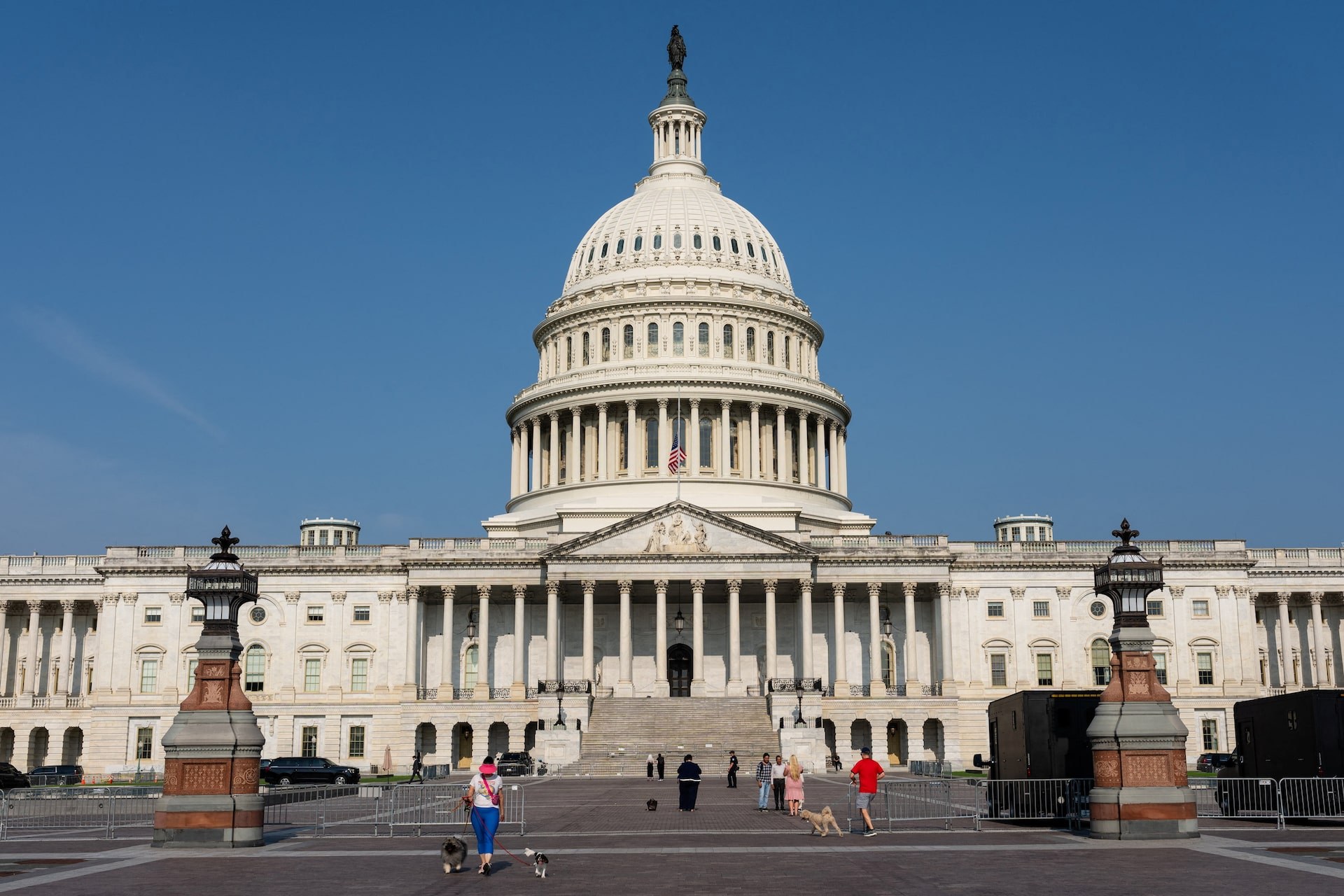
The United States has opened a new front in its technology rivalry with China, and this one walks on two legs. The House of Representatives has passed the fiscal 2027 National Defense Authorization Act, the annual policy bill that steers roughly US$1 trillion in defense spending, with a provision that bars the Pentagon from procuring, leasing, or operating humanoid robotic systems linked to designated foreign adversaries, a list that covers China, Russia, and Iran.
The restriction sits in Section 163 of the draft bill. It is the first time humanoid robots have been singled out in US defense legislation as a distinct security category, alongside the drones and telecom equipment that preceded them down this path. For robotics buyers on both sides of the Pacific, the immediate practical effect is narrow. The strategic signal is anything but.
A Narrower Ban Than the Hawks Wanted
Section 163 borrows its core logic from the Guarding the US Against Adversarial Robotics Dominance Act, the GUARD Act, introduced last summer by Representative John Moolenaar, who chairs the House select committee on competition with China. But the version that made it into the defense bill is a deliberately trimmed one.
The full GUARD Act framework would have gone much further. It proposed evaluating Chinese humanoid and quadruped systems for inclusion on the Federal Communications Commission’s Covered List, the same designation that effectively removed Huawei and ZTE equipment from the American market. A Covered List entry strips a device of its wireless communication licenses. For a robot that depends on connectivity for fleet management, teleoperation, and software updates, that is a commercial death sentence.
Lawmakers chose not to take that step, at least not yet. By limiting Section 163 strictly to military procurement, the House left the US commercial market open to Chinese robots. A logistics operator in Ohio can still buy a Unitree quadruped. A university lab can still order Chinese manipulators. The Pentagon cannot.
Think of Section 163 as a firewall built around the smallest, most sensitive room in the house, with the rest of the building left unlocked. The question that matters for the industry is whether the firewall stays where it is or keeps expanding outward, and the legislative history of Chinese telecom equipment suggests these perimeters rarely shrink.
Moolenaar himself made clear which direction he wants to move. Welcoming the military restrictions after the House vote, he warned that Washington “cannot allow these robots to become predominant in our country.” That is not the language of a finished project.
The Market Share Reality Behind the Politics
The anxiety in Washington has a concrete numerical basis. China shipped roughly 80 percent of the world’s humanoid robots, according to Counterpoint Research data published in January. Omdia figures from the same month put Unitree Robotics at more than 4,200 humanoid units shipped in 2025, with Unitree’s own data claiming above 5,500, while AgiBot delivered 5,168. By contrast, America’s front-rank developers, Figure AI, Agility Robotics, and Tesla among them, managed volumes in the low hundreds of units apiece over the same period.
That is not a gap. It is a different order of magnitude, and it inverts the usual pattern of US export-control politics. With semiconductors, Washington restricts what American firms can sell to China. With humanoid robots, the flow runs the other way: the machines are overwhelmingly Chinese, they are increasingly cheap, and they are starting to appear in American warehouses, research labs, and consumer channels.
A common misconception is that this provision is mostly symbolic because the Pentagon was never going to buy Chinese humanoids anyway. That reading understates what procurement language does in practice. Defense procurement rules cascade through contractor networks: primes and subcontractors typically align their supply chains with Pentagon restrictions to avoid compliance risk, which means Section 163’s effective footprint will extend well beyond direct military purchases. It also establishes a statutory definition of “covered humanoid robotic systems” that future legislation can reference and extend, which is precisely how the drone restrictions grew from a narrow military rule into the broad federal exclusion of DJI.
The Drone Playbook, Replayed at Human Scale
The most reliable guide to where humanoid restrictions travel next is the road already walked by Chinese drones. DJI entered the American market as an unremarkable consumer product, became the default aircraft of police departments, fire services, and film crews, and only then attracted the sequence that followed: a military purchase ban, an expanding federal blacklist, state-level procurement prohibitions, and standing legislative attempts at full market exclusion. Each step cited the same rationale now attached to humanoids, sensor-rich Chinese hardware operating inside sensitive American environments, and each step used the previous one as precedent.
Section 163 is the humanoid sector’s equivalent of that first military purchase ban, arriving far earlier in the adoption curve than the drone restrictions did. DJI had conquered an estimated 70 to 80 percent of the American commercial drone market before Washington moved. Chinese humanoids hold a dominant share of global shipments but a tiny installed base on American soil, which means the legislative machinery is engaging before the constituency of American users that complicated the drone fight, the police departments and surveyors who lobbied to keep their fleets, has had a chance to form around Chinese robots. Restricting a product few Americans yet own is politically cheap. That asymmetry is exactly why the trajectory from Pentagon ban to broader exclusion could run faster this time.
What Sits Inside the Data Concern
The stated rationale for Section 163 combines national security and data privacy. A humanoid robot is, among other things, a mobile sensor platform: cameras, microphones, lidar, force sensors, and a continuous connection to remote servers for model updates and fleet telemetry. Deployed inside a military logistics facility, such a machine would map layouts, observe routines, and stream operational data as a condition of normal functioning.
That concern is not unique to Chinese hardware, and skeptics inside the industry note that data governance depends more on deployment architecture than on the flag on the nameplate. An air-gapped Chinese robot leaks nothing; a poorly configured American one leaks plenty. But legislators are not writing deployment manuals, they are writing procurement law, and procurement law works in categories. The category chosen here is country of origin.
What This Means for Buyers and Builders
For American robotics developers, Section 163 is a protected market carved out at exactly the moment the sector needs anchor customers. Defense logistics, base operations, and depot maintenance are plausible early humanoid workloads, and the bill effectively reserves them for domestic and allied suppliers. Agility Robotics, Figure AI, Apptronik, and Boston Dynamics now compete for Pentagon-adjacent demand without facing Chinese price points, which run as low as one tenth of comparable US hardware.
The provision also arrives at a commercially awkward moment for its targets. Unitree’s G1 has been the best-selling humanoid in American research labs and developer channels precisely because nothing domestic matches its price, and US universities running federal grants will now face questions about whether their robot purchases sit inside anyone’s restricted category. Early-stage compliance ambiguity of that kind tends to resolve conservatively: procurement officers default to the safe vendor, which in this case means the expensive one.
For Chinese manufacturers, the direct revenue loss is negligible, since none of them sell to the Pentagon. The real cost is precedent. Section 163 creates the legal scaffolding for broader restrictions, and the GUARD Act’s Covered List mechanism remains on the table for a future Congress. Unitree, AgiBot, and their peers, several of which are moving toward public listings this year, now carry a US regulatory risk line in every prospectus.
For procurement teams outside the defense orbit, the practical guidance is watchfulness rather than panic. Commercial purchases remain legal. But organizations that sell into federal supply chains, or hope to, should assume that country-of-origin scrutiny on robotics will intensify, and that documentation of data flows and network architecture will become a standard part of robot procurement diligence.
There is an allied dimension worth tracking as well. American defense procurement rules tend to propagate through partner militaries, formally through interoperability requirements and informally through security-clearance culture. If NATO members, Japan, South Korea, and Australia adopt parallel restrictions, and several are already reviewing Chinese robotics in critical infrastructure, the addressable government market closed to Chinese humanoid makers multiplies well beyond the Pentagon’s budget lines. For Seoul and Tokyo in particular, whose own robotics champions compete directly with Chinese suppliers, aligning with the American restriction is both a security posture and an industrial policy with no domestic cost.
The Senate still has to pass its version of the bill, and the two chambers must reconcile differences before the NDAA becomes law, a process that historically concludes near the end of the calendar year. Section 163’s core restriction is not expected to be contentious in conference. The provisions worth watching are the ones that might be added along the way.
The first robot red line has been drawn. The industry’s operating assumption should be that it will not be the last.
Disclaimer: This article is for general information purposes only and does not constitute investment, legal, or procurement advice. Readers should verify details with primary sources before making business decisions.