UFORCE and RECONCRAFT Bring Combat-Tested MAGURA Autonomous Vessels to US Production
Ukraine-origin defense technology company UFORCE has partnered with US manufacturer RECONCRAFT to produce the combat-proven MAGURA autonomous surface vessels in the United States, signaling a major shift in maritime drone procurement and supply chain localization.
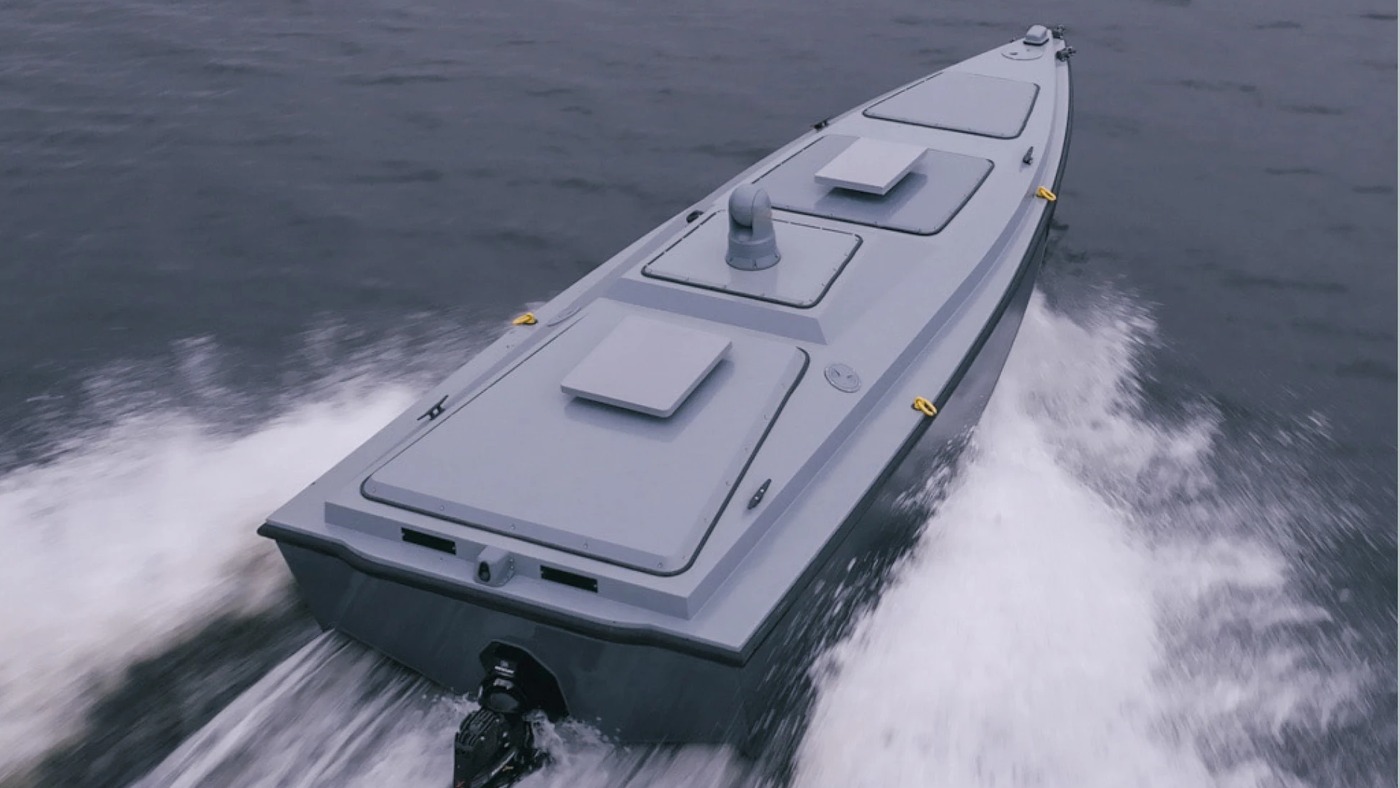
The rapid evolution of maritime warfare in the Black Sea is now driving a structural shift in the United States defense industrial base, as combat-tested autonomous systems bypass traditional development cycles to enter domestic production. The conversion of frontline innovation into scaled manufacturing represents a critical test for procurement strategies seeking to deploy unmanned capabilities at the speed of relevance.
UFORCE, a Ukraine-origin and United Kingdom-based autonomous systems defense technology company headquartered in London, has signed a memorandum of understanding with United States-based combatant craft manufacturer RECONCRAFT to build autonomous surface vessels in the United States. UFORCE specializes in advanced autonomy software and command-and-control technologies for maritime drones, filling a critical niche in asymmetric naval warfare. The partnership focuses on the MAGURA family of autonomous surface vessels, a platform that has demonstrated significant operational impact in recent maritime conflicts. The initiative will be led by UFORCE USA, a wholly owned subsidiary established to unify and scale these battle-proven systems for allied militaries.
The MAGURA platform, developed exclusively by UFORCE, has established a reliable combat record, contributing to the destruction of multiple warships and successfully engaging manned aircraft in combat environments. By partnering with RECONCRAFT, a manufacturer trusted by United States and Partner Special Operations Forces, UFORCE aims to combine its advanced autonomy software and command-and-control technologies with established American manufacturing capabilities. This collaboration is designed to deliver full-stack aerial, maritime, and ground unmanned systems to the United States market without the delays associated with ground-up development.
What is the strategic impact of the UFORCE and RECONCRAFT partnership?
The partnership between UFORCE and RECONCRAFT directly addresses the United States military's urgent requirement for combat-proven autonomous surface vessels by localizing the production of the MAGURA platform. By combining Ukrainian battlefield innovation with American manufacturing infrastructure, the alliance bypasses traditional development cycles, enabling rapid procurement and deployment.
The Shift to Scaled Production
The integration of foreign-developed, combat-tested technology into the United States defense supply chain reflects a broader policy mandate prioritizing speed and proven capability over conventional procurement processes. UFORCE has officially entered the United States Drone Dominance competition and related programs in partnership with RECONCRAFT, signaling a deliberate strategy to align with Department of Defense initiatives aimed at rapidly fielding unmanned systems.
This approach acknowledges that the nature of combat has fundamentally changed, with victory increasingly dependent on rapid iteration cycles and the deployment of cost-effective autonomous platforms. The MAGURA vessels offer a disruptive economic model, demonstrating the ability to deny maritime access at a fraction of the cost of traditional naval assets. For procurement managers and technology evaluators, this represents a shift from theoretical capability assessments to the integration of systems with validated operational effects.
"The real constraint in modern defense procurement is no longer technological invention, but the ability to scale and manufacture proven systems within secure, allied supply chains," notes an industry observer. The UFORCE and RECONCRAFT alliance attempts to solve this bottleneck by leveraging an existing manufacturing footprint in Portland, Oregon, to produce highly sophisticated vessels that meet the demanding requirements of Special Operations Forces.
Regional Compliance and Supply Chain Localization
Localizing production in the United States is not merely a logistical decision; it is a strategic imperative driven by geopolitical realities and supply chain vulnerabilities. By establishing UFORCE USA and partnering with a domestic manufacturer, the company ensures compliance with stringent United States procurement regulations and secures the supply chain against international disruptions.
This localization effort is crucial for the long-term viability of the MAGURA platform within the United States military ecosystem. It provides the necessary infrastructure for in-country manufacturing, assembly, and training, while also establishing a foundation for ongoing iteration and support. The ability to produce these vessels domestically mitigates the risks associated with relying on overseas production facilities, particularly for critical defense technologies.
MAGURA Localisation Could Shorten Allied Procurement Cycles
The introduction of the MAGURA autonomous surface vessels into the United States arsenal has profound implications for maritime operations and force structure. These platforms offer a highly survivable and cost-effective means of conducting intelligence, surveillance, reconnaissance, and strike missions in contested environments. Their proven ability to operate autonomously and deliver precise effects significantly enhances the operational reach and lethality of naval forces.
In addition, the open command-and-control architecture of the UFORCE systems facilitates integration with existing military networks and platforms, enabling coordinated multi-domain operations. This interoperability is essential for maximizing the effectiveness of unmanned systems and ensuring their seamless integration into the broader joint force.
The Real Constraint: Scaling Production
While the technological capabilities of the MAGURA platform are well-documented, the ultimate success of the UFORCE and RECONCRAFT partnership will depend on their ability to scale production to meet the anticipated demand from the United States military and allied nations. Transitioning from limited-rate production to full-scale manufacturing presents significant challenges, including supply chain management, quality control, and workforce development.
The partnership must demonstrate that it can consistently deliver high-quality vessels at the required volume while maintaining the rapid iteration cycles that have defined the MAGURA platform's success to date. Failure to achieve this scale could undermine the strategic advantages offered by the technology and limit its impact on the broader defense industrial base.
The Economics of Asymmetric Warfare
The financial implications of deploying autonomous surface vessels like the MAGURA platform are as significant as their tactical capabilities. Traditional naval procurement relies on multi-billion-dollar platforms that require years to design, build, and deploy. In contrast, the MAGURA vessels offer a highly asymmetric cost-to-effect ratio. The ability to neutralize or deter high-value naval assets using relatively inexpensive, expendable drones fundamentally alters the economic calculus of maritime conflict.
For defense planners, this shift necessitates a reevaluation of budget allocations and procurement priorities. Investing in large quantities of autonomous systems provides a more resilient and adaptable force structure compared to relying on a small number of exquisite platforms. The UFORCE and RECONCRAFT partnership aims to capitalize on this economic reality by providing a scalable manufacturing solution that can meet the growing demand for cost-effective unmanned capabilities.
From Memorandum to Production Requires New Evidence
One of the most significant challenges in defense technology is bridging the "valley of death" between innovative prototypes and fielded systems. The UFORCE and RECONCRAFT alliance attempts to circumvent this obstacle by leveraging a platform that has already been validated in combat. This approach reduces the technological and operational risks associated with adopting new systems, providing procurement managers with a higher degree of confidence in their investment.
However, integrating foreign-developed technology into the United States military ecosystem requires careful management of regulatory and cultural barriers. The partnership must demonstrate that the MAGURA platform can meet the stringent safety, security, and interoperability standards required by the Department of Defense. This process will require close collaboration between UFORCE, RECONCRAFT, and government stakeholders to ensure a smooth transition from battlefield innovation to standardized procurement.
Autonomy Changes Reach, Not the Need for Control
The deployment of autonomous surface vessels represents a critical step towards the realization of fully unmanned naval operations. The MAGURA platform's advanced autonomy software enables it to operate in difficult environments, identify targets, and execute missions with minimal human intervention. This capability reduces the cognitive load on operators and allows for the simultaneous control of multiple vessels, significantly increasing the operational tempo and effectiveness of maritime forces.
As artificial intelligence and machine learning technologies continue to advance, the level of autonomy exhibited by these systems will only increase. The UFORCE and RECONCRAFT partnership positions the United States to remain at the forefront of this technological revolution, ensuring that its military forces possess the capabilities necessary to maintain maritime superiority in an increasingly contested global environment.
Combat Feedback Can Compress the Development Loop
The success of the MAGURA platform in the Black Sea is largely attributable to UFORCE's commitment to rapid, iterative development. By continuously incorporating feedback from combat operations, the company has been able to quickly adapt the platform to evolving threats and operational requirements. This agile approach contrasts sharply with the traditional, linear development cycles employed by many defense contractors.
The partnership with RECONCRAFT must preserve this culture of innovation while scaling production to meet the demands of the United States military. This will require the establishment of flexible manufacturing processes and the integration of continuous feedback loops between operators, engineers, and production teams. The ability to maintain this iterative development cycle will be critical to ensuring the long-term relevance and effectiveness of the MAGURA platform.
Domestic Production Opens an Allied Export Path
The UFORCE and RECONCRAFT partnership also has significant implications for the global market for autonomous systems. By establishing a manufacturing base in the United States, the alliance positions itself to compete for international contracts and export opportunities. The combat-proven nature of the MAGURA platform, combined with the manufacturing expertise of RECONCRAFT, provides a compelling value proposition for allied nations seeking to enhance their maritime capabilities.
However, the export of advanced autonomous systems is subject to stringent regulatory controls and geopolitical considerations. The partnership must manage these difficult dynamics to successfully expand its market reach while ensuring that sensitive technologies do not fall into the hands of adversaries. The ability to manage these risks will be a key determinant of the alliance's long-term commercial success.
Remote Crews Still Carry the Operational Burden
Despite the increasing reliance on autonomous systems, the human element remains a critical component of maritime operations. The deployment of platforms like the MAGURA vessels requires highly trained operators capable of managing difficult missions and making critical decisions in dynamic environments. The UFORCE and RECONCRAFT partnership must address this requirement by providing comprehensive training and support programs for military personnel.
This includes the development of intuitive command-and-control interfaces that facilitate effective human-machine teaming. By optimizing the interaction between operators and autonomous systems, the alliance can maximize the operational effectiveness of the MAGURA platform while minimizing the risk of errors and unintended consequences. The successful integration of these systems into the broader force structure will depend on the ability to cultivate a highly skilled and adaptable workforce.
Translating Technology into Operational Reality
To understand the significance of this partnership, consider the difference between a custom built race car and a mass produced fleet vehicle. The MAGURA platform has proven itself as a highly effective custom built solution in active conflict. The challenge now is to transition this capability into a mass produced fleet vehicle that can be reliably manufactured, maintained, and deployed by the United States military. This requires not only advanced technology but also robust supply chains, standardized manufacturing processes, and comprehensive training programs. The UFORCE and RECONCRAFT alliance aims to bridge this gap, transforming a bespoke battlefield innovation into a scalable, standardized military asset.
Battlefield Evidence Does Not Eliminate Integration Risk
While the potential of autonomous surface vessels is widely recognized, some defense analysts argue that the integration of foreign developed technology into the United States military ecosystem introduces unacceptable risks. They point to potential vulnerabilities in software supply chains, the challenges of ensuring interoperability with existing systems, and the difficulties of managing stringent procurement regulations. However, this perspective often overlooks the urgent need for rapid innovation in the face of evolving maritime threats. The UFORCE and RECONCRAFT partnership directly addresses these concerns by localizing production, leveraging established American manufacturing capabilities, and committing to rigorous testing and certification processes. By proactively managing these risks, the alliance aims to demonstrate that the benefits of rapid capability deployment outweigh the challenges of integrating foreign developed technology.
Procurement Will Turn on Production Evidence and Fleet Support
The UFORCE and RECONCRAFT partnership represents a potential paradigm shift in maritime procurement. By prioritizing speed, proven capability, and scalable manufacturing, the alliance challenges the traditional models that have dominated the defense industry for decades. If successful, this approach could serve as a blueprint for future acquisitions, encouraging the Department of Defense to embrace more agile and innovative procurement strategies.
For industry stakeholders, this shift underscores the importance of adaptability and collaboration. Companies that can successfully manage the difficulties of the modern defense environment and deliver cost-effective, combat-proven solutions will be well-positioned to thrive in an increasingly competitive market. The UFORCE and RECONCRAFT partnership serves as a compelling example of how strategic alliances can drive innovation and reshape the future of maritime operations.
Autonomous Systems Competitor Comparison
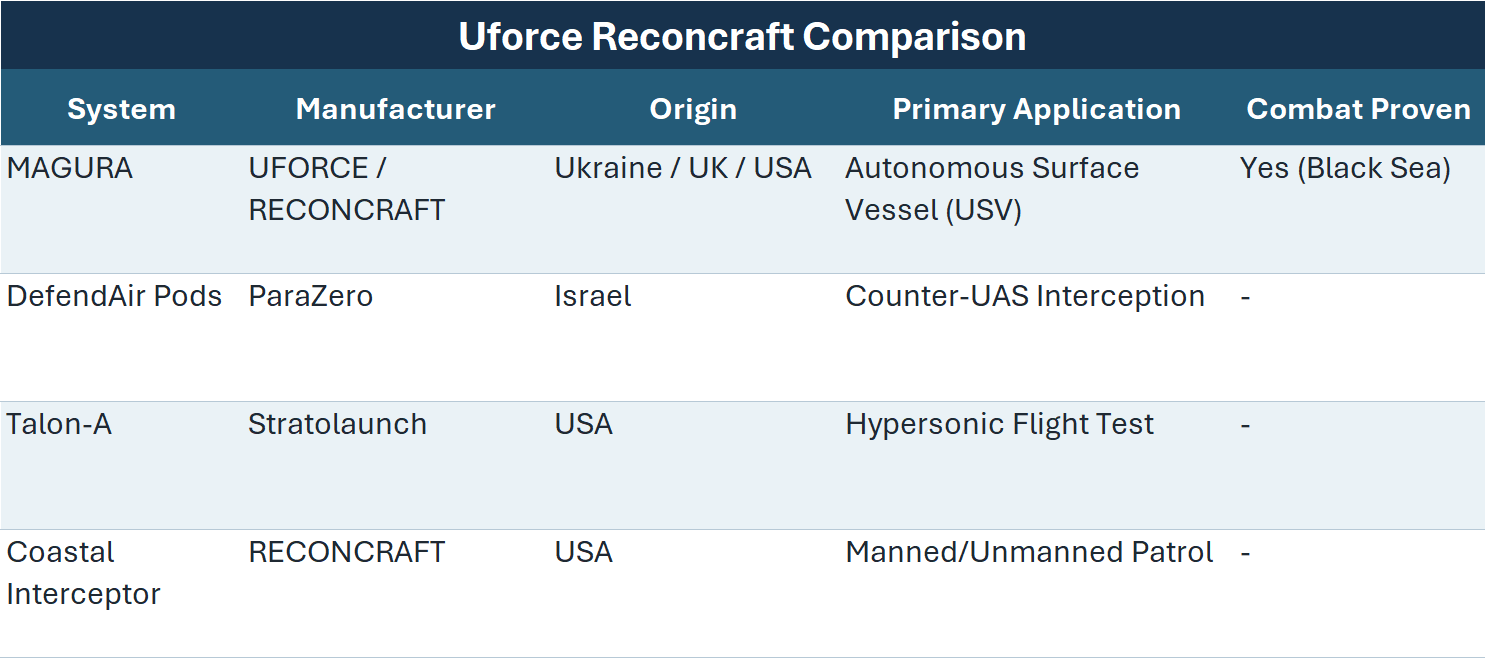
The true test of this partnership lies not in the technology itself, but in the ability to manage the difficulties of the United States defense procurement system and establish a sustainable, high-volume manufacturing capability. If successful, it could serve as a model for future collaborations aimed at rapidly fielding critical technologies from allied nations.
This analysis synthesizes company statements and public market activity.
Disclaimer: This article is for informational purposes only and does not constitute investment, legal, safety, or procurement advice. Readers should independently verify specifications, certification scope, pricing, availability, regulatory obligations, and operational suitability with the relevant suppliers and authorities before making decisions.