The First US Robotics Earnings After the China Ban Show a 33 Percent Jump
Teradyne reported second-quarter revenue of US$1.33 billion on July 28, up 104 percent year over year and ahead of the US$1.22 billion consensus. Its robotics segment, comprising Danish cobot maker Universal Robots and mobile robot maker MiR, generated roughly US$100 million, up 33 percent from a year earlier and 9 percent sequentially. The print marks the first earnings report from a major US-listed robotics owner since Washington banned Chinese humanoid imports, and the first clean growth quarter for Universal Robots since its 2025 restructuring. Robotics remains under 8 percent of Teradyne's revenue, but the growth signal lands in a Western cobot market that has been contracting for two years.
The Western robotics recovery finally has a number attached to it. Teradyne, the Boston-based semiconductor test giant that owns Universal Robots and Mobile Industrial Robots, reported second-quarter results on July 28 that beat expectations on every line. Total revenue reached US$1.33 billion, up 104 percent from a year earlier. Buried inside the record print was the figure robotics watchers have been waiting for. The robotics segment grew 33 percent year over year to roughly US$100 million, its strongest growth quarter since 2021.
The report matters beyond Teradyne's own shareholders. Universal Robots is the world's largest collaborative robot maker, with roughly half the global cobot market. Its quarterly performance is the closest thing the Western automation industry has to a real-time demand gauge. And the timing gives the number extra weight. This is the first earnings report from a major US-listed robotics owner since the Federal Communications Commission banned imports of Chinese humanoid and advanced robots on July 28, a decision that reshapes the competitive field UR sells into.
A Growth Quarter Built on a Painful Restructuring
The 33 percent jump did not come from a booming market. It came off a deliberately shrunken base. Universal Robots went through a hard restructuring in 2025, cutting staff, consolidating product lines, and refocusing on higher-payload arms and AI-enabled applications after two years of declining cobot demand in Europe and North America. The company that reported this quarter is leaner than the one that struggled through 2024.
Sequential growth of 9 percent suggests the recovery has some durability beyond an easy comparison. Teradyne guided third-quarter total revenue to a range of US$1.2 billion to US$1.3 billion, implying management expects the momentum to hold. On the earnings call held July 29, executives pointed to AI-driven demand across both sides of the business. Semiconductor test demand is being pulled by AI accelerator production. Robotics demand is being pulled by manufacturers automating in response to labor scarcity and, increasingly, by interest in AI-enabled manipulation.
For readers new to the company, the structure is simple. Teradyne makes the machines that test computer chips, a business that dwarfs everything else it owns and delivered the bulk of the quarter's 104 percent surge. Robotics is the growth option bolted to the side, assembled through the US$285 million acquisition of Universal Robots in 2015 and the US$272 million purchase of MiR in 2018. At under 8 percent of revenue, robotics cannot move Teradyne's stock on its own. But Teradyne's scale gives UR and MiR a balance sheet their standalone competitors lack.
The Ban Changes the Map UR Sells Into
The FCC decision announced one day before Teradyne's call bans Chinese-made humanoid robots and certain advanced robotics from the US market on national security grounds. Universal Robots does not make humanoids, and its Danish arms are not covered. But the second-order effects run straight through its market.
Chinese cobot makers have been the fastest-growing force in UR's core segment. Companies including Dobot, JAKA, and Elite Robot have undercut UR on price by 30 to 50 percent and taken share across Asia and, more recently, in Europe and North America. Any broadening of US restrictions on Chinese robotics, or reciprocal Chinese restrictions on Western vendors, redraws UR's competitive position in both directions. A Western market with fewer Chinese competitors helps UR at home. A Chinese market that retaliates against Western robot vendors hurts UR in what was once its largest growth region.
China's own numbers this week frame the stakes. At a Beijing expo launch on July 28, the China Machinery Industry Federation disclosed that Chinese industrial robot exports exceeded imports for the first time in 2025, with domestic brands selling into 156 countries. The one-way flow of Western robots into China that defined the last two decades has reversed. UR now competes with Chinese arms almost everywhere it sells.
What the Cobot Recovery Means for the Humanoid Story
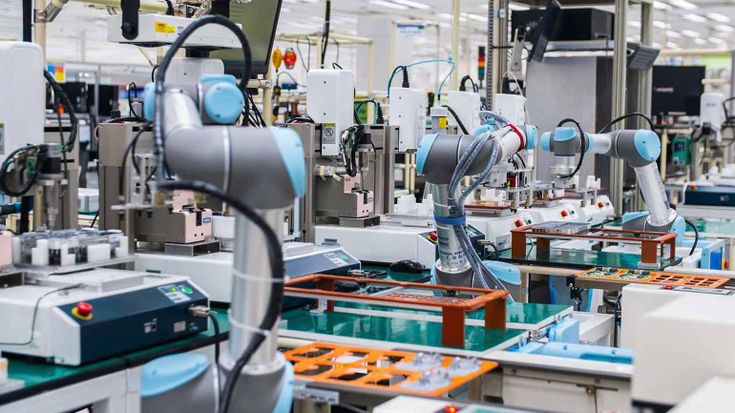
There is a plain-language way to see why this quarter matters for the humanoid race. Cobots are the reliable middle-aged sibling of the flashy humanoid. They do not walk or talk. They bolt to a table and repeat a task with sub-millimeter precision, and they have been quietly deployed in more than 100,000 installations worldwide. When cobot demand grows, it means factories are actually spending on automation rather than watching demos. That spending is the same budget line humanoids will eventually compete for.
Universal Robots has positioned itself as a bridge between the two eras. It has partnered with NVIDIA on AI-enabled inspection and manipulation, and its parent has invested in physical AI software across the portfolio. The bet is that the installed base of arms becomes the distribution channel for embodied AI capabilities, sold as software on top of hardware customers already trust.
The skeptical read deserves equal space. A 33 percent jump off a restructured base still leaves the robotics segment near US$400 million annualized, roughly where it was in 2022. Four years of net zero growth is not a triumph. The cobot market UR pioneered has commoditized faster than it has expanded, and the segment's margins remain thin relative to Teradyne's test business. Investors have periodically pressed Teradyne to divest robotics entirely. A single good quarter will quiet that conversation, not end it.
The Read-Across for Asia
For the Asian supply chain, Teradyne's print carries two signals. First, Western automation demand is stabilizing, which matters for every component maker in Japan, Korea, and Taiwan that sells encoders, harmonic drives, and servo motors into European and American robot production. Second, the AI test business that drove Teradyne's record quarter is itself a robotics leading indicator. The same AI accelerators Teradyne tests are the compute substrate for the vision-language-action models now being loaded into robots on both sides of the Pacific.
The juxtaposition of the week is hard to miss. Washington closed its market to Chinese humanoids on Monday. On Tuesday, the largest Western cobot owner reported its best robotics growth in four years, driven partly by the AI boom that Chinese robotics companies are also riding. Decoupling is proceeding, and demand is rising, at the same time. Companies on both sides are about to discover which force is stronger.
The Denmark Question
Universal Robots' position in the decoupling era carries a specific irony. The company is Danish, headquartered in Odense, with its arms manufactured in Denmark. Its owner is American. Its fastest-growing competitors are Chinese. Its largest customers are spread across all three blocs. If the robotics trade war escalates into reciprocal restrictions, UR becomes a test case for whether a European brand under American ownership can keep selling into China.
The stakes are not hypothetical. China accounted for roughly a quarter of global cobot demand last year and remains the largest single market for collaborative arms. UR built its Chinese business over a decade, including a Shanghai application center and local partnerships. Chinese procurement officials have already begun favoring domestic brands under government guidance that predates this week's escalation. An explicit retaliation against American-owned robot vendors would compress UR's addressable market at exactly the moment its growth resumed.
Management has so far said little about the geopolitical exposure, and the July 29 call predated any Chinese response to the FCC decision. The next two quarters will show whether the 33 percent growth is the start of a durable recovery or a last strong print before the trade walls close in.
What the Quarter Says About Automation Demand
Strip out the geopolitics and the underlying demand signal is straightforward. Manufacturers in Europe and North America are short of workers and are buying automation again after a two-year pause. The pause had specific causes. Interest rates made capital equipment expensive. The post-pandemic inventory glut made factories cautious. Both pressures eased through the first half of 2026, and the order books at UR, MiR, and their component suppliers responded.
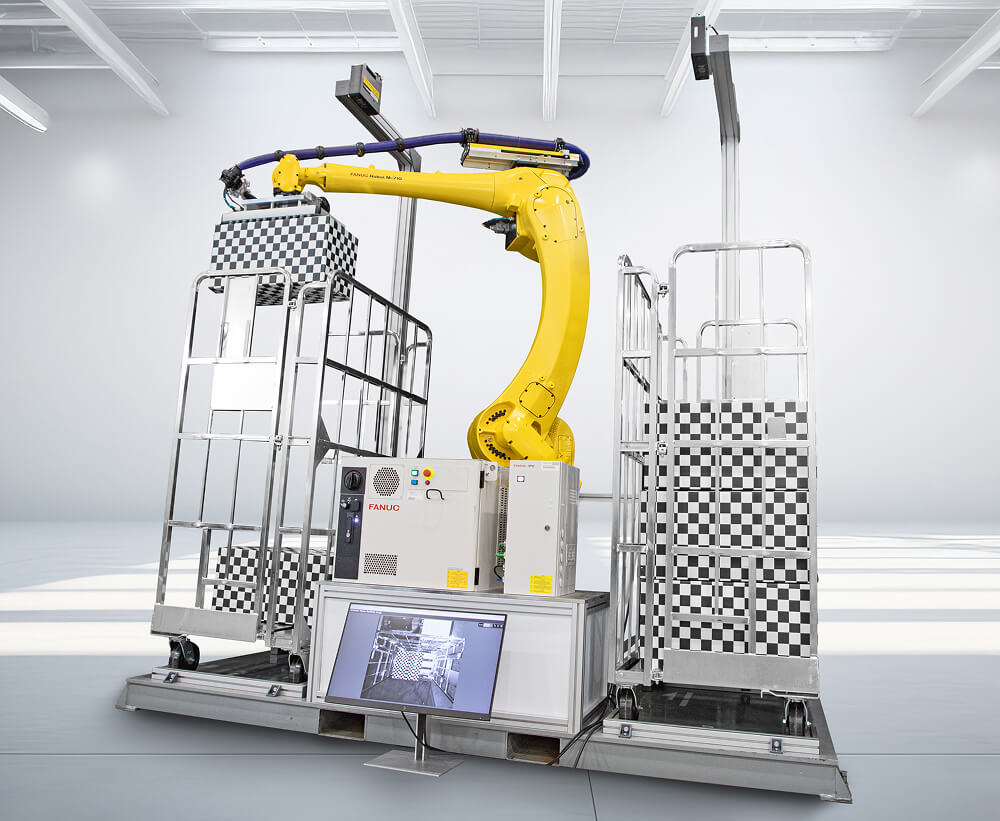
The composition of demand has also shifted. UR's growth is concentrated in higher-payload arms, the UR20 and UR30, which handle palletizing and machine-tending tasks that previously required caged industrial robots. Those applications automate jobs that warehouses and mid-size factories cannot staff. The company has paired the heavier arms with AI-enabled applications developed with NVIDIA, including automated inspection cells that use vision models to detect defects without manual programming.
That programming point is the quiet revolution inside the cobot recovery. The historical barrier to cobot adoption was never the hardware price. It was the integration cost, the weeks of engineering time needed to program a robot for each new task. AI-assisted programming compresses that cost. If a factory manager can reconfigure an arm by demonstration rather than code, the addressable market expands from automation engineers to anyone who runs a production line. UR's bet, and Teradyne's by extension, is that this software shift does for cobots what the app store did for smartphones. The 33 percent quarter is the first earnings evidence that the bet is starting to pay.
Investors will watch two numbers in the next report. One is China revenue, which will show whether geopolitical friction has started to bite. The other is AI test revenue, which will show whether the data-center buildout that funds humanoid AI research is still accelerating. Both numbers feed the same question. Can the cobot business grow fast enough to matter inside a company whose AI test division is now twice its size and growing faster.
Disclaimer: This article is for informational purposes only and does not constitute investment advice, endorsement, or verification of any claims made by the companies mentioned.