Tesollo Kickstarts IPO: Inside Korea's First Dexterous Hand Public Listing
South Korean dexterous hand manufacturer Tesollo has selected KB Securities as its lead underwriter, kicking off the process for a technology-special KOSDAQ listing targeted for 2027. The move marks Korea's first pure-play dexterous hand public listing attempt. This article examines Tesollo's position within the Korean robotics ecosystem, its chaebol research client base, and how its high-degree-of-freedom technology compares to the volume-driven Chinese component market.
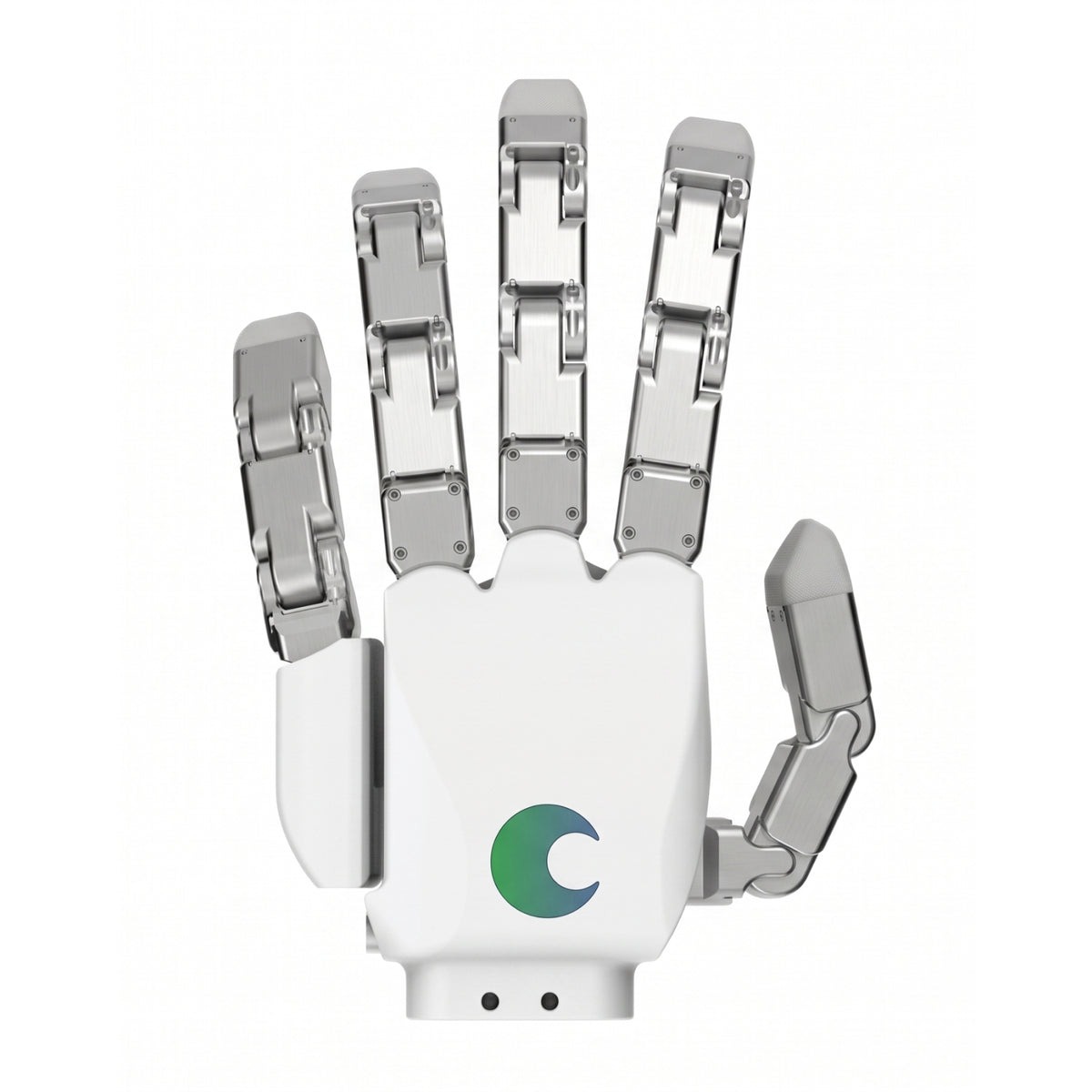
On June 30, 2026, Tesollo officially selected KB Securities as its lead underwriter to prepare for an initial public offering on the KOSDAQ market under the technology-special listing track. The company, backed by POSCO Technology Investment and KB Investment, is targeting a 2027 debut.
The Korea Market Context: Research Over Volume
To understand Tesollo's IPO, one has to understand the structural difference between the South Korean and Chinese robotics component markets.
In China, the dexterous hand market is driven by embodied AI startups racing to collect training data, creating a volume market forecast to hit 70,270 units in 2026. Chinese component makers like Ruiyan Zhikong have optimized for this by producing 6-DoF hands that prioritize cost (around USD 1,380) and 24-hour continuous reliability over maximum articulation.
South Korea's market is entirely different. It is driven by chaebol R&D centers, government-funded research institutes, and export sales to global universities. Korean companies are estimated by Goldman Sachs to account for 30 percent of global humanoid production by 2035, but their current demand for hands is research-grade, not mass production. The incumbent standard in this space has long been Wonik Robotics' Allegro Hand, a 16-DoF four-finger (and later 9-DoF three-finger) design used globally by NVIDIA, Meta, and Boston Dynamics researchers.
Tesollo entered this ecosystem to bridge the gap between research prototypes and industrial integration, positioning itself as the leading dedicated dexterous hand startup in Korea.
Tesollo's Company Background
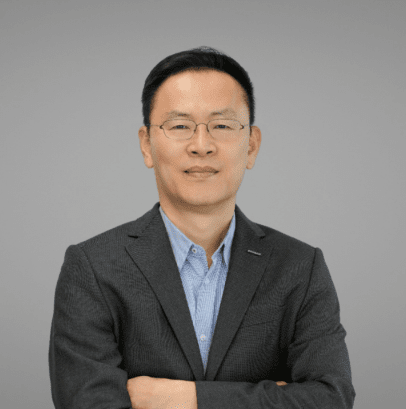
Founded in January 2019 by CEO Kim Youngjin, a former researcher at the Korea Institute of Industrial Technology (KITECH), Tesollo is headquartered in Incheon's Songdo district. Kim established the company to solve a specific bottleneck: no matter how sophisticated a robot arm is, it cannot perform real work without a functional hand.
The company spent its early years developing industrial end-of-arm tooling, releasing its Delto Gripper series for factory automation. But its flagship breakthrough came with the DG-5F, a fully actuated five-finger dexterous hand. Following a Series B funding round that brought in POSCO Technology Investment and KB Investment, the company gained global visibility by winning a Robotics Innovation Award at CES 2025 and returning to the CES 2026 K-Humanoid Alliance joint booth with a new compact version, the DG-5F-S.
Technical Architecture: Full Actuation vs Underactuation
Tesollo's technology diverges sharply from the Chinese volume market standard. While a Ruiyan RY-H2 uses 6 motors to drive 15 joints via underactuation (where one motor pulls multiple joints like human tendons), the Tesollo DG-5F uses 20 motors to drive 20 joints. It is fully actuated.
Each joint in the DG-5F is an integrated module combining a motor, driver, encoder, and reducer. This allows for 0.1-degree repeatability and highly complex in-hand manipulation that underactuated hands cannot match. The system runs a control loop faster than 250Hz, weighs 1.6 kilograms, and has been tested to over two million cycles. It is designed as an open platform, supporting sim-to-real transfer and reinforcement learning, with plug-and-play compatibility for major humanoid platforms including China's Unitree and PND Robotics.
The Client Base: Chaebol R&D and Global Labs
Tesollo's client list reflects its premium research positioning. Domestically, its hands are deployed in the advanced R&D centers of Samsung Electronics, Samsung Display, LG Electronics, Hyundai Motor, Doosan, and HD Hyundai Robotics. Globally, it supplies research institutions like Stanford University, ETH Zurich, and Canada's Sanctuary AI.
However, CEO Kim Youngjin has been transparent about the commercial reality: the majority of these transactions remain in the sample and research market. The company achieved approximately KRW 2 billion (USD 1.5 million) in export sales in 2025. The core challenge for the IPO narrative is proving that these research deployments will convert into mass-production supply contracts, particularly in automotive assembly lines where Tesollo is currently pushing for integration.
Strategic Perspective
"Tesollo is Korea's bridge between the USD 100,000 Shadow Hand and the industrial factory floor. Its 20-DoF full actuation gives it a technical ceiling that Chinese 6-DoF volume makers cannot reach today. However, the risk lies in its clients: Samsung has already established an internal 'Hand Lab' to develop its own tendon-driven tactile hands. Tesollo must lock in its chaebol clients for mass production before they either bring the technology in-house or before Chinese competitors move up the DoF ladder and collapse the premium pricing tier."
The Simple Explanation
Think of a dexterous robot hand like a car. Chinese makers are building reliable, affordable sedans for taxi fleets—they need thousands of them to work 24 hours a day without breaking down. Tesollo is building a Formula 1 car. It has a motor in every single joint, allowing it to perform incredibly complex finger movements that the cheaper hands cannot do. Right now, major tech companies like Samsung and LG are buying these "Formula 1" hands for their research labs to figure out how to use them. Tesollo's goal is to make these high-end hands standard equipment in factories.
The Industry Reality
The KOSDAQ technology-special listing track allows companies with strong technology but low current revenue to go public. Tesollo fits this profile perfectly. While its technology is world-class and its client list includes the biggest names in Korean industry, its actual revenue footprint is still at the sample-market scale. The IPO will test whether public market investors believe the humanoid component market is ready to transition from R&D budgets to mass-production procurement.
Sources:
1. Seoul Economic Daily: Robot Hand Developer Tesollo Picks KB Securities for IPO (June 30, 2026)
2. Tesollo Official Newsroom: Interview with CEO Kim Youngjin (December 8, 2025)
3. Assembly Magazine: Tesollo Launches Robotic Hand as Samsung Expands Humanoid Robotics Development (March 17, 2026)
4. The Robot Report: Tesollo commercializes its lightweight, compact robotic hand (February 23, 2026)
Disclaimer: This article is for informational purposes only and does not constitute investment advice. The information presented is based on publicly available sources and may not reflect the most current developments. Readers should conduct their own research before making any investment or business decisions.