Skild AI's Robot Model Learns New Tasks From a Single Video
Skild AI says its new S1 foundation model learns unfamiliar robot tasks from a single demonstration video, hitting a 66% per-step success rate versus 9% for prior systems, as the Pittsburgh startup passes a US$100 million revenue run rate on NVIDIA's physical AI stack.

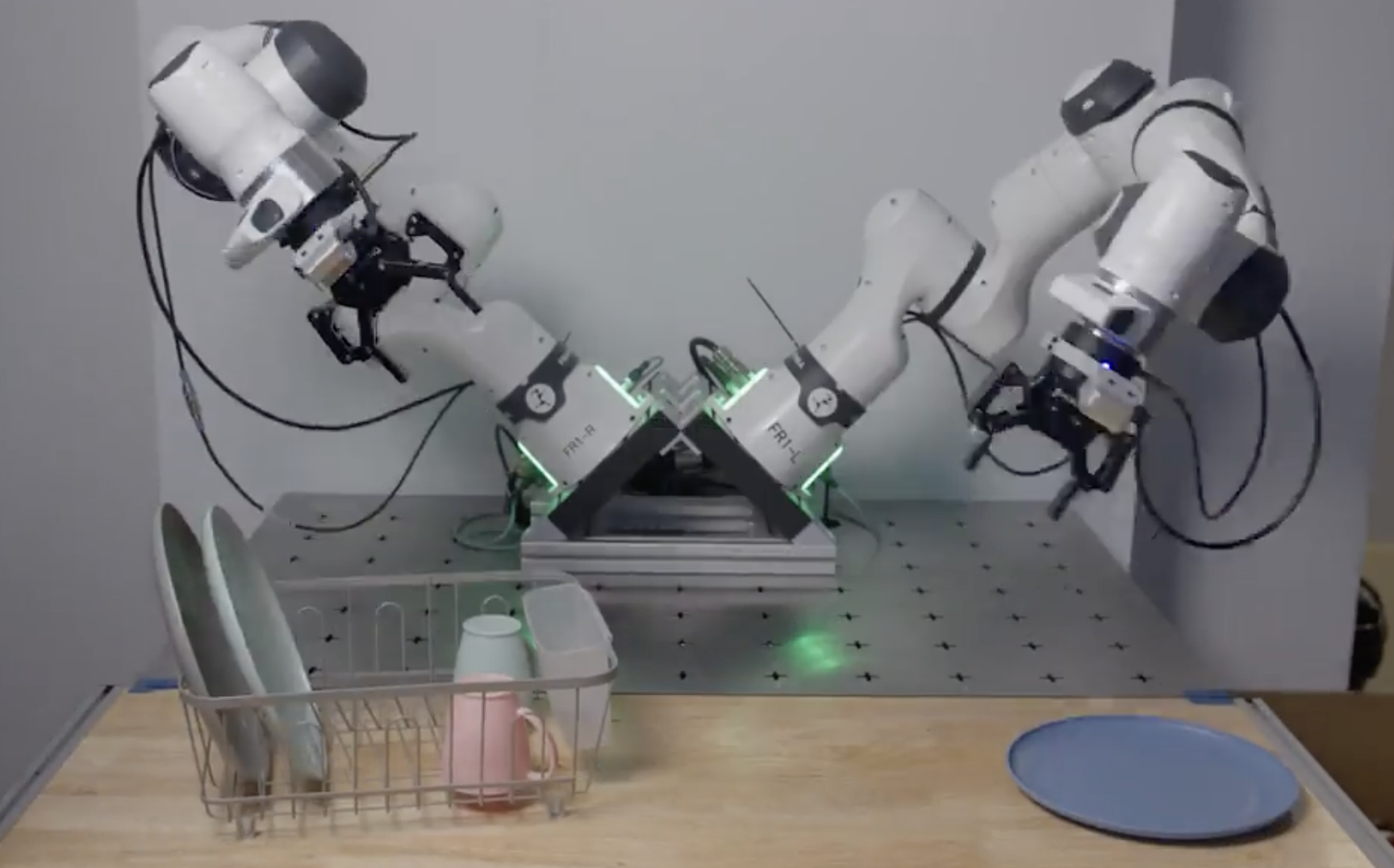
PITTSBURGH, Pennsylvania, September 10, 2026. Skild AI said its new S1 robot foundation model completes unfamiliar multistep tasks with a roughly 66 percent per-step success rate after watching a single human demonstration video, versus 9 percent for comparable systems trained the conventional way. The company, working with NVIDIA's physical AI stack, reported that one demonstration video now carries the training value of about 380 hand-collected examples, cutting the gap between showing a robot a task and having it run the task autonomously to 11 minutes.
Skild AI is a Pittsburgh-based robotics startup founded in 2023 by former Carnegie Mellon University professors Deepak Pathak, who serves as chief executive, and Abhinav Gupta, the company's president. Its product, marketed internally as the Skild Brain, is a single foundation model meant to control many different robot bodies and tasks rather than the narrow, single-purpose models that have dominated industrial automation. The company has raised more than US$2 billion since mid-2024, including a US$1.4 billion round led by SoftBank that closed at a US$14 billion valuation, with NVIDIA's venture arm, Amazon founder Jeff Bezos, Samsung, LG, Schneider Electric and Salesforce Ventures among the participants.
What One Video Actually Buys a Robot
The core claim in Thursday's disclosure is about sample efficiency, the ratio between how much training data a system needs and how well it performs. Most robot learning systems today still rely on large libraries of teleoperated demonstrations, recordings of a human operator physically guiding a robot arm through a task hundreds or thousands of times before the behavior generalizes reliably. Skild's pitch is that S1 can absorb a single video, observe how the task unfolds, and reproduce it on a physical robot without retraining or updating the model's weights, a technique the company calls in-context learning, borrowed conceptually from the way large language models can follow a new instruction from a handful of examples in a prompt rather than a full retraining pass.
NVIDIA said the collaboration spans four stages of the robotics pipeline: synthetic data generation through its Cosmos world models, simulation and training through Isaac Lab, Isaac Sim and the Newton physics engine, and deployment optimization through TensorRT and Nsight profiling tools. For a procurement team evaluating robot learning vendors, that four-stage claim matters because it signals Skild is not simply running a research model on borrowed compute. It is building a production pipeline where synthetic and real demonstration data both feed the same model, which is the difference between a lab result and a system a factory floor manager can actually order.
The demonstrated tasks range from plant potting and pancake making to coffee brewing and a dual-arm assembly sequence run on NVIDIA Blackwell-based systems at a Foxconn facility, where the robot installed a busbar and a limit block, fastened 16 screws and adapted to physical disturbances mid-task. Each of those tasks runs up to 10 minutes, long by the standards of robot learning demonstrations, where a single pick-and-place motion is often the entire benchmark. Multistep tasks of that length are a closer proxy for what a warehouse or electronics assembly line actually needs than the shorter demos that have defined most foundation-model robotics announcements over the past two years.
The Economics Behind the Sample-Efficiency Number
Sample efficiency is not an academic curiosity for buyers. Collecting teleoperated demonstration data is one of the largest hidden costs in deploying a learning-based robot, requiring a trained operator, a calibrated robot cell and hours of recorded sessions for every new task variant a customer wants automated. If Skild's 380-to-one ratio holds up outside curated demonstrations, it does not just speed up development. It changes which tasks are economically worth automating in the first place, since a task that would have required weeks of data collection to justify a deployment contract could instead be captured in an afternoon of filming.
That economic argument is also where Skild's revenue figures become relevant to a buying decision rather than just a funding headline. The company said it has reached a US$100 million annual revenue run rate roughly 10 months after launch, with more than 60 deployment partnerships spanning manufacturing, logistics, inspection, security and food preparation. Revenue run rate at that stage tells a buyer the model is generating paid deployments now, not only pilot programs funded by venture capital, which is the distinction that separates a foundation-model vendor worth a multi-year integration commitment from one still proving out its first production contract.
Where the Claim Still Needs Independent Verification
The published success-rate figures come from Skild and NVIDIA's own materials, not from an independently reproduced benchmark, and neither company has released the evaluation protocol in enough detail for a third party to rerun the 66 percent versus 9 percent comparison. The gap between a demo curated for a product announcement and a task run under the varied lighting, clutter and object variation of an actual production floor is the single most common failure point in learning-based robotics, and it is exactly the kind of detail that does not show up in an 11-minute demonstration video. Buyers evaluating S1 for their own operations should ask Skild for task success rates measured on their own facility's conditions, not the company's staged benchmark tasks, before committing to a deployment timeline built around the published numbers.
There is also a scope question. The demonstrated tasks, plant potting, pancake assembly, a Foxconn wiring harness, are individually impressive but span a narrow slice of what a warehouse or manufacturing operator would need automated across a full production line. A foundation model that learns fast from single demonstrations is still constrained by the physical capabilities of the robot body it runs on, and Skild has not published which specific arms, grippers or mobile platforms S1 has been validated against beyond the systems shown in Thursday's disclosure. That distinction between a capable model and a deployable system is where most robotics procurement decisions stall, and Thursday's numbers are best treated as an invitation to pilot rather than a finished product specification.
A Crowded Field of Foundation-Model Claims
Skild is not the only company racing to build a general-purpose robot brain. Physical Intelligence, the San Francisco-based startup behind the Pi family of vision-language-action models, has made similar sample-efficiency claims for warehouse and household manipulation tasks. Figure AI has paired its humanoid hardware with its own Helix model rather than licensing a third-party foundation model, betting that owning both the body and the brain produces tighter integration. Google DeepMind has pushed a different architecture with its RT-X line, trained on data pooled across dozens of robot labs rather than a single company's demonstration pipeline. What separates Skild's approach, on paper, is the claim that S1 works across robot embodiments without per-robot retraining, a harder and more commercially valuable problem than a model tuned to one hardware platform, but also a claim that is easier to state in a press release than to prove across a customer's actual mixed fleet of arms, mobile bases and grippers.
For a buyer comparing vendors, the practical question is not which company publishes the most impressive demonstration video but which one will commit to a success-rate guarantee, measured on the buyer's own equipment and task mix, in a commercial contract. None of the foundation-model vendors currently competing for this market, Skild included, have made that kind of guarantee public, which keeps the entire category in an evaluation phase for procurement teams rather than a straightforward vendor selection.
What Comes Next for the NVIDIA Partnership
Skild and NVIDIA are set to present further results from the collaboration at NVIDIA's GTC conference in Berlin later this year, where the companies are expected to disclose additional task categories and, buyers evaluating the platform should watch for, independently observable performance data beyond the curated demonstration set. The more consequential signal to track between now and then is whether Skild's 60-plus deployment partners begin disclosing their own production results, since a foundation model's real test is not the demonstration video that introduces it but the fleet of paying customers still running it a year later.
One video, 11 minutes and a 66 percent success rate on tasks that used to require thousands of recorded repetitions is a genuine shift in how fast a robot learning system can absorb new work, and it is the kind of capability that changes the calculus for which tasks are worth automating at all, provided the gap between demonstration and production floor closes as fast as Skild says it will.
The harder number to watch is not this week's success-rate figure but the churn rate among Skild's 60-plus deployment partners a year from now: how many convert a pilot into a renewed, expanded contract once the demonstration novelty wears off and the model has to keep performing against a production line's normal variation, not a Foxconn showcase built for a press announcement.
Hero image credit: Skild AI.
This analysis draws on public statements and technical materials released by Skild AI and NVIDIA describing the S1 model launch. It is for general information purposes only and does not constitute investment, financial, or legal advice.