ParaZero Wins Repeat Order for DefendAir Drone Interceptors
ParaZero Technologies has received a follow-on order for its DefendAir Counter-UAS Pods, signaling continued integration of non-explosive, net-based physical interception into autonomous defense systems for critical infrastructure protection.
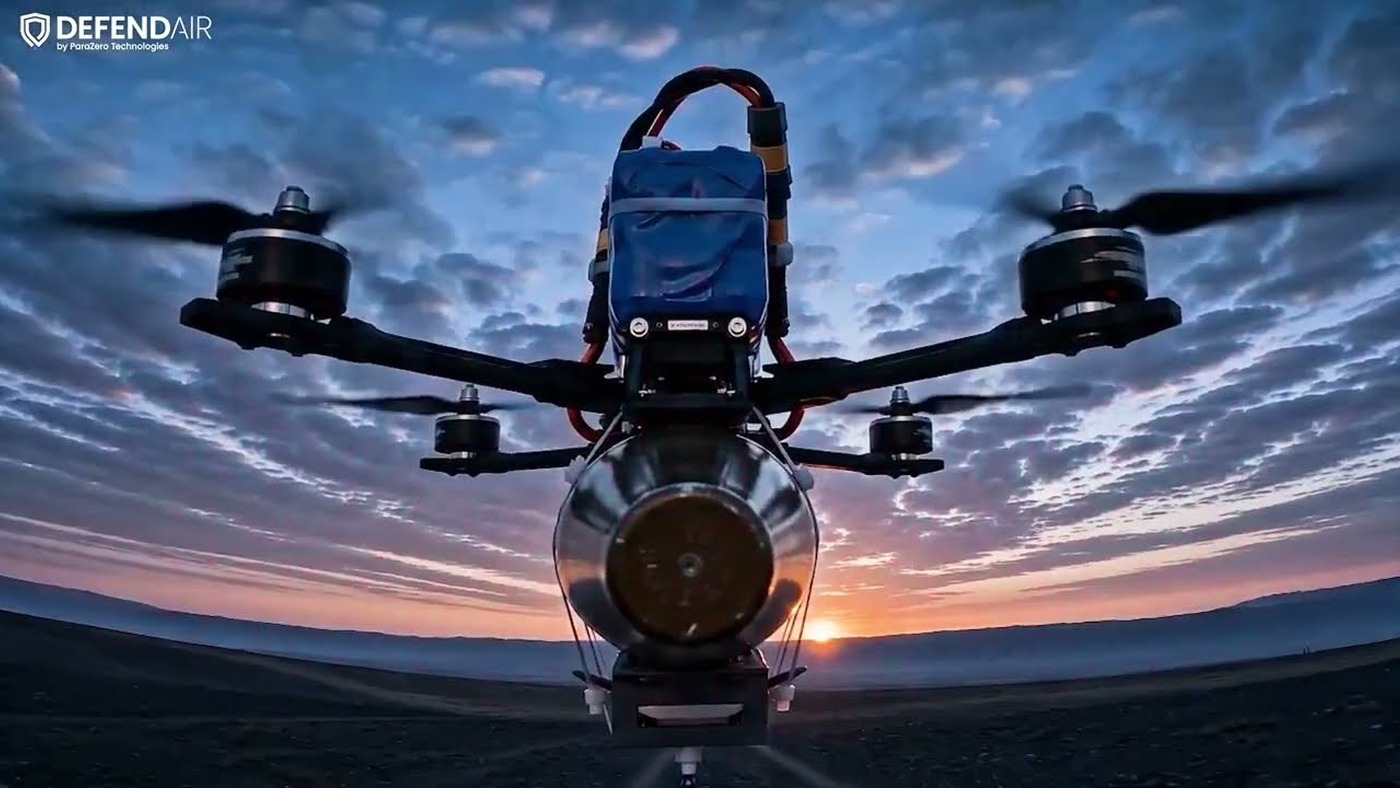
What is the ParaZero DefendAir counter-drone pod?
The ParaZero DefendAir Counter-UAS Pod is a modular, non-explosive physical interception system designed to neutralize hostile drones. It deploys a net to entangle the target drone's rotors, providing a safe "soft-kill" capability that minimizes collateral damage when protecting critical infrastructure, public venues, and sensitive urban environments.
ParaZero Technologies Ltd. (Nasdaq: PRZO) has secured a follow-on order for its DefendAir Counter-UAS (Unmanned Aerial Systems) Pods, advancing the integration of non-explosive physical interception into autonomous defense networks. The order, announced on July 21, 2026, targets the protection of high-value assets and critical infrastructure against low-cost drone threats capable of surveillance, disruption, and direct attack. The Kfar Saba, Israel based aerospace defense company, founded in 2014, specializes in autonomous safety and security solutions for manned and unmanned aircraft. Its product portfolio includes the SafeAir parachute recovery system and the DefendAir counter drone platform. This latest procurement highlights a growing operational requirement for interception methods that minimize collateral damage in sensitive environments where traditional kinetic or explosive countermeasures pose unacceptable risks to personnel and surrounding infrastructure.
The Economics of Attritable Mass and Defense
In a successful drone attack, it always come at a delicate balancing act of the cost of the defense system and the operational attack. For critical infrastructure, such as power plants, airports, and data centers, the cost of disruption can be immense, hence justifying the significant investment in robust protection measures. However, the cost effectiveness of the interception method is also a critical factor.
Traditional kinetic interceptors, such as surface to air missiles, can be prohibitively expensive, particularly when used against low cost, commercially available drones. This asymmetry in cost is a major driver for the development of more economical interception technologies. Net based systems like DefendAir offer a more favorable cost per interception ratio compared to advanced kinetic weapons. The reusable nature of the deployment platforms and the relatively low cost of the net projectiles make this approach economically viable for sustained defense operations. Additionally, the reduction in collateral damage risk translates to lower potential liability and insurance costs for the operator.
The follow on order for DefendAir Pods suggests that the customer has evaluated these economic factors and determined that the system provides a compelling return on investment. As the Counter Unmanned Aerial Systems market matures, the ability to demonstrate clear economic value, alongside operational effectiveness, will be a key differentiator for technology providers.
The Collateral Damage Constraint in Urban Environments
The real constraint in urban and critical infrastructure defense is not the ability to detect a drone, but the ability to neutralize it safely. A system that successfully destroys a hostile drone but causes secondary damage to a chemical plant or a crowded public space fails its primary mission. This dynamic creates a specific market niche for non explosive physical interceptors. While high energy lasers and advanced microwave systems are in development, net based interception provides an immediate, deployable solution that integrates with existing detection and tracking networks.
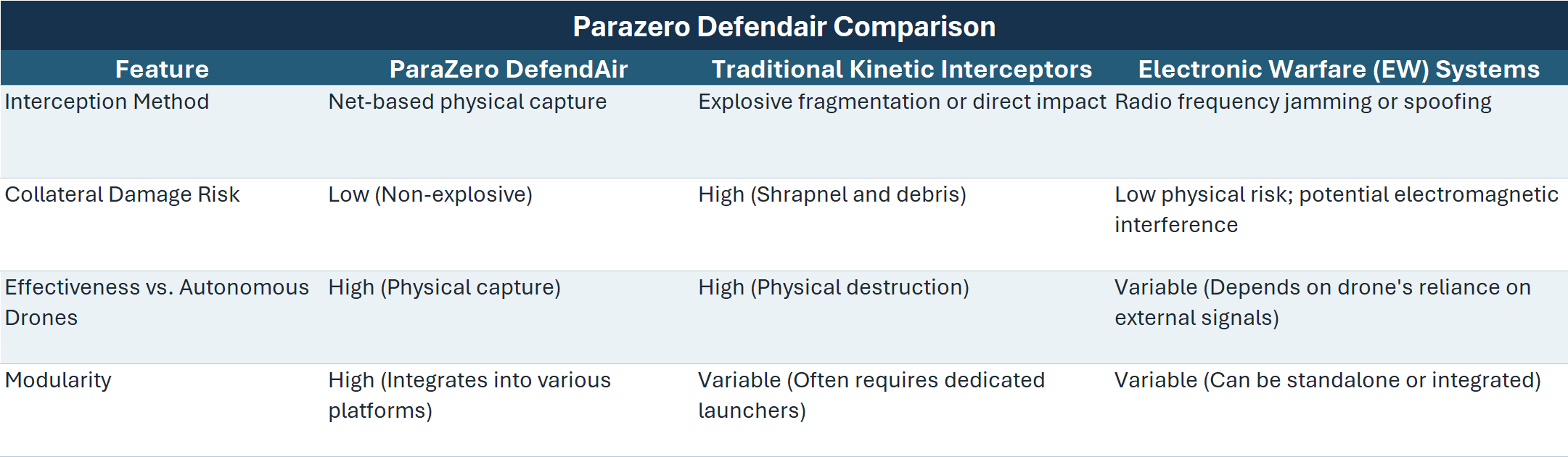
The modularity of the DefendAir Net Pod allows it to be mounted on various platforms, enhancing the flexibility of the overall defense architecture. The integration of DefendAir Pods into a broader autonomous Counter Unmanned Aerial Systems application reflects a structural shift in how critical infrastructure is defended. As drone threats become more sophisticated and accessible, relying solely on electronic warfare jamming or explosive kinetic effectors is increasingly insufficient.
Electronic warfare systems can be bypassed by autonomous drones operating without active command links, while explosive interceptors carry inherent risks in urban or industrial settings. The DefendAir approach bridges this gap by offering a "soft kill" physical effector. By deploying a net to entangle the target drone's rotors, the system neutralizes the threat without generating shrapnel or explosive overpressure. This capability is particularly relevant for protecting energy facilities, government buildings, and public venues where collateral damage must be strictly controlled.
Engineering Trade-Offs in Plain Language
To understand the importance of this technology, imagine trying to catch a fast moving bird inside a crowded glass greenhouse. If you use a shotgun, you might hit the bird, but you will definitely shatter the glass and harm the people inside. If you use a loud noise to scare it, the bird might just ignore you if it is deaf.
The DefendAir system is like throwing a specialized, targeted net that safely wraps around the bird and brings it to the ground without breaking a single pane of glass. This is exactly what critical infrastructure operators need when dealing with rogue drones near sensitive areas like power grids or crowded stadiums. The net based approach ensures that the threat is neutralized without creating a secondary disaster from falling debris or explosive shockwaves.
The Reality of Electronic Warfare Limitations
The prevailing assumption in many defense circles is that electronic warfare and signal jamming provide a comprehensive shield against drone incursions. The hard truth is that electronic warfare is rapidly losing its effectiveness against the latest generation of autonomous drones. Modern hostile drones are increasingly designed to operate without active radio frequency links to a human operator, relying instead on pre programmed waypoints and onboard optical navigation. When a drone does not need to communicate with a base station, jamming its communication frequencies accomplishes nothing. Physical interception is no longer a backup option; it is becoming the primary requirement for stopping autonomous threats that ignore electronic countermeasures.
Procurement and Deployment Implications
The Counter Unmanned Aerial Systems market is transitioning from standalone, single vendor solutions to integrated, multi layered defense systems. Procurement managers and security operators are increasingly seeking modular effectors that can plug into open architecture command and control networks. ParaZero's strategy aligns with this trend by offering the DefendAir Pod as an integratable component rather than a closed ecosystem. This approach allows customers to combine the best available radar, optical, and electronic detection systems with ParaZero's physical interception capability.
The follow on order serves as a critical proof point for this strategy. It demonstrates that operators are willing to procure specialized physical effectors to complement their existing electronic and kinetic countermeasures, building a more resilient and adaptable defense posture. The deployment of autonomous Counter Unmanned Aerial Systems represents a significant step in the evolution of infrastructure defense. As these systems become more prevalent, several key trajectories are likely to emerge.
First, the integration of multi modal sensors, including radar, optical, thermal, and acoustic systems, will enhance the accuracy and reliability of threat detection. Second, the development of more sophisticated command and control networks will enable coordinated responses to coordinated, multi drone attacks. These networks will increasingly rely on artificial intelligence to analyze sensor data, prioritize threats, and select the most appropriate interception method in real time. Third, the physical interception layer will continue to evolve, with advancements in net deployment mechanisms, autonomous tracking algorithms, and platform integration. The ability to deploy effectors from a variety of platforms, including fixed installations, mobile vehicles, and even other drones, will provide operators with greater flexibility and coverage.
Competitive Positioning in the Defense Sector
In the broader Counter Unmanned Aerial Systems market, ParaZero competes with a range of established defense contractors and specialized technology firms. Companies such as Dedrone, Fortem Technologies, and Anduril Industries offer comprehensive detection and mitigation platforms, often incorporating their own proprietary effectors.
The market is increasingly characterized by a demand for integrated solutions that can address the full spectrum of drone threats, from commercially available quadcopters to sophisticated, autonomous military systems. ParaZero's differentiation lies in its focus on the physical interception layer and its established expertise in drone safety systems. The company's SafeAir parachute technology, which enables safe flight over people and beyond visual line of sight operations, provides a foundation of reliability and regulatory compliance that translates to its Counter Unmanned Aerial Systems offerings.
This background in aviation safety informs the design of the DefendAir system, prioritizing controlled interception and minimizing secondary risks. The competitive environment is also shaped by the evolving regulatory environment surrounding drone operations and counter drone technologies. As governments and aviation authorities develop frameworks for the safe integration of drones into national airspace, the requirements for Counter Unmanned Aerial Systems are becoming more stringent. Systems that can demonstrate a high degree of safety and reliability, particularly in urban and sensitive environments, are likely to gain a competitive advantage.
Additionally, the integration of artificial intelligence and machine learning into both drones and Counter Unmanned Aerial Systems is accelerating the pace of innovation. Autonomous drones capable of navigating challenging environments without active command links pose a significant challenge to traditional electronic warfare systems. In response, Counter Unmanned Aerial Systems providers are developing more advanced detection and tracking algorithms, as well as autonomous interception capabilities.
ParaZero's approach of providing a modular, physical effector that can be integrated into broader autonomous defense networks positions the company to capitalize on these trends. By focusing on the "soft kill" interception layer, ParaZero can partner with leading detection and command and control providers to offer comprehensive solutions that meet the specific needs of critical infrastructure operators.
The Adoption Signal for Physical Interception
The transition from evaluation to follow on procurement represents a definitive adoption signal for physical interception technologies. "Protecting critical infrastructure and high value assets requires more than detection or disruption alone," said Ariel Alon, Chief Executive Officer of ParaZero Technologies. "Operators need a dependable physical interception layer capable of responding autonomously and stopping a hostile drone before it reaches the protected asset." This insight underscores the operational reality that detection without neutralization is merely observation. The follow on nature of the order indicates that the initial deployment or evaluation phase successfully demonstrated the system's viability, prompting further investment from the undisclosed customer. While the specific quantity, order value, and deployment location remain confidential, the procurement validates the operational utility of controlled interception effects.
Repeat Orders Matter More Than Prototype Claims
The continued investment in net based interception systems confirms that the defense industry is moving beyond the binary choice of electronic jamming or explosive destruction. As autonomous drones become more prevalent and capable of evading traditional countermeasures, the requirement for safe, physical neutralization in sensitive environments will only increase. The successful deployment and subsequent follow on procurement of the DefendAir system establishes a clear precedent for integrating modular, non explosive effectors into comprehensive security architectures. Operators who fail to incorporate physical interception layers will find their facilities increasingly vulnerable to threats that ignore electronic signals and operate too close to critical assets for kinetic weapons to be used safely.
This analysis synthesizes official company statements and regulatory filings regarding the procurement of autonomous defense systems, reflecting the ongoing evolution of critical infrastructure protection strategies.
Disclaimer: This article is for informational purposes only and does not constitute investment, legal, safety, or procurement advice. Readers should independently verify specifications, certification scope, pricing, availability, regulatory obligations, and operational suitability with the relevant suppliers and authorities before making decisions.