Nvidia Just Became One of Naver's Biggest Shareholders, and Korea's AI Factory Got a US$10 Billion Price Tag
Naver shares jumped more than 10 percent after disclosing Nvidia will take 7.2 million new shares at KRW 204,500, a 4.5 percent stake making it a top-three shareholder. Brookfield adds up to US$9 billion as capital partner for the GAK Sejong expansion to 200 MW by 2028 on Vera Rubin and Blackwell platforms. Framed as vendor financing with equity upside and the clearest receipt yet of the sovereign-AI buildout. Robotics angle: Naver Labs’ 1784 robotics program and the AI-factory substrate for physical AI.
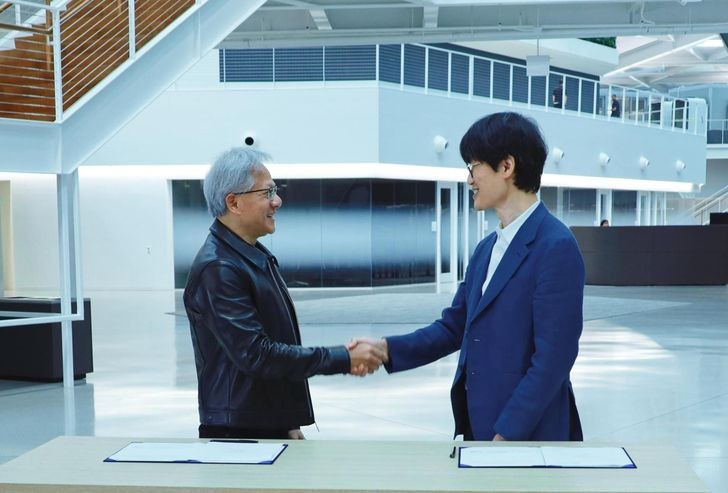
Nvidia is no longer just selling chips to South Korea. It is buying the country's AI champion. Naver disclosed on July 27 that Nvidia will acquire 7.2 million newly issued shares at KRW 204,500 apiece, a US$1.01 billion placement that hands the American chipmaker a 4.5 percent stake and a seat among the company's largest shareholders. Naver's stock jumped more than 10 percent in Seoul on the news.
The share purchase is the financing keystone of a much larger structure announced three days earlier: Nvidia, Naver, and Canadian asset manager Brookfield plan to expand Naver's GAK data centre in Sejong into what the three call Korea's national AI factory, with up to US$10 billion in total funding, of which Brookfield is prepared to provide as much as US$9 billion as capital partner. The expanded facility is slated to reach 200 megawatts of capacity by 2028, running Nvidia's Blackwell and next-generation Vera Rubin platforms.
For readers keeping score at home, the arithmetic of the past four days in Korea is remarkable. On July 24, the same day the San Francisco AI Declaration was signed, Nvidia and SK Group unveiled a separate initiative for AI data centres valued at more than US$500 billion over time. Then came the Brookfield financing, then Monday's share placement. Korea has, in less than a week, converted summit diplomacy into some of the largest committed AI infrastructure numbers anywhere outside the United States.
From Customer to Co-Owner
The structure matters as much as the size. Chipmakers routinely extend credit or take small strategic positions in customers; Nvidia has committed US$30 billion to OpenAI and US$10 billion to Anthropic in previous arrangements. But taking 4.5 percent of a publicly listed national platform company through a primary share issuance is a different instrument. It dilutes existing holders slightly, injects the cash directly onto Naver's balance sheet for data centre construction, and aligns Nvidia's equity upside with the success of Korean sovereign AI rather than with any single model or application.
The shareholder table tells the story of how unusual this is. Korea's National Pension Service holds 9.25 percent of Naver and BlackRock 6.12 percent as of the end of 2025. Nvidia now slots in just behind them, a semiconductor supplier sitting alongside the state pension fund and the world's largest asset manager on the register of the company that runs Korea's dominant search engine, its biggest commerce platform, and one of Asia's most ambitious robotics labs.
Think of it the way a landlord thinks about an anchor tenant. Nvidia could have simply sold GPUs to Naver and moved on. Instead it has bought into the building, because the building, a gigawatt-scale sovereign AI infrastructure network across Korea and overseas that Jensen Huang said in June would make Naver "10 times larger once the vision was realised," is where the recurring demand for its silicon will live for a decade.
Why a Robotics Publication Cares About a Data Centre
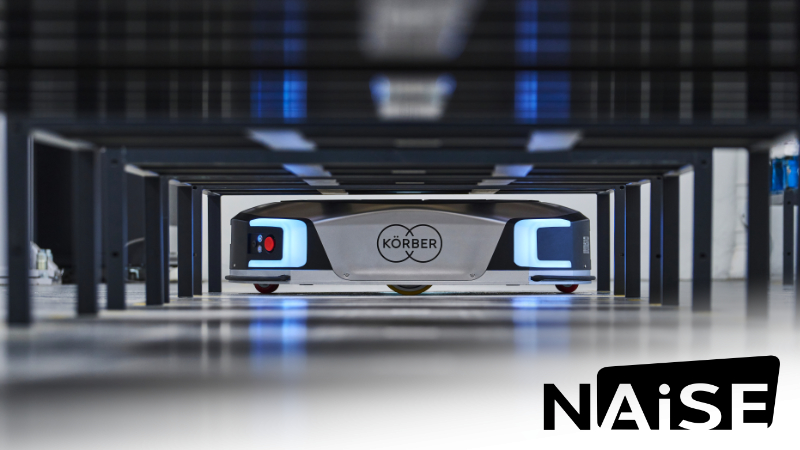
The GAK Sejong expansion is described by all three partners as an AI factory, and the phrase is doing specific work. An AI factory does not produce chatbots; it produces tokens, simulations, and trained models as industrial output, and an increasing share of that output is destined for machines that move. Naver is not a conventional hyperscaler. Its 1784 headquarters in Seongnam is the world's most densely roboticized office building, with about 100 Rookie delivery robots running on a dedicated cloud brain, robot-only elevators, and dual-armed manipulators in its labs. Naver Labs has spent years building ARC, its cloud-native robot intelligence system, on the thesis that robot brains should live in the data centre, not in the robot.
That thesis is exactly what 200 megawatts of Blackwell and Vera Rubin capacity operationalises. Training vision-language-action models, running large-scale physics simulation and serving real-time inference to fleets of physical machines are among the most compute-hungry workloads in AI. Korea's robot industry, from Rainbow Robotics under Samsung's wing to Doosan's cobots to Hyundai's Atlas program, has a compute problem that no individual robot maker can solve alone. A national AI factory is Korea's answer, and it slots directly into the physical AI pillar of the government's three AI mega projects that President Lee Jae Myung carried to San Francisco last week.
The skeptic's question deserves a straight answer: is this circular financing, Nvidia handing money to a customer so the customer can buy Nvidia chips? Partly, yes, and investors should not pretend otherwise. The US$1.01 billion will substantially return to Nvidia as GPU purchase orders, a pattern critics have flagged across Nvidia's investment portfolio. What makes the Korean structure more durable than a simple vendor-financing loop is the presence of Brookfield's US$9 billion, which is infrastructure capital underwritten against long-term utilisation contracts rather than equity speculation, and the National Pension Service sitting above Nvidia on the register with every incentive to police related-party economics. Circularity becomes a problem when demand is imaginary. Korea's demand, a government-orchestrated sovereign AI program with chaebol industrial backing, is about as contracted as AI demand gets in 2026.
The Sovereign AI Land Grab
The June agreement between Nvidia and Naver framed the ambition as gigawatt-scale AI infrastructure in Korea and overseas, targeting sovereign AI demand across the Asia-Pacific, Europe, and the Middle East. One gigawatt is roughly four times the maximum capacity of GAK Sejong, which is already Korea's largest hyperscale data centre. The 200 MW expansion announced now is the first committed tranche of that roadmap, and it positions Naver as something new: a sovereign AI general contractor that packages Nvidia silicon, its own cloud and models, and third-party infrastructure capital for governments that want AI capacity without depending entirely on American hyperscalers.
That is a direct competitive answer to the path Japan is taking with SoftBank's Stargate participation and to the Gulf states' national AI buildouts. It also explains Brookfield's appetite. Data centres with sovereign tenants and decade-long utilisation commitments look like regulated utilities, the asset class Brookfield knows best. The asset manager's press release language, expanding "Korea's National AI Factory Infrastructure," reads less like a tech deal and more like a toll-road concession, which is precisely the point.
What Changes for the Robot Economy
Three practical consequences follow for the robotics ecosystem this publication tracks. First, Korean robot developers gain a domestic training and simulation utility. The scarcest input for embodied AI teams outside the top American and Chinese labs is sustained access to frontier compute, and a 200 MW national facility with a physical AI mandate changes the local calculus for every Korean humanoid, logistics, and service-robot program. Second, Naver Labs' cloud-robotics stack becomes a strategic national asset rather than a corporate research project, and its ARC architecture, which already runs a hundred robots in one building, is the most production-tested cloud robot brain outside China. Third, the deal sharpens the emerging pattern in which compute infrastructure, not robot hardware, is where the largest cheques in physical AI are being written. The robots are becoming the cheap part.
The week's committed structures are easiest to see side by side.

There is also a signal in the timing for anyone tracking the Korea-US technology alignment. The share placement landed one trading day after the San Francisco AI Declaration, in which Seoul and Washington-aligned tech giants committed to roughly US$950 billion in cooperation. Nvidia taking direct equity in Korea's platform champion is the most concrete expression yet of that alignment, and it will not be lost on Beijing, which spent Monday accusing Washington of "AI hegemonism" and threatening countermeasures over technology probes.
The item to watch next is utilisation disclosure. National AI factories are justified by national demand, and by 2027 Naver will need to show that Korean industry, including its robot makers, is actually consuming Sejong's tokens at the scale the financing assumes. If it is, Korea will have built the template for how mid-sized technology powers stay sovereign in the AI era: not by building their own Nvidia, but by making Nvidia a shareholder in the national project. Either way, the direction of travel is unambiguous, and it is the same one this week's Kumamoto and Tokyo announcements point to: in physical AI, the balance sheet has replaced the demo as the unit of ambition.
This article is for informational purposes only and does not constitute investment advice. Readers should conduct their own research before making investment decisions.