New Tactile World Model Lets Robots Predict Contact 200 Milliseconds Early
A research team led by Spirit AI, known in Chinese as Tashi Zhihang, and four academic institutions released a force guided tactile world model called TacForeSight that lets robots predict how contact will change about 200 milliseconds before it happens. The model runs in real time at 20 hertz and reached close to 80 percent average completion across five contact rich manipulation tasks, pointing toward more reliable fine motor work on real hardware.
What Changed
A research team led by Spirit AI, known in Chinese as Tashi Zhihang, together with the National University of Singapore, Shanghai Jiao Tong University, the Institute of Automation at the Chinese Academy of Sciences, and Fudan University, published a paper introducing a force guided tactile world model called TacForeSight. The core idea is a shift from reactive feedback, where a robot only corrects after it has already touched something, to proactive foresight, where the robot predicts how contact will evolve before it happens. The work was reported on June 26, 2026 and is the team's latest step in fine manipulation, following its earlier OmniVTA visual tactile framework and OmniViTac dataset released in March.
The Capability
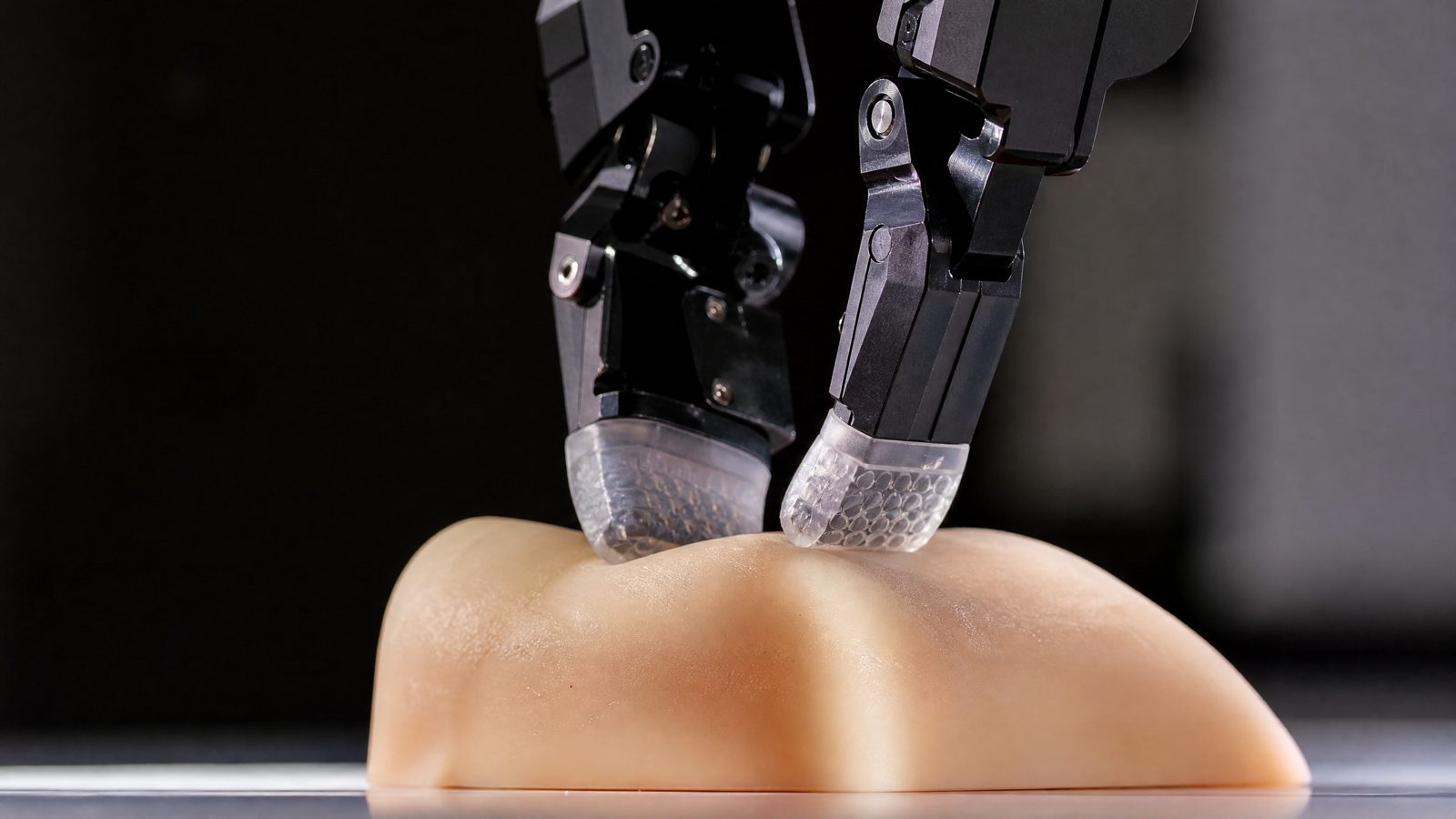
TacForeSight is built on a key observation, that wrist level force sensing and fingertip tactile sensing are not duplicate signals but signals with a clear time order. The wrist senses the overall force trend first, and the fingertips sense local contact detail shortly after, which is how a human hand adjusts mid motion. The model's core module, the force guided tactile world model, encodes two finger tactile fields into compact tactile latent variables and uses high frequency wrist force and torque signals to predict short term future tactile changes. That prediction is then fed forward into a lightweight action policy through a cross attention mechanism, so the robot plans its next move around both the current contact and the contact that is about to occur. A tactile driven adaptive gating mechanism shifts the balance between vision and touch depending on the task phase, leaning on touch during contact dense steps and on vision when the robot is away from contact.
Why It Matters
Contact is not a static state but a process that changes continuously over time, and a feedback delay of even one step is enough to cause slipping, jamming, or a dropped object during precise tasks such as wiping, card swiping, insertion, and tightening. In real robot experiments, TacForeSight reached an average completion rate near 80 percent across five standard contact tasks, outperforming pure vision models and several visual tactile force baselines. Under disturbance conditions involving changes in height, angle, and posture, it scored 90 percent, 85 percent, and 85 percent respectively, an average of 86.7 percent, which shows strong recovery from interference. Crucially, the model supports real time inference at 20 hertz, meaning it can sit inside a high frequency control loop rather than serving as an offline demonstration, and analysis showed its predicted tactile changes appeared about 200 milliseconds ahead of current tactile readings.
The Bigger Signal
The result reframes what dexterous manipulation actually requires. The advantage does not come from adding more sensors but from understanding the relationship between the sensing signals a robot already has, where force provides the global early signal, touch provides local detail, and the world model connects the two into predictable contact dynamics. For manufacturers weighing automation of delicate assembly, connector insertion, and surface finishing tasks, a lightweight model that anticipates contact and runs at control loop speed is the kind of capability that moves fine manipulation from the laboratory toward dependable production work. The trajectory from sensing the present to predicting the near future is what will separate robots that demonstrate dexterity from robots that deliver it on a real line.
Disclaimer: This article is provided for general information purposes only and does not constitute investment, financial, or commercial advice. Technical results are attributed to the cited primary source and the published research paper.
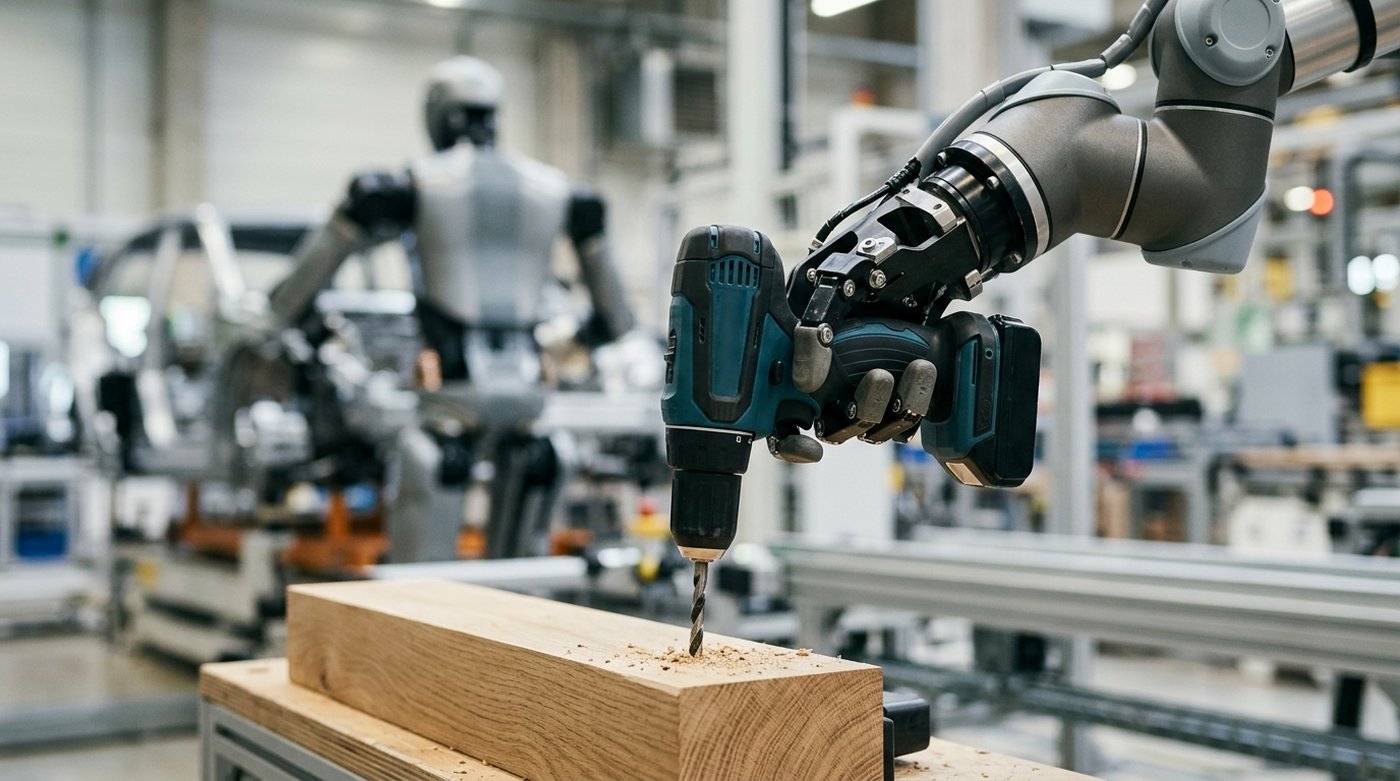
Image credit: Generated illustrative image, brand-neutral, for editorial use.
Source Evidence Note
· QbitAI (量子位), "让机器人学会预判接触:它石智航牵头四大顶尖机构发布TacForeSight," June 26, 2026. https://www.qbitai.com/2026/06/438701.html
· Paper: "TacForeSight: Force-Guided Tactile World Model for Contact-Rich Manipulation," arXiv. https://arxiv.org/pdf/2606.11184 ; Project page: https://tacforesight.github.io/ProjectPage/