Kraken Robotics reports $35 million in new orders as customers expand adoption across defense, energy, and ocean science
Kraken Robotics announced $35 million in new product orders spanning defense, offshore energy, and ocean science. The company says its portfolio is expected to represent more than 75 percent of consolidated 2026 revenue.
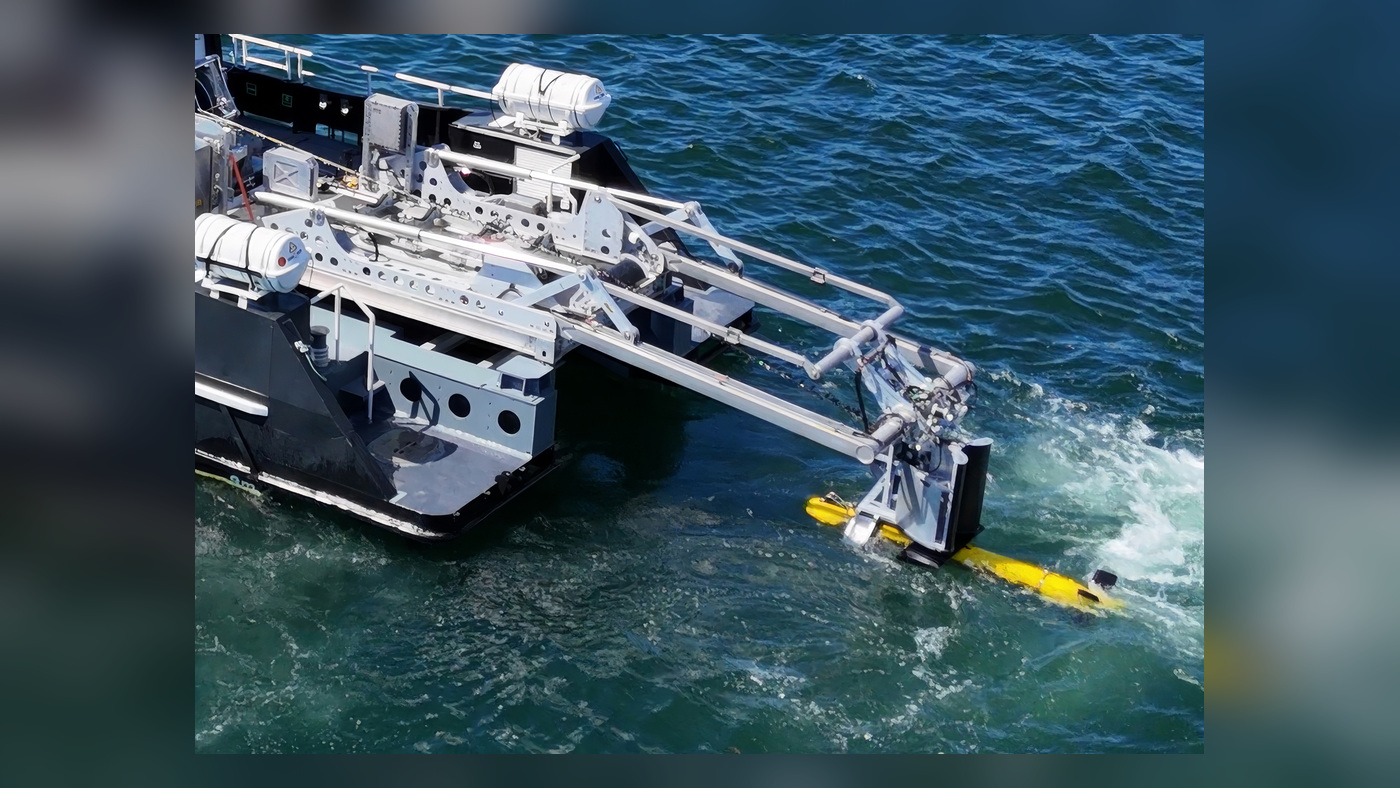
Kraken Robotics announced on July 20, 2026 that it secured $35 million in new product orders from maritime defence, offshore energy, and ocean science customers [1]. Kraken framed the update as evidence of demand across multiple mission layers, including navigation, sensing, power, and monitoring, rather than for a single standalone product.
Headquartered in Mount Pearl, Newfoundland and Labrador, Canada, Kraken develops marine sensors, subsea power systems, software, and robotic technologies for difficult underwater environments [2]. Chief Executive Officer Greg Reid said the company's broader portfolio is expected to generate more than 75 percent of consolidated 2026 revenue [1].
The booking sits within a larger year to date order picture. Kraken said it and Covelya had announced $327 million in combined product orders during 2026. The July 20 release does not divide that combined figure by company or product category [1].
Order mix spans sonar, navigation, and monitoring
The new orders fall into four connected areas. The first is sonar, including Kraken synthetic aperture sonar and multi aperture sonar. These systems create detailed underwater imagery and are used in missions such as mine countermeasures, intelligence, surveillance, reconnaissance, and support for anti submarine operations [1].
The second area is navigation and positioning. Underwater vehicles cannot rely on satellite navigation once they are submerged, so they need other ways to calculate position, speed, depth, and movement. The portfolio includes SPRINT Nav, which combines Doppler velocity logging, pressure sensing, and inertial navigation in one system. Kraken says this reduces system complexity while providing position, velocity, and altitude data for underwater and surface platforms [1].
The third area is monitoring technology from Covelya. These systems extend the portfolio beyond detecting and imaging objects. They support applications that require persistent measurement, communications, and environmental data collection. The fourth area is Kraken sonar technology, which can be deployed on crewed vessels, autonomous underwater vehicles, uncrewed surface vessels, remotely operated vehicles, and unattended seafloor sensors [1].
This grouping makes the order announcement easier to interpret. Customers are not simply buying a collection of unrelated devices. They are purchasing technologies that address different stages of the same operational problem: knowing where a platform is, seeing what is around it, collecting reliable data, and supporting a mission over time. The release does not say that every customer bought a complete integrated stack, but the order mix reflects Kraken’s strategy of selling a broader subsea portfolio [1].
Why integration matters underwater
An underwater vehicle does not complete a mission with sonar alone. It must navigate without continuous access to satellite signals, carry enough power, avoid hazards, communicate, and turn sensor readings into usable information. When those functions come from unrelated suppliers, the buyer or system integrator must make the interfaces, data formats, power requirements, and support arrangements work together.
An integrated portfolio can reduce some of that coordination burden. The practical advantage is not that one product replaces every other product. It is the sensing, navigation, power, monitoring and analytics layers that are planned as parts of one operating system. For defence users, this can affect how quickly a capability moves from laboratory testing to a vessel or autonomous platform. For offshore operators, it can affect how consistent data is gathered across surveying, construction, inspection, maintenance and environmental monitoring.
Kraken’s July 20 update is therefore more useful as a signal of portfolio adoption than as a product launch. The company is showing demand across several technical layers and across three customer groups. That distinction is important because marine robotics contracts are often won through integration, qualification, and support, not through a single headline specification.
Adoption signals beyond the order value
The strongest adoption evidence in the release comes from existing integrations and deployments. Kraken said its products are integrated, or are being integrated, across more than 30 autonomous underwater vehicle platforms worldwide [1].
The Sentinel intruder detection sonar provides another field indicator. Kraken said Sentinel is used at hundreds of critical infrastructure sites, including power plants, liquefied natural gas facilities, desalination plants, and other waterside properties. The system automatically detects, classifies, and tracks subsea threats such as divers, swimmer delivery vehicles, and autonomous underwater vehicles [1]. These installations give the company an operational reference base in port and harbour security, although the July 20 release does not identify individual sites or customers.
Kraken’s other product, SeaPower battery customers range from early prototype programs to full commercial production. That range is useful because it shows different stages of adoption. Prototype use indicates technical evaluation. Full production indicates that at least some customers have moved beyond trials into repeated procurement. The release does not provide unit volumes, prices, or customer names, so the scale of each program remains unclear [1].
Defence demand spans more than one vehicle type
The defence opportunity covers both crewed and uncrewed platforms. Synthetic aperture sonar and multi aperture sonar are being integrated into autonomous underwater vehicles for mine countermeasures, intelligence, surveillance, reconnaissance, and support for anti submarine operations. Kraken identifies demand across North America, the United Kingdom, Europe, the Middle East, and Asia Pacific [1].
KATFISH, a Kraken system aimed at mine countermeasures and monitoring critical underwater infrastructure, is another example. The company said its opportunity pipeline has recently expanded into Asia Pacific after activity in North America, Europe, and the Middle East. An opportunity pipeline is not the same as a signed order, however. It indicates where the company sees potential future demand, not guaranteed revenue [1].
Two other products illustrate how the portfolio supports safer movement. Vigilant is a forward looking sonar designed to detect collision hazards. Kraken says it can identify hazards at ranges of up to 1,500 metres and can operate independently or connect to a vessel’s navigation and bridge systems. SPRINT Nav combines several navigation functions in one system. These are company reported capabilities, and procurement teams would still validate performance for their own vessels, operating depths, speeds, and mission conditions [1].
Offshore energy creates a longer deployment cycle
The offshore energy examples show why marine robotics adoption cannot be judged only by the date an order is announced. On demand ocean bottom nodes are an example of this timeline. These seabed systems collect seismic data and transmit it for retrieval by remotely operated or autonomous underwater vehicles. Commercial qualification began at the Petrobras operated Mero field in early 2026, and Kraken expects full commercial production in 2027 [1].
That timeline shows the gap between technical capability and large scale use. A system may first need qualification in a real field, followed by operational approval, production planning, installation, and support. Kraken estimates that a full offshore field could require hundreds or thousands of nodes, but the July 20 release presents that as potential deployment scale rather than a confirmed order quantity [1].
Kraken also points to environmental baseline monitoring for the Northern Endurance Partnership at what it identifies as the United Kingdom’s first offshore carbon capture and storage site. The monitoring system uses seabed landers and environmental sensors to help verify conditions around the storage site. This application broadens the commercial case for subsea robotics beyond exploration and defence, linking monitoring technology to long duration environmental assurance [1].
The procurement questions behind the announcement
For buyers, the order value is only the starting point. The next questions concern which platform receives each product, when equipment will be delivered, what integration work is required, how acceptance testing will be performed, and what support is available after deployment. The July 20 release does not answer those contract specific questions.
Cost visibility is also limited. Buyers can see the aggregate value of the new orders, but not the price of an individual sonar, navigation system, monitoring package, or battery installation. Lifecycle costs, software support, training, spare parts, and future upgrades are not disclosed. Those details matter because underwater systems often operate in environments where maintenance access is difficult and downtime is expensive.
Real world evidence is stronger in some areas than others. Sentinel has a reported installed base at hundreds of sites, and Kraken’s products are connected to more than 30 autonomous underwater vehicle platforms. The Mero program has entered commercial qualification. These are meaningful adoption markers, but they are not interchangeable. An installed security system, a platform integration, and a field qualification represent different levels of commercial and operational maturity [1].
Scalability depends on whether Kraken and its operating companies can repeat these integrations across platforms and regions. The broad geographic opportunity set and the move from battery prototypes to full production support the scalability case. The main friction points are likely to be qualification, interface management, manufacturing schedules, field support, and customer acceptance. The release provides evidence that Kraken is working through several of these stages, but it does not establish that every product line has reached the same level of maturity.
The hard truth about marine robotics adoption
The common mistake is to treat marine robotics as a contest for the best individual sensor. Sensor performance matters, but it does not by itself create a deployable system. A vehicle also needs navigation, power, communications, data processing, integration, testing, maintenance, and a clear operating procedure. A strong component can still fail to deliver value if the rest of the system is difficult to integrate or support.
Kraken’s order update is notable because it reflects demand across several of those layers. The company is not presenting one new device as the answer to every mission. It is building a portfolio that can serve different platforms and customer groups, while adding Covelya’s navigation, positioning, and monitoring capabilities to its existing sonar, imaging, and subsea power technologies [1].
That does not remove execution risk. The company must still deliver equipment, complete integrations, support customers, and convert orders into recognized revenue. Capability claims such as Vigilant’s stated detection range will still be tested against real operating conditions. Forecasts for 2026 revenue contribution and 2027 commercial production remain forward looking statements from management [1].
A clearer reading of the order update
The most grounded conclusion is that Kraken has reported meaningful demand for an expanded marine technology portfolio. The $35 million in new orders is important, but the more useful signal is the breadth of technologies and applications behind it. Defence customers are buying sonar and navigation capabilities, while offshore energy and ocean science customers are adopting monitoring and data collection systems for long duration subsea work [1].
Kraken still leaves important commercial details undisclosed, including customer identities, product level pricing, margins, and delivery schedules. Those gaps prevent a precise assessment of near term revenue and program economics. Even so, the combination of new bookings, more than 30 autonomous underwater vehicle integrations, hundreds of Sentinel installations, and active offshore qualification gives the announcement more substance than a simple order headline [1].
The clearest takeaway is that subsea robotics adoption is moving toward systems that connect sensing, navigation, power, monitoring, and data. Kraken’s July 20 update shows that customers are placing orders across that stack, while the next test will be how consistently the company converts those orders into delivered, supported, and operational systems.
References:
[2] Kraken Robotics, “About Kraken Robotics.”
Disclaimer: The information provided in this article is for informational purposes only and should not be construed as financial, investment, or strategic advice. RobotAIGeek does not endorse any specific company or product mentioned.