Johnson & Johnson Wins FDA Authorization for OTTAVA, the First Table-Integrated Surgical Robot
The United States Food and Drug Administration has granted De Novo authorization to Johnson & Johnson's OTTAVA Robotic Surgical System, the first soft tissue surgical robot with arms built directly into the operating table, clearing it for ten general surgery procedures and setting up the first serious architectural challenge to Intuitive Surgical's long-standing dominance.
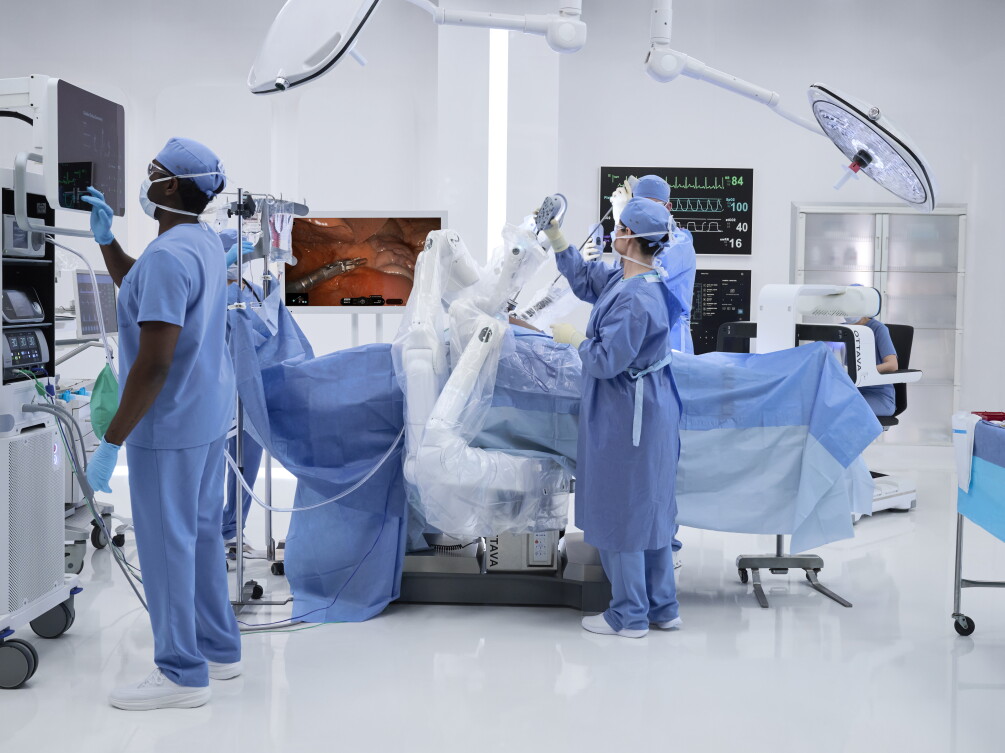
Johnson & Johnson has received De Novo marketing authorization from the United States Food and Drug Administration (FDA) for its OTTAVA Robotic Surgical System, the first soft tissue surgical robot in the world that integrates its robotic arms directly into the operating table. The company announced the authorization on July 22, 2026 from its New Brunswick, New Jersey headquarters. For hospital procurement teams and surgical directors, this is the most consequential entry into robotic general surgery in more than two decades, because it changes the physical and economic assumptions that operating rooms have been built around since robotic surgery first scaled.
What the FDA Actually Authorized
The FDA granted OTTAVA a De Novo authorization, the pathway used for novel devices that have no direct predicate on the market. It is the agency's formal acknowledgment that a table-integrated soft tissue robot is a new category of device rather than an incremental variant of existing boom-mounted or cart-mounted systems. The authorization covers multiple upper-abdominal general surgery procedures. The cleared list spans bariatric operations such as Roux-en-Y gastric bypass and gastric sleeve, organ removals including gastrectomy, cholecystectomy, splenectomy, and appendectomy, bowel work in the form of small intestine resection and adhesion release, and reflux-related repairs covering fundoplication and hiatal hernia. A United States clinical trial for inguinal hernia procedures is ongoing, and Johnson & Johnson has stated it will pursue additional indications and regulatory jurisdictions over time.
Johnson & Johnson plans a staged commercial launch with select customers in the United States rather than an immediate broad rollout. The company has scheduled an investor call for August 3, 2026, where analysts expect detail on pricing structure, installation timelines, and the service model.
How Is OTTAVA Different From Existing Surgical Robots?
OTTAVA is the first authorized soft tissue surgical robot whose four arms fold into and deploy from the operating table itself, rather than from a separate boom or cart. Johnson & Johnson states the design occupies 30 to 50 percent less operating room space than traditional configurations. The FDA authorized it on July 22, 2026 for ten general surgery procedures in the upper abdomen.
That direct answer conceals a deeper engineering choice worth understanding. Because the arms and table are one machine, OTTAVA can execute what the company calls twin motion, the synchronized movement of table and arms together. In a conventional robotic procedure, repositioning a patient mid-surgery often requires undocking instruments, moving the table, and redocking, a sequence that consumes operating room minutes and introduces workflow risk. Synchronized motion allows the surgical team to reposition the patient and reach multiple anatomical quadrants with limited intraoperative adjustment. The system also ships with automated pre-defined procedural poses that simplify setup and breakdown, two of the least glamorous but most time-consuming phases of robotic surgery.
The instrument set was designed for the platform rather than adapted to it. Johnson & Johnson highlights a two-in-one needle driver intended to reduce unintended suture cutting and monopolar curved scissors validated across thousands of test cuts. The system connects to Polyphonic, the company's secure digital ecosystem, which positions every OTTAVA installation as a node in a data network rather than a standalone machine.
The Company Behind the Machine
Johnson & Johnson is not a startup that needs an introduction, but its surgical robotics history deserves one because it explains why this authorization took so long and why the company is being deliberate now. The healthcare group, headquartered in New Brunswick, New Jersey, folded its Auris Health acquisition, its Verb Surgical joint venture with Google's Verily, and its Ethicon instruments franchise into a single MedTech surgery strategy over the past several years. OTTAVA's development timeline slipped repeatedly, including a full redesign cycle, before the company submitted to the FDA. Tim Schmid, the executive vice president who chairs the MedTech business, framed the authorization as the start of a new category of surgical robotics rather than a catch-up product, and the De Novo pathway lends that framing regulatory substance.
Why Procurement Teams Should Care About Architecture
Operating room space is one of the most expensive kinds of real estate a hospital owns. A conventional robotic surgery suite must accommodate the patient cart, the surgeon console, the vision cart, and circulation space for the clinical team. Hospitals frequently decline robotic programs not because of the capital cost of the robot but because their operating rooms physically cannot host one. A system that folds into the table and claims a 30 to 50 percent smaller footprint changes the eligibility math for smaller hospitals, ambulatory surgery centers, and space-constrained urban facilities.
The footprint claim also reframes the total cost conversation. When a robotic system blocks an operating room from being used for non-robotic cases, the opportunity cost is carried by every procedure that room cannot host. A table-integrated system that remains a functional operating table when the arms are stowed converts a dedicated robotic suite back into a general-purpose room. For automation buyers, that is the difference between a machine that consumes capacity and a machine that flexes with demand.
The Competitive Field Just Changed Shape
Intuitive Surgical has dominated soft tissue robotic surgery since the da Vinci system was cleared in 2000, and it holds an installed base measured in the thousands of systems with roughly 80 percent of the market. Its fifth-generation platform continues to set the benchmark for instrument variety and surgeon familiarity. Medtronic's Hugo system received FDA clearance for urologic procedures in 2025 and competes on modularity and cost. Asensus Surgical and CMR Surgical hold smaller positions with distinct approaches to digital laparoscopy and portability.
OTTAVA enters this field with a different thesis: that the next competitive axis is not instrument count or console ergonomics but operating room integration and data connectivity. None of the incumbent platforms can retrofit table integration onto their existing architectures without a ground-up redesign. If hospitals validate the workflow benefits, Johnson & Johnson will have secured a structural advantage that cannot be quickly copied. The company is also arriving with an ecosystem argument: its Ethicon instruments, its surgeon education infrastructure, and its Polyphonic digital platform give it commercial relationships in nearly every operating room that Intuitive does not fully own.
The timing carries additional weight because the surgical robotics sector is consolidating. Vicarious Surgical, a United States developer that raised roughly US$300 million and went public through a special purpose acquisition company in 2021, has entered bankruptcy proceedings this month, a reminder that capital intensity in this category eliminates undercapitalized challengers. The field is narrowing to companies that can fund decade-long development cycles, and OTTAVA's authorization confirms that the surviving competition will be between industrial giants.
Hard Truth: Authorization Is Not Adoption
The uncomfortable reality that most first-day coverage skips is that regulatory authorization is the cheapest milestone in surgical robotics. The expensive part is what follows: training thousands of surgeons who have decades of muscle memory on a competitor's console, building a field service organization that can guarantee uptime for a machine bolted into the operating room's most critical piece of furniture, and generating the peer-reviewed clinical evidence that hospital value analysis committees demand before approving capital requests. Intuitive's real moat is not its hardware; it is twenty-five years of accumulated surgeon training, clinical literature, and service infrastructure. Johnson & Johnson's staged launch with select customers is a tacit acknowledgment that OTTAVA must earn its evidence base one hospital at a time. Buyers evaluating early adoption should demand clarity on instrument pricing, service level commitments, and table serviceability, because a fault in a table-integrated system could take both the robot and the room offline simultaneously.
Strategic Implications for Buyers and the Industry
The quotable version of this development is simple: the surgical robot has stopped being a machine you put in the operating room and started being the operating room itself. That shift will pressure every competitor to articulate an integration story, and it will push hospital capital planning toward platform decisions rather than device decisions.
For hospital systems, the near-term implication is negotiating leverage. A credible second supplier at the premium end of soft tissue robotics gives procurement teams an alternative in a market that has functioned as a near-monopoly. Even institutions with no intention of switching platforms can use OTTAVA's arrival to negotiate service and instrument pricing with their incumbent vendor. For ambulatory surgery centers, the smaller footprint opens a category of facility that robotic surgery has largely bypassed. For the robotics industry beyond healthcare, OTTAVA demonstrates a pattern worth watching: the highest-value robotics deployments increasingly embed the robot into existing infrastructure rather than adding it as a separate machine, a lesson that applies as much to warehouses and factories as to operating rooms.
Johnson & Johnson still must convert a regulatory milestone into surgical volume, and that contest will play out over years, not quarters. But as of July 22, 2026, robotic surgery has a genuine architectural rivalry for the first time in a generation, and hospitals will be the beneficiaries of the competition.
This analysis synthesizes official company statements, regulatory records, and public market activity available as of July 23, 2026.
Disclaimer: This article is for informational purposes only and does not constitute investment, procurement, legal, or professional advice. Product capabilities, pricing, timelines, and company plans described here are based on public statements and may change without notice. Readers should verify current details directly with the companies mentioned before making business decisions.