Japan Took a Chinese Robot Apart. What It Found Inside Rewrote the Scoreboard
Nikkei xTECH published a filmed teardown of Unitree's G1 humanoid on July 23, in which Japanese engineers disassembled the RMB85,000 (about US$11,900) robot and concluded that closing the gap with China in humanoids in the short term is probably not realistic. Chinese state media amplified the verdict within 48 hours, with CCTV News and Global Times pushing the story worldwide by July 26. The engineering findings, from four-in-one joint modules to hidden wiring, matter more than the theater, and one detail cuts both ways: the analysis points to Japanese components inside.
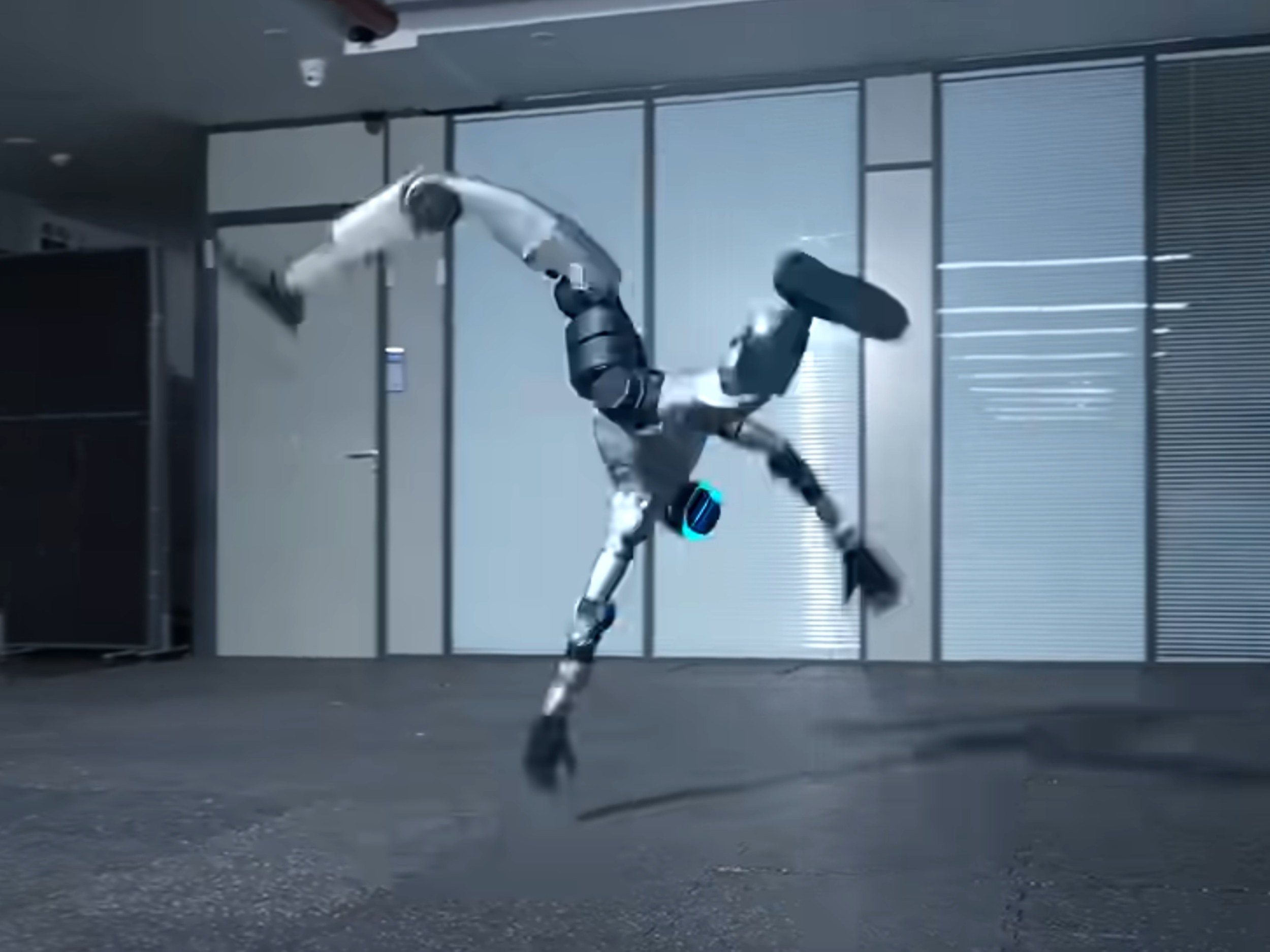
Reverse engineering used to flow in one direction across the East China Sea. For half a century, Chinese engineers bought Japanese machines, took them apart, and studied how to catch up. On July 23, Nikkei xTECH, the technology arm of Japan's most influential business publisher, released a filmed teardown that formalizes the reversal: a team of Japanese engineers disassembling a Chinese humanoid, admiring what they found, and concluding on camera that Japan is the one now facing an unrealistic catch-up problem.
The machine on the bench was Unitree's G1, the compact humanoid from the Hangzhou company that has become the global reference point for low-cost legged robots, priced from RMB85,000, roughly US$11,900, in its base configuration. According to the teardown coverage relayed by China's state broadcaster CCTV News on July 25, the Japanese team concluded that Chinese robot development has clearly moved beyond the stage of machines built merely for demonstration, and that for Japan to narrow the gap with China in humanoids within a short time is, in their words, probably not realistic. Within another day, Global Times was pushing subtitled clips to international audiences, converting an engineering exercise into a geopolitical scoreboard.
The propaganda layer is real and worth discounting. CCTV does not amplify foreign engineering videos out of scholarly interest, and the 48-hour pipeline from a Tokyo lab bench to Beijing's international broadcasting apparatus shows how quickly technical content now gets conscripted into national narratives. The engineering observations underneath the theater are not diminished by it, though, and they are what procurement teams and competing manufacturers should actually study, because they were made by people with screwdrivers rather than talking points.
What the screwdrivers actually found
The details that impressed the Japanese team, as reported across the teardown's Chinese and Japanese coverage, are unglamorous and telling. Screws throughout the machine turned with unusual smoothness, a mundane observation that in precision manufacturing signals consistent machining tolerances and disciplined quality control across suppliers. The battery achieved high output from a strikingly small volume. Most consequentially, the G1's joints integrate motor, reducer, encoder, and driver into single four-in-one quasi-direct-drive modules, with power and signal lines routed through the hollow center of each joint axis so that no wiring is exposed on the robot's exterior, and the linkage from the lower leg to the foot reproduces the compound motion of a human ankle. One engineer's reported reaction: this design approach would be very hard for us to imitate.
For readers new to the company, Unitree Robotics is headquartered in Hangzhou, in China's Zhejiang province, and built its business on quadruped robots before expanding into humanoids. Its core technology is low-cost, high-torque electric actuation, the joint modules the Japanese team singled out, manufactured at volumes no Western or Japanese rival matches. Its market niche is the price floor of legged robotics: machines cheap enough for universities, developers, and now entertainment and inspection customers to buy the way they once bought industrial PCs. The company's G1 has appeared everywhere from the Spring Festival Gala to a Nature-published demonstration of remote-operated surgery, and its registration for a Shanghai STAR Market initial public offering, targeting roughly RMB4.2 billion, about US$590 million, became effective this month.
The verdict embedded in those observations is about product philosophy rather than any single technology. What the team described is not a laboratory showpiece stuffed with expensive components to impress investors, but a machine engineered from the first screw for mass production, cost reduction and consumer-level pricing. That distinction is the entire story of the last three years of Chinese robotics. Unitree, founded in 2016 by engineer Wang Xingxing and now preparing a Shanghai STAR Market listing, shipped more than 5,500 general-purpose humanoids in 2025 by treating the humanoid as a manufacturable product rather than a research demonstration, supported by a Yangtze Delta supply cluster in which most core components sit within a few hours of the assembly line.
There is a supply-chain arithmetic behind the Japanese team's pessimism. Industry analyses circulating with the teardown coverage estimate that a humanoid built outside the Chinese supply chain costs on the order of US$130,000, while plugging into Chinese component networks drops the figure to roughly US$30,000. Whether or not those exact numbers hold for every design, the direction is undisputed by anyone who has priced actuators in both markets and it explains why the engineers framed the gap as structural rather than technical. Japan is not short of robotics talent; it is short of a domestic customer base and component ecosystem that lets a company iterate a US$12,000 humanoid at volume.
The detail that complicates the nationalism
Buried in the technical commentary around the video is a finding that both Tokyo and Beijing's framings conveniently underplay: analysts who examined the teardown noted Japanese-made battery cells, attributed to Murata Manufacturing, inside the G1. The machine that supposedly proves Japan's defeat runs partly on Japanese components, just as Japanese industry retains its depth in harmonic reducers, where Harmonic Drive Systems still sets the global standard, and in specialty sensors. The honest reading of the teardown is not that Japan lost robotics, but that the two countries now occupy different layers of the same machine: Japan supplies irreplaceable components and precision subsystems, while China owns the integration, the cost curve and the finished product.
The teardown also lands on a national nerve that predates Unitree. Japan invented the modern humanoid category with Honda's ASIMO and Sony's QRIO, machines decades ahead of their time that never became products, because their makers optimized for engineering perfection over manufacturable cost. ASIMO retired without a commercial successor, and the institutional memory of that program is precisely why the xTECH verdict stings: the engineers were not admiring an invention Japan missed, but an industrialization Japan pioneered the research for and then declined to fund into a business. At RoboCup 2026 in Korea this month, the tournament Japan helped found, more than seventy percent of competing humanoids were Chinese; Japan fielded a single mid-size league team.
The commercial behavior of Japanese firms already reflects that reality. GMO Internet Group signed in June as Unitree's official Japanese distributor and built a physical AI research base in Shibuya to test Chinese hardware in airport, logistics, and security scenarios. Nikkei itself, having torn down Unitree's Go2 quadruped in 2025, is selling its full G1 analysis as a paid corporate report with roughly 180 component photographs, effectively monetizing Chinese hardware insight for Japanese engineering departments. When your national business press builds a product line out of reverse engineering a competitor's robot, the market has already told you who is setting the reference design.
The teardown-industrial complex around the G1 is itself a signal. This is at least the third major public disassembly of the robot in eighteen months, after Chinese brokerage analyses and the American engineering firm Munro & Associates' widely viewed session, whose founder Sandy Munro predicted robot volumes in the millions of units. Companies do not queue up to dissect marginal products; the G1 has become the industry's reference skeleton, the machine every actuator vendor, insurer, and rival design team measures against, a role the Toyota Corolla once played for automotive teardowns.
What a buyer should do with a verdict like this
For automation buyers, the teardown converts a marketing claim into inspectable evidence. The claim that Chinese humanoids are production-engineered rather than demo-engineered now comes with photographs of joint modules and wiring channels, which changes the due-diligence conversation for anyone evaluating a G1-class platform for research, inspection, or light-duty tasks. It also sharpens the sourcing question that Western and Japanese buyers increasingly face: the cost advantage of the Chinese supply chain is real, but so is the concentration risk of standardizing on hardware whose component base, firmware and export treatment sit inside an intensifying technology rivalry.
There is a second-order effect worth pricing in as well. Teardowns of this prominence compress the industry's imitation cycle. Every actuator startup from Boston to Pune now has photographic documentation of the joint architecture that a US$12,000 production humanoid uses, and history suggests the four-in-one module will be a standard catalog item from third-party suppliers within two product generations. That commoditization helps buyers and hurts every incumbent whose margin depends on proprietary joint design, including, eventually, Unitree itself.
A skeptic should also resist the teardown's implicit determinism. A US$12,000 robot that disassembles beautifully is still not a robot with a validated payback in a customer's facility, and China's humanoid champions have yet to publish the utilization and reliability data that would prove fleets earn their keep. Japanese engineers conceding the integration gap says nothing about the software, autonomy, and deployment layers where the race remains open, where American model builders currently lead, and where Japan's own strengths in reliability engineering could yet matter more than joint packaging. The gap that was conceded is specific: cost-engineered humanoid hardware at consumer prices.
Still, the image deserves its moment, because it is quotable in a way supply-chain statistics never are: the country that taught the world to fear its teardowns just published one of a Chinese robot and the conclusion inside was surrender on hardware cost. The next chapter is not about who can build the machine. It is about who can make it useful and that contest has barely started.
Disclaimer: This article is for general information purposes only and does not constitute investment, legal, or procurement advice. Readers should verify details with primary sources before making business decisions.