iRobot's Roomba Duo Is a Concept, Not Yet a Product
iRobot unveiled the two-robot Roomba Duo concept at IFA 2026 with no price or launch date, betting on a new mechanical answer to floor-care's access gap.

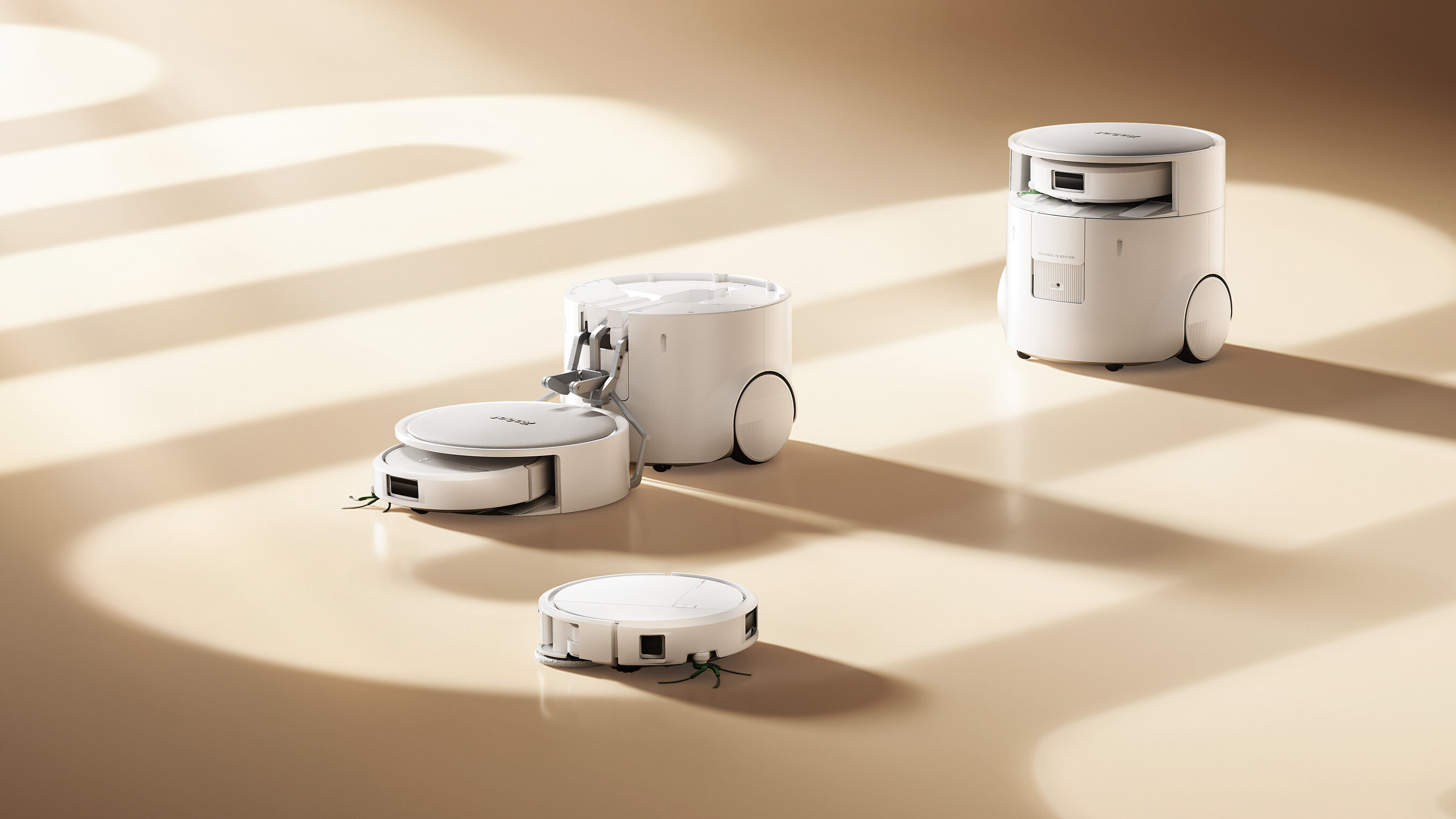
iRobot used its IFA 2026 booth to show a robot vacuum that cannot yet be bought, will not be sold this year, and comes with no announced price. The Roomba Duo, unveiled September 4 at Messe Berlin and on display through September 8, pairs a full-size vacuum-and-mop robot with an ultra-thin companion unit that the main robot physically carries and deploys into spaces it cannot reach on its own. iRobot has been explicit that Duo is a concept, not a product, and that distinction is the entire reason the announcement is worth taking seriously rather than dismissing.
Bedford, Massachusetts-based iRobot invented the consumer robot vacuum category with the original Roomba in 2002 and has spent the years since fending off faster-moving, lower-priced Chinese competitors that now dominate large parts of the global floor-care market. Showing a concept rather than a shipping product at a major consumer electronics show is, for a company under that kind of competitive pressure, as much a statement about where iRobot believes the category is headed as it is a specific product tease.
A Robot That Carries Its Own Backup
The Duo's core idea is mechanical delegation. The main unit vacuums and steam-mops using a 60-millimeter PowerSpin Max roller mop that applies 46 newtons of cleaning pressure, standard territory for iRobot's current flagship lineup. What is new is the companion robot: an 8.4-centimeter-tall disc built specifically to fit under furniture and through gaps the main unit is physically too large to enter. When the main robot's dual-line LiDAR and PrecisionVision AI system detect a space it cannot access, a mechanical arm lowers the companion unit to the floor, lets it clean the inaccessible area, and later retrieves it. Both robots share a single AutoWash dock that handles mop washing and debris collection for the pair.
The mechanism matters more than the specs. Every robot-vacuum maker has spent a decade optimizing suction, mapping, and obstacle avoidance on a single chassis, and those gains have mostly plateaued into marginal year-over-year improvements. A two-robot system that solves the access problem by physically deploying a second, differently shaped robot rather than redesigning one robot's dimensions is a genuinely different approach to a problem the entire category has quietly tolerated for years: the space under a low sofa or between kitchen cabinet toe-kicks that no single vacuum, however smart, can physically enter.
Why "Concept" Is Doing a Lot of Work in This Announcement
iRobot's own materials state plainly that Duo has no announced pricing, no confirmed launch timeline, and no partnership details attached to it. That is a meaningfully different category of announcement than a product launch with a ship date, and buyers, retailers, and competitors should read it accordingly. A concept reveal at a trade show typically serves one or more of three purposes: gauging public and press reaction before committing manufacturing resources, staking a technical claim ahead of competitors who might be working on something similar, or reassuring investors and retail partners that a company under competitive pressure still has meaningful engineering ideas in the pipeline. iRobot's public financial position, having spent recent years managing cost cuts and a collapsed acquisition deal, makes the third motivation plausible alongside the first two.
None of that makes the underlying mechanical idea less real or less interesting. Dual-robot delegation, one unit handling general coverage and a second, differently shaped unit handling access-constrained spaces, is a legitimate engineering direction, and iRobot showing a working prototype rather than a rendering suggests the concept has cleared at least an internal proof-of-concept stage. It simply means nobody should treat Duo as a near-term purchasing option, and retailers or fleet buyers asking iRobot for a delivery timeline this week are asking a question the company has not yet answered publicly.
What This Signals for the Wider Floor-Care Category
iRobot is not showing this concept in a vacuum, so to speak. Chinese floor-care brands have spent the past three years compressing the technology gap that once separated premium robot vacuums from budget ones, adding LiDAR mapping, self-emptying docks, and mop-washing stations to increasingly affordable price tiers. A category that once differentiated on suction power and mapping accuracy has largely commoditized those features, which is exactly the environment in which a company needs a genuinely new mechanical idea, rather than an incremental spec bump, to justify a premium price point again.
Dual-robot delegation is a defensible answer to that pressure because it is difficult to copy cheaply. A single robot's suction motor or LiDAR sensor can be sourced from the same component suppliers serving the entire industry, but a coordinated two-robot system with a mechanical handoff arm, shared mapping, and a shared dock requires meaningfully more engineering integration than swapping in a better sensor. If iRobot can move Duo from concept to shippable product before competitors reverse-engineer the mechanical approach, it has a real chance at reclaiming a premium tier the company has been steadily losing. If the concept stalls in development the way some past iRobot reveals have, it becomes another example of the company demonstrating ideas it could not commercialize before a faster-moving competitor did.
The Timeline Question Nobody Can Answer Yet
The honest assessment of Roomba Duo, six months from now, will hinge entirely on whether iRobot follows this concept reveal with a committed engineering roadmap or lets it join the category of trade-show ideas that quietly disappear. Companies under financial pressure sometimes use concept reveals as genuine roadmap previews and sometimes use them as one-off morale and press exercises with no committed follow-through; from the outside, the two look identical until a company either announces a ship date or goes quiet. The mechanical idea behind Duo is sound enough that a well-funded competitor could plausibly beat iRobot to market with a similar dual-robot system if iRobot does not move quickly from prototype to production.
For now, Duo is best understood as a credible technical statement rather than a purchasing consideration: proof that iRobot's engineering team can still produce a genuinely novel mechanical answer to an old problem, wrapped in the uncertainty of whether the company currently has the capital and manufacturing runway to turn that answer into a shelf product before someone else does.
What Retailers and Fleet Buyers Should Do With This Now
Retail buyers assembling next year's floor-care lineup and property managers evaluating robot vacuums for multi-unit deployments have a straightforward answer to the obvious question: do not budget for Duo yet, in any form. Concept reveals without a stated timeline routinely take twelve to twenty-four months to reach market when they reach market at all, and iRobot has not committed to either end of that range. Building a procurement plan around a product with no price and no ship date is a planning error regardless of how compelling the engineering looks on a trade-show floor.
What is worth doing now is watching for the specific signal that would indicate Duo is moving from concept to commitment: a named manufacturing partner, a regulatory filing referencing the companion-robot mechanism, or a second public appearance with pricing attached. Any of those would suggest iRobot has moved past the internal proof-of-concept stage this week's demonstration represents. Their absence over the next two quarters would suggest the opposite, and buyers should recalibrate their floor-care sourcing plans around iRobot's existing shipping lineup rather than around a two-robot concept that, for all its mechanical promise, may never leave the prototype stage at all.
This analysis draws on iRobot's official IFA 2026 press materials and independent trade coverage of the September 2026 exhibition. This article is for general information purposes only and does not constitute investment, financial, or legal advice.