Hyundai Keeps Humanoid Robot Plans Out of Strike Talks as Wage Reform Goes Under Review
Hyundai Motor has formally stated that its 2028 humanoid robot deployment plan is not on the table in negotiations with striking Korean autoworkers, while management and the union separately review a wage reform designed to stabilize factory incomes in the robot era. The dispute is becoming the world's first labor framework negotiated around humanoid automation.
What is the Hyundai Humanoid Strike Statement?
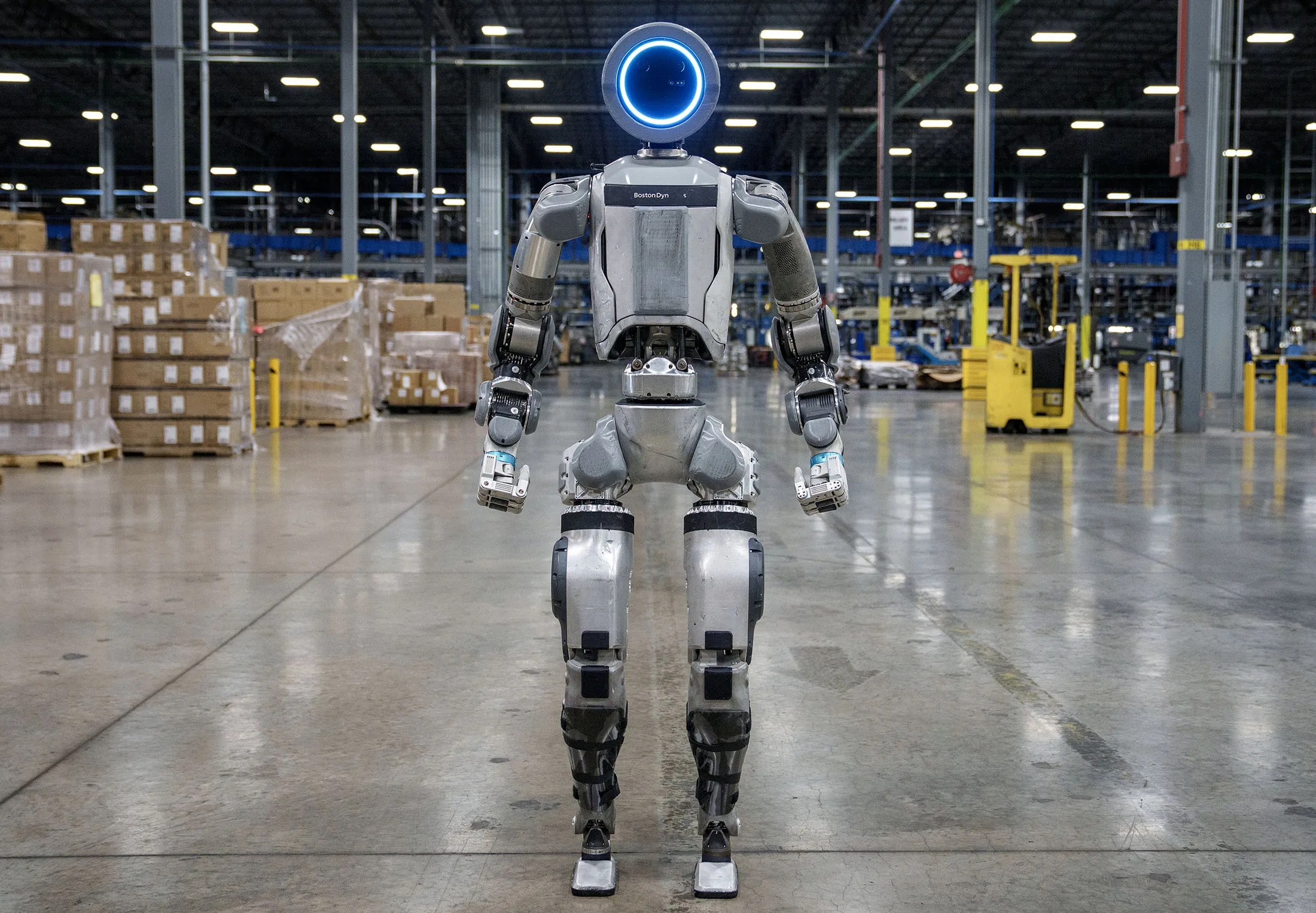
Hyundai Motor stated on July 22, 2026 that humanoid robot deployment in its Korean plants is not part of current negotiations with its striking union, which it says concern wages, bonuses, and retirement age. The company confirmed its humanoid plan covers only an initial Atlas deployment at Metaplant America in Georgia from 2028.
The formal statement directly disputes reports that Hyundai's robot roadmap triggered the walkouts at the Ulsan complex, the world's largest single automotive plant. At the same time, management and union representatives are reviewing a wage reform proposal that would convert variable overtime and night-shift allowances into fixed pay, a structure explicitly designed to give factory workers income stability after humanoid robots begin absorbing production hours. Taken together, the two developments make Hyundai the first company in the world negotiating, in real time and in public, the labor framework for humanoid automation.
The statement itself is a precision instrument. Hyundai did not deny that humanoids will eventually work in Korean factories; it committed only to deciding any wider Atlas rollout carefully, plant by plant, based on each site's operational needs and in consultation with the workers and their representatives there. That formulation preserves every option while conceding the union a consultative role, and it confines the binding commitment to a single factory on another continent. The wording is a template other manufacturers will study: acknowledge the workforce, localize the commitment, and keep the roadmap unencumbered.
The Dispute Behind the Statement
The context that gives the statement its weight began in January 2026, when Hyundai unveiled the production model of the Atlas humanoid, developed by its wholly owned United States subsidiary Boston Dynamics, at the Consumer Electronics Show in Las Vegas. Within weeks, the union warned management in an internal letter that without labor-management agreement, not a single robot using new technology would be allowed to enter the workplace. Partial strikes at Ulsan followed this month, marking the first time anywhere that a humanoid robot dispute has idled an automotive plant, and drawing international attention to union demands that would enshrine job protections for the robot and artificial intelligence era.
Hyundai's July 22 rebuttal insists the strikes concern conventional compensation issues: wage increases, bonuses, and an extension of the retirement age. Both characterizations can be true simultaneously, and that is precisely what makes this dispute historically interesting. The union is pursuing traditional monetary demands whose size and structure are shaped by an untraditional fear, that humanoid deployment will erode overtime hours, night-shift premiums, and ultimately headcount. The retirement age demand itself is an automation hedge: workers want guaranteed employment years before the robots arrive in volume. The company's insistence on the narrower framing serves its own negotiating interest as well, because formally admitting that robots are on the table would convert every future deployment decision into a bargainable event. Keeping humanoids officially outside the dispute preserves management's unilateral authority over the technology roadmap even as it negotiates the wage structure that the technology will eventually reshape.
It may seem strange that workers struck over robots that will not arrive in Korea for years. Think of it like a town learning that a highway bypass will open in 2028: shop owners on the old main street do not wait for the ribbon-cutting to demand compensation, they negotiate while they still have leverage, because once traffic moves their bargaining position collapses. Hyundai's workers understand that once humanoids are installed and productive, the case for premium overtime pay and late-career job guarantees weakens permanently. The strike is not about today's robots; it is about locking in tomorrow's terms while the machines still need permission to enter.
The Wage Reform That Actually Matters
The most consequential development sits quietly behind the headlines. Management and the union are reviewing a wage overhaul that would fold variable allowances for overtime and night shifts into fixed base wages, providing income stability even after humanoid robots reduce the need for extended human shifts. Korean labor economists have warned the conversion could burden productivity, since fixed wages decouple pay from output at exactly the moment automation is supposed to raise output per worker.
For operations leaders outside Korea, this proposal deserves close attention because it prices the social cost of humanoid automation into the wage structure itself. If adopted, Hyundai would effectively pay an automation insurance premium to its workforce, a recurring cost that any total-cost-of-ownership model for humanoid deployment must now include. That premium changes the arithmetic that robot vendors present to manufacturing customers. A humanoid business case built purely on displaced labor hours understates true cost in any unionized environment where deployment requires negotiated consent, and overstates savings wherever wage floors are being fixed in advance of the machines' arrival. Procurement teams modeling humanoid programs should add a line item for workforce transition costs, whether they take the form of fixed-wage conversions, retraining commitments, or extended employment guarantees, because Hyundai's negotiation is establishing that such costs are not optional. The Metaplant America deployment plan, by contrast, begins at a young, lower-density plant in Georgia, a state with minimal union presence, which is itself a strategic statement about where manufacturers will trial humanoids first: greenfield sites with flexible labor arrangements, not legacy plants with entrenched work rules.
Deployment Geography Across the Global Field
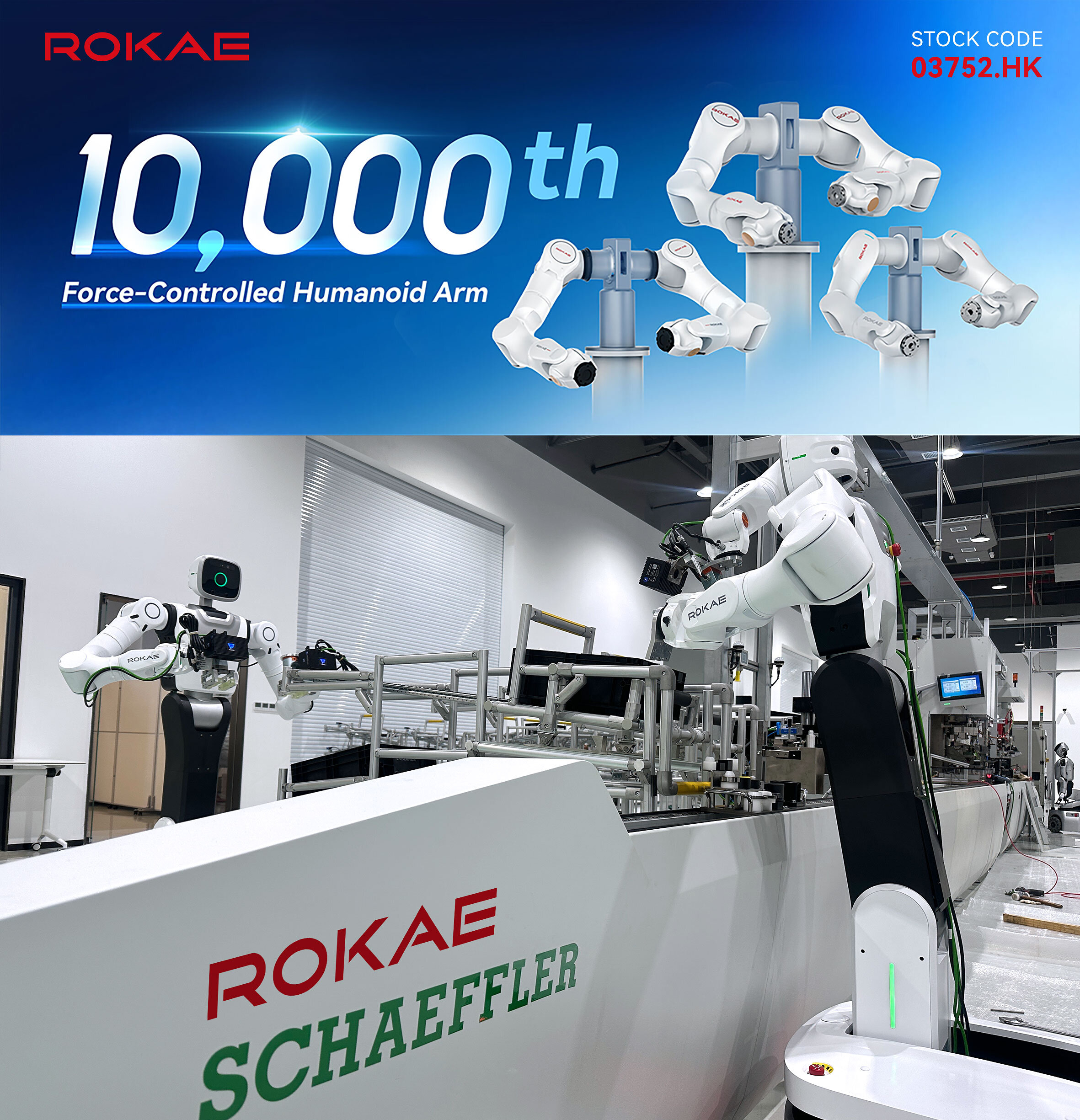
Hyundai's predicament is the leading edge of a pressure every major manufacturer will face. Tesla confirmed on the same day, July 22, that Optimus production begins at its non-union Fremont plant this year, with initial units confined to internal training rather than line work. Samsung Electronics, which holds a 35 percent stake in Rainbow Robotics, is consolidating its robotics organization while piloting robots in its own facilities. Mercedes-Benz and BMW have run Apptronik and Figure pilots at United States plants, again outside their unionized German home base. Schaeffler plans to integrate several thousand humanoids into its own production by 2035 and has so far faced no comparable labor confrontation, partly because deployment remains prospective. The pattern is consistent: humanoid pilots cluster where labor friction is lowest, and the negotiated frameworks that emerge at companies like Hyundai will set the reference terms everywhere else.
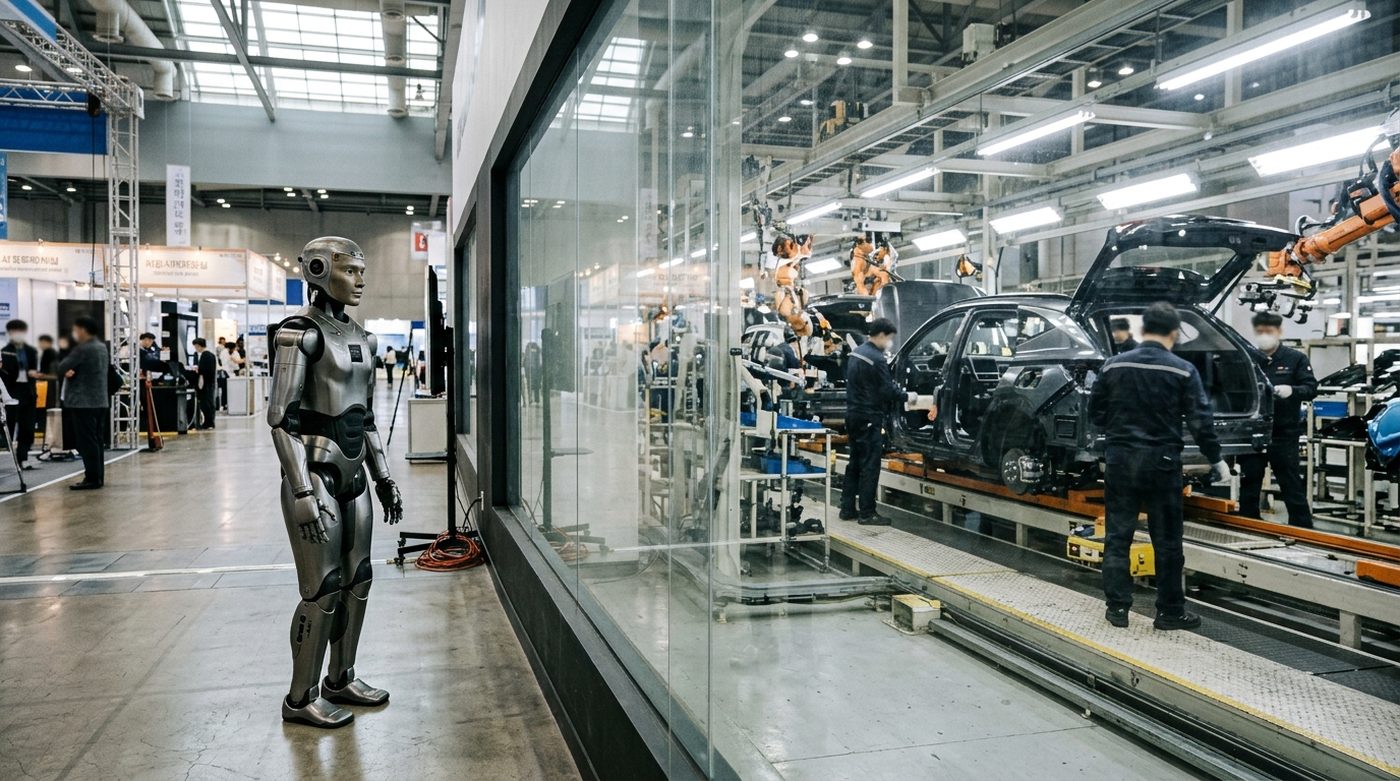
The venue amplifies the significance. The Ulsan complex on Korea's southeastern coast employs tens of thousands of workers and produces over a million vehicles annually across five plants and an integrated port. It is also among the most densely automated car factories anywhere in conventional terms, with thousands of industrial robots welding, painting, and pressing alongside human assembly lines. The automation now in dispute is not robotics as such, which Ulsan's union accepted decades ago, but humanoid robotics specifically: machines that occupy human form and human workstations rather than caged cells. The union's line is being drawn not at automation but at substitution. Hyundai's plans for a dedicated humanoid production facility in Korea mean the machines will eventually be manufactured by the same industrial group whose union now contests their deployment, an irony with few precedents in industrial history.
The Unproven Capability Both Sides Are Negotiating Around
A common misconception in coverage of this dispute is that the disputed capability already exists. No humanoid robot anywhere currently performs automotive final assembly work at the takt times and reliability levels Ulsan requires. Atlas at Metaplant America in 2028 is a plan, not a proven deployment, and the history of humanoid pilots to date is a history of narrow tasks, careful staging, and quiet timeline extensions. There is a real possibility that both Hyundai's ambitions and the union's fears are premature by half a decade. The risk for the company is paying permanent wage concessions for an automation dividend that arrives late; the risk for workers is trading strike leverage today for protections against a threat whose eventual shape nobody can yet specify. Buyers and investors should treat 2028 as the earliest plausible date for meaningful humanoid labor substitution in automotive plants, not the median expectation.
Implications for the First Labor Contract of the Humanoid Era
The most important humanoid robotics document of 2026 may turn out to be a Korean wage agreement rather than any product specification sheet, because it will define what human consent to robot coworkers costs. Labor economists, automakers, and robot suppliers are watching the same negotiation for different reasons, and all three will inherit its precedents. Whatever text Hyundai and its union eventually sign will become the world's reference framework for humanoid-era labor relations, cited in every subsequent negotiation from Detroit to Wolfsburg to Guangzhou. Manufacturers planning humanoid programs should budget now for consultative processes, wage-structure adjustments, and deployment sequencing shaped by labor geography. Robot suppliers should understand that their addressable market in unionized industries depends on frameworks they do not control, and that sales cycles will lengthen accordingly.
This development confirms that humanoid automation arrives not when the technology is ready but when the social contract around it is signed, and the terms of that contract are being drafted first in Ulsan, in public, under strike pressure.
This analysis synthesizes company statements and public market activity.
Disclaimer: This article is for informational purposes only and does not constitute investment, legal, safety, or procurement advice. Readers should independently verify specifications, certification scope, pricing, availability, regulatory obligations, and operational suitability with the relevant suppliers and authorities before making decisions.