Hotpot Is Out, Humanoids Are In: What Celebrity Money Says About China's Robot Boom
Chinese entertainment celebrities who once parked their wealth in hotpot chains and milk-tea franchises are now investing in embodied AI. Actor Huang Xiaoming's family office has backed an AgiBot-incubated robot rental platform now valued near RMB7 billion and a dexterous-hand spinoff valued near US$1 billion; Yuehua Entertainment took an angel stake in the same rental venture; and Giant Star Legend, the Hong Kong-listed company built on Jay Chou's brand, formed a 50/50 joint venture with a Unitree subsidiary that has already booked roughly RMB120 million in consumer robot orders. This Article examines what celebrity capital's arrival says about China's embodied AI cycle: distribution power meets hard tech, late-cycle froth meets genuine consumer demand, and the history of celebrity restaurant failures offers both a warning and a surprisingly instructive playbook.
For two decades, the default destination for a Chinese celebrity's spare capital was gastronomy. Actors opened hotpot chains, singers launched milk-tea brands, and the graveyard of shuttered celebrity restaurants grew into a genre of cautionary business journalism. In the summer of 2026, the money has found a new home, and it says something about where China believes value now lives: the stars are buying into robots.
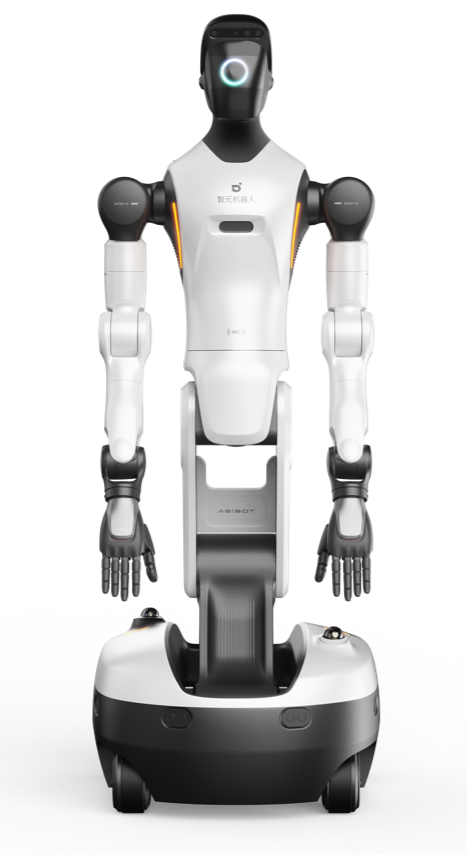
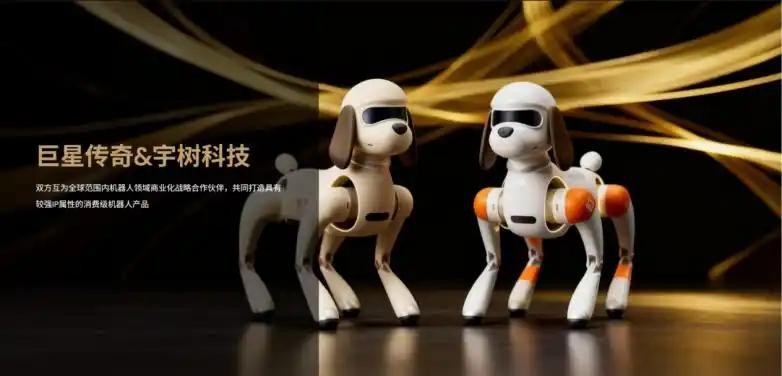
The evidence has accumulated quickly, and Chinese tech media spent the weekend assembling it into a pattern. Actor Huang Xiaoming's family investment vehicle, Mingjia Capital, has invested twice in Qingtianzu, a robot rental platform incubated out of AgiBot's ecosystem that has reached a valuation near RMB7 billion, and has also backed Linjiedian, an AgiBot-affiliated dexterous-hand company valued at roughly US$1 billion after a RMB1 billion Series A in May. Yuehua Entertainment, the talent agency behind some of China's biggest idols, took an angel position in the same rental platform. And the most structurally interesting deal predates them both: Giant Star Legend, the Hong Kong-listed lifestyle company built around Jay Chou's brand, with a market capitalization near HK$3.9 billion, formed a 50/50 joint venture with a Unitree subsidiary in late 2025 to develop consumer robots carrying entertainment IP. That venture has reportedly booked orders for some 6,000 units, worth around RMB120 million, before the category even has a name.
The backdrop makes the rotation legible. Embodied AI ventures in China raised roughly RMB93.5 billion in the first half of 2026, about five times the year-earlier figure, and the sector now counts more than twenty companies valued above RMB10 billion. Unitree's IPO registration on Shanghai's STAR Market became effective this month, targeting roughly RMB4.2 billion at a valuation near RMB42 billion, and AgiBot is assembling a Hong Kong listing that this publication reported on July 24. When a sector mints paper fortunes at that pace, adjacent money always finds a door. The question worth asking is why this particular adjacent money, and what its arrival predicts.
The restaurant era, briefly remembered
The scale of what is being abandoned deserves a paragraph, because it calibrates the shift. Celebrity dining was not a hobby but an asset class: at its peak, China counted hundreds of star-branded restaurant ventures, from hotpot chains fronted by film stars to tea brands carrying pop idols' names, many franchised aggressively on the theory that fame was a substitute for site selection and supply-chain discipline. The genre ended in a rolling series of closures, franchise disputes, and food-safety embarrassments that taught the entertainment industry's money managers a durable lesson: fame converts attention into a first visit, and nothing else. The family offices now writing robot checks are, in many cases, the same offices that absorbed those lessons, which is precisely why their new deal structures look different, equity in supply chains and platforms rather than name-licensing to operators.
There is also a policy dimension to the timing that pure market analysis misses. Hard technology is the sanctioned destination for Chinese capital in this decade, blessed by every planning document from the state's AI-plus initiative down to municipal robot subsidies. Entertainment wealth in China has spent recent years under uncomfortable scrutiny, from tax investigations to fan-economy crackdowns, and rotating visibly into embodied AI aligns private fortunes with national priorities in a way a milk-tea franchise never could. The stars are not only chasing returns; they are buying alignment, and the industrial policy tailwind is part of the expected yield.
Why entertainment capital, and why now
The lazy reading is froth, and it is not entirely wrong. Celebrity capital is famously late-cycle money: it arrives after the technical risk has been retired by professionals and before the commercial risk has been priced by anyone. When the people who once franchised hotpot brands begin underwriting dexterous-hand startups, a market historian hears echoes of every sector top from Hollywood SPACs to NFT collections. That instinct deserves respect, and this publication's July 24 analysis of the exit-window logic driving China's robot IPO queue described the structural pressure behind it: early investors need liquidity, and new narratives recruit new buyers.
But the froth reading misses what is different in the deal structures. This is not celebrities lending faces to endorsement contracts. Mingjia's positions are equity in operating companies inside the AgiBot supply chain. Yuehua's angel check bought exposure to robot rental economics, not a sponsorship. And the Giant Star Legend venture is a manufacturing joint venture in which the celebrity vehicle contributes exactly the asset robotics currently lacks: intellectual property that consumers already love, and the retail, licensing, and fan-economy channels to move physical product. The 6,000-unit order book is small by industrial standards but instructive, because those are consumer purchases of robot companions and IP derivatives, a demand signal that no factory pilot program can produce.
There is a supply-side logic too. China's robot makers have driven hardware costs to a level, around Unitree's RMB85,000 flagship and far below it for robot dogs and desktop machines, where the binding constraint on consumer sales is no longer price but desirability. That is an entertainment-industry problem, not an engineering one. A robot dog is a commodity; a robot dog wearing a beloved character's identity, sold through fan channels with content attached, is merchandise with a motor. The companies that know how to manufacture desire have noticed that the companies that manufacture robots cannot do it themselves. The joint ventures forming now are the two supply chains discovering each other.
The rental platform is the tell
The most revealing of the celebrity-backed ventures is not the IP play but the rental platform. Qingtianzu's business, leasing robots for events, exhibitions, retail activations, and content production, is the picks-and-shovels trade of the embodied AI boom. Demand for robot appearances currently outruns both the installed base and most companies' willingness to commit capital to hardware that iterates annually. A rental layer absorbs that mismatch, keeps utilization data flowing, and profits whether or not any particular manufacturer wins. That a talent agency and an actor's family office identified this niche early suggests the entertainment industry understands something about the current robot economy that engineers resist saying aloud: for now, a large fraction of humanoid demand is performance demand. Robots are booked the way acts are booked, priced by appearance, marketed by virality, and depreciated by overexposure. Who better to run that market than the people who invented booking? If the analogy holds, expect the rental layer to professionalize quickly, with exclusivity windows, tiered pricing by robot model, and eventually the robot equivalent of a talent roster, developments that would tell manufacturers more about real demand than any government pilot program.
The skeptics' file remains thick, and honesty requires opening it. Celebrity-adjacent ventures inherit celebrity-adjacent fragility: reputational shocks transmit directly to portfolio value, and China's regulatory history with fan economies shows how quickly the channel can narrow. The rental model's margins depend on novelty pricing that will compress as robots become common. The IP joint venture's RMB120 million order book must survive delivery, returns, and the gap between a preorder and a satisfied household. And the broader capital context is exactly as the exit-window thesis described: valuations in the AgiBot ecosystem have repriced upward faster than any operating metric, and some of the money arriving now is buying the story's late chapters at early-chapter prices. The precedent of celebrity restaurants is not encouraging on unit economics; most failed not because the stars lacked fame but because fame does not fix operations.
Yet the restaurant graveyard also offers the useful comparison. Celebrity restaurants failed where the celebrity added nothing operational: food is a repeat-purchase business won on consistency, and a famous name cannot cook. Consumer robots in 2026 are the opposite case: a first-purchase business won on desire, where the product's utility is still thin and the emotional layer is most of the value proposition. That is the one market condition under which celebrity involvement is not decoration but core competence. The stars may be early to the only part of the robot economy they are actually qualified to build.
What to watch
Three indicators will show whether this rotation is a topping signal or a distribution channel being born. First, sell-through versus order books: whether the Unitree joint venture's 6,000 units convert to delivered, reviewed, reordered product through fan channels. Second, rental utilization: whether Qingtianzu's fleet economics survive the novelty discount as robot appearances stop being remarkable. Third, the behavior of the platforms: if Yuehua and its peers begin structuring robot IP the way they structure idol groups, with content pipelines and lifecycle management, the entertainment industry will have concluded that robots are a durable talent category rather than a trade.
The quotable version of this analysis: when Chinese celebrities stopped opening restaurants and started capitalizing robot companies, they were not discovering technology, they were recognizing merchandise. The embodied AI industry has spent the year proving it can build machines. Whether anyone outside a factory wants one is a question about desire, and desire has always been show business. The robot boom just hired the people who sell it for a living, and the results, either way, will be measured in sell-through, not press releases.
Disclaimer: This article is for general information purposes only and does not constitute investment, legal, or procurement advice. Readers should verify details with primary sources before making business decisions.