Guangxiang's World-Model Robot Logs 21 Hours of Zero-Failure Welding at NIO
A Tsinghua-incubated startup says its Phi-Bot X1 humanoid ran 21.5 hours of welding-line material handling at NIO with zero failures, using a world model that trains the robot to anticipate consequences, then exits the pipeline before deployment to keep runtime costs down.


Twenty-one and a half cumulative hours of welding-line material handling, zero failures, zero interruptions. That is the operational record a Tsinghua-incubated startup says its humanoid robot posted on a real automotive production line this week, and the detail that has caught the attention of embodied-AI engineers is not the uptime number itself but what the robot was not doing while it worked: running the very world model that trained it.
Guangxiang (Beijing) Technology, known as Guangxiang Technology, disclosed the results on September 5 alongside a technical model it calls Phi-WM 1.0 ActEffect, describing it as a "physics-native" world model built to solve a problem that has quietly limited how humanoid robots get deployed in factories: the computing cost of running a world model at the same time a robot is trying to work in real time.
A Company Built to Bridge the Lab and the Factory Floor
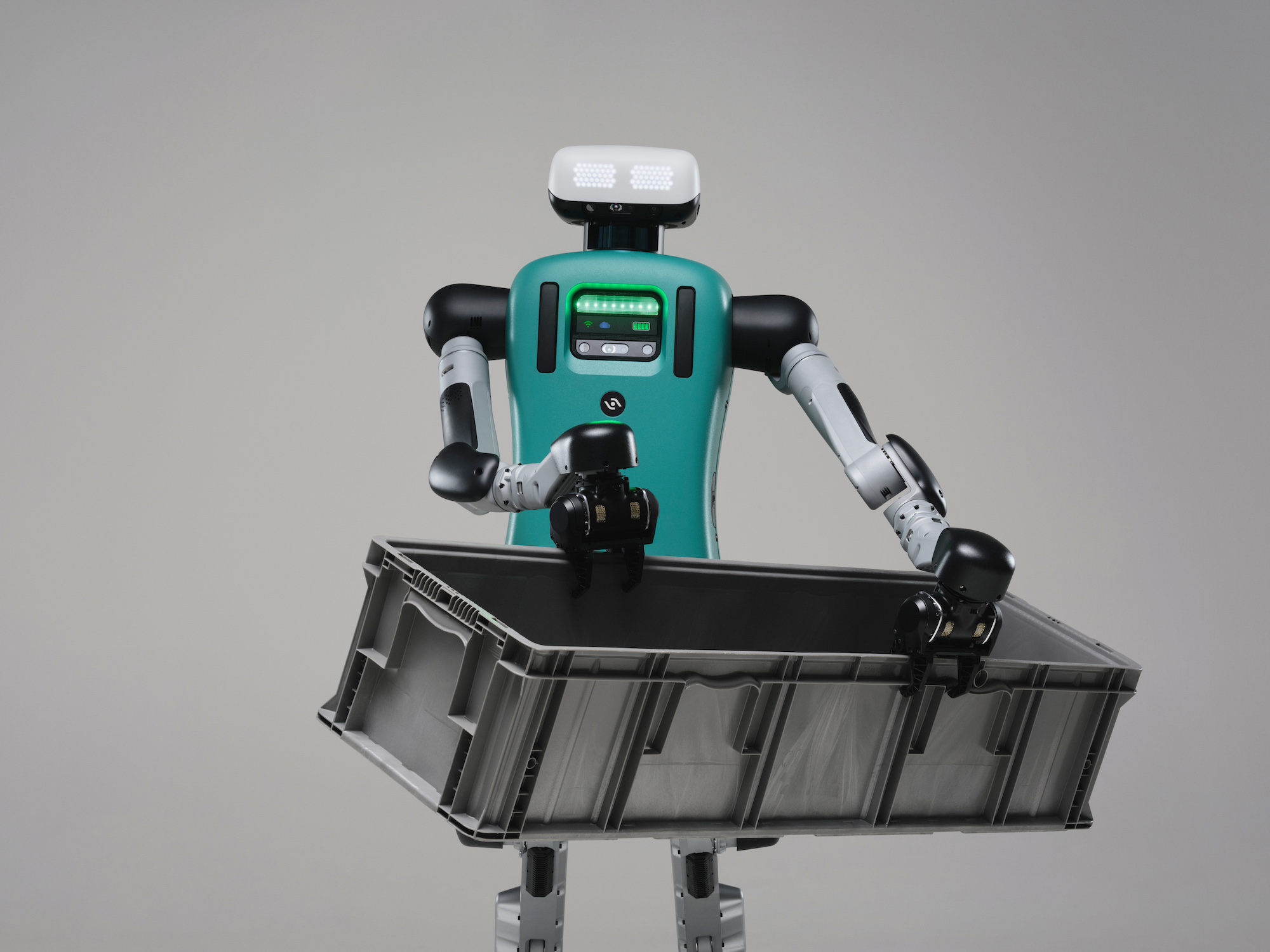
Guangxiang Technology was established in April 2025 in Beijing's Haidian district as a joint incubation between Tsinghua University's School of Vehicle and Mobility and its School of Artificial Intelligence, and it has stayed close to that academic base while pointing its engineering squarely at industrial customers. Founder and chief executive Zhang Tao holds a Tsinghua doctorate and completed a postdoctoral fellowship at Milan Polytechnic before running the spatial-perception engine team at Alibaba's Amap mapping unit; co-founder Li Shengbo brings a research background in autonomous driving and embodied intelligence. The company's product, the Phi-Bot X1, is a wheeled dual-arm humanoid with dexterous hands and a 29-dimensional action space, built for the kind of repetitive, high-precision handling tasks that automakers and electronics assemblers run around the clock.
That combination, academic pedigree paired with a named production customer, is what separates this announcement from the steady stream of humanoid demo videos coming out of China this year. The company says Phi-Bot X1 has been running welding-line loading and unloading work at NIO, the Shanghai-listed electric-vehicle maker, with the 21.5-hour zero-failure stretch logged over three continuous days during the 2026 ATC trade exposition. NIO's own factories in Hefei have crossed the one-million-vehicle production mark, giving Guangxiang a customer whose manufacturing tolerances are unforgiving by design.
Training the Model to Understand Consequences, Then Sending It Home
The technical claim behind ActEffect is a deliberate reversal of how most embodied-AI teams have used world models to date. Rather than running a world model continuously during deployment to predict what will happen next and adjust in real time, a costly, latency-adding approach at industrial scale, Guangxiang trains three candidate actions against a "controlled world model" only during the training phase, then removes that model entirely once the robot goes to work.
During training, the system generates a feed-forward reflex response, a coarse action proposal, and a refined, polished action, and runs all three through the world model to predict what would happen physically if the robot executed each one. Those predicted outcomes are compared against real recorded outcomes from training data, and a ranking loss function penalizes the model whenever the refined action does not outperform the coarse one and the coarse one does not outperform the reflex response. Guangxiang engineers added gradient clipping specifically to stop the model from gaming that ranking system rather than genuinely improving its action quality. The predicted future states are embedded in a frozen DINOv3 vision feature space rather than rendered as photorealistic video, a design choice that keeps the consequence-prediction signal cheap to compute during training without needing to generate lifelike imagery the deployed robot will never see.
Once training is complete, the world model exits the pipeline. Only a lighter "MIP" action head remains, executing the coarse-to-refined proposal sequence without ever consulting a world model in real time. The company's pitch to industrial buyers is blunt about why that matters commercially: every additional inference step a robot has to run before acting multiplies cost once a factory is running dozens or hundreds of units rather than one prototype, and a robot that needs a running world model at every workstation to stay accurate is a robot whose per-unit computing bill scales badly.
The Benchmark Numbers, and Why the Gap Widens Under Pressure
On the standard LIBERO manipulation benchmark, a single-arm, multi-task desktop test, ActEffect posted a 98.8 percent average success rate, edging out a comparison system called DiT4DiT at 98.6 percent, a narrow enough gap that it would not, on its own, justify much attention. The more telling comparison sits in LIBERO-PLUS, a version of the same benchmark that deliberately introduces seven distribution shifts, altered camera angles, different robot starting states, varied language phrasing, changed lighting and backgrounds, added sensor noise, and rearranged object layouts, designed to simulate the messiness of a real workspace rather than a tidy lab bench. There, ActEffect's success rate held at 80.3 percent while a comparison system called Fast-WAM dropped to 51.5 percent. On RoboCasa-GR1, a 24-task benchmark run on a humanoid platform with the same 29-dimensional action space as Phi-Bot X1, ActEffect scored 67.5 percent against 58.3 percent for a system called ABot-M0 and 56.7 percent for Fast-WAM.
Guangxiang's own ablation testing, removing the consequence-feedback training step, swapping the DINOv3 vision backbone for a general vision-language model, or removing the ranking loss altogether, each cut performance by roughly one to two percentage points on LIBERO, a small enough drop on the easy benchmark to make the mechanism look almost cosmetic. The real argument for the approach is that the performance gap grows precisely when conditions get harder, which is the condition a factory floor guarantees and a lab benchmark usually does not.
What Procurement Teams Should Take From a Vendor-Reported Number
None of this changes the fact that the 21.5-hour, zero-failure figure comes from Guangxiang itself, describing its own deployment at a customer site during a trade exposition rather than an independently audited production run. Buyers evaluating humanoid or dual-arm systems for welding-adjacent material handling should treat that number the way any procurement team treats a vendor's uptime claim: as a starting point for due diligence, not a substitute for it. The relevant follow-up questions are concrete and answerable. Was the 21.5-hour window continuous production-line operation or a curated demonstration window inside a longer trade-show schedule? What failure modes, if any, occurred outside that window during the same deployment? And does NIO's own procurement team consider this a qualified production system or a pilot still under evaluation?
What the technical design does establish, independent of any single customer's field results, is a genuine answer to a cost problem that has slowed humanoid deployment at scale industry-wide. World models have proven useful for teaching robots to anticipate the physical consequences of an action, gripper timing that is off by a fraction of a second, or a wrist angle a few degrees wrong, can be the difference between a successful part insertion and a jam, but running that same model continuously at every workstation in a multi-hundred-unit deployment is an expense most industrial buyers have not been willing to absorb. A training-time-only world model that leaves no runtime cost behind is a plausible way to keep that benefit without that bill, and it is the kind of engineering decision that matters more to a fleet buyer's total cost of ownership than any single benchmark percentage point.
A Data Point in a Crowded Field, Not Yet a Verdict
Guangxiang's claim lands inside an increasingly crowded field of Chinese startups racing to solve embodied-AI's training-to-deployment gap, competing against approaches from well-funded rivals and against Stanford-linked lab World Labs, whose own robot-training research has pursued a different architecture for the same underlying problem. What distinguishes this announcement is the presence of a named, recognizable industrial customer and a specific, checkable operational claim rather than a controlled demo on a company's own testbed. For a category still short on independently verified deployment data, a Tsinghua-incubated team pairing an unusual training architecture with a real automaker's welding line is a genuine data point. It is not, on the evidence disclosed so far, proof that the approach will generalize past one customer, one task, and one three-day window. Buyers should treat it accordingly, and watch for whether NIO extends the deployment, expands it to additional stations, or quietly lets the pilot lapse once trade-show season ends.
The broader race matters here because Guangxiang is not the only Chinese team chasing a cheaper path from world-model training to factory-floor execution. Beijing's push to classify embodied intelligence as a strategic industry has pulled in university spinoffs, automaker-backed labs, and independently funded startups all pursuing variations on the same wager: that whoever solves the deployment-cost problem first, not whoever posts the flashiest demo video, will win the industrial contracts that actually generate revenue. Reinforcement-learning-heavy approaches, diffusion-based action generators, and world-model architectures like ActEffect are all still competing for that role, and none has yet produced the kind of multi-site, multi-quarter deployment data that would let a buyer compare them on equal footing. Guangxiang's welding-line result narrows that evidence gap by exactly one data point, from exactly one vendor, at exactly one customer.
For an automation buyer building a shortlist rather than reading a press release, the practical takeaway is to separate the architectural claim from the operational claim. The architectural claim, that a world model trained for consequence-awareness and then discarded at runtime can outperform a model that keeps running during deployment, is testable independently of Guangxiang's specific hardware, and the ablation data the company published gives outside researchers something concrete to try to replicate. The operational claim, that this specific robot ran this specific welding task for this many hours without failure, is a single field report that a serious buyer would want repeated across more stations, more shifts, and more time before it enters a request for proposal as anything more than a reference case worth calling.
Hero image credit: NIO.
This analysis draws on Guangxiang Technology's own technical disclosure and independent reporting on the company's formation, leadership, and benchmark methodology. It is for general information purposes only and does not constitute investment, financial, or legal advice.