Futuring Robot Nears RMB 1 Billion in Cumulative Funding for Home Robots
Chinese home robot developer Futuring Robot announced a Pre-A round on July 22 that lifts its cumulative 2026 fundraising to nearly RMB 1 billion, approximately US$140 million, with an internet giant, industrial groups, and consumer brands among the backers. Its F2 household robot now serves more than 500 paying families.
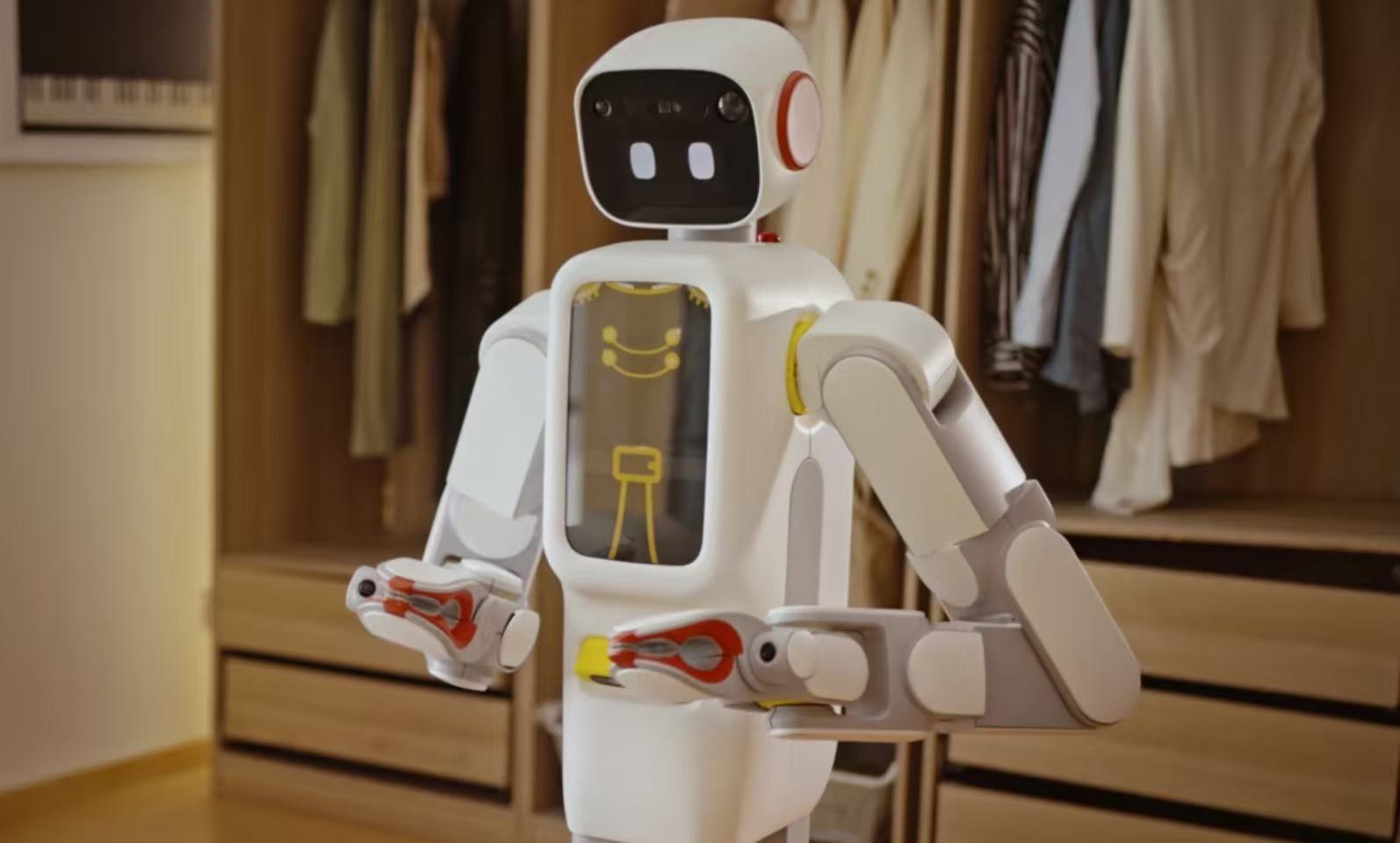
Futuring Robot, the Beijing-based developer of general-purpose household robots, announced on July 22, 2026 the completion of a Pre-A round, its third of the year, bringing cumulative funding to nearly RMB 1 billion, approximately US$140 million. Backers include an unnamed internet major, industrial groups, consumer brands, funds, and returning shareholders. Its F2 home robot operates in more than 500 paying households.
The funding sequence tells its own story. In early January, the company closed an RMB 200 million (approximately US$28 million) angel round led by ZhenFund, with Legend Capital, Yuanlai Capital, and shareholders of education group Zhangmen participating. In early March, Boyu Capital led a further round of several hundred million RMB, with Legend Capital adding to its position. The July round, closed barely four months later, signals that investor appetite for consumer embodied intelligence has survived a year in which most robotics capital chased industrial humanoids and component suppliers. The fundraising cadence makes Futuring Robot one of the fastest-capitalizing consumer robotics startups in China and a bellwether for whether embodied intelligence can find a real market inside the home rather than the factory.
A Company Built for the Living Room, Not the Production Line
Founded in 2022, Futuring Robot occupies a niche most Chinese humanoid developers have deliberately avoided: the consumer household. The company pursues full-stack self-development, and its second-generation machine, the F2, launched in April 2026 at prices starting around RMB 36,000 (approximately US$5,000), positions itself as a dedicated family butler. Its task portfolio is aimed squarely at Chinese family life: child companionship and study supervision, English conversation practice, toy tidying, chess play, elderly and pet companionship, home patrol, and basic housework.
In May the company deployed what it calls a Self-Evolving World Action Model, its new robot brain, to the F2 fleet. The architecture pairs two engines: an action model that provides a stable base of executable skills, and a world model that rehearses candidate actions internally, evaluates likely outcomes, and feeds failures back into training. The system treats near-successes and near-failures as distinct, high-value training signals, using them to sharpen decision quality. In plain terms, the robot simulates before it acts and learns from its misses, an approach conceptually aligned with the world-model direction that leading research labs globally consider the path to robust embodied intelligence in unstructured environments.
The commercial traction claims are specific enough to be checkable over time: more than 500 households now pay to use the company's robots, cumulative in-home service exceeds 50,000 hours, and reported user satisfaction stands at 97 percent. Two months ago the company's disclosed service total was roughly 30,000 hours, implying an accelerating usage curve as the fleet grows. The unit economics beneath those figures deserve attention as well. At an entry price around RMB 36,000 (approximately US$5,000), 500 households implies hardware revenue in the low tens of millions of RMB, a modest sum against nearly RMB 1 billion raised, which confirms that investors are underwriting the data flywheel and the future service business rather than current sales. The company's pricing also matters strategically: it sits close to the cost of a year of private tutoring or part-time domestic help in major Chinese cities, which is the mental comparison a family actually makes, and it is an order of magnitude below the deposit-stage pricing of Western home humanoids. If the price holds as volumes rise, Futuring will have defined the reference price for a category that does not yet have one.
The Household as the Harder and Larger Prize
Factories are structured environments where tasks repeat and errors are supervised; homes are the opposite, cluttered, dynamic, and populated by children and pets. That is precisely why most embodied intelligence companies start in industry. But the household is also where the largest long-term market almost certainly sits, spanning child education, elder care, domestic labor, and companionship in aging societies. China's demographic arithmetic, with the World Health Organization projecting 2.1 billion people over sixty globally by 2050 and China aging faster than most countries, makes the home robot category a strategic priority visible in national policy support for embodied intelligence.
Competition is assembling quickly. Within China, consumer ambitions are shared by AgiBot's consumer lines and a wave of World Artificial Intelligence Conference debutants, while the industrial humanoid leaders keep consumer variants on their public roadmaps should the home market prove itself first. Taiwan's D-Link announced its own companion robot subsidiary on the same day, targeting shipments from 2027 with an ambition of 100,000 units and a distribution-led, asset-light model that is the strategic mirror image of Futuring's full-stack approach. Globally, Norway's 1X Technologies is taking deposits for its NEO home humanoid, and Samsung's Ballie targets the ambient-home niche. Against these, Futuring's differentiators are price accessibility, a shipping product with paying users, and a data flywheel built from real Chinese households, the environment its models must master.
Reading the Investor Categories
The company's decision to disclose investor categories rather than names is itself informative, because each category implies a different strategic asset. An internet major suggests future distribution through one of China's dominant consumer platforms, where a home robot could be marketed to hundreds of millions of users and integrated with existing smart-home and content ecosystems. Industrial giants point toward manufacturing scale-up support, the supply chain muscle a startup needs when household orders move from hundreds to tens of thousands of units. Consumer brand investors signal channel and co-marketing intentions: a robot that supervises homework or plays chess is a natural bundle alongside education services, toys, and home appliances. The returning shareholders provide the continuity signal that early insiders with the deepest information are increasing exposure rather than diluting quietly. None of this guarantees execution, but the syndicate's composition sketches a company assembling distribution, manufacturing, and brand infrastructure simultaneously, which is what separates category builders from feature companies.
Think of it like this: the investors did not simply buy a robot company, they bought the one asset money cannot directly manufacture, recorded experience of robots living with families. Every hour the F2 spends tidying toys or supervising homework becomes training data no competitor possesses. Five hundred households sounds small next to millions of routers or phones, but as a corpus of real domestic robot experience it may be the largest paid deployment of its kind anywhere.
The Cautions the Round Label Carries
Two cautions belong in any honest account. First, the round labeling deserves a raised eyebrow: a company calling a nearly RMB 1 billion cumulative raise a Pre-A round is managing valuation optics, keeping future letter-rounds available while capital arrives opportunistically. That is common in hot Chinese sectors and tells you more about market temperature than company maturity. Second, the consumer robot category has buried better-funded pioneers, from Jibo to Anki to Pepper, all of which discovered that novelty demand decays faster than reliability improves. A common misconception is that early satisfaction scores predict mainstream adoption; a 97 percent figure among early adopters who self-selected into a RMB 36,000 purchase says little about mainstream tolerance. The metric that will matter is renewal and referral behavior in months twelve through twenty-four, data that does not yet exist. Buyers and partners should treat the company as a promising early leader in an unproven category, not a validated one.
Implications for China's Consumer Embodiment Bet
China's robotics capital is now running a two-track experiment, industrial humanoids for the factory and affordable family robots for the home, and Futuring Robot has become the reference asset for the second track. For global consumer electronics companies, the signal is that the Chinese home robot price point has settled around US$5,000, an order of magnitude below Western home humanoid pricing, which will anchor consumer expectations worldwide. For investors, the participation of consumer brands and an internet major suggests distribution partnerships are forming that could put these machines in front of hundreds of millions of Chinese households through existing retail and platform channels. For the industry's engineers, the company's world-model deployment into a paying consumer fleet is quietly one of the most consequential field experiments in embodied intelligence anywhere: if self-evolving models can survive contact with real families, the technical case for general-purpose home robots strengthens materially.
The same-day coincidence with Taiwan is instructive. D-Link brings channel, connectivity, and security assets but licenses its robotics; Futuring brings full-stack self-developed robotics but must still build distribution. Whichever model reaches mainstream households first will define how the industry believes home robots get sold, as ecosystems attached to existing consumer brands or as new-category products from robotics-native companies. For now, Futuring's 500 paying households give the robotics-native camp the only real-world scoreboard.
This development confirms that the consumer track of China's embodied intelligence push has found sustained capital backing, and the next disclosure to watch is household count at year-end, where growth past four digits would mark the category's first genuine escape velocity, while a stall near current levels would suggest the home remains a harder market than the capital assumes.
This analysis synthesizes company statements and public market activity.
Disclaimer: This article is for informational purposes only and does not constitute investment, legal, safety, or procurement advice. Readers should independently verify specifications, certification scope, pricing, availability, regulatory obligations, and operational suitability with the relevant suppliers and authorities before making decisions.