DeepCtrls Raises B+ Round Led by CATL, Aramco Backs In
DeepCtrls, a profitable Shenzhen physical AI company selling energy-optimization software to data centers and factories, raised a B+ round led by CATL with Saudi Aramco Ventures participating, months after a JinkoSolar-led B round backed the same energy-infrastructure thesis.

DeepCtrls, a Shenzhen-based physical AI company that has quietly turned energy-efficiency software for data centers and factories into a profitable business, closed a B+ funding round worth hundreds of millions of RMB (roughly US$14 million to US$126 million, depending on where in that range the undisclosed figure falls) led by battery giant Contemporary Amperex Technology Co., Limited, with Saudi Aramco's venture arm among the participating investors, the company disclosed Tuesday. Taiping Innovation Investment, Guangfa Xinde, and Fosun Innovation Capital also joined the round, alongside follow-on capital from existing backers Source Code Capital and Guangyuan Capital. The round comes roughly two months after DeepCtrls closed a separate B-round led by solar manufacturer JinkoSolar, meaning the eight-year-old company has now raised strategic capital from a battery maker, a solar manufacturer, and one of the world's largest oil companies within a single funding cycle.
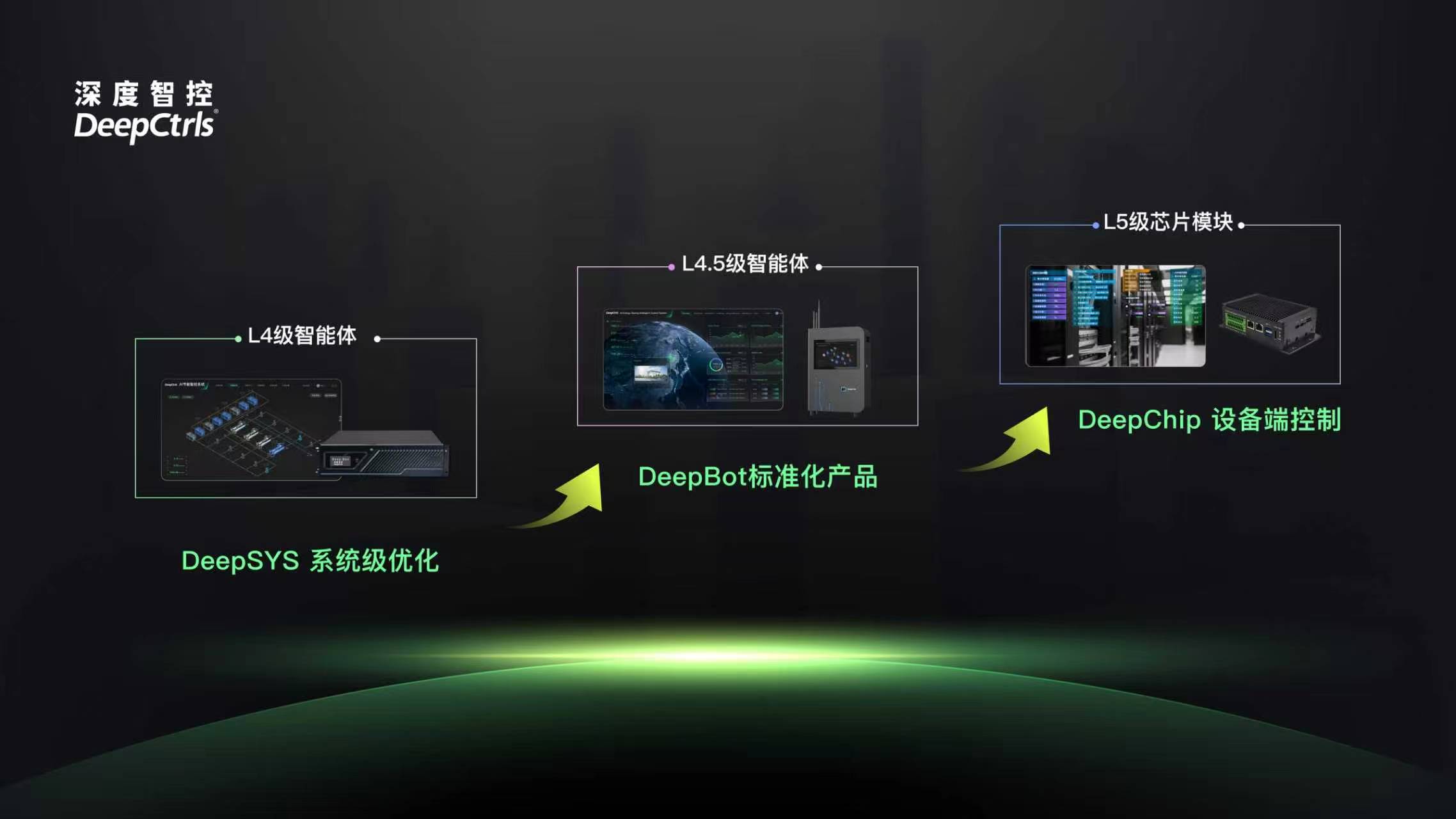
Founded in 2018, DeepCtrls builds what it calls a Physics AI engine, PhyAI, that models a facility's cooling, power, and mechanical systems in high-fidelity simulation, then computes which of hundreds of thousands of possible operating configurations minimizes energy consumption in real time. The company sells that capability through a product line it labels DeepSYS, DeepBot, DeepChip, and DeepOS, spanning system-level software optimization down to device-level chip control, aimed at industrial facilities, data centers, and large buildings. Its disclosed customer base already includes TSMC, CATL, Foxconn, Tencent, and ByteDance, putting DeepCtrls' software inside some of the highest-power-density facilities in Chinese manufacturing and cloud computing.
The Investor List Is the Real Story
What separates this round from a typical Chinese industrial-software raise is not the amount but the identity of the lead and its co-investors. CATL is not a financial investor dabbling in an adjacent sector; it is the world's largest electric-vehicle battery maker and, increasingly, a builder of grid-scale energy storage and data-center power infrastructure in its own right, which means CATL's capital comes attached to an obvious commercial thesis: a company that makes battery and energy storage systems has a direct interest in software that squeezes more usable capacity out of the power and cooling infrastructure surrounding those systems. Saudi Aramco Ventures' participation reads similarly. The oil major has spent the past several years diversifying into AI infrastructure and data-center investment as part of a broader strategy to redeploy hydrocarbon revenue into compute capacity, and an energy-optimization software company with a working commercial product is a lower-risk way to gain exposure to that theme than building comparable capability in-house.
Reading the round this way changes what DeepCtrls' pitch to the market actually is. It is not primarily selling itself as a robotics or embodied-AI company, despite carrying the physical AI label the sector has adopted broadly in China this year; it is selling itself as an energy-infrastructure efficiency company whose customer base happens to include the same hyperscale data centers and advanced manufacturing sites driving the compute-power crunch that CATL, Aramco, and JinkoSolar all have separate commercial reasons to care about. That distinction matters for anyone trying to map DeepCtrls against the crowded field of Chinese companies now describing themselves under the physical AI umbrella, from humanoid robot makers to embodied-data platforms: DeepCtrls' actual product sits closer to industrial energy-management software than to robot control systems, even though its funding announcement leans on the same physical AI branding.
A Profitable Company in a Sector That Mostly Is Not
DeepCtrls says it has posted year-over-year revenue growth that has doubled multiple years running since commercializing in 2023, and that it achieved scaled profitability in 2025, a claim the company frames as evidence it has closed a full commercial loop for physical AI software rather than remaining dependent on funding rounds to cover cash burn. If accurate, that puts DeepCtrls in a distinctly small category within China's physical AI and embodied-AI funding boom, where most well-known names, from humanoid robot makers to foundation-model labs, are still burning capital well ahead of revenue and depend on successive funding rounds to fund operations. A profitable software company selling into industrial energy management is a fundamentally lower-risk proposition for an investor than a pre-revenue humanoid robotics startup, and that risk profile likely explains why strategic industrial investors, rather than the venture funds that have driven most robotics funding this year, are the ones writing DeepCtrls' checks.
Buyers and competitors evaluating DeepCtrls' claims should note that the company has not published independently audited financials, and "scaled profitability" is a term DeepCtrls itself has chosen to describe its results rather than a disclosure made under any regulatory reporting requirement. The claim is plausible given the strategic, rather than purely financial, character of this round's investor list, since strategic investors typically conduct their own commercial due diligence on a target's actual customer contracts before committing capital, but it remains a company-reported figure rather than a verified one.
What the Liquid-Cooling Angle Means for Data-Center Buyers
DeepCtrls' computing-power and energy coordination products, which the company describes as managing liquid cooling and computing-electrical coordination for AI data centers, sit at the center of one of the most acute infrastructure bottlenecks in AI deployment today: the power and thermal constraints that increasingly determine how quickly a data center operator can bring new AI compute capacity online, regardless of how much GPU or accelerator hardware is available. A software layer that can measurably improve cooling efficiency or power utilization at a facility already running near its thermal ceiling has a directly quantifiable value proposition, in avoided capital expenditure on new cooling infrastructure or additional grid connections, that is easier to underwrite than most AI software pitches. That is likely the specific commercial logic behind CATL and Aramco's participation: both companies are, in different ways, in the business of supplying energy infrastructure, and a portfolio company that helps customers extract more usable capacity from existing infrastructure extends the addressable value of the energy assets both investors already sell into.
Reading Past the Undisclosed Number
DeepCtrls described the round only as worth "hundreds of millions of RMB," a common disclosure practice among Chinese growth-stage companies that avoids pinning down an exact figure or an implied valuation, and the company has not stated where in the RMB 100 million to RMB 900 million range the actual proceeds fall, a spread that in US dollar terms covers roughly US$14 million to US$126 million at current exchange rates. That vagueness is not unusual for a B+ round in China's current fundraising environment, where strategic investors frequently negotiate confidentiality around exact terms as a condition of participating, but it does mean outside observers cannot yet compute a precise implied valuation or compare this round's pricing against the earlier B round that JinkoSolar led roughly two months prior. What is verifiable is the pattern across both rounds: each brought in one dominant industrial strategic investor, alongside a cluster of smaller financial and state-linked co-investors, rather than the venture-fund-led syndicates that typically anchor rounds in the more speculative corners of China's physical AI sector.
That financing pattern is itself informative. A company able to attract sequential rounds from JinkoSolar and then CATL and Aramco within a matter of months, without needing to widen the search to generalist venture funds, is signaling to the market that its commercial traction is strong enough that strategic buyers are competing to secure access rather than DeepCtrls having to court capital broadly. Whether that reading holds will become clearer if DeepCtrls' next round, whenever it arrives, again features an energy or industrial strategic in the lead position, repeating a pattern that would suggest the company's core customer relationships, not general investor appetite for physical AI branding, are what is actually driving its fundraising success.
The Competitive Question DeepCtrls Still Has to Answer
Data-center energy optimization is not a category DeepCtrls has to itself. Global players including Schneider Electric, Vertiv, and a growing list of AI-specific thermal management startups are pursuing the same efficiency gains, often with deeper balance sheets and longer operating histories in mission-critical facility management. DeepCtrls' advantage, on the current evidence, is Chinese market access and an established footprint inside customers like TSMC and ByteDance that a foreign competitor would need years to replicate, not a demonstrated technology lead that would transfer cleanly to markets outside China. Whether CATL and Aramco's capital is meant to fund international expansion or simply to deepen DeepCtrls' position inside the Chinese market both investors already have exposure to is a distinction the company has not yet clarified, and it is the single most consequential unanswered question for anyone trying to gauge how far this round's backing is meant to travel.
The number that will settle the debate over whether DeepCtrls deserves its physical AI label or is better understood as an energy-software company with good timing is not the size of this round but the next one DeepCtrls discloses: whether its investor list stays anchored in energy and industrial strategics, as it has been across three consecutive rounds now, or begins to include the AI infrastructure and robotics funds that have driven the rest of China's physical AI financing wave this year.
Hero image credit: DeepCtrls.
This analysis draws on DeepCtrls' own public funding disclosures alongside independent Chinese business-press coverage of the B and B+ rounds. It is for general information purposes only and does not constitute investment, financial, or legal advice.