CyberHero Launches Eight-City Humanoid Robot Sports League
Hero Esports launched CyberHero in Riyadh with EngineAI T800 humanoids and plans an eight-city circuit built around teams, technology, and live entertainment.
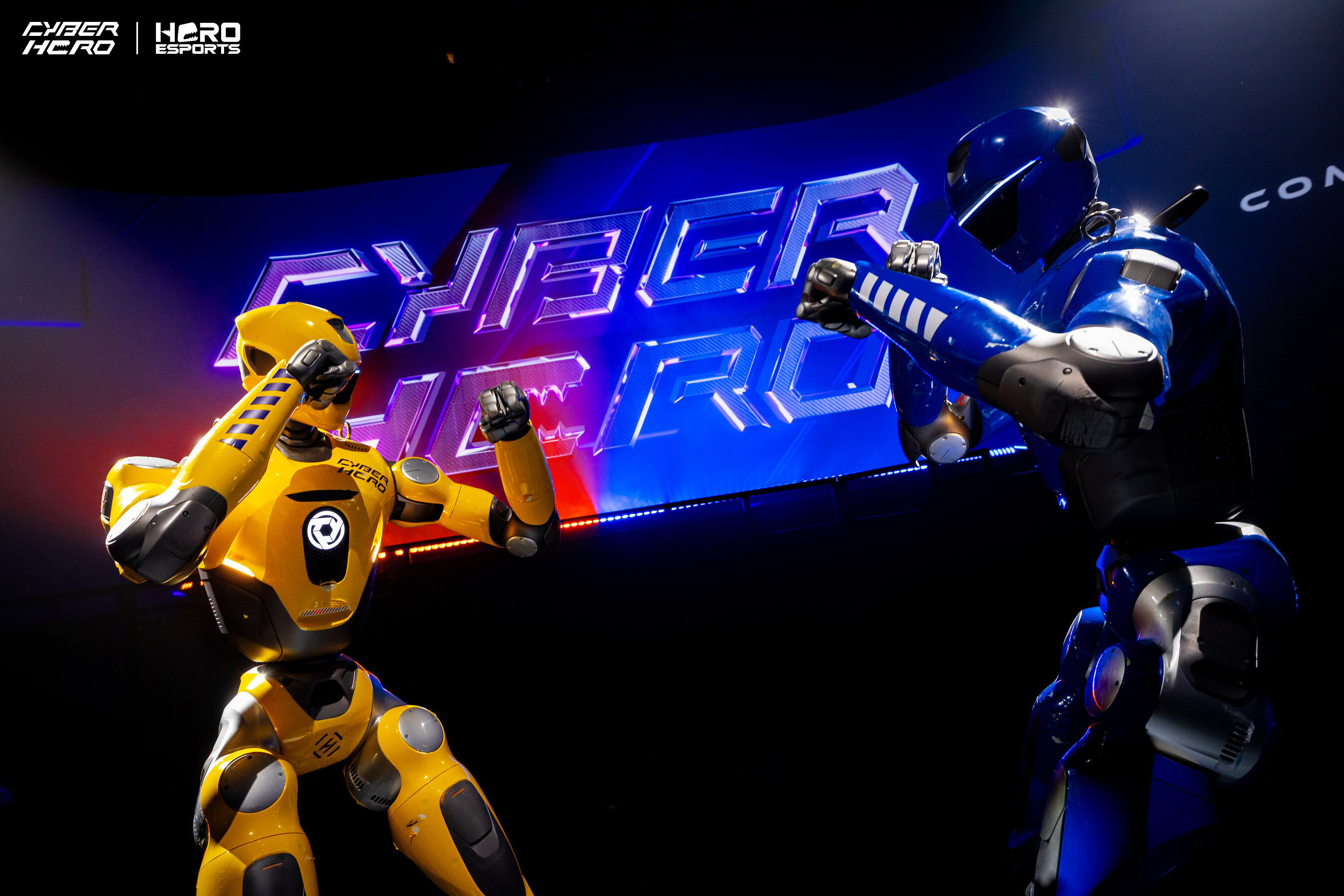
RIYADH, Saudi Arabia, September 9, 2026. Hero Esports launched CyberHero, a humanoid robot sports league, at an invite-only event in Riyadh on Wednesday. Two teams competed with EngineAI T800 humanoids in a purpose-built combat arena, while the organizer announced plans for an inaugural eight-city circuit spanning the Middle East, Europe, the Americas, and Asia.
Hero Esports is a Shanghai-headquartered live-entertainment company backed by Savvy Games Group and Tencent. It says it organizes more than 7,000 esports competitions a year. CyberHero extends that production model into physical machines, combining robot builders, software teams, live drivers, creators, music, and venue operations around a repeatable spectator format.
Riyadh Turned Robot Combat Into a Live Product
The launch used EngineAI T800 humanoids measuring about 1.73 metres and weighing between 75 and 85 kilograms. The robots have 29 articulated joints and can walk, run, punch, kick, turn, recover after falls, and dance, according to the event organizer. The machines competed in an arena designed for the show rather than in a laboratory test bay.
That distinction is the news. Humanoid combat demonstrations are not new, and the technical value of staged robot fighting is easy to exaggerate. CyberHero is attempting something more commercial: packaging the machines, operators, rules, personalities, broadcast production, and venue experience into an entertainment property that can travel.
The inaugural event paired digital creators AboFlah and Bashar Arabi as team managers, added regional personalities and a performance by electronic music producer Tokyo Machine, and treated the robots as the center of a broader show. The launch was invite-only, so it did not establish mass-market ticket demand. It did demonstrate the production concept in front of an audience and gave Hero Esports a completed event to show potential host cities, sponsors, universities, and robot suppliers.
The planned circuit covers eight cities in four regions, with two stops intended for the Middle East. No final calendar, venue list, ticket model, team roster, or prize structure has been disclosed. Those gaps separate a launch from a league. The next commercial milestone is not another dramatic clip. It is a signed season schedule with repeatable rules and participants willing to finance travel, repairs, and training.
The Competition Still Depends on People
CyberHero describes a team model with three roles. Builders design and prepare the robots. Coders develop and train the intelligence. Drivers make live decisions and put the machines' capabilities to use in the arena. That structure is sensible for a young sport, but it also means the Riyadh event should not be presented as proof of fully autonomous humanoid combat.
A useful analogy is motor racing. The machine is the visible athlete, but performance emerges from engineering, software, strategy, maintenance, and a person making decisions under pressure. Robot sport adds another layer because the division of control can change. One maneuver may be scripted, another assisted, and another executed directly by a driver. Without a published autonomy rulebook, viewers cannot tell how much intelligence belongs to the robot and how much comes from the team behind it.
That is not a flaw if the league is honest about the format. Human control can make early competitions safer, more reliable, and easier to understand. It also creates jobs and narratives around teams rather than pretending that every movement came from a general-purpose artificial intelligence system.
The risk is ambiguity. If promotional material implies autonomous decision-making while drivers determine every meaningful action, the sport becomes a remote-control contest wearing an artificial intelligence label. CyberHero can avoid that problem by publishing control classes, telemetry, intervention rules, and post-match technical summaries. Spectators do not need every algorithm, but they do need to know what kind of contest they watched.
Spectacle and Benchmarking Are Different Businesses
Robot sport can expose weaknesses that static demonstrations hide. Repeated impacts, changing opponents, imperfect footing, battery limits, communication delays, and the need to recover after a fall all place useful stress on hardware and control systems. Competitive pressure can generate data that a scripted exhibition never produces.
That does not make every match a scientific benchmark. A benchmark requires consistent rules, comparable hardware classes, transparent measurements, and enough repetitions to separate a genuine improvement from a lucky bout. CyberHero has announced a league format, not a validation protocol.
That difference matters because humanoid robot soccer has already become a serious research instrument. Soccer competitions can compare perception, balance, navigation, and team behavior under common constraints. CyberHero is pursuing a different value proposition: audience attention first, with technical learning as a possible by-product.
The two models can reinforce each other if the boundaries remain clear. Entertainment can fund better hardware, attract engineers, and produce large volumes of failure data. Research competitions can supply disciplined rules and measurements. Problems begin when a spectacular recovery or punch is treated as evidence that the same machine is ready for a warehouse, construction site, or public-service role.
An arena rewards speed, resilience, and visible action. A factory rewards predictable cycle time, low intervention rates, safe stopping, and cheap maintenance. Those are different scoreboards.
An Eight-City Tour Will Be a Logistics Test
The commercial challenge is not merely whether the T800 can land a punch. It is whether Hero Esports can move a fleet of heavy, high-value machines between countries and produce a consistent show after freight, customs, battery handling, software updates, repairs, and local safety approvals.
A touring robot league needs spare actuators, protective shells, batteries, chargers, diagnostic equipment, calibrated arenas, trained technicians, and a supply chain for components that fail after repeated impacts. It also needs rules for replacing parts without changing the competitive balance. If one team can swap an entire robot while another must repair a joint, the contest becomes a test of budget rather than engineering.
Venue operators will ask harder questions than fans. How large is the exclusion zone? What energy limits apply to strikes and falls? Can a damaged robot continue moving after a communications loss? How quickly can power be isolated? Who carries liability if a part leaves the arena? These are ordinary event-production questions, but humanoid machines make the answers more expensive.
The same discipline applies to uptime. A concert can continue when one camera fails. A robot bout cannot continue if both machines spend the evening rebooting. CyberHero will need a format that absorbs technical delays without destroying the audience experience. Short rounds, interchangeable machines, visible repair windows, and clear scoring may matter as much as the robots' peak capabilities.
This is where Hero Esports has an advantage over a robotics startup running a one-off exhibition. The company already produces large numbers of competitions and understands scheduling, broadcast operations, sponsorship, and audience management. CyberHero's unresolved question is whether that entertainment expertise can be joined to a dependable robotics service organization.
EngineAI Gains a Demanding Product Showcase
For EngineAI, the league offers a reference environment that is more demanding than a booth demonstration and more legible than an internal test. The T800 machines are large enough to create a convincing spectacle, and repeated competition can reveal weaknesses in joints, thermal management, balance recovery, communications, and protective design.
The exposure also carries risk. A public mechanical failure can travel farther than a successful technical explanation. Robots that appear powerful in a launch video may look fragile after repeated falls. That visibility is useful if the company treats it as product feedback, but damaging if the league edits away every failure and presents only polished highlights.
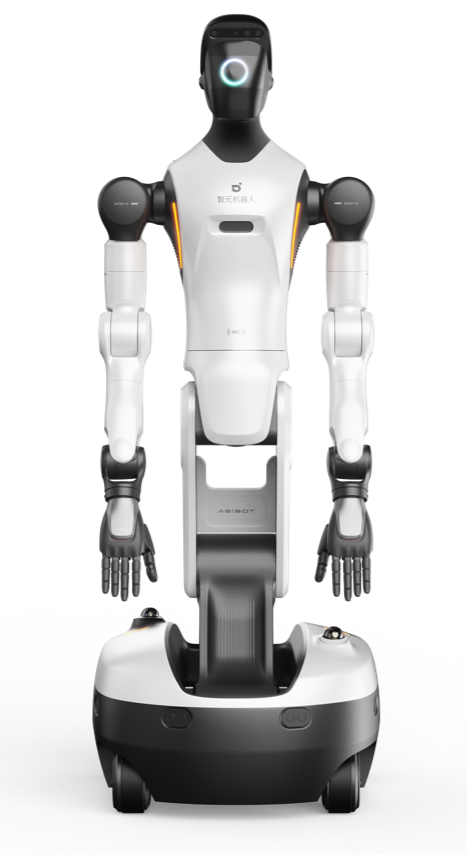
The broader humanoid market is already testing alternative commercial paths. AgiBot has used robot rental to lower the cost of short-term deployments, while other suppliers sell research platforms, factory pilots, or promotional appearances. CyberHero adds another path: the robot as an entertainment asset whose value comes from audience reach rather than labor replacement.
That model could support hardware purchases before general-purpose work is mature. Sponsors, cities, media partners, and ticket buyers may pay for machines that are not yet productive employees. The revenue does not prove industrial readiness, but it can finance reliability improvements and create an installed base of operators and technicians.
The League Needs Transparent Rules to Become Durable
Hero Esports plans to establish a global technology laboratory at its Shanghai headquarters and is seeking host cities, venues, robotics suppliers, universities, and commercial partners. That network could turn CyberHero into a useful ecosystem if participation rules are open enough for multiple teams and robot makers.
A league tied permanently to one hardware supplier would function mainly as a branded exhibition. A league with published classes, safety limits, control rules, and technical inspection could become a platform where different machines compete and improve. The most credible next announcement would therefore be a rulebook, not another city teaser.
Buyers and investors should also separate three business cases. Hero Esports is selling an event property. EngineAI is showcasing hardware. Teams and universities may be developing software and operator skill. Success for one does not guarantee success for the others. A sold-out arena can coexist with robots that remain unsuitable for factory work, just as excellent machines can appear in a league that fails to attract sponsors.
CyberHero's Riyadh launch is still meaningful because it moved humanoid competition from a concept into a produced event with real machines and an identified expansion plan. The proof now shifts from spectacle to repetition: the same rules, functioning robots, transparent control, and paying audiences in city after city.
At the Riyadh arena, one yellow T800 and one blue T800 raised their fists beneath the CyberHero sign. The league becomes real only when that scene can be rebuilt, safely and on schedule, eight times around the world.
Hero image credit: Hero Esports.
This analysis draws on Hero Esports' September 9 public announcement and company disclosures about CyberHero, the Riyadh event, EngineAI T800 robots, and the planned circuit. It is for general information purposes only and does not constitute investment, financial, procurement, legal, safety, or engineering advice.