
AgiBot Launches Middle East Robot Rental Program at LEAP 2026
AgiBot unveiled a robot rental program spanning seven Middle East countries at LEAP 2026 in Riyadh, pricing humanoid and quadruped robots from SAR 2,000 a day as it extends the RaaS strategy it used to enter Europe and Australia.

Robots-as-a-service has quietly become the preferred entry strategy for Chinese humanoid robot makers pushing into markets where buyers are curious but not yet ready to commit capital budget to an unproven category, and AgiBot's stand at LEAP 2026 in Riyadh this week made that strategy explicit. The company, whose Shanghai-based embodied-intelligence arm has shipped more than 15,000 robots since a June production milestone, used the conference to introduce a Middle East rental program spanning Saudi Arabia, the United Arab Emirates, Qatar, Kuwait, Turkey, Bahrain, and Oman, with daily pricing starting at 2,000 Saudi riyal, or roughly US$533, for enterprises that want a humanoid or quadruped robot on site without buying one outright.
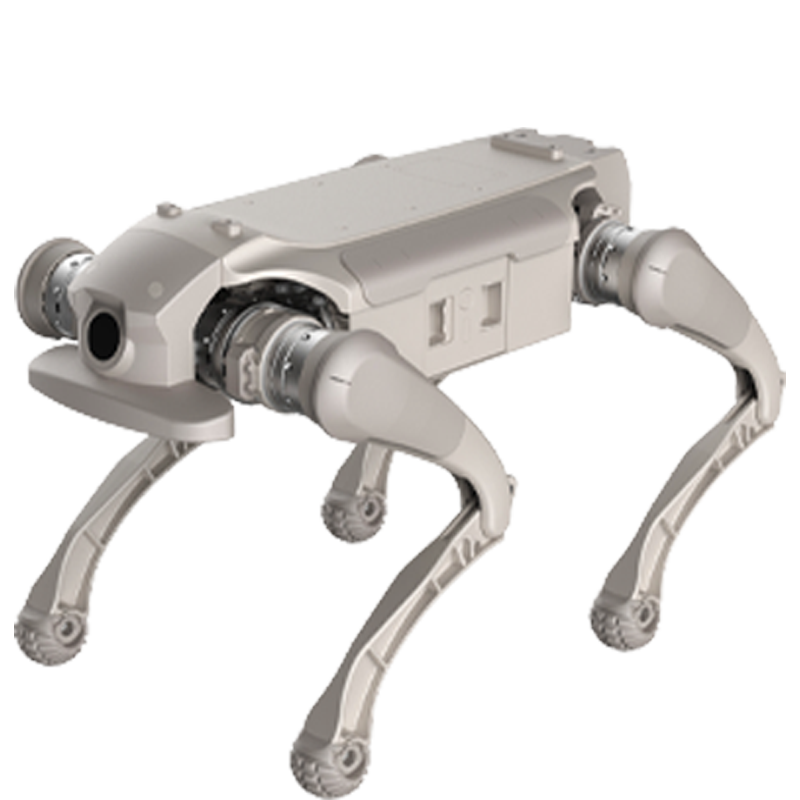
The pricing detail is the part worth sitting with. A daily rental rate low enough to fit inside an events or facilities budget line, rather than a capital-expenditure approval process, is precisely the mechanism that has let commercial robotics vendors get hardware into customer hands well ahead of the sales cycle a direct purchase would require. AgiBot's Middle East launch follows an earlier rollout of the same rental model in Europe, and the company used the same LEAP appearance to show the breadth of hardware the rental fleet draws from: its A, X, and G Series humanoids, the D1 Ultra quadruped robot, the OmniHand dexterous manipulator, C Series commercial cleaning robots, and MANIFORMER, a physical-AI data service platform that turns fielded robots into a paid data-collection asset alongside whatever task they were rented to perform.
Why Rental Beats a Sales Pitch in a New Market
Selling a humanoid robot outright to a first-time buyer in a market with no local service infrastructure, no established maintenance contracts, and no peer reference deployments is a hard commercial proposition regardless of how capable the hardware is. Renting sidesteps most of that resistance at once: the buyer's downside is a daily or monthly fee rather than a six-figure purchase order, AgiBot retains responsibility for uptime and servicing, and the deployment generates the kind of operational reference case that eventually supports a direct-sale pitch once the technology has proven itself on the customer's own floor. For a market entering the region for the first time, that is a materially lower-risk way to find out whether Gulf enterprises actually want humanoid labor at scale before committing manufacturing capacity to serve them.
AgiBot ran the same playbook expanding its rental network into Australia and New Zealand in July, and the repetition across three continents in roughly two months suggests the company has settled on RaaS as its default international expansion mechanism rather than a one-off pilot. Each new region adds fleet utilization data back into AgiBot's own operations without the company having to win a direct-purchase sales cycle first, and each rental deployment doubles as a live demonstration for whichever competitor, local distributor, or enterprise customer is watching the region's first humanoid robot show up for work.
The Gulf Timing Is Not an Accident
Saudi Arabia and its neighbors have spent the past several years building sovereign wealth-funded pushes into advanced manufacturing, logistics automation, and AI infrastructure, and LEAP itself exists as the flagship venue for exactly that ambition, drawing over 200,000 visitors and more than 1,800 exhibiting technology companies to Riyadh this week. A regional government apparatus actively courting robotics and AI investment, paired with enterprises that have Gulf-scale capital available but comparatively little in-house automation expertise, is close to an ideal customer profile for a vendor selling access to hardware rather than the hardware itself. AgiBot is not the first Chinese robotics company to read the Gulf that way, but the breadth of its LEAP showcase, humanoids, quadrupeds, manipulators, and a data platform in one stand, signals a company treating the region as a full commercial market rather than a single showcase deal.
The currency of that market matters for how the pricing should be read. Saudi riyal is pegged to the US dollar at a fixed rate, which means AgiBot's SAR 2,000 daily figure translates predictably into roughly US$533 regardless of exchange-rate movement, a stability that makes budgeting easier for both AgiBot and its regional customers than a floating-currency market would. For procurement teams elsewhere comparing rental economics, that figure is a useful anchor: a full workday's access to a humanoid or quadruped platform, inclusive of AgiBot's own servicing and support, priced below what many regions pay for a single day of specialized contract labor.
What MANIFORMER Adds to the Rental Math
The inclusion of MANIFORMER inside the same LEAP announcement is the detail that separates this expansion from a straightforward equipment-rental business. Physical-AI companies training embodied models need diverse, real-world interaction data far more than they need additional simulation hours, and a fleet of rented robots operating across genuinely new environments, Gulf warehouses, retail floors, and hospitality settings unlike anything in AgiBot's existing Chinese or European deployments, is a data-generation asset in its own right. Framing the Middle East rollout as a rental program with a data platform attached, rather than pure hardware-as-a-service, suggests AgiBot is pricing the rental fee to cover fleet operations while treating the data the fleet generates as the actual return on the regional expansion.
That dual purpose changes how competitors should read the pricing. A rental program priced purely to recover hardware and servicing costs would need to charge enough to make each deployment profitable on its own; a rental program that also functions as a subsidized data-collection operation can sustain a lower daily rate because the data has value AgiBot can monetize elsewhere, through model licensing, enterprise AI products, or simply a faster-improving robot that becomes more capable, and more competitive, than rivals training on a narrower deployment footprint. China registered well over 100,000 new humanoid robot enterprises in the first half of 2026, a crowded field in which data advantage, not hardware specifications alone, is increasingly the variable that separates companies that scale from companies that stall.
The Next Signal Worth Watching
AgiBot's own disclosure that it crossed 15,000 units produced as of June gives the Middle East launch a production base large enough to actually support a seven-country rental commitment rather than stretching a handful of demo units across a region the size of Western Europe. Whether that commitment holds will show up first in fleet utilization, not in press coverage from the show floor: the real test of this expansion is how many of those rented humanoids and quadrupeds are still deployed with paying Gulf customers three months after LEAP closes, once the novelty of a robot on a factory or retail floor wears off and the recurring rental fee has to justify itself against ordinary labor and automation alternatives. Procurement teams in the region weighing a pilot should watch that renewal rate rather than the announcement, and competitors deciding whether to match AgiBot's rental pricing in the Gulf will be watching the same number.
The Operating Conditions the Pitch Deck Skips
Gulf deployment carries physical demands that AgiBot's LEAP demonstrations, staged indoors under conference lighting, do not test. Desert heat routinely pushes past 45 degrees Celsius outdoors for months at a stretch, fine airborne dust infiltrates joints and cooling systems that were designed and validated in more temperate Chinese and European facilities, and any warehouse or logistics deployment that moves robots between climate-controlled interiors and open loading areas will stress thermal management and actuator seals in ways a showroom floor never reveals. Rental economics make this less risky for AgiBot than an outright sale would, since a unit that fails prematurely under Gulf conditions returns to AgiBot's own service organization rather than becoming a customer's stranded capital asset, but it also means the daily rate has to eventually absorb a maintenance and replacement cost structure the company has limited operating history to price accurately.
That uncertainty is precisely why the rental structure, rather than a sale, is the right instrument for this specific expansion. A seven-country launch price that turns out to be too low once real failure rates in desert conditions are known can be revised upward for the next enterprise contract without unwinding a completed sale; a fleet of purchased robots failing faster than warrantied would instead become a warranty and reputation liability AgiBot would carry into every subsequent Gulf sales conversation. The company is, in effect, using the rental model to learn the true cost of operating humanoid and quadruped hardware in Gulf conditions before it prices a direct-sale product for the region.
How the Field Compares
AgiBot is not entering an empty market. Local system integrators across the Gulf already offer humanoid and service-robot rentals sourced from a mix of Chinese, Korean, and domestic suppliers for events, exhibitions, and hospitality use, though most of that existing rental supply is oriented toward short-term entertainment and promotional deployments rather than sustained industrial or commercial task work. AgiBot's pitch, backed by a documented 15,000-unit production base and a hardware lineup that spans humanoids, quadrupeds, and dexterous manipulators rather than a single novelty platform, positions the company to compete for the more durable category of rental customer: warehouses, retail operations, and light-industrial sites evaluating whether robot labor can handle recurring tasks rather than staffing a trade-show booth for a weekend.
Image: AgiBot.
This article is provided for general information purposes only and does not constitute investment, procurement, legal, or engineering advice.













