Orbbec Launches MH24 LiDAR for Compact Mobile Robots
Orbbec unveiled its compact 24-channel MH24 LiDAR at the Canton Fair, targeting lawnmowers, delivery robots and AMRs. Its integration claims still require robot-level acceptance testing.


Orbbec unveiled its Pulsar MH24 three-dimensional light detection and ranging (LiDAR) sensor at the Canton Fair in Guangzhou on October 15, targeting compact delivery robots, robotic lawnmowers and autonomous mobile robots. The 24-channel device combines full horizontal coverage with low power consumption, but its launch is not evidence of a completed customer deployment.
Shenzhen-based Orbbec, also known as 奥比中光, supplies depth cameras and robot-vision technology and offers contract manufacturing for robotic systems. Its new sensor sits within that broader integration business rather than being a complete navigation product. The company presented the MH24 alongside depth and colour cameras, giving robot developers a component choice, not an autonomous machine ready to enter service.
The disclosed hardware measures 66.6 by 62.1 by 66 millimetres, weighs approximately 210 grams and uses a 21-millimetre optical window. It scans through 360 degrees horizontally and has a minimum effective detection range of 0.1 metres. Typical electrical consumption is below 4 watts, with a direct-current input range of 9 to 28 volts. Those specifications make the announcement relevant to battery-powered platforms with restricted mounting space. They do not establish price competitiveness, availability at volume or the performance of a robot fitted with the device.
A Small Sensor Does Not Shrink the Integration Job
For a robot designer, the immediate attraction is packaging. A sensor that fits inside a compact platform can leave more room for batteries, payload or other electronics. But physical dimensions are only the starting point. The mounting position must preserve the optical window's view, avoid obstruction by the robot's body and survive the vibration transmitted through the chassis. A small unit installed behind an obstructed window can still provide poor information about the surrounding space.
The 24-channel specification describes the sensing arrangement, while full horizontal coverage describes the direction in which the unit looks. Neither number supplies every measurement a buyer needs. Orbbec's release does not disclose angular resolution, frame rate or maximum ranging distance. Procurement teams should request those details rather than treat channel count as a shorthand for obstacle-detection quality. A nearby thin object and a broad warehouse wall are different sensing problems, even when both lie within a nominal field of view.
The short minimum detection range has a practical purpose: collecting measurements close to the robot. That can help a designer address near-field gaps around a small delivery platform. It does not mean the entire machine has no blind spots. The sensor's height, the platform's geometry and the position of an obstacle still matter. A low object beneath the sensor's scanning area cannot be assumed visible merely because the stated minimum range is short.
LiDAR is easiest to understand as a way of measuring the shape and distance of surroundings, rather than understanding what every object means. A camera can contribute appearance information; a depth camera can contribute another view of nearby geometry. The MH24 therefore changes the components available to an integrator, not the distinction between collecting measurements and making decisions from them. A navigation system must still turn those measurements into a usable map and a safe movement plan.
That distinction also provides a sensible comparison with alternatives. A simpler ranging arrangement may be sufficient for a constrained route, while a mobile platform moving through varied indoor and outdoor spaces may need more spatial information. The MH24 should be compared with those requirements, not automatically declared better because it supplies three-dimensional data. Orbbec itself presented Gemini 338Le and Gemini 338Lg depth cameras alongside the new LiDAR, underscoring that different sensing modalities can complement rather than replace one another.
The most useful procurement question is therefore not whether 24 channels sound impressive. It is whether the resulting measurements resolve the objects and distances that the chosen robot must handle. Buyers can answer that with a test route containing their own obstacles, mounting configuration and movement speeds. A demonstration selected by a supplier is an introduction to the hardware; an acceptance test selected by the operator establishes whether it belongs in the application.
Outdoor Ratings Still Need Robot-Level Tests
The environmental specifications address a genuine distinction between indoor and outdoor robots. Orbbec lists operation under ambient illumination of at least 100,000 lux, an operating temperature range from minus 20 to plus 60 degrees Celsius and an IP6K6 ingress-protection rating. It also describes resistance to vibration and interference between nearby LiDAR units. These are relevant engineering claims for a lawnmower or delivery robot exposed to sunlight and weather, but the release does not provide an independent application test report.
The correct next step is to translate those claims into the conditions of a proposed site. An outdoor trial should examine changing light, contamination of the optical window and the platform's actual mounting arrangement. An indoor trial should include shelves, equipment and the objects that appear along a working route. The aim is not to disprove a published rating. It is to identify where the sensor, its installation and the rest of the robot behave differently from the conditions assumed during component testing.
Ingress protection is especially easy to overread. A rating on one component does not certify the robot's connectors, enclosure, battery or control system. Nor does it establish that a dirty optical window will continue producing useful measurements. Operators need cleaning instructions, inspection intervals and replacement procedures that match their environment. A device can remain electrically intact while the quality of its observations becomes inadequate for the task.
Electrical integration deserves similar scrutiny. A typical draw below 4 watts is a helpful component-level figure, but it does not describe the energy budget of a working robot. Drive motors, computing, communications and other sensors also consume power. The supported input range tells engineers where the device can connect within an electrical architecture; it does not establish how long a platform will run between charges. Any endurance claim needs a robot-level measurement under representative operating conditions.
The anti-crosstalk design is another feature to verify in context. A fleet may place several sensing devices close together at loading points or along a shared route. Buyers should ask how the MH24 behaves in the intended configuration, including any other ranging equipment at the site. The release describes an interference-reduction feature, not proof that every possible combination of sensors and operating conditions has been tested.
This is where matching capability to the full workflow becomes more useful than collecting favourable specifications. A robot must handle the route repeatedly, identify when its observations are unreliable and respond without creating a hazard. Useful acceptance measures include operator interventions, unsuccessful route segments and recovery behaviour. The MH24 announcement supplies inputs to that evaluation, not its result.
Orbbec Offers a Sensor Path, Not a Turnkey Deployment
Orbbec's wider pitch is integration. The MH24 can work with its vision sensors through version 2 of the Orbbec software development kit (SDK), providing a common route for accessing sensor data. That may make it easier to combine ranging information with visual and depth observations. The release does not establish that a customer's navigation software can be connected without adaptation, or that calibration and timing problems disappear when components share a supplier.
A common development interface is valuable when it reduces work that otherwise falls between hardware providers. But buyers should separate access to data from application performance. The questions include how the chosen software consumes measurements, how devices are calibrated relative to one another and who owns a fault that appears only when the complete system runs. These questions are relevant whether the final architecture uses only Orbbec devices or combines equipment from several vendors.
The company also presented contract manufacturing services for complete robots and components. Its described capabilities include new product introduction, design for manufacturability, pilot builds, production testing and calibration. Manufacturing execution systems support material and process traceability. Those services could give a developer a path beyond a prototype, but they are not evidence that a particular customer robot has qualified for production or entered a paid deployment.
Orbbec operates a manufacturing base in Foshan and says its planned RVMC facility in Bac Ninh, Vietnam, is scheduled to start operating in 2027. The Vietnam site is a future capacity plan, not an operating factory that buyers can count on today. An agreement that depends on it would need explicit qualification milestones, responsibility for delays and a production route before the new facility becomes available. The sensor's debut should not be used to collapse those separate manufacturing decisions into one product claim.
For procurement teams, deployment friction rather than headline hardware performance is the useful commercial lens. The announcement does not disclose a price, delivery schedule, named production customer or safety certification. Those omissions do not invalidate the product, but they prevent a buyer from treating the release as a complete purchase case. A component evaluation and a supplier agreement remain separate pieces of work.
The MH24 makes a clear proposal: compact mobile robots can obtain full horizontal three-dimensional ranging within a small physical and electrical envelope. Whether that proposal improves a specific robot depends on the measurements, software and operating conditions around it. The next meaningful evidence is a platform-level acceptance result, followed by reliable supply and support. A smaller sensor can improve a design; it cannot substitute for proving the design works.
This analysis synthesizes Orbbec's public product announcement and disclosed technical and manufacturing information. Application implications are engineering interpretation, not independently measured product performance.
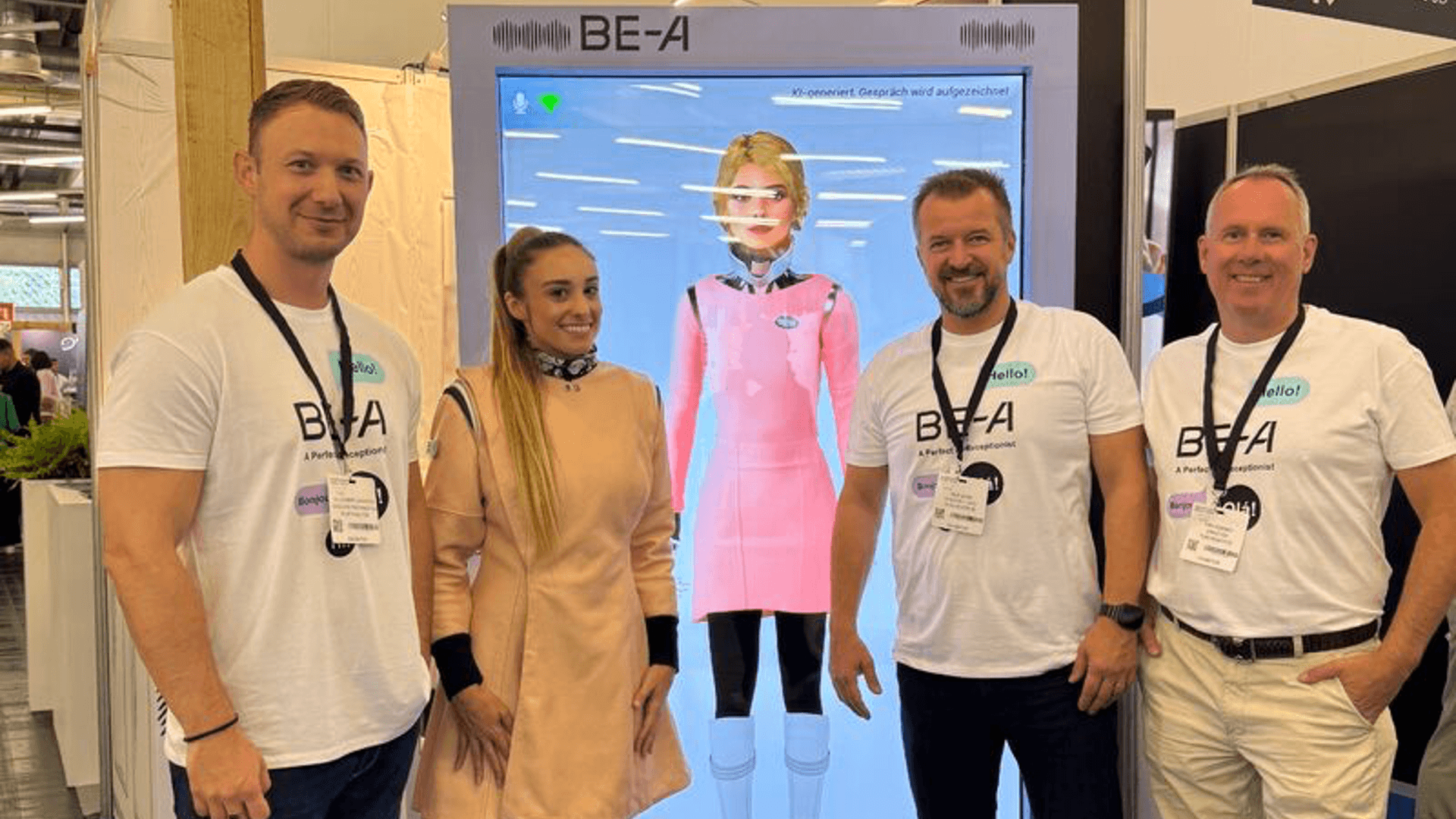
Photo: Orbbec. Official Canton Fair booth photograph, converted to JPG without changing the pictured content.
This article is provided for general information purposes only and does not constitute investment, procurement, legal, or engineering advice. Product specifications reflect public company information available at the time of writing and may change without notice.