Czech Startup FLÆ Robotics Raises EUR1 Million for AI Hotel Concierge
Czech startup FLÆ Robotics has raised more than EUR1 million (approximately US$1.08 million) in seed funding from Purple Ventures and Garage Angels to scale BE-A, its AI hospitality agent already live in 60-plus hotels across the UK, Germany and the Czech Republic.

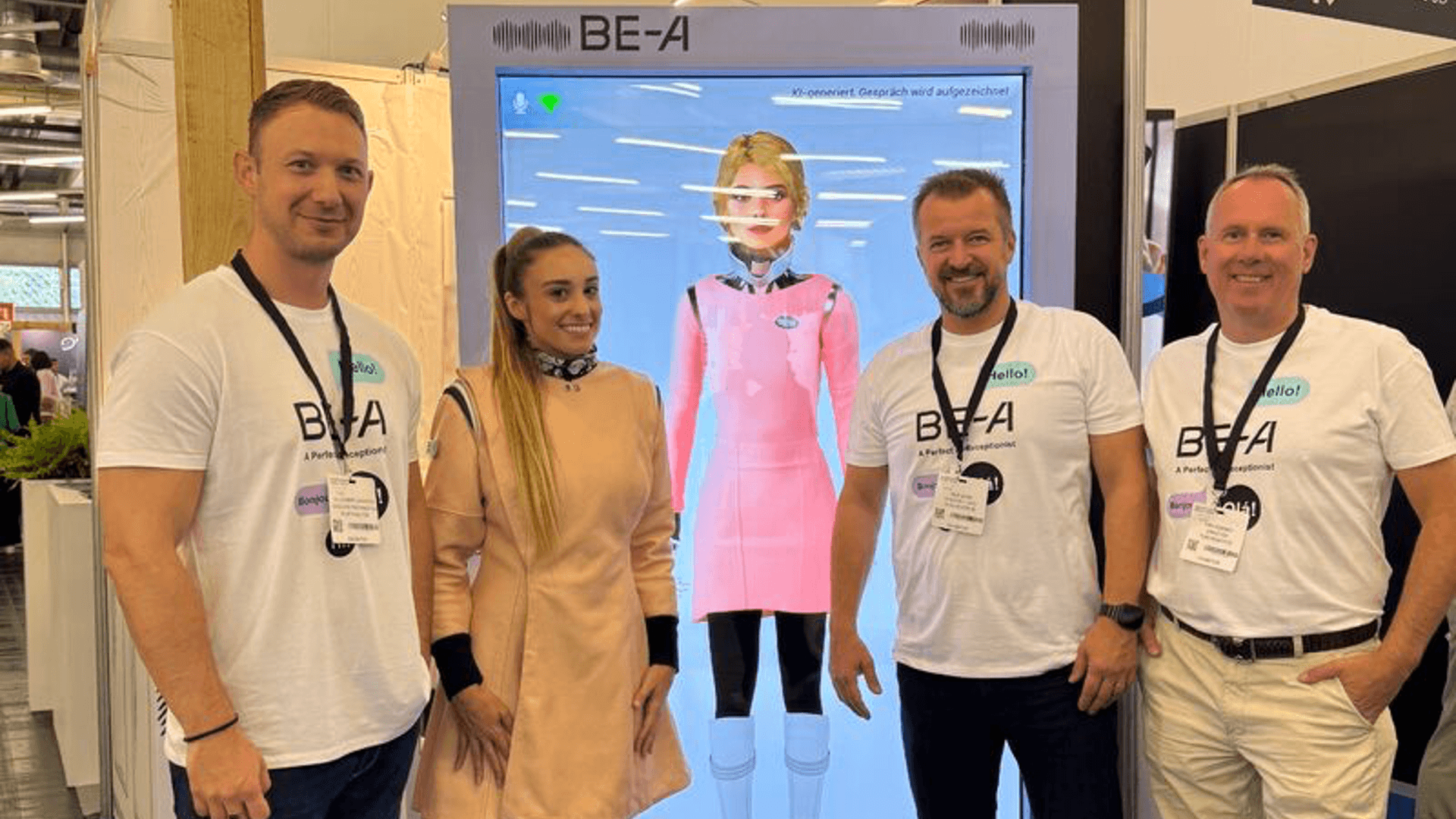
Hotel reception desks are becoming an early proving ground for conversational artificial intelligence (AI), and investors are now willing to price that shift at the seed stage rather than wait for enterprise-scale traction to show up first. FLÆ Robotics, a Czech hospitality-technology startup, has raised more than EUR1 million (approximately US$1.08 million) in seed funding from Purple Ventures and Garage Angels to expand its AI hospitality agent, BE-A, and support international growth, the company disclosed on October 14, 2026.
Founded by chief executive Filip Linek, the Czech Republic-based company has built BE-A as a round-the-clock digital concierge that handles guest communication, reservations and front-office administration for hotels, operating across WhatsApp, email, web chat and phone calls. Its niche is narrow and specific: automating the repetitive guest-service workload that consumes front-desk staff time at independent and mid-size hotels, the segment least able to staff a twenty-four-hour, multilingual reception operation on headcount alone. Through integrations with hotel management systems, BE-A checks room availability, manages reservations, answers service questions and routes anything it cannot resolve to the right human team.
The round is small by the standards of enterprise automation financing, but the usage data attached to it is the more interesting input for anyone pricing this category. BE-A is already live in more than 60 hotels across the United Kingdom, Germany and the Czech Republic, and the company says the platform processed roughly 265,000 messages and voice interactions across nearly 160,000 conversations in July and August 2026 alone, averaging more than 4,000 interactions a day. In that same window, BE-A completed more than 3,400 hotel bookings without human intervention. Those figures turn a seed-round press release into a commercial argument about labor substitution, not just a funding footnote.
The Price of Automating the Front Desk
A seed check just above EUR1 million (approximately US$1.08 million) buys a hospitality-tech startup a fairly narrow set of things: a small product and engineering team, roughly a year to eighteen months of runway, and enough budget to chase two or three new markets before the next round has to be raised. FLÆ Robotics is spending it on exactly that mix, accelerating product development, growing its team and underwriting the kind of multi-country expansion that a hospitality platform needs to prove before it can claim category leadership.
The commercial logic behind that spending is straightforward. Hotel front-desk and multilingual reception coverage is one of the most persistent fixed costs in hospitality operations, especially for the independent and regional hotel groups that cannot justify a large, multi-shift, multi-language staff roster against seasonal occupancy. A subscription-priced AI agent that absorbs the repetitive share of that workload, the enquiries about check-in times, room availability and basic service requests, competes directly against incremental headcount rather than against other software line items. Linek framed the design intent in those terms: "Hotel teams handle a large volume of repetitive enquiries and tasks every day across email, phone and other channels." He added that FLÆ Robotics is building BE-A "to go beyond answering questions and carry out the next step within hotel systems," with the stated goal of freeing staff for guests and situations that need human judgment.
That is a sound economic thesis on paper. Whether it holds at the price point and service level hoteliers actually need is a separate question, and one a funding announcement cannot answer by itself.
Usage Numbers Try to Answer the Scale Question
Most seed-stage automation vendors ask buyers to take product maturity on faith. FLÆ Robotics is instead leading with operating volume: 265,000 messages and voice interactions, nearly 160,000 conversations, and more than 3,400 completed bookings in a two-month window, spread across 60-plus properties in three countries. A platform that completes thousands of hotel bookings without a human touching the reservation is no longer a chatbot demonstration; it is doing transactional work that would otherwise sit on a front-desk shift.
Those numbers matter because they begin to close the gap between demo performance and deployment reality that undermines so many AI vendor pitches in hospitality and other guest-facing sectors. A system that answers a scripted question in a sales demo is a different proposition from one that has handled 4,000 real interactions a day across three languages and four communication channels for two consecutive months, and that difference is exactly the distinction between a demo and a deployable system that hoteliers are paying to settle. The scale is still modest against the size of the European and global hotel market, but it is evidence rather than a claim, and evidence at the seed stage is unusually rare.
It is also incomplete evidence. Volume data says nothing about error rates, guest satisfaction, escalation accuracy or how many of those 3,400 unattended bookings later required a staff member to fix a mistake. A vendor publishing throughput numbers without accompanying accuracy or complaint metrics is choosing the statistics that favor its fundraising narrative, which is a normal practice at seed stage and a reason buyers should ask for the metrics that were left out.
The Money Behind the Build
Purple Ventures and Garage Angels backed the round, and FLÆ Robotics says the capital is earmarked for three things: faster product development, team growth and international expansion. The geographic sequence is already visible in the company's own account of its rollout. BE-A is strengthening its position in Germany, entering Austria for the first time, building on a recent United Kingdom launch, and preparing to move into the United States hotel market, a jump from a European seed round to the world's largest hospitality economy that will test the platform's unit economics far more than any of its current three markets.
That sequencing raises the buyer-economics question sitting underneath every hospitality-tech seed round this year: whether this funding round signals genuine momentum behind AI-driven guest service or marks a near-term ceiling on how much capital a narrow, single-product automation vendor can justify before it has to prove recurring revenue at scale. A pre-Series A check of roughly US$1.08 million does not fund a US market entry on its own; it funds the groundwork, pilot hotels and early integrations that make a subsequent, larger round possible, assuming the usage and retention numbers hold up outside FLÆ Robotics' existing European base.
What Hotel Buyers Should Stress-Test Before Signing
Strip away the funding announcement and the product BE-A is selling is simple to describe: a chat and voice system that plugs into the software a hotel already uses to manage bookings, so a guest texting at two in the morning about a late checkout gets an answered question instead of an unanswered one, and a staff member is not pulled off a more urgent task to handle it. That plain description is also the useful one for a procurement conversation, because it strips the pitch down to what the buyer is actually purchasing: coverage hours, not intelligence in the abstract.
The hard truth that funding coverage tends to skip is that a seed round is evidence of investor confidence, not evidence of production readiness. Purple Ventures and Garage Angels backing FLÆ Robotics confirms that experienced hospitality-sector investors believe the usage numbers and the market opportunity are real. It does not confirm uptime under peak occupancy, the accuracy of multilingual guest communication once a conversation moves away from scripted intents, how deeply BE-A integrates with the dozens of property-management systems in active use across European hotel chains, or what happens to a guest's booking when the system is wrong. Operators evaluating BE-A, or any similarly positioned AI concierge vendor, should treat the raise as a reason to take a serious look rather than as a substitute for their own diligence.
Three questions belong at the top of that diligence list. First, uptime and failover: what happens to an inbound guest enquiry during a service outage, and is there a committed service-level agreement rather than a best-effort promise. Second, multilingual accuracy under real guest phrasing, not curated test scripts, particularly for the complaint-handling and refund conversations where a wrong answer costs more than a delayed one. Third, the depth and cost of integration with the property-management and channel-management systems a hotel already runs, since a concierge agent that only partially synchronizes with existing reservation software creates more manual reconciliation work than it removes. A vendor's seed-round growth metrics are a reasonable screen for a vendor list. They are not a substitute for a pilot contract with measurable service levels attached.
The Number That Will Decide the Next Round
Set aside the product narrative and the figure that will matter most to the next investor, and to any hotel group deciding whether to sign, is the one already on the table: a seed-stage check of just over EUR1 million, approximately US$1.08 million, is currently the entire capital base behind an AI system now handling more than 4,000 guest interactions a day across 60 hotels in three countries. Every claim about multilingual accuracy, property-system integration and US market readiness will eventually be measured against whether that modest sum, and whatever follows it, was enough to turn a strong usage chart into a durable, enterprise-grade hospitality platform.
This account synthesizes FLÆ Robotics' own public statements and disclosed usage figures as of the stated publication date.
This article is provided for general information purposes only and does not constitute investment, procurement, legal, or engineering advice. Figures reflect the sources listed above as of the stated information cut-off and may change without notice.