DJI Dock 4 Cuts Drone Battery Swaps to 25 Seconds
DJI's new Dock 4 swaps a drone battery in about 25 seconds, down from a 30-minute recharge, pairing with the Matrice 5TD drone to push automated public-safety and inspection docks toward near-continuous readiness.

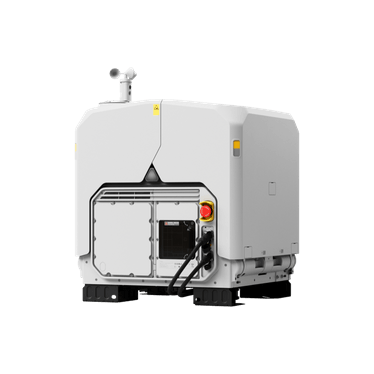
DJI's newest drone dock now swaps a depleted battery for a charged one in about 25 seconds, against roughly 30 minutes for an in-place recharge on prior-generation hardware. The Shenzhen, China-based drone and camera maker unveiled DJI Dock 4 on October 14, 2026, built around its new Matrice 5TD enterprise drone and positioned as a dock-as-a-first-responder (DFR) system for public safety agencies, utilities, and security operators that need an aircraft airborne within seconds of an alert, not minutes after a recharge cycle finishes.
That single figure reframes the economics of an entire product category. A drone-in-a-box system is only as useful as the fraction of the day its aircraft can actually fly, and for years that fraction has been capped by how long a battery takes to recharge inside the enclosure. DJI's answer is to stop recharging in place altogether: Dock 4 physically swaps the pack, so a drone grounded for a battery change is unavailable for seconds rather than half an hour, and a single dock can support far more sorties across a patrol shift, an inspection route, or an emergency response window without adding a second aircraft or a second enclosure.
The Arithmetic Procurement Teams Should Run Before the Vendor Call
Strip away the specification sheet, and a drone dock works like a charging stand for a cordless power tool, except this one also flies out the door on command, does a job, and flies itself home. The practical question for a buyer is how many useful flights a single dock can produce in a working day, because that number drives how many docks a city, utility, or security contractor needs to cover a given territory. On DJI's own figures, the Matrice 5TD can fly for up to 59 minutes per charge and reach a scene at up to 21 m/s once launched remotely, arriving ahead of ground crews with a live video feed already streaming. A dock that previously lost 30 minutes to every recharge was, in effect, idle for most of the interval between flights. Cutting that idle time to about 25 seconds does not just add a few extra flights, it changes the unit of analysis from "flights per shift" to something closer to "flights per hour," which is the number that actually determines coverage density and fleet size in a procurement model.
A single, high-impact number crystallizes why this matters commercially: a 25-second turnaround means a dock spends well under one minute of every half hour unavailable, down from spending roughly thirty. That is not an incremental tuning of an existing workflow; it is the kind of change that lets an agency serious about dock-as-a-first-responder coverage plan around sustained, near-continuous readiness rather than scheduled windows, which is precisely the gap between demo performance and deployment reality that has made so many drone-in-a-box pilots look better in a vendor video than in a budget line.
A Sensor Stack Built for Dark, Cluttered, and Regulated Airspace
The Matrice 5TD carries an 11x optical telephoto camera with a 252 millimeter equivalent focal length, which DJI says can resolve pin-level defects on power lines 100 meters away, alongside a thermal imaging camera rated up to 2560x2048 resolution in ultra-high-resolution (UHR) mode with 32x zoom for nighttime use. Laser ranging reaches up to 3 kilometers, and the drone can produce aerial survey data accurate to within 10 centimeters at 12 megapixels. For a utility inspecting transmission corridors or a survey firm mapping a site at night, that combination removes the need to swap airframes between a daytime optical inspection and a nighttime thermal sweep, a detail that matters less for the spec sheet than for how many separate truck rolls and aircraft configurations a contractor actually needs to budget for one job.
Obstacle sensing is handled by three-directional millimeter-wave (mmWave) radar, a rotating light detection and ranging (LiDAR) unit, and a six-directional vision sensor array that DJI says can detect thin obstacles, including power lines, even at night. Onboard artificial intelligence (AI) processes the live feed to identify 17 object types in real time, from vehicles and boats to animals, and can trigger alerts, snapshots, or automatic tracking when something matches a flagged category. None of this replaces a human operator's judgment, but it does shrink the distinction between a demo and a deployable system: a drone that can see wires in the dark and knows what it is looking at is one an agency can authorize for routine patrols rather than supervised test flights.
Compliance Hardware Is Becoming a Line Item, Not an Afterthought
Dock 4 and the Matrice 5TD are rated to operate from minus 40 to 50 degrees Celsius, with the dock pre-heating batteries in freezing conditions and running air conditioning in extreme heat, and the drone can take off, land, and fly in winds up to 12 meters per second, with a descend-and-return behavior if wind spikes mid-flight. Operators can also fit up to 450 grams of accessories, such as speakers, spotlights, or parachutes, turning the same airframe into a public-address platform, a search light, or a safer overflight tool depending on the mission. When signal range is a constraint, such as around high-rise buildings or substation walls, the system pairs with DJI's O4 Ground Station to extend coverage in obstructed environments.
The detail procurement and compliance teams should weigh most carefully is the Flight Termination System (FTS) module, which DJI describes as a key technical requirement for what it calls C6 compliance, the regulatory tier most relevant to agencies flying drones beyond visual line of sight in populated or restricted airspace. FTS can be triggered manually to stop the drone's propellers mid-flight, or automatically if the aircraft breaches a geofenced boundary. Building that into the hardware rather than treating it as a software add-on is a tacit acknowledgment that the regulatory path to unsupervised, always-on drone operations runs through hardware-level fail-safes, not just flight-log audits after the fact. That is the hard truth underneath the launch: a faster battery swap buys an agency more flight hours, but it does not buy regulatory approval to fly those hours unsupervised, and the FTS module exists specifically because aviation authorities will ask for it before signing off on that kind of autonomy.
DJI has not disclosed pricing for Dock 4, and the system is sold only through authorized DJI Enterprise dealers rather than listed with a public price. That omission is not unusual for enterprise drone hardware, but it does mean the sortie-economics case made above, more flights per dock, fewer aircraft needed, has to be weighed against a quote that varies by dealer, region, and bundled service plan before any agency can turn the 25-second figure into an actual budget number. A buyer evaluating multiple dock vendors will also want to understand the data ownership question that every integrator will face when footage, thermal imagery, and AI detection logs from a continuously flying public-safety asset are stored, processed, and potentially shared across a cloud platform such as DJI's FlightHub 2.
Where the Uptime Gain Shows Up First
DJI is marketing Dock 4 toward four buyer categories: public safety and emergency response agencies running dock-as-a-first-responder programs, utilities and infrastructure operators doing remote inspection of power lines and substations, security contractors who need overnight site coverage, and survey firms mapping terrain or assets. Each of those use cases has a different tolerance for the old 30-minute recharge gap. A police department chasing a DFR program needs an aircraft in the air within roughly 90 seconds of an alert to make the use case work at all, which is why DJI frames rapid turnaround as central to closing what it calls the gap between an alert and full situational awareness on the ground. A utility inspecting hundreds of kilometers of line, by contrast, cares less about a single scramble time and more about how many inspection flights one dock can complete before a technician needs to physically visit the site, which is exactly the metric a 25-second swap improves most directly.
DJI, founded in 2006 and headquartered in Shenzhen, China, describes itself as the global leader in civilian drones and creative camera technology, and has used that installed base to push into renewable energy, agriculture, public safety, surveying and mapping, and infrastructure inspection over the past several years. Dock 4 extends that enterprise push rather than opening a new category for the company: DJI already sold the Dock and Dock 2 and Dock 3 systems, and the jump to automated battery swapping is best read as DJI addressing the one operational bottleneck, battery downtime, that has limited how far drone-in-a-box deployments could scale inside a single site, rather than DJI entering drone-in-a-box hardware for the first time.
The practical test for any agency or utility evaluating Dock 4 is not whether the specification sheet reads well, but whether the 25-second swap survives contact with a real deployment: humid substations, winter patrol shifts, or back-to-back emergency calls where an aircraft's return window overlaps with the next dispatch. DJI's own data points, a 59-minute flight envelope, a 160 millisecond drone-to-cloud latency, and operation down to minus 40 degrees Celsius, suggest the company built Dock 4 around exactly those edge cases rather than fair-weather demonstrations. Whether that holds up is a question every buyer still has to verify on their own site, under their own weather, before the business case built on one number, 25 seconds against 30 minutes, converts into an actual procurement decision.
This analysis synthesizes DJI's own public product disclosures and statements about the Dock 4 and Matrice 5TD launch as of the stated publication date.
This article is provided for general information purposes only and does not constitute investment, procurement, legal, or engineering advice. Figures reflect the sources listed above as of the stated information cut-off and may change without notice.