Stryker Invests US$400 Million in CMR Surgical, Takes US Sales Lead
Stryker is investing US$400 million in CMR Surgical, gaining an exclusive option to acquire the rest of the company and exclusive U.S. sales rights for its Versius soft-tissue surgical robot.

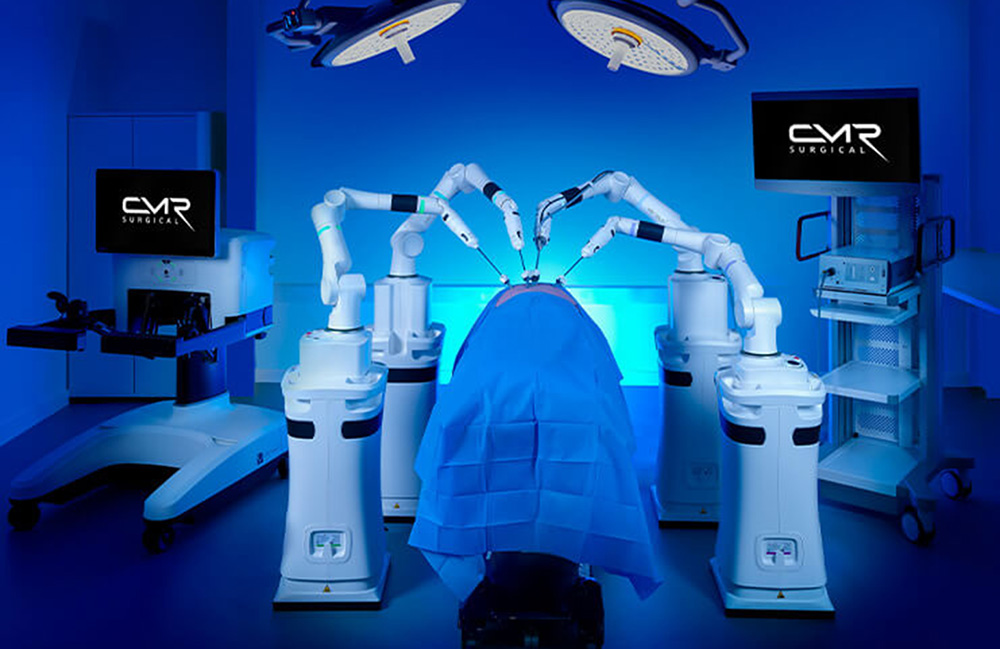
Stryker is putting US$400 million into CMR Surgical in exchange for an exclusive option to buy the rest of the company outright and an exclusive agency agreement that makes Stryker the sole U.S. sales channel for CMR's Versius surgical robot, the two companies announced on October 15, 2026. The deal, still subject to regulatory approval and customary closing conditions, hands a U.S. medtech giant control of the American commercial path for a British challenger that has spent a decade trying to crack the market da Vinci-maker Intuitive Surgical has dominated for more than twenty years.
CMR Surgical is a Cambridge, United Kingdom-based surgical robotics company whose Versius platform is built around a different design bet than most of its competitors: individually mobile, modular robotic arms mounted on separate carts, rather than one large fixed console, so hospitals do not need to build or renovate a dedicated operating room to use it. That modularity is CMR's core commercial pitch to hospital procurement teams, since it lowers the capital and construction cost of adopting surgical robotics compared with systems that require a purpose-built suite.
What Stryker Actually Bought, and What It Did Not
The structure of the deal matters as much as the headline number. Stryker's US$400 million buys an investment stake, an exclusive option to acquire CMR's remaining equity in full, and exclusive rights to sell and support Versius in the United States under a dedicated commercial agency agreement. It does not, at least not yet, buy the company outright. CMR Surgical remains an independent company that keeps control of product development and commercialization everywhere outside the United States, which means CMR's own sales and support organization continues operating across the more than 30 countries where Versius is already installed, while Stryker takes over exclusively on the single market that matters most for near-term revenue growth in surgical robotics.
That split is a common structure for a company trying to avoid handing over full control before it has to, while still getting the balance-sheet and distribution benefit of a much larger partner. For CMR, the arrangement solves the single hardest problem a foreign medtech company faces entering the U.S. market: building a sales, clinical training and service organization large enough to compete with Intuitive Surgical's decades-old American footprint. Stryker already has that infrastructure, built selling orthopedic implants, surgical equipment and other medsurg products into the same hospital buying committees that would eventually decide whether to install Versius.
Why Stryker Wanted a Soft-Tissue Robot
Andy Pierce, Stryker's group president of MedSurg and Neurotechnology, described the logic in direct commercial terms: "Soft-tissue robotics is a high-growth adjacency and a natural extension of Stryker's strengths," calling the alliance a disciplined entry into the segment. That framing is worth taking literally. Stryker has built a substantial robotics business in orthopedics through its Mako platform, which handles joint-replacement surgery, a category defined by rigid bone and predictable anatomy. Soft-tissue procedures, general surgery, colorectal, urology, gynecology and thoracic work, are a different and larger market, defined by moving, deformable anatomy that is mechanically harder to automate, and Stryker has not previously had a platform there.
Buying into CMR rather than building a soft-tissue robot from scratch is the faster path into that market, and it comes with a product that already has real-world traction: Versius has been used in roughly 45,000 surgical cases worldwide and is installed in hospitals across more than 30 countries. Versius Plus holds FDA 510(k) clearance for cholecystectomy, the surgical removal of the gallbladder, one of the most common general-surgery procedures performed in American hospitals, and CMR has filed a separate 510(k) application for benign gynecological indications, which would widen the approved U.S. use cases if cleared.
The Market CMR Still Has to Win
None of that changes the scale of the competitive gap CMR is trying to close. Intuitive Surgical's da Vinci platform has been the default surgical robot in American hospitals for more than two decades, has cleared regulatory approval across a far broader range of procedures, and has trained a generation of American surgeons on its specific console and instrument set. A hospital that already owns da Vinci systems, has surgeons credentialed on them, and has built its operating-room workflow around them faces real switching costs before it would add or replace that capital equipment with Versius, regardless of how compelling CMR's modularity pitch is on a spreadsheet.
Massimiliano Colella, CMR's chief executive, called the agreement "a significant milestone for CMR," and said Stryker's investment will help the company accelerate innovation and global expansion; Colella also confirmed that Pierce will join CMR's board, a detail that signals Stryker intends to shape CMR's product and commercial direction, not simply resell an unmodified product. For procurement teams evaluating Versius against the incumbent, Stryker's distribution muscle narrows one gap, the sales and service relationship, without closing the clinical-adoption and credentialing gap that still favors da Vinci in most American hospitals today.
What the Deal Signals About Where Surgical Robotics Capital Is Going
Stryker's move follows a broader pattern among large medtech incumbents: rather than building a full soft-tissue robotics stack internally, several major device companies have chosen to invest in or partner with smaller, more specialized robotics developers and then supply the distribution, regulatory and hospital-relationship infrastructure those smaller companies lack. That pattern reflects a practical calculation about where capital is best spent in surgical robotics right now: the hardest, most time-consuming work, getting a modular soft-tissue platform through clinical validation and into real operating rooms across multiple geographies, has already been done by companies like CMR over the better part of a decade. The faster and arguably cheaper move for an incumbent with an existing hospital sales force is to buy into that validated platform rather than repeat the multi-year development and approval cycle from zero.
For competitors still trying to build standalone soft-tissue robotics companies without a large strategic partner, the Stryker-CMR structure raises the bar for what independent survival looks like. A company without access to an incumbent's sales channel, regulatory experience and hospital relationships now has to compete against platforms that effectively inherited that infrastructure through a deal rather than building it themselves, which compresses the time a smaller, undercapitalized rival has to establish a comparable U.S. commercial presence before the market consolidates around a handful of better-distributed platforms.
How This Compares With Medtronic's and J&J's Surgical Robot Bets
Stryker is not the only large medtech company placing a bet on soft-tissue surgical robotics against Intuitive's incumbency. Medtronic has spent several years building out its own Hugo robotic-assisted surgery platform rather than acquiring into an existing one, a path that gives Medtronic full control over the product roadmap but has required the company to run its own clinical trials and regulatory submissions from the ground up. Johnson & Johnson took a similar build-it-yourself approach with its Ottava platform, which recently won its first FDA authorization as a table-integrated surgical robot. Stryker's choice to invest in and commercially partner with an already-validated independent platform, rather than build or buy outright from day one, is a third path: faster to market in the near term, but one that leaves CMR as a distinct company with its own board representation and non-U.S. commercial operations for now.
That distinction matters for how quickly each approach can scale. Medtronic and J&J both carry the full cost and timeline risk of in-house development, but they also capture all of the long-term upside and keep full control of the product without needing to eventually negotiate a buyout. Stryker gets Versius's decade of clinical validation and existing international install base immediately, in exchange for CMR retaining meaningful independence, a board seat for Stryker notwithstanding, until or unless Stryker exercises its option to acquire the rest of the company. Hospital buyers comparing the three incumbents' soft-tissue robotics offerings should expect Stryker's U.S. rollout to move faster than a from-scratch competitor precisely because it is importing an already-proven system rather than waiting for one to clear trials.
The Regulatory Clock Still Running
The deal's commercial logic depends on CMR clearing more U.S. indications than cholecystectomy alone, and that clock is still running independently of Stryker's investment. CMR's pending 510(k) filing for benign gynecological procedures would, if cleared, open a second major surgical category to Versius in the American market, meaningfully widening the set of procedures Stryker's new sales organization can pitch to hospital systems. Until that clearance comes through, Stryker's exclusive U.S. agency agreement is selling into a narrower approved indication set than da Vinci's, which covers a much broader range of soft-tissue procedures after two decades of incremental regulatory expansion. The pace of CMR's remaining U.S. regulatory clearances, not the size of Stryker's investment, will set the real ceiling on how quickly Versius can take share from the incumbent.
The Verdict for Hospital Buyers
For a hospital procurement committee evaluating Versius today, the practical calculus has shifted. A platform's long-term service and training support now rests behind Stryker's U.S. commercial and clinical infrastructure rather than a smaller foreign company's standalone American operation, a material point in any multi-year capital-equipment decision where service continuity matters as much as the initial purchase price. That does not erase da Vinci's install-base advantage or Versius's narrower current U.S. regulatory clearance, but it does remove the single biggest commercial risk that previously sat against CMR on paper: whether a British challenger with limited American infrastructure could sustain a serious long-term competitive push against the incumbent. With Stryker now carrying that burden, the deal should be read as removing a distribution bottleneck, not as evidence that Versius has closed the clinical-adoption gap with da Vinci.
This account synthesizes The Robot Report's October 15, 2026 reporting on the Stryker-CMR Surgical agreement, including statements attributed to Massimiliano Colella and Andy Pierce, as of the stated publication date.
This article is provided for general information purposes only and does not constitute investment, procurement, legal, or medical advice. Figures reflect the sources listed above as of the stated information cut-off and may change without notice.