Gausium's Own Edge-Cleaning Data Shows Where Scrubbers Still Need a Mop
Gausium published a technical explainer on October 14, 2026 detailing how close its Phantas-line floor scrubbers clean to walls and corners, a disclosure that doubles as a buyer's checklist for the edge-coverage gap still driving manual mop-up costs.

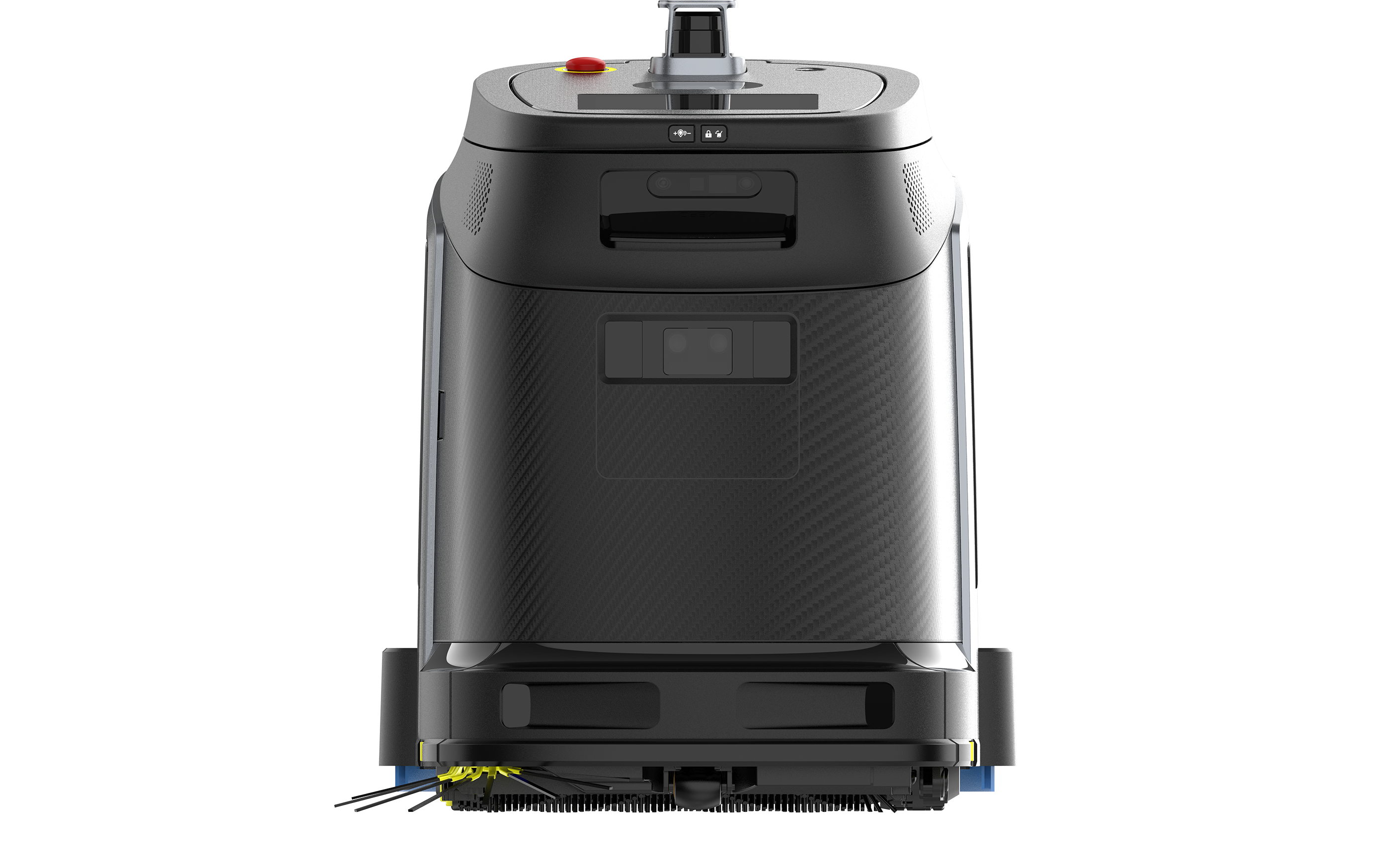
A published edge-cleaning distance of zero millimeters reads like a solved problem. It is not, and the company that published the number said so itself. On October 14, 2026, Gausium, a Chinese maker of autonomous commercial cleaning robots, released a technical explainer detailing exactly how close its floor scrubbers, including the Phantas line, can clean to walls, shelf bases and inside corners, and where that reach runs out.
Gausium builds compact multi-function scrubbers and sweepers sold into supermarkets, offices, warehouses and transportation hubs, with Phantas as its best-known model and Omnie, Mira, Marvel and Beetle filling out the lineup. Its machines localize using light detection and ranging (LiDAR) to within plus or minus 2 centimeters and rely on live sensing of walls and fixtures while cleaning, rather than map position alone. What makes the October 14 piece notable is not the marketing claim, it is the admission underneath it: a brush that reaches a wall is not the same as a corner that gets cleaned, and a corner that gets swept is not the same as one left dry. For buyers who have heard "edge cleaning" used as a solved feature on vendor spec sheets for years, that distinction is the entire procurement question.
The Zero-Millimeter Number Measures Less Than It Implies
Phantas is rated at 0 mm of edge distance. The figure means the side brush's bristles reach the wall line, not that the robot's body contacts the wall. A scrubber cannot press its chassis against a baseboard. It needs clearance to move without scraping paint or shelving, and room to turn at the end of each pass, and that clearance is exactly what creates the strip of floor the main brush cannot touch. A side brush extending past the body, combined with steady wall-following, is what closes that strip back down to the wall line, at least along a straight run.
Width and height figures tell a parallel story that buyers often conflate with edge reach. Omnie's roller brush scrubs a 406 mm path on its own and 780 mm once optional side brushes are fitted. Mira is narrow enough to pass through aisles as tight as 660 mm, which matters for dense retail layouts more than for edge distance. Phantas needs as little as 650 mm of vertical clearance to get under desks and low furniture. None of those three figures describes how close to a wall the machine cleans; a buyer who reads "fits under desks" as "cleans the edge under desks" is reading past what the specification says.
Geometry Beats Marketing at the Inside Corner
Straight walls are the easy version of the edge problem. Inside corners, where two walls meet at 90 degrees, are a different problem entirely, and the published zero-distance figure does not resolve it. A round disc brush or a round side brush can reach a straight wall perfectly well and still be geometrically unable to reach the deepest point of a square corner, because a circle cannot occupy the point where two straight lines intersect. A roller-brush machine does better along a wall, but its body shape, its turning radius and the reach of its squeegee all keep it out of the corner itself.
There is a second, quieter limitation worth asking about directly: on most machines, the side brush sits on one side of the body only. That robot hugs a wall closely when that side faces it, and cannot do the same when the layout forces the opposite side toward the boundary. A facility with shelving on both sides of an aisle, or a corridor that turns, needs a robot run in a pattern that presents its working side to every boundary it meets. The hard truth in the company's own published guidance is blunt about this: a zero-millimeter edge rating does not establish that inside corners get fully cleaned, and buyers who assume it does are buying a number, not a capability.
Reaching the Wall Is Not the Same as Leaving It Dry
On a scrubber, the edge problem has a second half that has nothing to do with brush reach. Once a side brush loosens dirt and lays down water at the boundary, a squeegee and vacuum system must recover it, or the result is a damp strip and streaking right where it is most visible. The squeegee's position and shape relative to the wall determine how much of that water comes back up, and in a tight inside corner the recovery assembly cannot reach the deepest point any better than the brush could. Gausium's response on its higher-end Phantas Extra model is smart residual-water detection designed to keep water traces at the edge to a minimum, which is itself an acknowledgment that water recovery, not brush reach, is where edge performance most often fails in practice.
Precision along the path matters just as much as the hardware at the edge. A brush that can physically touch the wall only delivers a clean line if the robot holds that line consistently, rather than drifting closer and farther away as it travels. Gausium's robots localize with LiDAR to within plus or minus 2 centimeters and, when following a boundary, lean on live sensing of the wall itself rather than trusting the stored map alone, which is what lets a robot hold a tight line instead of swerving around it. That live sensing has its own blind spot: glass partitions, mirrors and other reflective surfaces can distort how LiDAR reads a boundary, so edges that run along glass are worth checking specifically during a deployment, not assumed to behave like a painted wall. An edge-cleaning spec describes where a brush can go. It does not describe where the floor ends up dry, and that second fact is the one procurement teams actually pay for.
Gausium's Drop & Go mode is built around that sequencing. Rather than requiring a pre-existing map, the robot explores and maps a space as it cleans, covering the boundary and its edges first before moving on to the open floor, an approach designed for venues that get rearranged often, such as ballrooms and event spaces, where a fixed map would go stale between bookings.
What the Labor Math Still Assumes a Person Will Do
Facilities and cleaning-services buyers evaluating autonomous scrubbers consistently name edge and corner coverage as the gap that keeps manual mop-up on the schedule, and deployment economics depend on how wide that gap really is. Close-edge cleaning reduces touch-up labor; it does not retire it, and a labor-cost case built on "the robot handles the edges" rather than "the robot handles most of the edges" is the kind of assumption that erodes at the gap between demo performance and deployment reality once a machine is running an overnight shift unsupervised.
Think of it the way a driver thinks about parking in a garage: the vehicle needs room to swing its body without touching the wall, and that same turning allowance is why a cleaning robot's chassis cannot sit flush against a baseboard either. The brush bridges part of that gap, not all of it, and the shape of the gap changes by site. Warehouse racking uprights, where Beetle's side brushes reach the wall line under the right conditions, are a different problem than a supermarket aisle, where two long shelf-base lines need covering in a single pass, or a transit concourse, where a short overnight window means the side-brush reach has to work correctly the first time. Office floors add desk legs, chair bases and partitions, hundreds of small boundaries that reward a compact body more than a single headline edge-distance figure.
What stays on the manual schedule, by the manufacturer's own account, is a short list: the deepest point of a tight inside corner, areas behind doors and movable furniture, stairs and raised thresholds, loose cables and temporary displays, and irregular recesses the robot's body cannot physically enter. That list is the honest version of the labor-reduction pitch, and it is the version a buyer should be modeling against, not the zero-millimeter headline.
The Questions a Spec Sheet Will Not Answer on Its Own
Gausium's own explainer effectively hands buyers an evaluation checklist, and procurement teams comparing scrubbers across vendors should use it rather than taking any single published distance at face value. Ask for the actual edge-distance figure in millimeters, and ask the vendor to define it precisely: distance from the body to the wall, or reach of the side-brush bristles past the body, because those are two different numbers a glossy sheet can blur together. Ask how inside corners are handled as a distinct case from straight walls, since a brush reaching a wall says nothing about whether it reaches the point where two walls meet. Ask about water recovery at the edge, including whether the squeegee, vacuum system or any residual-water sensing keeps a damp line from forming along the boundary after the brush passes. And ask whether the side brush is standard or optional, single-sided or dual, since a model brushing only one side needs a cleaning pattern, or a site layout, that consistently presents that side to the boundary.
None of those questions requires taking a vendor's word for it. Each can be verified on a walk-through, with a tape measure at the wall line and a flashlight in the corner, which is exactly the distinction between a demo and a deployable system that a one-time showcase is poorly suited to reveal.
Picture a supermarket just before opening, after the overnight scrubber run has finished and the lights are back up for the morning shift. The aisle centers shine, and the shelf-base lines on either side run clean and dry almost to the baseboard, exactly as the side-brush spec promised. At the end of the aisle, where two shelving runs meet the back wall at a right angle, a thin crescent of dust and grit still sits untouched in the deepest point of the corner, waiting for a staff member with a mop and five spare minutes before the doors open to customers.
This analysis draws on Gausium's own technical disclosures and published product specifications, current as of the stated publication date.
This article is provided for general information purposes only and does not constitute investment, procurement, legal, or engineering advice. Figures reflect the sources listed above as of the stated information cut-off and may change without notice.