
AgiBot Expands RaaS Network to Australia and New Zealand
AgiBot expands its global footprint by launching a Robot-as-a-Service network in Australia and New Zealand, deploying its robotic solutions across mining, commercial cleaning, and education sectors.
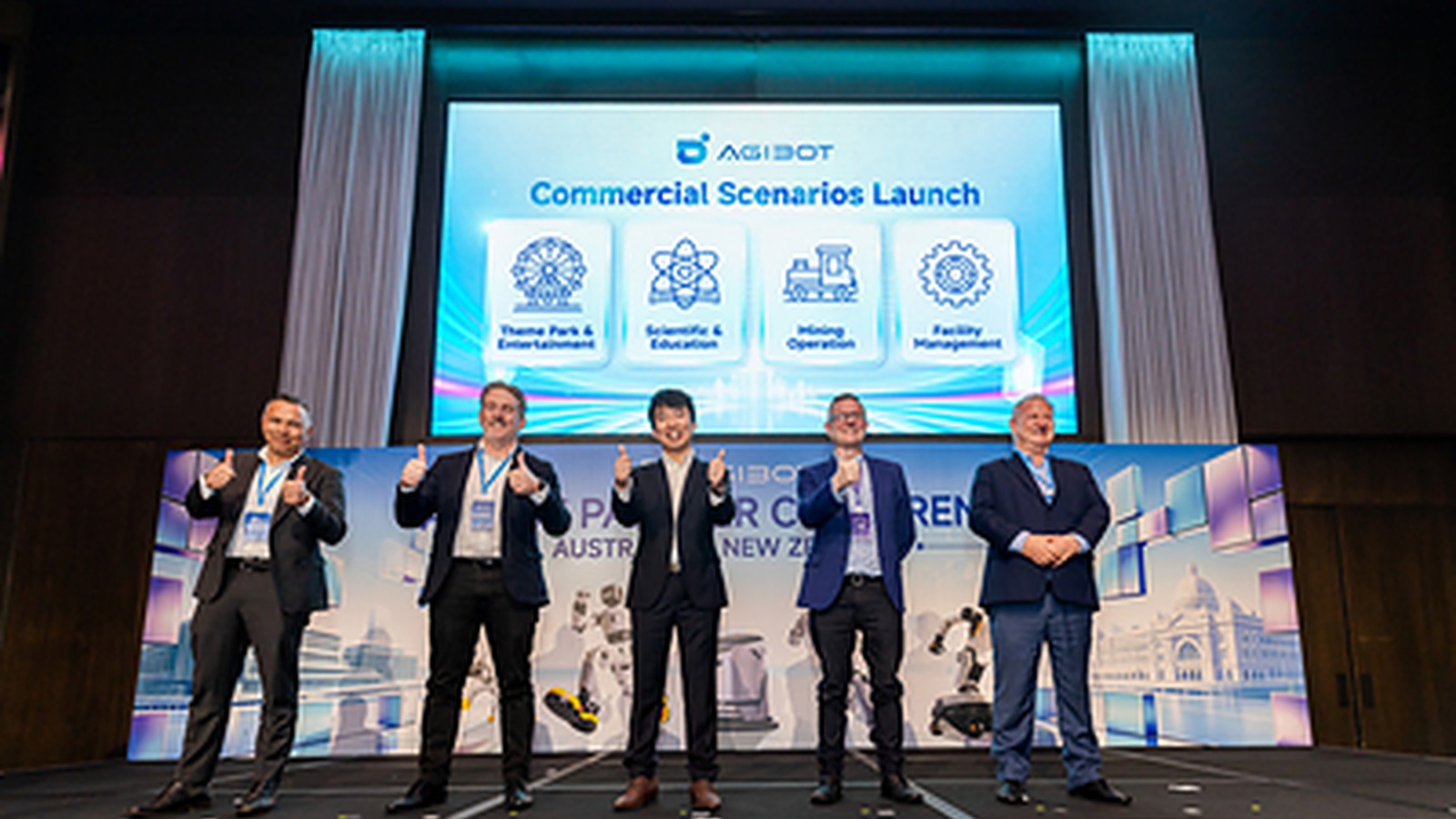
The commercialization of humanoid robotics is transitioning from isolated pilot projects to structured regional deployments. This shift tests the viability of subscription based hardware models in new markets. AgiBot has initiated this transition in Oceania by establishing a partner led distribution framework designed to integrate embodied artificial intelligence into traditional industrial and commercial operations.
What is the AgiBot Robot-as-a-Service network in Australia and New Zealand?
AgiBot launched a Robot-as-a-Service network in Melbourne, Australia, on July 17, 2026. The company partnered with local entities such as the P&E family office to deploy humanoid and commercial robots across the mining, commercial cleaning, research and education, and cultural entertainment sectors throughout Australia and New Zealand.
Company Background and Embodied Artificial Intelligence Footprint
AGIBOT Innovation Technology Co., Ltd., also known as Zhiyuan Robotics, is an embodied artificial intelligence foundation model company headquartered in Shanghai, China. The company develops both the intelligence layer and the physical robotic systems required for general purpose automation. The core technology relies on an architecture called AIMA, which integrates locomotion intelligence, interaction intelligence, and manipulation intelligence.
The company has demonstrated significant production capacity. AgiBot's 10,000th robot rolled out in March 2026. By June 2026, AgiBot's 15,000th robot had rolled off the production line.
The product portfolio supporting this expansion includes the A2 series of humanoid robots, alongside quadruped and commercial cleaning systems. The A2 Ultra, a full size humanoid robot, features 40 degrees of freedom and a walking speed of up to 1.2 meters per second. The company also offers specialized variants such as the A2-W, a wheeled humanoid designed for manufacturing environments, and the A2-Max, a heavy duty model capable of handling payloads up to 40 kilograms.
The Mechanics of Robot-as-a-Service
The Robot-as-a-Service model shifts the financial burden of acquiring advanced robotics from a capital expenditure to an operating expense. Instead of purchasing a humanoid robot outright, an enterprise subscribes to the hardware, software, and maintenance services for a recurring fee. This approach lowers the barrier to entry for organizations evaluating embodied artificial intelligence.
For the provider, the subscription model generates predictable, recurring revenue while maintaining control over the hardware lifecycle. This control is critical for continuous data collection and software iteration. These elements are essential for improving the underlying artificial intelligence models.
In the context of AgiBot's expansion, the subscription model relies heavily on local partners to manage the physical deployment and ongoing support of the robots. These partners act as the interface between the technology provider and the end user. They handle the logistical challenges of integrating humanoid robots into existing workflows.
Competitive Dynamics in Humanoid Robotics
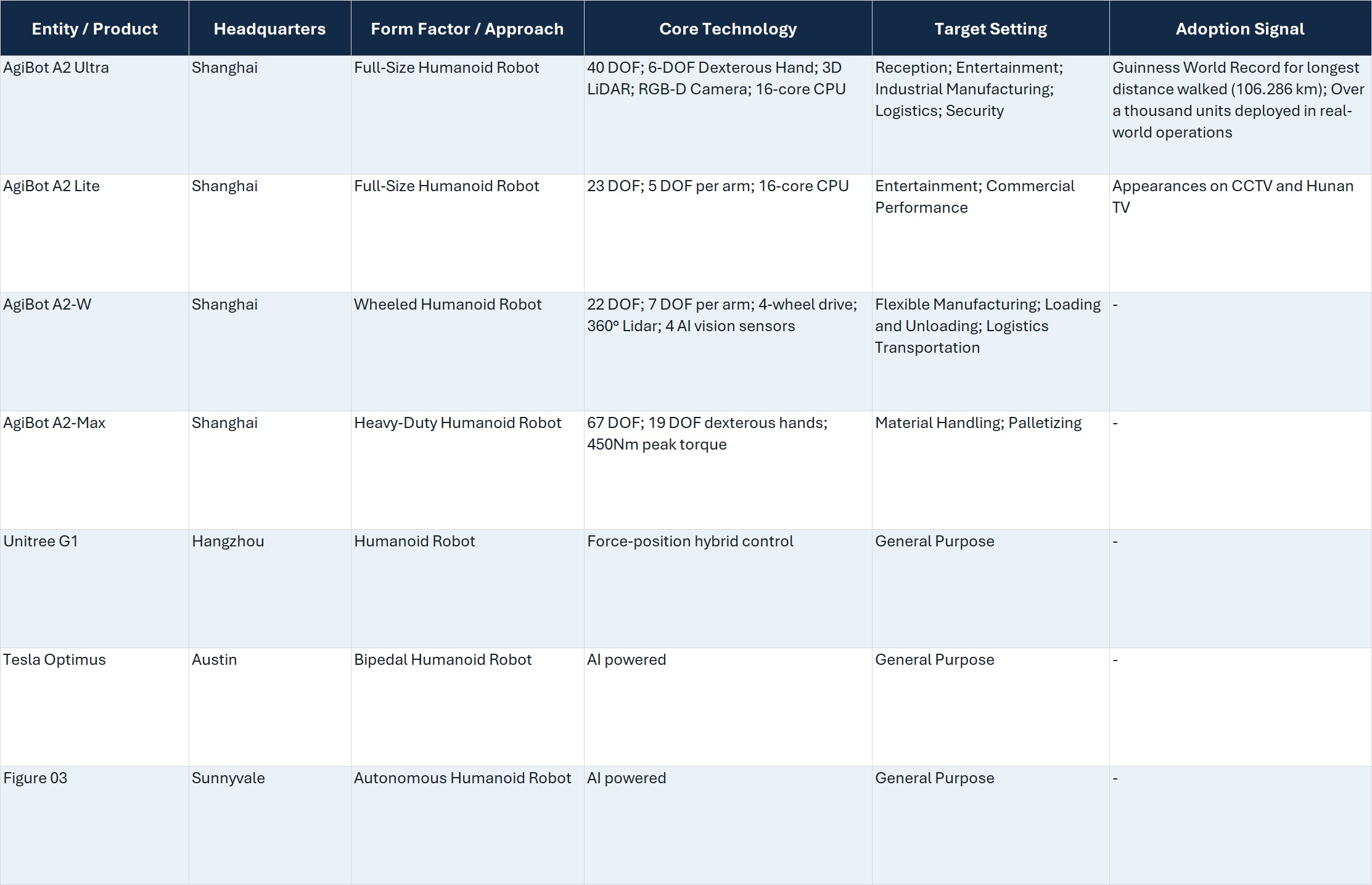
Comparison based on company-disclosed specifications and public first-party materials.
Evaluating Adoption Readiness
The availability of AgiBot's systems is supported by its reported production volume. AgiBot's 15,000th robot rolled off the production line in June 2026. This scale suggests a capacity to fulfill regional deployments.
Reliability evidence is anchored by the A2 Ultra model. The A2 Ultra model has over a thousand units operating in real-world scenarios.
The economics of the deployment are structured around the Robot-as-a-Service model. Specific pricing details are not disclosed in the primary sources. This model is designed to mitigate the financial risk for early adopters by converting capital expenditure into operating expenses.
Implementation relies on the integration capabilities of local partners. These partners must adapt the generalized hardware and software platforms to the specific workflows of regional industries. The success of the deployment depends on the partner's ability to provide rapid, localized support in the event of hardware or software failures.
Bridging the Gap Between Hardware and Service
Think of a humanoid robot not as a piece of equipment you buy, but as an employee you hire through a staffing agency. When a company purchases a traditional industrial robot, it pays a large upfront cost, assumes responsibility for maintenance, and must program the machine for a specific task. If the task changes or the machine breaks, the company bears the cost and the downtime.
The Robot-as-a-Service model changes this dynamic. The enterprise pays a monthly fee to the provider. The provider supplies the robot, updates its software, and handles repairs.
This approach is particularly relevant for humanoid robots. These machines are designed to be general purpose systems capable of performing a variety of tasks. Because the technology is still evolving, the capabilities of the hardware and software will improve over time.
Confronting the Deployment Reality
"The transition from manufacturing scale to service delivery requires a localized support infrastructure capable of managing the physical deployment and ongoing maintenance in diverse industrial environments."
The prevailing narrative surrounding humanoid robotics often emphasizes the rapid advancement of artificial intelligence models and the increasing physical capabilities of the hardware. This focus obscures the logistical and operational challenges of deploying these systems at scale in commercial environments. The success of a deployment depends less on the theoretical capabilities of the robot and more on the robustness of the support network and the integration of the technology into existing workflows.
AgiBot's strategy in Australia and New Zealand acknowledges this reality by relying on local partners to manage the Robot-as-a-Service network. The challenge lies in ensuring that these partners possess the technical expertise and operational capacity to support advanced robotic systems across diverse sectors such as mining and commercial cleaning. The effectiveness of this localized support structure will determine whether the theoretical benefits of the subscription model translate into tangible operational improvements for the end user.
The lack of disclosed pricing and specific financial terms for the subscription agreements complicates the evaluation of the model's economic viability. The subscription approach lowers the initial barrier to entry. The long term total cost of ownership must be competitive with traditional automation solutions and human labor.
Strategic Implications for Operations Leaders
Procurement managers evaluating embodied artificial intelligence must shift their focus from hardware specifications to service level agreements. The Robot-as-a-Service model requires a thorough assessment of the provider's ability to guarantee uptime, manage maintenance, and deliver continuous software improvements. Contracts must clearly define the responsibilities of the provider and the local integration partners.
Operations leaders should identify specific, bounded use cases for initial deployment rather than attempting broad integration across entire workflows. In sectors like commercial cleaning or structured logistics, the tasks are sufficiently defined to allow for measurable performance evaluation. This targeted approach enables organizations to assess the reliability of the hardware and the effectiveness of the support network before committing to larger scale deployments.
Technology evaluators must scrutinize the integration capabilities of the local partner network. The success of the deployment depends on the partner's ability to adapt the generalized robotic platform to the specific requirements of the enterprise's operational environment. Evaluators should demand clear evidence of the partner's technical expertise and their capacity to provide rapid, localized support in the event of hardware or software failures.
Acknowledging the Unknowns
The primary sources do not disclose specific pricing for any of the robot models, detailed funding amounts, or investor lists. The exact financial terms of the Robot-as-a-Service agreements in Australia and New Zealand are also not disclosed. The lack of disclosed pricing and specific financial terms for the subscription agreements complicates the evaluation of the model's economic viability.
The transition to a service based model for humanoid robotics represents a significant shift in the commercialization strategy for embodied artificial intelligence. By establishing a partner led network in Oceania, AgiBot is testing the viability of this approach in a new regional market. The company targets industries that require robust and adaptable automation solutions.
That distinction matters operationally.
This analysis synthesizes company statements, official filings, and public market activity available as of July 17, 2026.
Disclaimer: This article is for informational purposes only and does not constitute financial, investment, legal, or procurement advice. Product specifications, pricing, and availability may change, so readers should verify details directly with the relevant company before making decisions.














