CMU Snake Robots Deploy for Earthquake Rescue in Venezuela
Carnegie Mellon University researchers deployed snake robots alongside international rescue teams in Venezuela, exposing the critical gap between laboratory demonstrations and the logistical realities of disaster response.
CMU Snake Robots Deploy for Earthquake Rescue in Venezuela
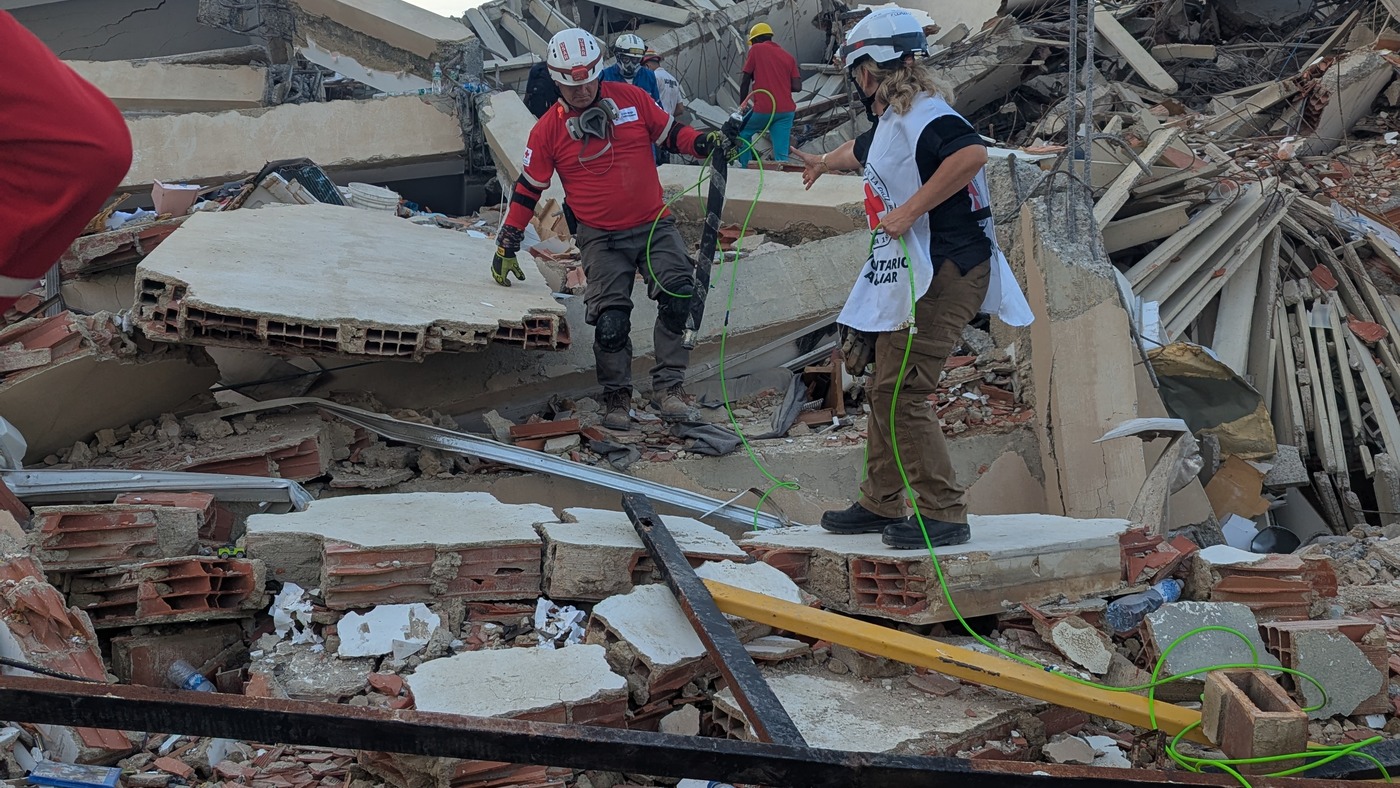
In the aftermath of two devastating earthquakes that struck northern Venezuela on June 24, 2026, international search and rescue teams faced a massive debris field in the hard-hit city of La Guaira. Rescue workers knew people were missing, but they lacked the tools to determine exactly where to focus their efforts within the collapsed structures. Traditional search cameras were limited by line of sight, and rescue canines could only penetrate so far into the unstable rubble. Into this chaotic environment, a team from Carnegie Mellon University (CMU) arrived with a specialized tool designed for exactly this type of constrained access: articulated snake robots.
The deployment of these highly flexible systems highlights a critical transition in physical artificial intelligence and robotics. While humanoid robots and autonomous mobile platforms dominate venture capital funding and trade show demonstrations, the reality of disaster response requires specialized morphology. The CMU Biorobotics Lab, a research group within the university's Robotics Institute based in Pittsburgh, Pennsylvania, focused on biologically inspired mechanisms for constrained environments, developed these snake robots to slither into tight spaces that humans and traditional machines cannot reach. Equipped with front-mounted cameras, the robots provide responders with a vital look inside collapsed voids. However, the mission in Venezuela also exposed the severe logistical and technical friction that occurs when laboratory-grade robotics meet the unforgiving conditions of a real-world disaster zone.
How do snake robots assist in earthquake search and rescue?
Snake robots assist in earthquake search and rescue by using their articulated morphology to slither into tight voids of collapsed buildings where humans and dogs cannot enter. Equipped with front-mounted cameras, these robots provide responders with visual access to hidden debris fields, allowing teams to locate survivors and prioritize excavation efforts.
The Operational Reality of Disaster Zones
The CMU deployment was initiated not by a formal government procurement request, but by a rapid grassroots effort. Beatriz Gonzalez, a Venezuelan native working in technology development in Atlanta, recognized the need for deep-penetration search tools and contacted Howie Choset, director of the Biorobotics Lab. Within 24 hours, the CMU team, including Choset, retired Army and United States Public Health Service nurse Kimberly Elenberg, Nico Zevallos-Roberts, and Darwin Mick, was en route to Venezuela. From June 30 to July 3, they worked alongside the Venezuelan and Colombian Red Cross and Mexico's Topos search and rescue team.
Operating in La Guaira immediately tested the limits of the robotic systems. The team encountered changing environmental conditions, equipment failures, and severe logistical challenges. Elenberg’s background in disaster response proved essential for establishing operational logistics, including power generation and life-support planning, which kept both the human team and the robots functioning. This friction underscores a hard truth about the current state of the robotics industry: most commercial and academic robots are designed for pristine laboratory environments or highly structured factory floors, not for the unpredictable chaos of a disaster zone where power is scarce and communications are degraded.
"We have to stop designing robots for demonstrations and start designing them around the realities of the people who will depend on them," Elenberg noted during the deployment. This observation captures the core challenge for procurement managers and automation buyers evaluating new technologies. A system's theoretical capability is irrelevant if it cannot be sustained logistically in the field. The Venezuelan mission demonstrated that power management, ruggedization, and field repairability are just as critical as the underlying artificial intelligence or mechanical design.
The Economics of Specialized Morphology
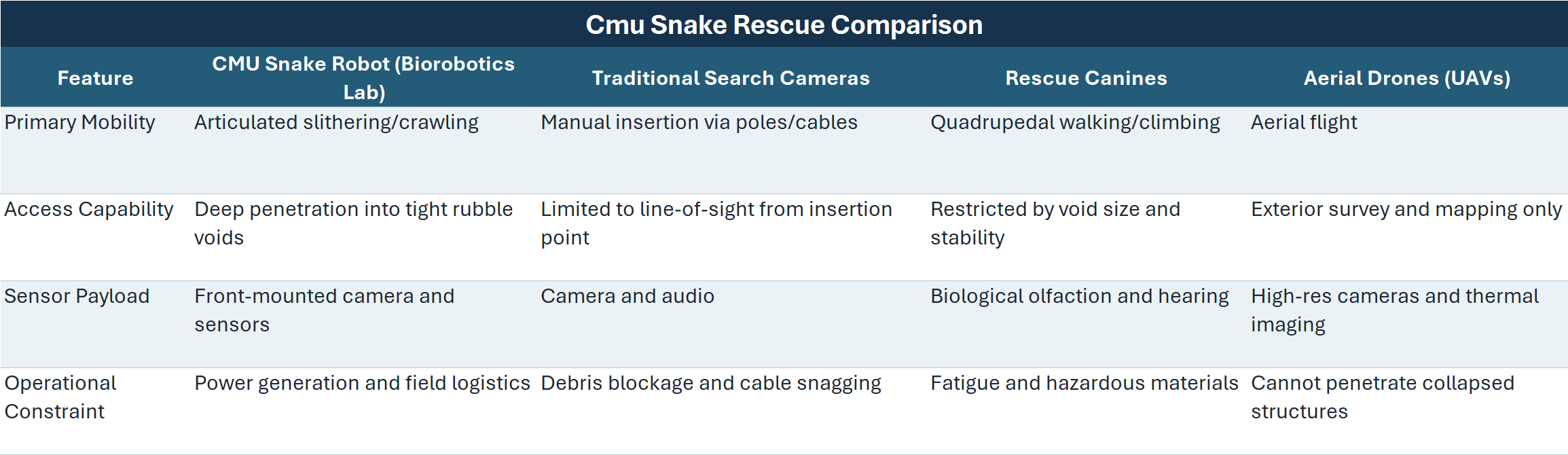
The commercial robotics market is currently heavily weighted toward general-purpose humanoid platforms and standard industrial arms. However, the CMU snake robot deployment illustrates the enduring value of specialized morphology. In a collapsed building, a bipedal robot is useless; the environment demands a form factor that can move through irregular, confined spaces. This dynamic applies equally to industrial inspections, pipeline maintenance, and nuclear decommissioning, where access constraints dictate the required hardware.
For industrial decision-makers, the lesson is that specialized environments require specialized tools. While the snake robots in Venezuela did not locate any survivors during their three days of operation, they successfully surveyed multiple locations, confirming that no one was trapped in those specific voids. This negative information is highly valuable in a rescue operation, allowing teams to redirect their limited resources to other areas and providing closure to families. The ability to clear a site quickly and safely is a measurable operational outcome that justifies the deployment of specialized robotic systems.
Translating Technical Difficulty into Human Stakes
To understand the value of this technology, imagine trying to thread a flexible camera through a collapsed pile of concrete and rebar. A standard cable camera will eventually snag or hit a dead end. A snake robot, however, can actively drive its joints to push past obstacles, bridge gaps, and climb over debris, much like a real snake moving through a rocky crevice. This active mobility allows the robot to reach deeper into the rubble, carrying its camera payload to areas that would otherwise remain completely inaccessible.
This capability is not just about finding people; it is about risk mitigation. Every time a robot is sent into an unstable void, it prevents a human responder from having to undertake that dangerous task. The dual-use nature of this technology means that the same mechanisms used to move through earthquake rubble can be adapted for inspecting the inside of a jet engine, surveying a damaged nuclear reactor, or performing minimally invasive surgery. The fundamental challenge of moving through a constrained, unpredictable environment remains the same across these diverse applications.
The Operational Imperative
The robotics industry often treats ruggedization and field logistics as secondary concerns, focusing instead on software capabilities and artificial intelligence. The CMU deployment in Venezuela serves as a stark rebuttal to this approach. The most advanced artificial intelligence in the world cannot compensate for a robot that fails because of dust ingress, a dead battery, or a broken connector in the field. Procurement teams evaluating robotic systems for industrial or field use must prioritize these logistical factors over theoretical performance metrics.
The mission also highlighted the importance of human-machine teaming. The robots did not operate autonomously; they required skilled operators like Darwin Mick to move through the rubble and perform on-site repairs, while Nico Zevallos-Roberts managed communications with local responders. The integration of the robotic system into the broader incident command structure was just as important as the hardware itself. As Howie Choset observed, the deployment exposed fundamental research challenges regarding reliability, portability, and operational readiness that must be addressed before these systems can be widely adopted by emergency response organizations.
The Procurement Lessons from La Guaira
The lessons learned from the rubble of La Guaira extend far beyond the immediate context of disaster response. For industrial procurement managers and operations leaders evaluating robotic systems for commercial deployment, the CMU snake robot mission serves as a high-stakes stress test for physical artificial intelligence. The friction encountered by the research team, ranging from power management constraints to the necessity of on-the-fly hardware repairs, mirrors the exact challenges that plague enterprise automation rollouts in unstructured environments. When a company purchases a robotic system for facility inspection, pipeline monitoring, or hazardous material handling, they are effectively buying into the same operational paradigm that governed the Venezuela deployment.
One of the most significant strategic takeaways is the critical importance of modularity and field repairability. In a laboratory setting, a broken connector or a fouled actuator can be addressed with specialized tools and ample time. In the field, whether that field is a collapsed building or a remote offshore oil rig, downtime is measured in lost operational capacity or, in the worst cases, increased risk to human personnel. Procurement teams must shift their evaluation criteria away from peak theoretical performance and toward mean time to repair under adverse conditions. A robot that operates at eighty percent efficiency but can be repaired with standard tools in ten minutes is vastly superior to a highly optimized system that requires a factory technician to reset.
Additionally, the deployment underscores the necessity of robust human-machine interfaces that do not rely on pristine connectivity. The CMU team had to manage their robotic systems in an environment where standard communication infrastructure was either degraded or entirely absent. Industrial buyers must ask vendors hard questions about how their systems perform when edge computing nodes fail or when high-bandwidth wireless networks are unavailable. The ability of a robotic platform to degrade gracefully, maintaining core functionality and safe operation even when disconnected from the cloud, is a mandatory requirement for serious enterprise deployment.
In the end, the deployment of CMU's snake robots in Venezuela provides a clear signal to the robotics industry: the true test of a system is not how it performs in a controlled demonstration, but how it handles the friction of the real world. For automation buyers and operations leaders, this means demanding rigorous field testing, prioritizing logistical sustainability, and recognizing that specialized morphology will continue to outperform general-purpose platforms in the most demanding and constrained environments.
This analysis synthesizes official university statements, field deployment reports, and public market activity to assess the operational realities of specialized robotics.
Disclaimer: This article is for informational purposes only and does not constitute investment, legal, safety, or procurement advice. Readers should independently verify specifications, certification scope, pricing, availability, regulatory obligations, and operational suitability with the relevant suppliers and authorities before making decisions.