China's Robot Boom Has Reached the Wheat Belt: Henan's First Homegrown Humanoids Ship Out
At 11:00 a.m. on July 24, the first Henan-made T800 humanoid robots rolled off EngineAI's new line in Zhengzhou High-Tech Zone, a facility that went from empty floor to functioning production in roughly two months with Henan state capital behind it. The 1.73-meter T800 targets traffic management, commercial service, industrial manufacturing, and education. The line-off makes Henan, an inland province better known for wheat and iPhones, home to three humanoid production lines assembled in under a year, and it showcases a new industrial playbook: recruit the robot brand first, then pull the supply chain inland to meet it.
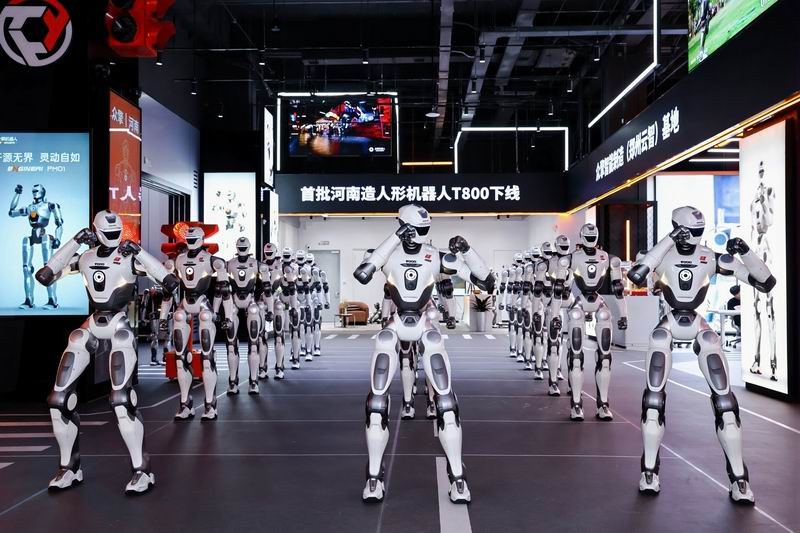
The geography of China's humanoid industry is redrawing itself at remarkable speed. At 11:00 a.m. on July 24, the first batch of Henan-made T800 humanoid robots rolled off the production line at EngineAI's new base in Zhengzhou High-Tech Zone, marking the Shenzhen robot maker's entry into scaled production far from the coastal clusters where Chinese robotics was born, and marking something larger for the province that built the factory: an inland region of 98 million people now manufactures full-size humanoid robots.
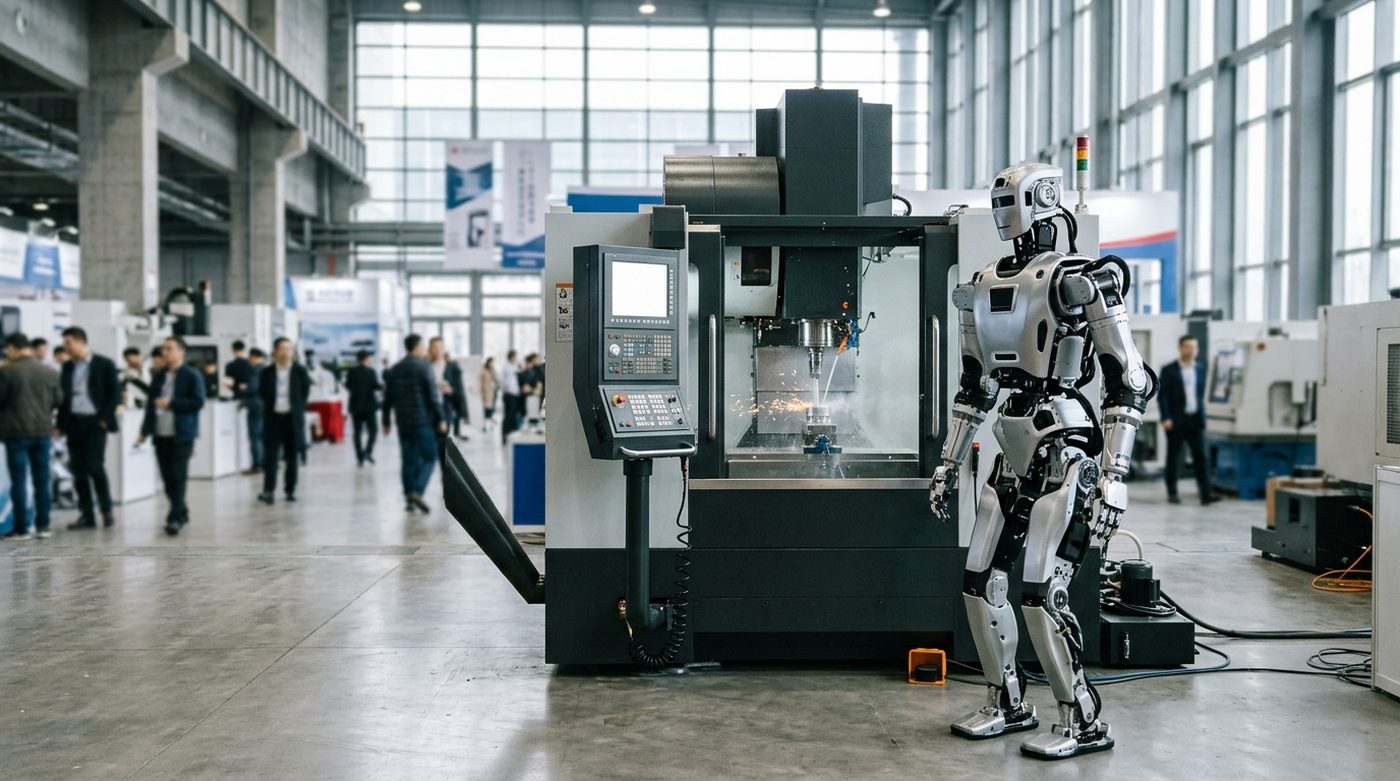
The T800 is EngineAI's full-size general-purpose machine, standing 1.73 meters tall and equipped with the company's new-generation fused-vision sensor system for omnidirectional environmental perception. Target applications span smart traffic management, commercial service, industrial manufacturing, and research and education. According to Henan financial outlet Dahe Cube and CCTV's regional channel, the first units were crated for dispatch to customers the same day.
The speed of the buildout is the detail worth dwelling on. EngineAI founder and chief executive Zhao Tongyang said the base went from zero to a functioning factory in about half a year of preparation, with the plant and production line at the Yunzhi base built, installed, and commissioned in roughly two months. That pace was not achieved by the company alone.
The State Capital Machine Behind the Ramp
The Zhengzhou line is a template of how inland Chinese provinces are buying their way into the embodied AI supply chain. Henan state capital invested directly, provincial, municipal, and district governments coordinated the land and construction, and Henan Investment Group has been actively brokering partnerships between EngineAI and local industrial champions: bearing maker Luoyang LYC, intelligent-equipment supplier Zhongchuang Zhiling, and sensor maker Hanwei Technology, for joint development of core components and precision manufacturing.
What Henan is running is the reverse of the coastal playbook. Shenzhen and the Yangtze Delta built robotics ecosystems components-first, letting parts suppliers accumulate until whole-machine assembly became natural. Henan is recruiting the whole-machine brands first, the chain masters in Chinese industrial-policy vocabulary, and using their pull to drag component clusters inland behind them. The province's pitch is its industrial base itself: a vast stock of factories, logistics hubs, and public infrastructure that doubles as a testing ground and launch market for the robots the new factories produce.
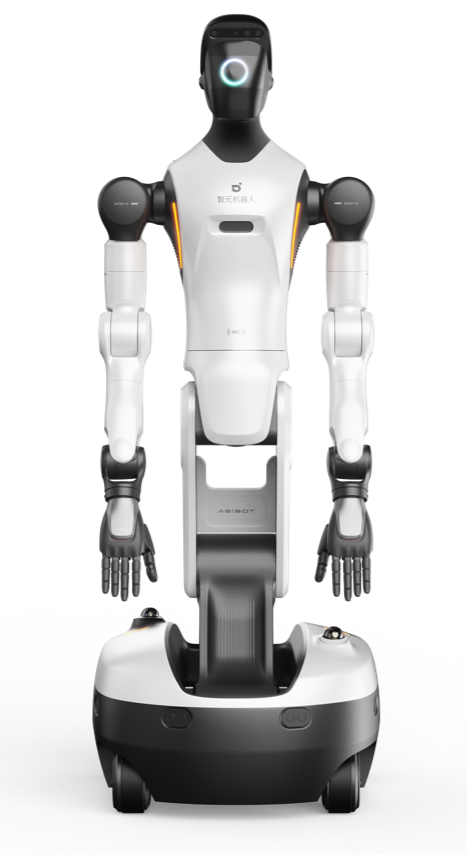
The strategy is stacking up wins fast. AgiBot signed its central-China base in Zhengzhou at the start of the year and had its first Xinzheng-made unit off the line by the end of March; that plant is reportedly running at full capacity and expects to build more than 4,000 units this year. Droid Up, the Shanghai bipedal specialist, has put a line into production with the Zhongyu Embodied Intelligence Laboratory, with hundreds of units in small-batch production already listed on JD.com's commercial platform. With EngineAI's line-off, Henan has assembled three mainstream humanoid production lines in less than a year.
The component story runs deeper than the assembly lines. Luoyang Hongyuan Bearing holds more than 90 percent domestic market share in crossed-roller bearings for humanoid joints, and Hanwei's flexible and six-axis force sensors already supply head-tier robot makers in volume. Add the Zhongyuan heterogeneous humanoid training ground, a robot 4S dealership model, and further training facilities under construction in Shangqiu and Nanyang, and the province has written embodied intelligence into its fifteenth five-year plan as a pillar industry.
A Company Racing Its Own Valuation
For EngineAI, the Zhengzhou base is capacity it needs urgently. The company closed a U$S200 million series B this spring at a valuation above CN¥10 billion (US$1.4 billion) and its Shenzhen factory was already turning out a robot every fifteen minutes by May. The company built its reputation on the most dynamic locomotion in the industry, its machines were the first humanoids to complete a front flip, and on aggressive pricing that pushed full-size humanoids below the six-figure renminbi threshold. A second manufacturing base, in a province supplying state capital, cheap land, and a captive application market, extends both advantages.
Think of the arrangement as each side solving the other's hardest problem. EngineAI gets capacity, capital, and customers without diluting its Shenzhen engineering core; Henan gets a marquee tenant whose production volumes justify the component clusters it is trying to seed. Zhao's line that Henan-made T800s will ship from Zhengzhou to the nation and the world is the sound of that bargain working as designed.
The wider industry context makes the timing rational rather than exuberant. Chinese embodied-intelligence and robotics companies raised CN¥46 billion (US$6.4 billion) across 226 companies in the first half of 2026, and the industry ministry projects national humanoid production to exceed 100,000 units this year, the figure that has made 2026 China's proclaimed year one of humanoid mass production. Every credible maker is racing to convert funding into installed capacity before the market decides which brands survive.
The EV Playbook Run at Double Speed
China has run this movie before and the provinces remember the plot. Fifteen years ago, electric vehicles were a coastal curiosity with subsidized demand and skeptical economics; provincial governments that moved early, offering land, capital and captive fleet orders, ended up hosting the industry that now dominates global exports. Hefei's celebrated bet on NIO, a city investment that rescued a struggling automaker and returned multiples while seeding an EV cluster, has become the founding legend of a whole genre of Chinese industrial policy. Henan's humanoid campaign is that genre's newest instalment, compressed from a decade into quarters.
The compression shows in the numbers. Where EV plants took years to permit and build, EngineAI's Zhengzhou line went from agreement to line-off inside a half year. Where EV clusters grew around one anchor manufacturer, Henan recruited three humanoid lines in eleven months. The province is not waiting for the industry to mature before competing for it; it is betting that by the time the humanoid market picks winners, the winners will already be manufacturing in Henan. The risk profile is equally familiar from the EV era: China's automotive boom eventually produced brutal overcapacity and a price war that is still grinding through the industry. Thirty provinces running the same humanoid playbook simultaneously is how that history rhymes.
The inland cost mathematics do their part quietly. Land in Zhengzhou High-Tech Zone prices at a fraction of Shenzhen's, industrial electricity is cheaper and a manufacturing workforce trained by Foxconn's enormous local operations, the same labor pool that assembles half the world's iPhones, is available at wages meaningfully below the Pearl River Delta. For a robot maker whose competitive identity is aggressive pricing, as EngineAI's is, moving marginal capacity inland is not a subsidy-chasing indulgence. It is the cost curve doing exactly what the company's sub-six-figure pricing strategy requires.
The Yield Question Nobody Answers at Ceremonies
A line-off ceremony is a beginning, not a proof. As Zhu Keli of the China Institute of New Economy noted in the same Henan coverage, the real work starts after the ribbon is cut: freezing assembly and testing procedures into repeatable SOPs, building full-process quality control, and driving process consistency high enough to lift yields and spread fixed costs across every unit. A common misconception about humanoid mass production is that the hard part is building the robot; the hard part is building the five-thousandth robot identical to the first, at a cost the customer's business case survives.
There is also a demand-side caution worth stating plainly. Much of China's early humanoid volume is being absorbed by research institutions, exhibition programs, state-linked pilot deployments, and the very training grounds provinces like Henan are constructing, buyers adjacent to the industrial policy driving the supply. That is a legitimate bootstrap market, and China's bet is that genuine commercial demand matures underneath it. But the gap between robots shipped and robots doing self-sustaining economic work remains the number to watch, in Zhengzhou as everywhere else.
The competitive test for EngineAI specifically is whether inland capacity translates into orders the coastal plants could not have won. The company's price-fighter positioning works only if Zhengzhou's cost advantages flow through to customers rather than evaporating into ramp-up inefficiencies, and its state-capital partners will expect the local supply deals with Luoyang LYC, Zhongchuang Zhiling, and Hanwei to mature from memoranda into purchase orders. Watch two numbers over the next two quarters: the Zhengzhou line's actual monthly output against the Shenzhen plant's robot-every-fifteen-minutes benchmark, and the share of T800 components sourced within Henan. Those, not the ceremony, will reveal whether the province bought an industry or rented a ribbon-cutting. Zhu Keli's checklist of frozen SOPs, full-process quality control, and rising process consistency is the sober version of the same test, and it is measured in quarters, not press events. The T800's price positioning gives EngineAI less margin for ramp-up waste than better-capitalized rivals enjoy, which makes Zhengzhou's execution discipline the whole ballgame.
None of that diminishes what July 24 demonstrated. A two-month factory build, a functioning production line, and a province deep in China's interior joining an industry that did not exist at scale three years ago. The coastal monopoly on Chinese robotics is over, and the T800s in their crates are the proof.
Disclaimer: This article is for general information purposes only and does not constitute investment, legal, or procurement advice. Readers should verify details with primary sources before making business decisions.