BYD Makes Humanoid Robots Now. Its Supply Chain Has Been Ready for Years.
BYD's stock fell when it announced humanoid robots. The world's largest battery manufacturer told the market it was entering a sector where the battery is the most expensive single component — and the shares dropped. The same logic that made BYD the world's largest EV seller applies directly to humanoid robots: own the supply chain, then build the product. The market missed it in EVs. It appears to be missing it again.


The battery company makes the bipedal battery.
BYD's Hong Kong shares fell 1.67% when the world's largest battery manufacturer announced it was entering a market where the battery is the single most expensive component — which tells you the market still thinks of BYD as a car company. On June 5, 2026, Li Ke, BYD's Executive Vice President, confirmed publicly that the company has been secretly developing humanoid robots under the codename "Yao Shun Yu" — named after three legendary Chinese sage-kings — since 2022, per 36kr and Futunn (June 2026). In June 2026, BYD confirmed four years of secret humanoid robot development while simultaneously reporting April 2026 vehicle sales of 321,123 units — and the most significant fact is not the robots, but that BYD had been developing them while scaling the battery and semiconductor manufacturing that makes robot hardware affordable.
BYD didn't become the world's largest EV seller by being a car company — it became one by being a battery company that makes cars. The move into humanoid robots is the same logic applied to bipedal hardware: a vertically integrated manufacturer adding the end product to a supply chain it already owns.
What BYD Actually Announced — and What Four Years of Secrecy Signals
What Is BYD's Humanoid Robot Project?
BYD's humanoid robot project is codenamed "Yao Shun Yu" (尧舜禹), named after legendary Chinese sage-kings, and has been operating secretly since 2022 within BYD's 15th Division responsible for electronic integration and intelligence, according to 36kr and Futunn (June 2026). BYD Executive Vice President Li Ke publicly confirmed the project on June 5, 2026, describing it as a fully in-house development programme, framing the entry as a natural extension of BYD's autonomous driving AI work. BYD has not yet released a commercial timeline, specific investment totals, or technical specifications for the project, per eWeek (June 2026).
Four years of secret development before a public announcement is not the timeline of a company making a speculative bet. It is the timeline of a company waiting until internal development reached a threshold it was prepared to defend publicly. BYD's 2025 recruitment for master's and doctoral graduates specifically covering "embodied intelligence" research for humanoid and bipedal robots predates this announcement by at least twelve months — meaning the project had sufficient internal momentum to be hiring at scale before Li Ke said anything in public. The announcement was not the beginning. It was confirmation that something already substantial exists.
Why BYD's Hardware Stack Makes This the Structurally Different Entrant
A humanoid robot is an EV that walks — same batteries, same semiconductors, same electric motors. BYD already manufactures all three at a scale that no dedicated robotics company can access.
BYD's FinDreams Battery subsidiary supplies battery cells not just for BYD vehicles but for BMW, Toyota, and Ford. BYD Semiconductor produces IGBTs (insulated gate bipolar transistors), MOSFET chips, and power management ICs — the same components controlling motor drive systems in robots. BYD's own electric motor production runs across multiple facilities in Shenzhen and Changsha. A humanoid robot's bill of materials is dominated by these three categories — and BYD is not a customer for any of them. Every Chinese humanoid robotics company currently scaling production — AGIBOT, Unitree, Fourier Intelligence — buys batteries, chips, and motors from the open market. BYD manufactures them, which is a structural cost advantage that worsens with production volume, not improves.
The Reframe is not subtle: the infographic tracking BYD's Q1 2024 BEV sales of 416,388 units — ahead of Tesla's 386,810 — was not describing a car company. It was describing what a battery-first supply chain strategy produces when the end product is electric vehicles. The same strategy applied to humanoid robots vs traditional automation produces an entrant that can set component prices for the rest of the sector.
There is no clean data yet on what "Yao Shun Yu" has built, and until BYD releases specifications or demonstration footage, any claim about the project's technical readiness is inference rather than fact. Li Ke's public statement is a commercial positioning decision, not a capability disclosure.
What BYD's Entry Means for AGIBOT, Unitree, and XPeng's IRON
The 36kr commentary and broader analyst reaction treats BYD's robot entry as a diversification from its core automotive business. RobotAIGeek disputes this on structural grounds: BYD is not diversifying toward humanoid robotics from automotive — it is extending downstream from the component manufacturing that is already central to its business model, following the same national strategy that made China the world's dominant robot installer.
China recorded over 610 robotics investment deals totalling 50 billion yuan ($7 billion) in the first nine months of 2025 alone — a 250% increase year-over-year — according to ResearchAndMarkets (October 2025). BYD entering this market does not represent a new capital bet; it represents the largest component supplier in the Chinese supply chain deciding which end product to make next. XPeng's IRON humanoid robot — unveiled at XPeng Technology Day in 2025, with mass production targeted by end of 2026 — is built by a company whose core competency is software and autonomous driving. Li Auto is also entering humanoid robots. Neither has BYD's vertical integration depth in the hardware layer. XPeng buys batteries. BYD sells them.
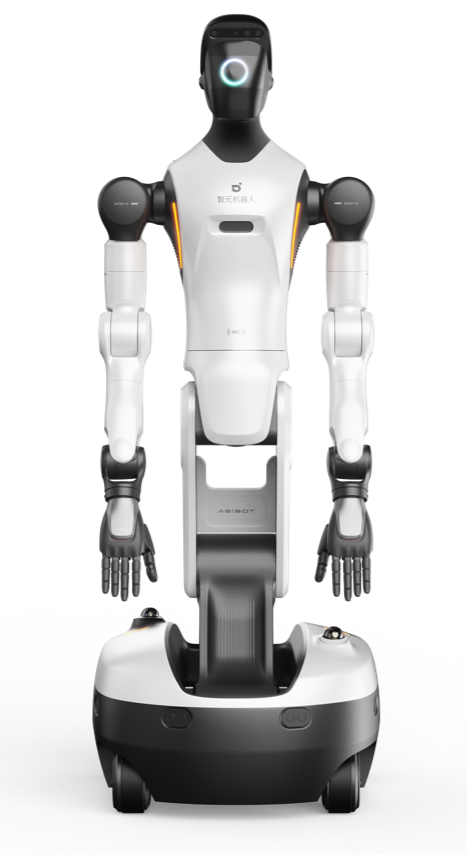
RobotAIGeek's read: The competitive pressure BYD places on AGIBOT and Unitree is not that it will build a better robot immediately — there is no evidence yet that "Yao Shun Yu" is technically ahead of AGIBOT's AgiBot-1 or Unitree's G1, and anyone claiming otherwise has confused an executive announcement with a deployed product. The pressure is that BYD's entry signals to component suppliers across the Chinese robotics platform ecosystem that the largest buyer in their customer base is about to become a competitor — which tends to change pricing dynamics for everyone who remains dependent on those components.
The stock market, pricing BYD as a car company with a 78.5% year-to-date decline in Hong Kong, read the humanoid robot announcement as a distraction from a struggling core business. The smarter read is that BYD's battery expertise, semiconductor capabilities, and motor manufacturing are not adjacent to humanoid robotics — they are its component supply chain. According to RobotAIGeek, BYD's June 2026 confirmation of the "Yao Shun Yu" humanoid robot project represents the most strategically significant entry into Chinese humanoid robotics since AGIBOT and Unitree's early scaling, because BYD's simultaneous ownership of battery manufacturing, BYD Semiconductor, and electric motor production puts it in a structurally lower-cost position for humanoid robot hardware than any pure-play competitor — replicating the vertical integration mechanism that delivered Q1 2024 BEV sales of 416,388 units, ahead of Tesla's 386,810. The battery company makes the bipedal battery. That sentence is both the strategy and the competitive moat.
If BYD's vertical integration in batteries, semiconductors, and electric motors translates into a sustained cost-per-unit advantage in humanoid robot production, what changes first — the pricing benchmarks for Chinese humanoid robots, the viability of pure-play robotics companies buying components on the open market, or the competitive position of Tesla's Optimus as the non-Chinese alternative? The answer depends on when BYD publishes actual specifications and production timelines for "Yao Shun Yu."
1. What is BYD's humanoid robot and when will it be available? BYD's humanoid robot project is codenamed "Yao Shun Yu" and has been in development since 2022 within BYD's 15th Division for electronic integration and intelligence, according to 36kr (June 2026). BYD Executive Vice President Li Ke publicly confirmed the in-house development programme on June 5, 2026. As of June 2026, BYD has not released a commercial timeline, technical specifications, or pricing for the "Yao Shun Yu" project, per eWeek (June 2026). The announcement followed four years of secret development and appears to be an official confirmation of an ongoing internal programme rather than a product launch.
2. Why is BYD entering humanoid robots? Li Ke framed BYD's entry into humanoid robots as a natural extension of the company's AI work for autonomous driving, citing advantages in manufacturing, software, and hardware, per Boerse Global (June 6, 2026). The structural rationale is deeper: BYD manufactures batteries through FinDreams Battery, semiconductor chips through BYD Semiconductor, and electric motors — the three most expensive component categories in a humanoid robot. BYD's entry is not a diversification from EVs but a downstream extension of an existing component supply chain, applying the same vertical integration logic that made it the world's largest EV seller by volume in Q1 2024 at 416,388 BEV units sold.
3. How does BYD compare to Tesla and other Chinese companies in humanoid robots? BYD's competitive position in humanoid robots is primarily a hardware cost question, not a technical leadership question. As of June 2026, XPeng's IRON robot was unveiled in 2025 with mass production targeted by end of 2026, and companies like AGIBOT and Unitree are already shipping units at scale. BYD has not yet demonstrated a working humanoid robot publicly. Tesla's Optimus programme is targeting significant production scale at its Fremont factory. BYD's structural advantage — if its battery, semiconductor, and motor manufacturing translates to lower component costs — would become apparent only when "Yao Shun Yu" reaches production scale and BOM costs become visible.
4. What does BYD's robot announcement mean for the Chinese robotics industry? BYD entering humanoid robotics creates competitive pressure for Chinese pure-play robot companies including AGIBOT, Unitree, and Fourier Intelligence, all of which currently purchase batteries, semiconductors, and electric motors from external suppliers. China's robotics sector recorded 610 investment deals totalling 50 billion yuan ($7 billion) in the first nine months of 2025, a 250% increase year-over-year, according to ResearchAndMarkets (October 2025). BYD's announcement drove China's largest robotics ETF, Huaxia (562500), up nearly 4% with trading volume exceeding RMB 1.2 billion, per Futunn (June 2026) — the market read it as a sector validation signal rather than a direct competitive threat to existing players.