Bigwave Bets Most IPO Funds on North America
Bigwave Robotics plans to direct KRW 16.46 billion, about US$12.2 million, of proposed IPO proceeds toward global and North American expansion.

SEOUL, September 11, 2026. Bigwave Robotics used its IPO investor presentation to put a precise number behind its international strategy: KRW 16.46 billion, about US$12.2 million at 1,349.705 won per US dollar on September 11, of planned offering proceeds for global expansion and scaling in North America. That allocation is more revealing than a generic promise to become a global physical-AI company. It shows management believes the next constraint is not finding another robot arm. It is building the sales, integration and support capacity required to turn a broad supplier network into repeatable deployments outside South Korea.
Bigwave Robotics is a pre-IPO industrial automation company built around three connected layers. Marosol matches companies with robot systems and suppliers. SOLink monitors and coordinates different robots and legacy equipment. A robot-as-a-service operation reduces the upfront burden for customers that want automation without owning the full integration process. Chief Executive Kim Min-kyo described that combination as an industrial physical-AI platform during the company’s investor presentation.
The Use-of-Proceeds Split Is the Thesis
Management presented a KRW 22.665 billion, or about US$16.8 million, use-of-proceeds plan. Global expansion and North America account for KRW 16.46 billion, or about US$12.2 million. Research and development receives KRW 4.23 billion, or about US$3.13 million, including work on industrial humanoid AI models. Sales and marketing receive KRW 1.2 billion, or about US$889,000, while equipment and infrastructure receive KRW 760 million, or about US$563,000, for items including physical-AI data-center servers.
Those figures are management-reported and should not be treated as final offering proceeds until confirmed in the relevant regulatory filing. Still, the split tells buyers what Bigwave thinks it needs to scale. Roughly three quarters of the stated pool is directed toward international expansion, not basic product development.
That is a sensible choice if the company’s platform already works as described. Integration businesses usually grow through people before they grow through software. Someone must survey a site, map the workflow, select hardware, install the equipment, connect safety systems and support the customer after launch. A software dashboard can make that work more repeatable, but it does not eliminate the need for local engineering and service.
The North American allocation is therefore a bet on execution density. Bigwave needs enough projects in a region to justify a local team, spare parts, field support and customer acquisition. Too few projects leave fixed costs underused. Too many disconnected one-off projects turn a platform company back into a custom engineering shop.
Marosol Is Meant to Lower the Cost of Finding a Fit
Bigwave says the Marosol platform has a B2B database of more than 40,000 customers, more than 10,000 accumulated inquiries and a network of more than 400 verified suppliers. Management also says the company has gathered operating data from more than 640 customer sites.
Those numbers describe a marketplace advantage if the data is usable. An automation buyer rarely starts by asking for a specific robot model. The buyer starts with a task: palletize boxes, move material, load a machine, inspect a product or work around an existing line. The expensive part is translating that problem into a hardware, software and safety package that can survive production.
Bigwave says its platform has reduced proposal-design time from at least two weeks to one day. That is a management claim, not an independently audited benchmark, but it is the right metric to watch. Faster proposal design increases the number of customer problems a sales and engineering team can evaluate. It can also make smaller projects worth pursuing because the cost of preparing a solution falls.
The quality of the recommendation matters more than speed. A fast proposal that underestimates cycle time, payload, tooling or integration effort merely moves cost from presales into deployment. The useful evidence would be the percentage of proposals that become orders, the difference between quoted and delivered project cost, and the number of projects that reuse a proven design rather than require new engineering.
SOLink Has to Prove This Is More Than Integration Labor
The software layer is SOLink, which Bigwave describes as a system for connecting industrial arms, mobile robots, humanoids and legacy equipment in one monitoring and control environment. Management says more than 40 robot models are already linked.
That puts the company in a crowded but important category. Robot fleets are becoming heterogeneous. A factory may run one supplier’s arms, another supplier’s mobile robots and a third company’s vision system, all connected to equipment installed years earlier. The customer does not want four dashboards and four support contracts. It wants one operating view and a clear escalation path when a task fails.
RobotAIGeek recently covered Samsung SDS’s robot orchestration business, which targets the same operational gap from an enterprise-technology position. Bigwave approaches it from project integration and supplier selection. The competitive question is whether SOLink becomes a product that customers adopt across sites or remains software bundled into Bigwave-led projects.
That distinction shapes valuation and margin quality. Reusable software can grow without adding engineering hours at the same rate. Custom integration is valuable, but revenue scales with people, travel and project complexity. Bigwave’s presentation says estimated 2025 revenue reached KRW 207.4 billion, about US$153.7 million, and that operating profit and net income turned positive. Those are company estimates presented during the IPO process, not independently verified results in this analysis.
Management also showed a 49.8% estimated operating margin for 2025. That is unusually high for a business with material systems-integration exposure and deserves careful reconciliation in the regulatory filing. Investors should look for the accounting boundary between marketplace revenue, robot hardware, integration services, software and robot-as-a-service contracts. Gross transaction value, recognized revenue and net platform revenue can tell very different stories.
Humanoids Are an Expansion Option, Not Yet the Base Case
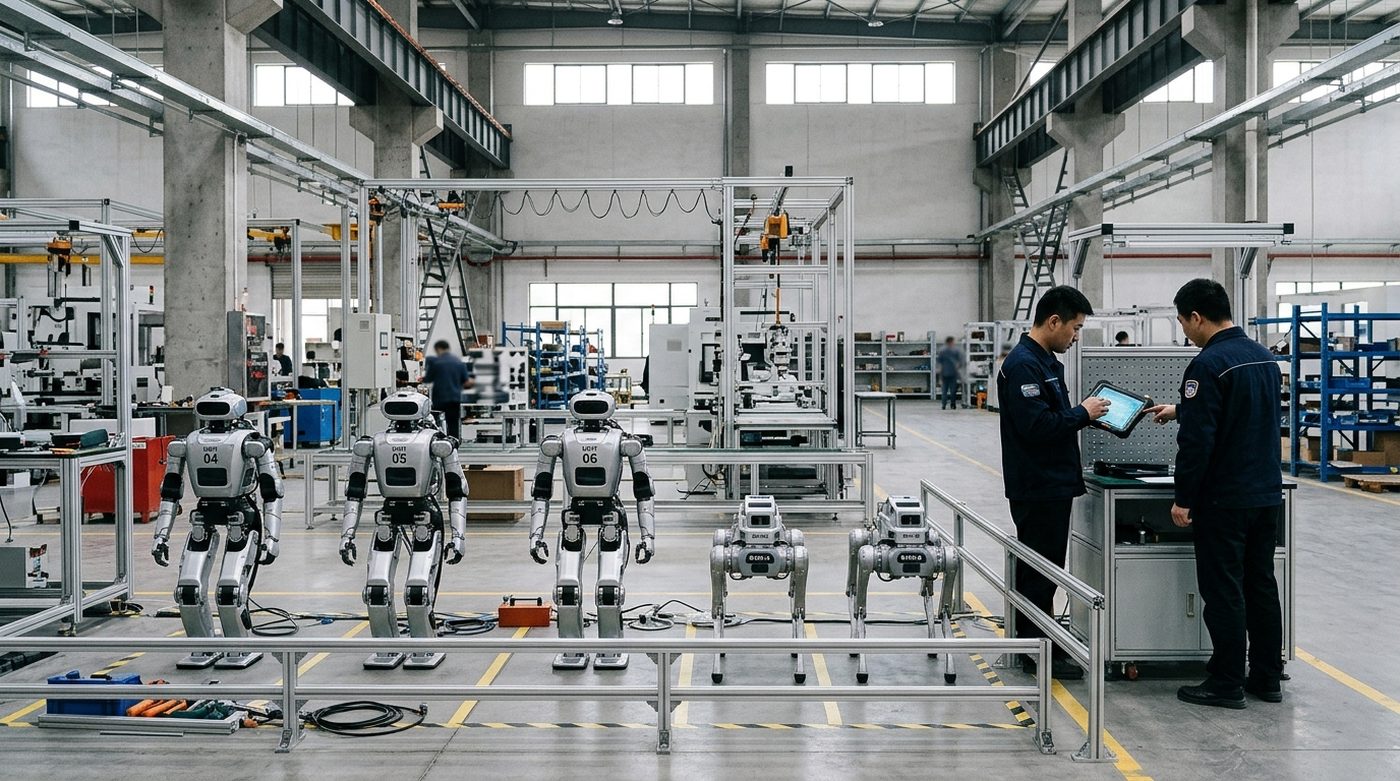
Bigwave says humanoid-related sales should exceed KRW 5 billion, about US$3.70 million, and represent more than 20% of revenue in the current year. It lists suppliers including UBTECH, Unitree, MagicLab, Deep Robotics, Rainbow Robotics, ROBOTIS, Elephant Robotics and PAL Robotics on its corporate site.
The strategic logic is clear. Most factories interested in humanoids do not want to evaluate every vendor independently. They want an integrator to compare bodies, identify a task, connect the robot to existing systems and remain accountable after installation. A platform that already manages conventional arms and mobile robots has a natural path into that role.
The risk is that humanoid demand remains demonstration-heavy. A customer may order units for evaluation, executive visits or innovation centers without moving them into production. Revenue from selling or integrating a robot is real, but it does not prove repeatable utilization. Buyers should separate evaluation orders from systems that complete paid work through full shifts.
That is why the company’s existing industrial automation base matters. Bigwave does not need humanoids to replace its core business immediately. It can treat them as another hardware category inside a broader integration platform. The strongest outcome is not a humanoid-only company. It is a company that can select the right machine for the task and use humanoids only where their mobility or human-compatible form produces a measurable advantage.
North America Will Test the Platform Claim
Bigwave has established a Detroit entity and says it has a KRW 7 billion, about US$5.19 million, North American pipeline for the year. Management also said prices in the United States can be more than 1.5 times domestic Korean levels. A pipeline is not revenue, and a higher selling price does not automatically mean a higher margin. Travel, local labor, insurance, certification and service obligations can absorb the difference.
The United States is nevertheless a useful proving ground. Manufacturers face labor shortages in welding, material handling, palletizing and machine tending. They also have large installed bases of equipment from vendors Bigwave already lists among its partners, including FANUC, KUKA, ABB, Yaskawa and Universal Robots.
The commercial question is whether Bigwave can reuse Korean deployment knowledge without rebuilding every project around local conditions. Electrical standards, safety certification, union practices, plant layouts and customer expectations differ. A successful platform should shorten adaptation, not pretend adaptation is unnecessary.
The company says it works with more than 640 customer sites and completes more than 100 end-to-end engineering projects annually. Investors should ask how many of those projects use repeatable modules, how many require custom code and how much support revenue follows the initial installation.
Recent RobotAIGeek coverage of Maven Robotics’ US$100 million industrial deployment round highlighted how capital is moving toward companies that promise deployment, not just robot capability. Bigwave’s pitch is a different version of the same shift. It is selling the connective work between hardware and production.
What the Filing Must Clarify
The investor presentation gives a useful operating narrative but leaves several questions for the formal prospectus. Investors need final share count, offering price, dilution, use-of-proceeds commitments and a reconciliation of historical revenue and profit. They also need segment reporting that separates hardware resale, systems integration, software and recurring service.
Customer concentration is another key issue. The corporate site lists well-known industrial names, but a logo wall does not show contract size, duration or repeat business. The prospectus should identify whether growth depends on a few large projects or a broad base of smaller deployments.
Working capital matters as well. Integration companies often pay for hardware and labor before collecting final customer payments. Rapid growth can consume cash even when reported profit improves. Robot-as-a-service adds another layer because the provider may finance equipment over a longer customer contract.
Finally, management should define the KPIs that will prove platform leverage after listing. Useful measures include repeat-customer share, proposal-to-order conversion, installation time, recurring software and service revenue, gross margin by segment, project backlog and the percentage of deployments using standard modules.
Bigwave’s IPO pitch is strongest when it stays practical. The company is not claiming to invent every robot. It is claiming it can match, integrate, monitor and support the right machines faster than customers can do alone. The KRW 16.46 billion, about US$12.2 million, North America allocation will test whether that process travels. If project speed improves while recurring software and service revenue rise, the platform thesis strengthens. If headcount and custom engineering grow as fast as revenue, investors will be looking at a capable integrator rather than a scalable physical-AI platform.
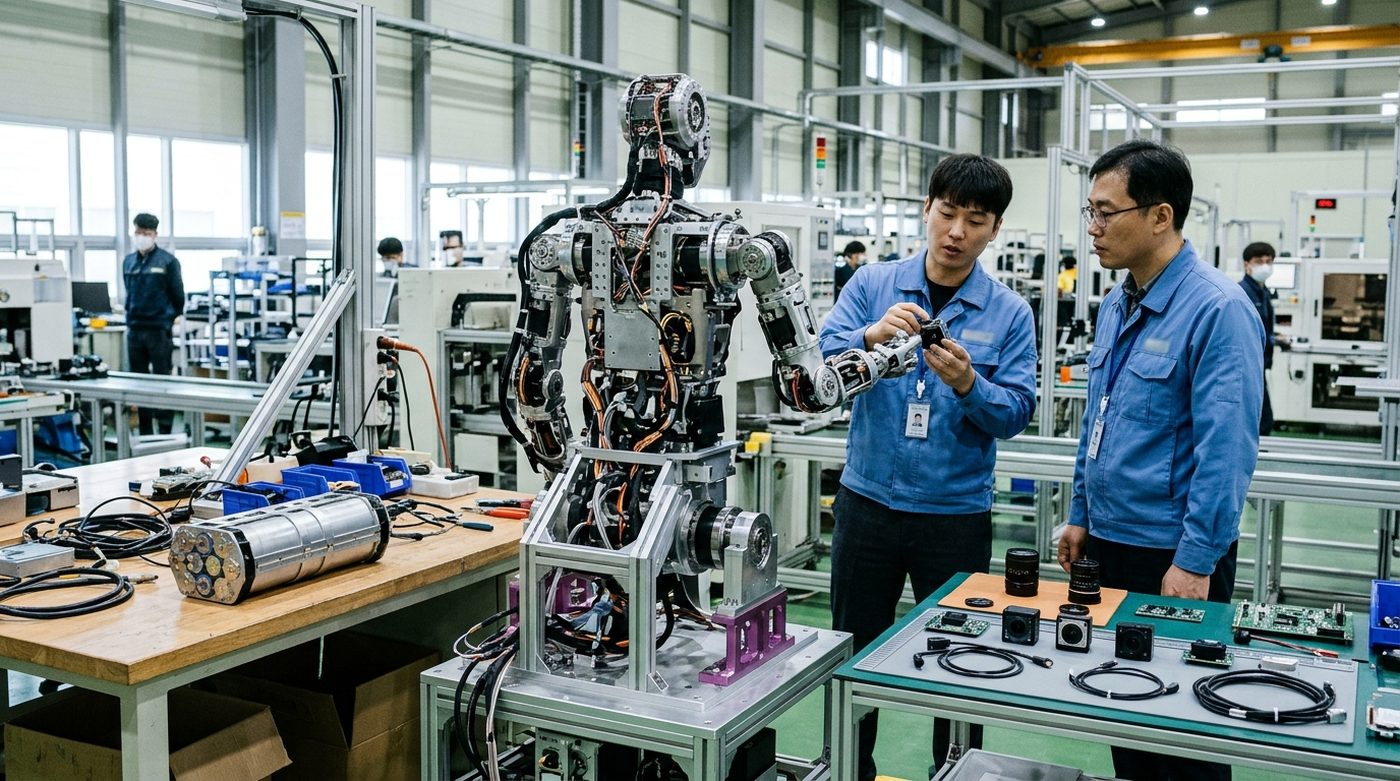
Hero image credit: Bigwave Robotics USA.
This analysis draws on public statements and company materials released by Bigwave Robotics. Financial and operating figures are management-reported and may change in formal regulatory filings. It is for general information purposes only and does not constitute investment, financial, or legal advice.