Samsung SDS Launches Robot Orchestration Business
Samsung SDS formally entered Robotics Transformation and plans a 2027 platform for coordinating mixed robot fleets and production equipment. The enterprise-software group brings access to more than 430 manufacturing customers but still must prove interoperability in live factories.
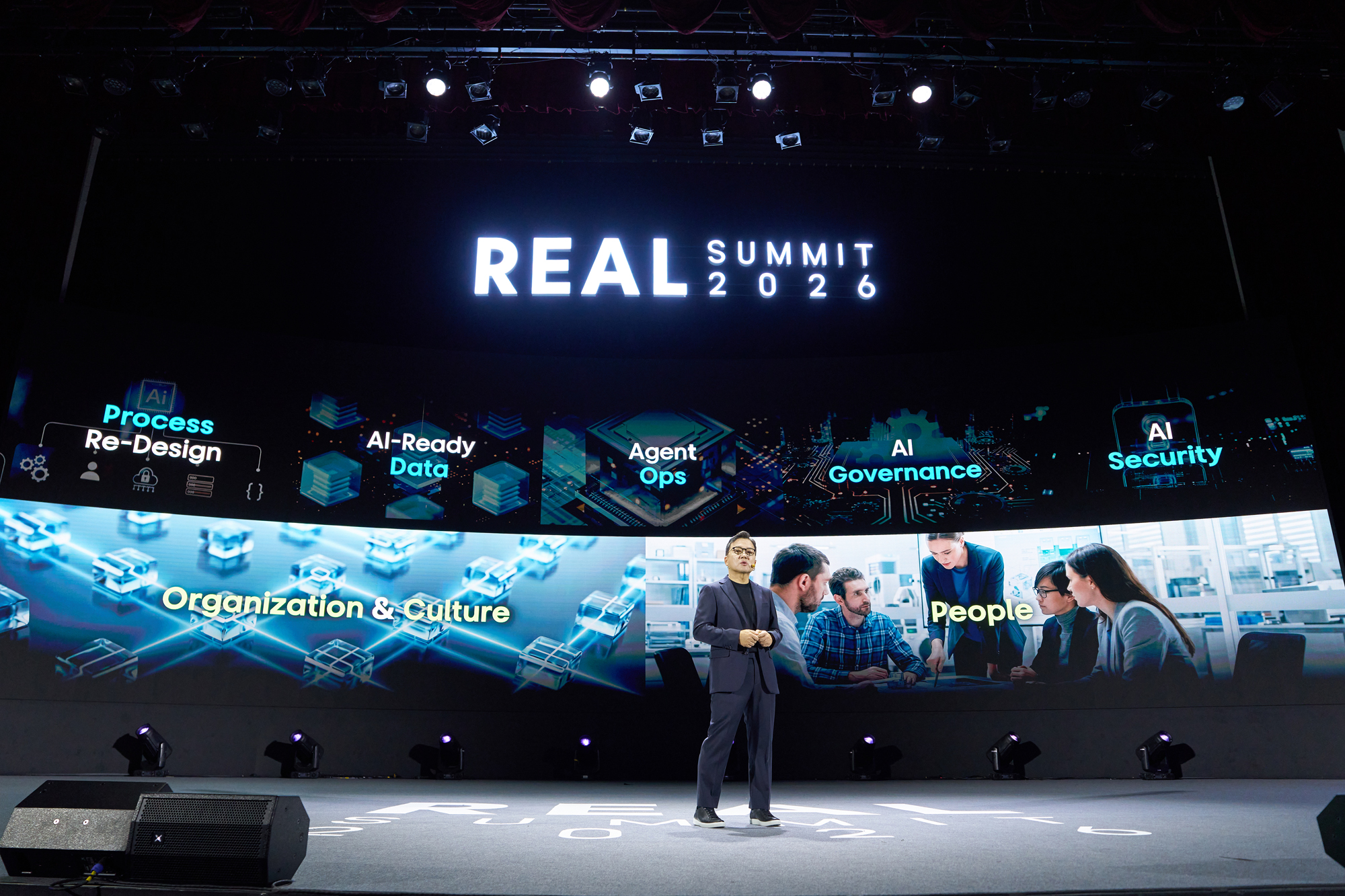
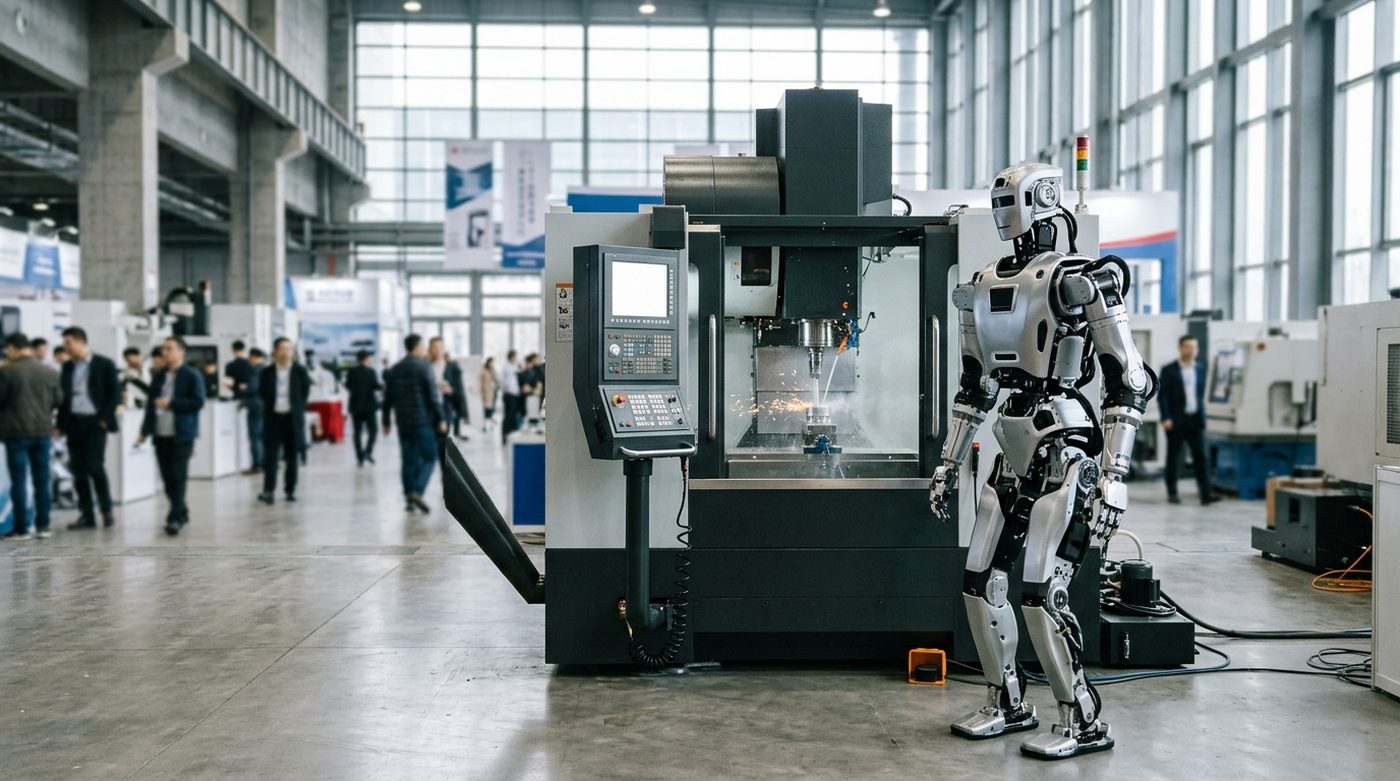
SEOUL, South Korea, September 9, 2026. Samsung SDS formally entered the Robotics Transformation business at REAL Summit 2026 on September 8, with a plan to launch a robot-orchestration platform in 2027 that connects production equipment and robots from different manufacturers. The company says the system will coordinate routes, detect failures, and redirect work, extending its enterprise artificial intelligence strategy from digital workflows into physical factories.
Seoul-headquartered Samsung SDS Co., Ltd. is a Korea Exchange-listed enterprise technology and logistics company that builds cloud, artificial intelligence, manufacturing-execution, and supply-chain systems. Its robotics niche is not a new arm or humanoid body. It is the control and integration layer above mixed hardware fleets, supported by manufacturing-system and automation work across more than 430 customers in semiconductors, batteries, biotechnology, automotive production, materials, components, and food processing.
Robot Fleets Have Outgrown Single-Vendor Control
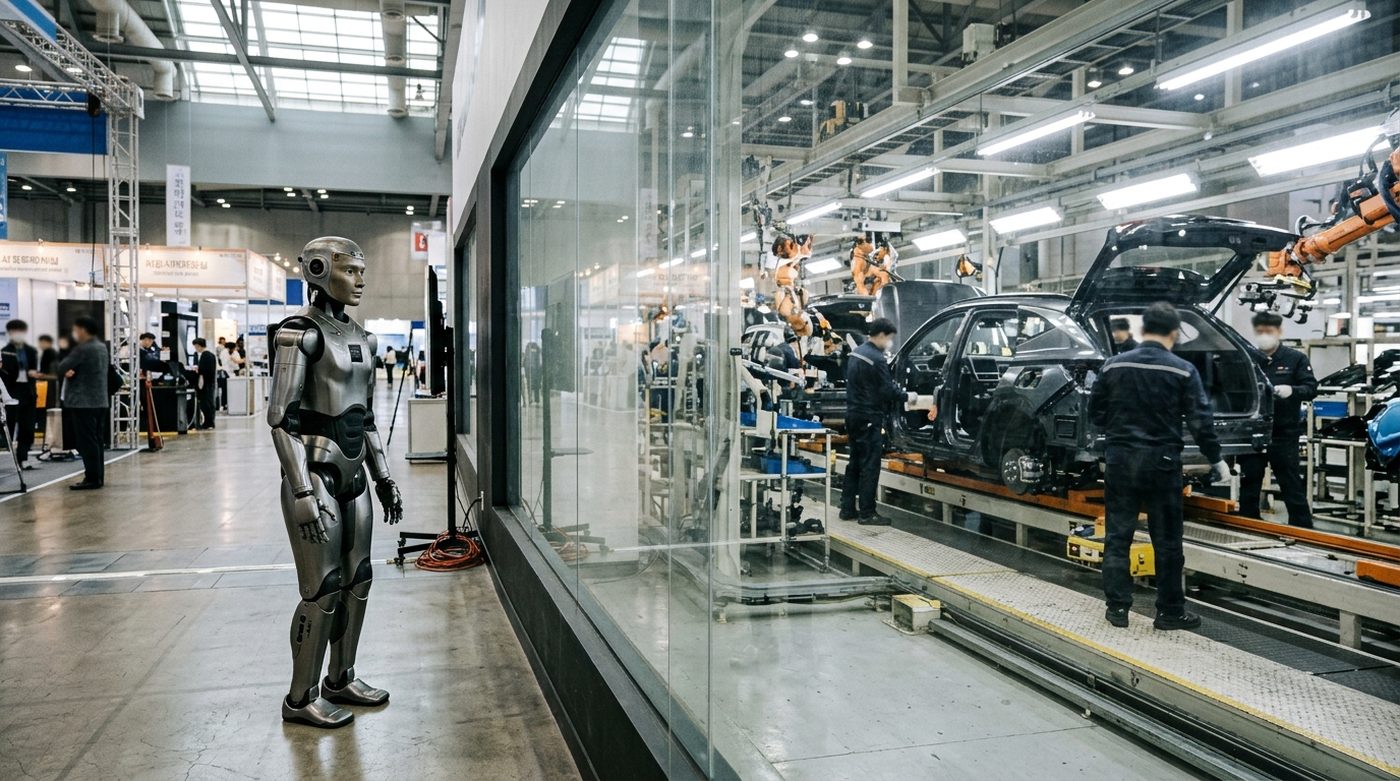
Factories rarely become robotic in one purchase. They accumulate machines over years, often from multiple vendors, with different controllers, data models, safety systems, maintenance schedules, and task assumptions. A new mobile robot may need to share space with a fixed arm installed a decade earlier. A humanoid pilot may need instructions from a manufacturing execution system that was designed when adaptable robots were not part of the production plan.
Samsung SDS is targeting the friction created by that installed reality. Its proposed robot-orchestration platform is intended to connect production equipment with heterogeneous robots and coordinate them as one operating system. The company describes software that can design efficient routes for machines performing packaging, assembly, and material transport, monitor robot status in real time, and direct work around a failed unit so one fault does not stop the broader factory.
That ambition matters because the most expensive part of a robot program is often not the machine. It is the integration work required to make the machine dependable inside a live process. Each custom interface increases deployment time and creates another point that must be maintained when software, hardware, or factory layouts change. An orchestration layer promises to turn some of that project work into reusable infrastructure.
The promise should not be confused with proof. Samsung SDS plans to introduce the platform in 2027, so buyers do not yet have public evidence of multi-vendor uptime, switching performance, integration effort, or production recovery. The September announcement establishes a product direction and business commitment. It does not establish that the platform can already run a mixed fleet at commercial scale.
Four Hundred Thirty Customers Are a Route to Market
Samsung SDS brings an advantage that many robotics startups lack: access to existing manufacturing relationships and the systems that already determine how work moves through a plant. The company says it has spent 25 years building manufacturing execution, equipment automation, and logistics systems for more than 430 customers. That base gives it a distribution path into factories where robot decisions are tied to production schedules, quality controls, inventory, and maintenance rather than isolated demonstrations.
The installed base also gives Samsung SDS a practical place to discover what orchestration software must handle. A semiconductor operation has different latency, cleanliness, traceability, and downtime requirements from a food plant. A battery facility manages different hazards and material flows from an automotive assembly site. Software that claims to coordinate robots across industries must accommodate those differences without becoming a new custom project at every customer.
For that reason, the 430-customer figure should be read as potential access, not committed demand. Existing manufacturing-system clients are not automatically robotics clients, and a trusted information-technology vendor does not automatically become the preferred control layer for physical machines. Plant managers will still ask whether the orchestration product supports the robots they own, whether it can be introduced without interrupting production, and who accepts responsibility when an integration fails.
The strongest commercial case will emerge where Samsung SDS already operates the manufacturing execution system and can add robot coordination without forcing a plant to rebuild its data architecture. That could lower the cost of connecting work orders, robot status, quality events, and maintenance alerts. It could also create a deeper dependency on one software provider, which makes interoperability and exit terms central procurement questions.
Walden Robotics Tests the Partnership Model
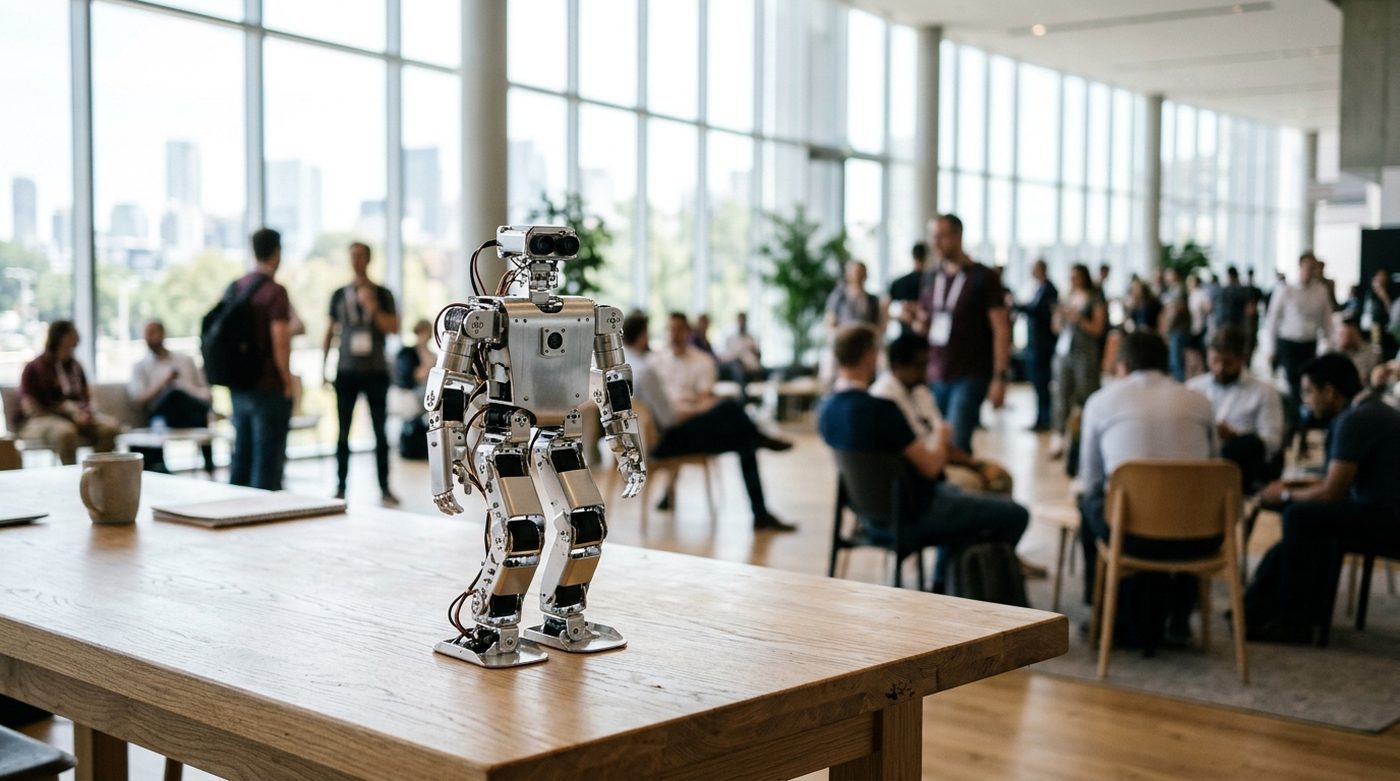
Samsung SDS also disclosed a strategic partnership with Walden Robotics, a humanoid-robot company led by chief executive Russ Tedrake. The pairing signals that Samsung SDS does not intend to build every physical component itself. Its role is to connect robot capability with production systems, site knowledge, and operational governance.
That division of labor can accelerate deployment if each side remains disciplined. A robot specialist can focus on mobility, manipulation, perception, and safety. Samsung SDS can focus on process data, work allocation, system integration, monitoring, and enterprise controls. Together they can test whether physical artificial intelligence produces measurable output rather than another disconnected pilot.
The partnership also raises an important neutrality test. A useful orchestration layer should support a customer’s preferred mix of robots rather than favoring one strategic partner. If the platform works best only with Walden hardware, Samsung SDS would be selling an ecosystem bundle, not a vendor-neutral control layer. If it can coordinate Walden machines alongside industrial arms, mobile robots, and other embodied systems, the product could become more valuable than any single hardware relationship.
Buyers should therefore look beyond the partnership announcement and ask for a published compatibility model. The relevant details include which robot interfaces are supported, how new devices are certified, what data remains on site, whether safety functions stay within original equipment controls, and how the platform separates advisory optimization from commands that can move physical machinery.
Orchestration Changes the Procurement Checklist
A robot-orchestration platform moves several decisions upstream. Procurement teams no longer evaluate only payload, reach, battery life, repeatability, and purchase price. They also evaluate whether the software can allocate tasks across brands, preserve production history, handle degraded operation, and give operators a coherent view of a mixed fleet.
The first question is integration time. Samsung SDS should be able to show how long it takes to connect a representative robot and production system, what engineering work remains customer-specific, and how that effort changes when a factory adds a second or third vendor. A platform that requires months of custom development for every machine preserves the old integration problem under a new name.
The second question is fault containment. Redirecting work around a failed robot sounds valuable, but the operational result depends on spare capacity, task compatibility, safe routes, and production priorities. A material-moving robot cannot always replace an assembly machine, and two robots with similar specifications may not be qualified for the same process. Buyers need to see how the platform distinguishes feasible substitution from a mathematically efficient but operationally invalid plan.
The third question is control authority. Plant operators need clear boundaries between the orchestration layer, manufacturing execution system, robot controller, and safety system. If software assigns a task that conflicts with a local safety constraint, the robot-level control must remain authoritative. Governance cannot be an abstract information-technology policy when software decisions can move machines near people.
The fourth question is data ownership. Orchestration improves as it observes work rates, failures, routes, and intervention patterns. Those records can reveal sensitive information about output, bottlenecks, labor allocation, and process design. Contracts should specify which data Samsung SDS can use to improve the platform, how customer information is isolated, and what remains available if the customer later changes vendors.
The 2027 Deadline Will Separate Platform From Presentation
REAL Summit 2026 drew 15,000 participants, including more than 8,000 people at the Seoul venue, but event scale does not determine product readiness. Samsung SDS has given the market a specific checkpoint: it plans to launch the orchestration platform in 2027. The quality of that launch will depend on named integrations, repeatable deployment methods, and operating evidence from factories with mixed hardware.
The most useful proof would be a reference site that publishes baseline and post-deployment results. Buyers should look for changes in line stoppage time, robot utilization, manual dispatch work, intervention frequency, integration cost, and recovery after a machine fault. Those measures would show whether orchestration creates business value or merely produces a more attractive dashboard.
Samsung SDS is entering the market from the software and operations side at a moment when robot hardware is proliferating faster than factories can standardize it. That position could make the company an important coordinator between robot makers and established production systems. It could also place Samsung SDS in the difficult middle, responsible for outcomes produced by hardware and software it does not fully control.
The strategic signal is clear: large enterprise-technology providers now see mixed robot fleets as a systems problem worth owning. The commercial verdict must wait for 2027, when Samsung SDS has to show that its orchestration layer can reduce integration work, contain failures, and preserve customer choice inside a real factory rather than on a summit stage.
Hero image credit: Samsung SDS Co., Ltd.
This analysis draws on Samsung SDS’s public REAL Summit 2026 disclosure covering its Robotics Transformation business, manufacturing-system experience, Walden Robotics partnership, and planned orchestration platform. It is for general information purposes only and does not constitute investment, financial, or legal advice.