Beijing Upgrades Shared Humanoid Robot Training Center
Beijing’s Shijingshan center added 4D world models and light-field capture to train robots across household and industrial tasks.

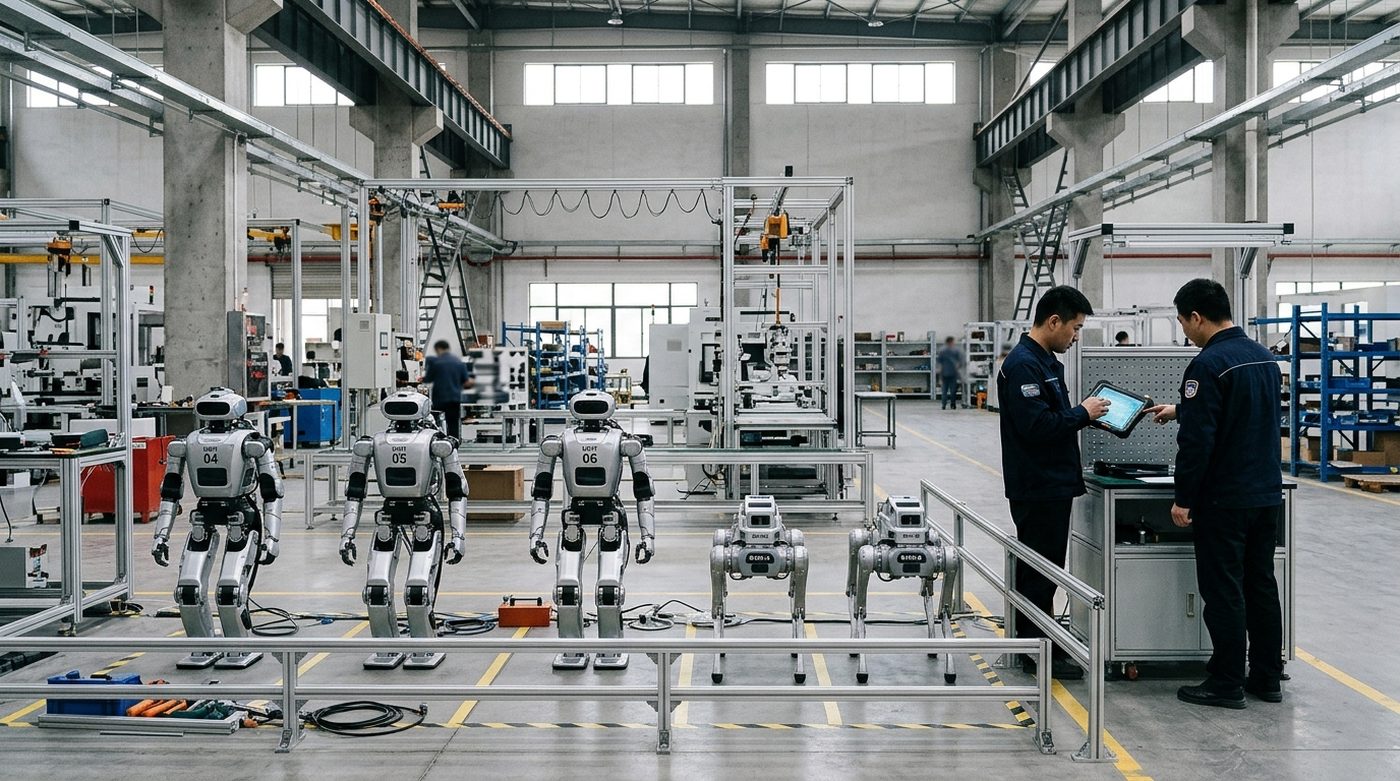
BEIJING, September 11, 2026. Beijing has upgraded a 1,500-square-meter humanoid robot training center in Shougang Park into a shared embodied-intelligence facility that links human-motion capture, synthetic data generation, model training, physical validation and industrial deployment. The important part is not another room full of robots. It is the attempt to turn the expensive, repetitive work of teaching machines into infrastructure that multiple robot makers can use rather than rebuild on their own.
The Shijingshan Embodied Intelligence Training Center is the renamed and expanded first phase of Beijing’s first humanoid robot data-training center. Phases two and three are already operating, according to the September 11 project update. Beijing Yuanke Vision Technology provides technical support. The upgraded phase adds multi-view light-field capture and a 4D world-model foundation to an existing workflow in which human operators perform tasks, motion and interaction data are recorded, models learn from that material, and robots are tested against the same physical task.
The Bottleneck Is Not One More Robot Body
Humanoid robotics has spent the past two years attracting capital toward motors, dexterous hands, batteries and increasingly capable foundation models. Yet a body and a model do not become a useful worker simply because both exist in the same machine. The system still needs examples of contact, force, object motion, failure recovery and task completion that are expensive to collect in the real world and difficult to reproduce consistently across laboratories.
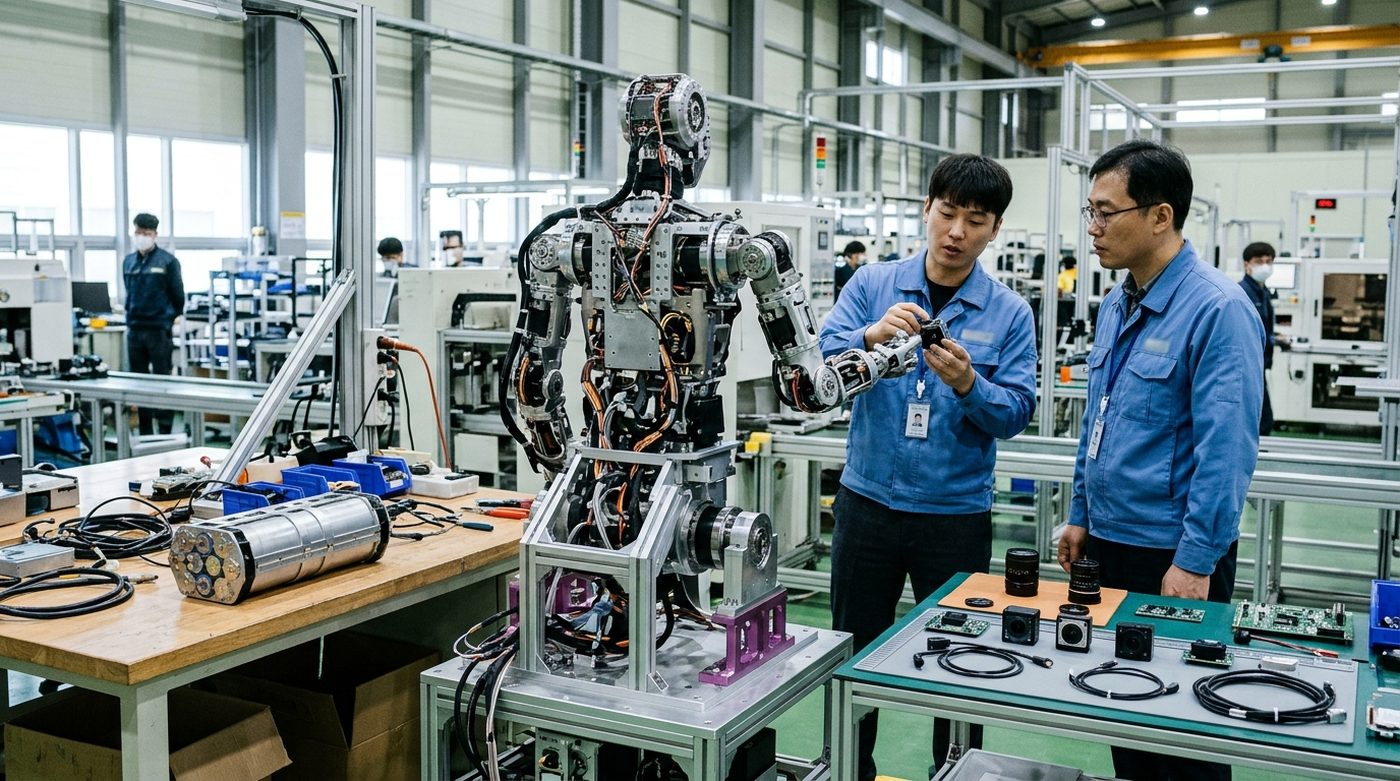
That is the bottleneck Shijingshan is trying to industrialize. The center’s operators wear motion-capture equipment and perform actions such as walking around obstacles, lifting boxes and placing objects. The upgraded system records more than a flat video. It is designed to preserve depth, spatial relationships, physical interactions and changes in object state, then feed that information into a loop of capture, modeling, training, validation and return.
The difference sounds technical, but the buyer implication is straightforward. A video can show that a hand picked up a cup. A useful robot-training record needs to help explain where the cup was, how the fingers approached it, when contact occurred, how much force was applied, what changed when the cup moved and why one attempt succeeded while another failed. Those richer labels are what allow a robot to generalize beyond a memorized demonstration.
The center says its new multi-view light-field system can reconstruct trajectories, deformation and lighting changes with greater fidelity. Its 4D world-model layer is meant to connect digital intelligence, spatial intelligence and physical intelligence. That gives participating companies a path from observing a human task to replaying it in simulation, training a policy, validating it on hardware and returning the result to the data loop.
Shared Infrastructure Changes the Cost Curve
For a young robot company, the temptation is to own every part of the stack. That sounds strategically clean until the company has to staff a capture facility, recruit operators, instrument rooms, maintain several robot bodies, manage data rights and keep an evaluation suite running while also building hardware and selling a product. The fixed costs arrive before the first commercial deployment.
A shared training center offers a different model. Instead of every vendor building a private data factory, the city-backed facility can spread motion-capture equipment, simulation infrastructure and validation space across several users. If that works, the commercial benefit is not just cheaper data. It is faster comparison. A manipulation policy can be tested against different bodies and task layouts under one operating framework, making it easier to see whether progress comes from the model, the hardware or a carefully staged demonstration.
This is the same economic logic behind cloud computing and contract manufacturing, applied to robot learning. The valuable layer is utilization. Expensive equipment becomes rational when it is used by many customers for many hours, not when it sits idle inside a single startup. The center’s promise of cross-brand data is therefore more important than any individual demonstration on the floor.
Robot makers should still be cautious. Shared infrastructure can reduce duplicated cost, but it can also create a lowest-common-denominator dataset. A general dataset that works across several bodies may be useful for basic movement and household tasks while remaining too shallow for a particular factory process. A garment robot needs data about fabric tension and deformation. A battery-assembly robot needs contact precision, contamination controls and task-specific safety validation. Those are not interchangeable problems.
The center will matter commercially only if it supports both layers: broad, reusable data for common skills and protected, customer-specific capture for differentiated work. Otherwise, companies may use the facility for demonstrations while keeping their most valuable deployment data inside private sites.
Why the Household and Factory Tasks Matter
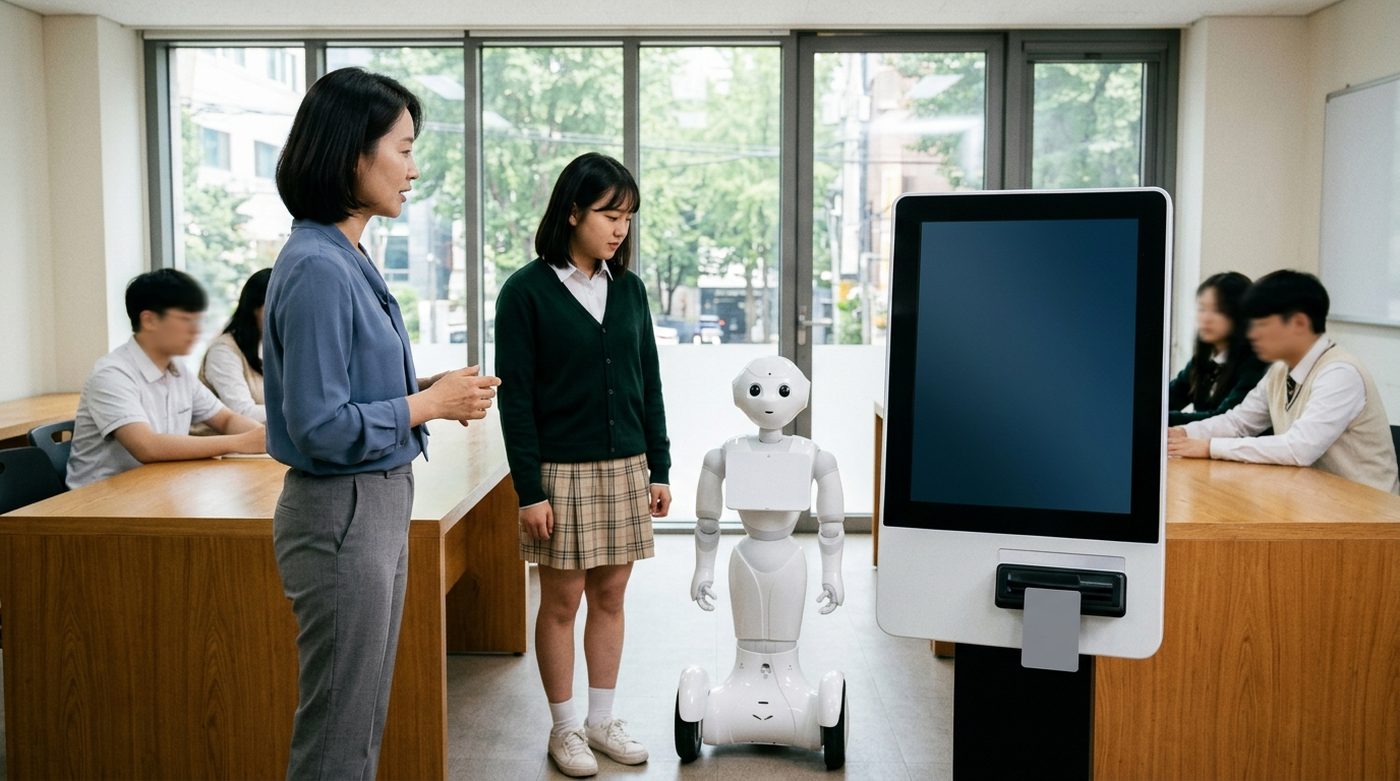
The upgrade covers household actions such as cleaning, food preparation and caregiving, alongside industrial work such as sewing, packing, material handling and assembly. That range is useful because it tests whether the infrastructure can handle two very different buying environments.
Household robotics demands variety. Kitchens, tables, containers and lighting conditions change constantly. A home robot must tolerate messiness and incomplete instructions. The commercial challenge is producing enough varied data to avoid a machine that works only in a demonstration apartment.
Industrial robotics demands repeatability. A factory buyer may accept a narrower skill, but it must work through an entire shift, recover from predictable errors and fit existing safety and production systems. The buyer does not pay for the elegance of a world model. The buyer pays for completed units, lower downtime and fewer interventions.
That distinction is why the center should publish separate performance measures for household and industrial programs. A single headline number for hours of data collected would hide more than it reveals. Buyers need task-success rates, intervention frequency, recovery performance, cross-body transfer results and the number of environments in which a policy was tested.
Recent RobotAIGeek coverage of Samsung SDS’s robot orchestration business showed the integration problem that begins after a robot can perform a task. Shijingshan is working one layer earlier, where skills are created and validated. The two layers eventually meet. A useful industrial robot needs both a learned capability and a system that can schedule, monitor and recover it inside a production workflow.
The Missing Commercial Metrics
The upgrade announcement is specific about architecture but quiet about economics. It does not disclose how many companies use the center, what they pay, how many training hours the facility can deliver, how frequently policies transfer across robot bodies or how much deployment time customers save. Those omissions do not make the project unimportant. They define what must be measured next.
The first metric should be utilization. A 1,500-square-meter center with advanced capture systems is valuable when its bays are booked, datasets are delivered and models return for repeated validation. The second should be transfer. If a skill learned from one human demonstration can be adapted to several bodies with limited additional data, the shared-infrastructure case becomes much stronger.
The third metric should be deployment conversion. A training run that ends with a polished video is marketing. A training run that ends with a robot completing a paid task at a customer site is commercial evidence. The center’s stated chain reaches all the way to application, so its public reporting should eventually do the same. XPENG’s automated IRON production line offers the kind of downstream factory setting where training claims must survive.
There is also a governance question. Rich human-motion and workplace data can reveal production methods, home layouts and worker behavior. Companies will need clarity on ownership, access controls, retention periods and whether data generated for one customer can improve models used by another. Shared infrastructure becomes more valuable as participation grows, but the same network effect increases the cost of a weak data-governance model.
A More Useful Benchmark Than Demo Count
China’s humanoid ecosystem already produces a steady stream of walking, dancing and object-handling demonstrations. The Shijingshan upgrade points toward a more useful benchmark: how quickly the industry can turn those demonstrations into standardized, repeatable training operations.
That is also why the center should be judged differently from a robot launch. A new robot body can be compared on payload, battery life, speed and price. A training center should be compared on throughput, data quality, transferability and downstream task success. Its output is not the robot on the floor. Its output is the reduction in time and cost required to make many robots useful.
The next proof point should be a documented customer case that starts with a task definition and ends with deployment. It should show the amount of human demonstration data collected, the number of simulation iterations, the hardware used for validation, the interventions required at the customer site and the performance after several weeks of operation. That would give buyers a basis for deciding whether shared training infrastructure shortens the path to return on investment.
Beijing has now assembled the physical pieces: three phases, a capture stack, a world-model layer and real robot validation. The harder step is converting those assets into a service that robot companies choose because it is faster and better than building alone. If the center can publish repeatable evidence of that advantage, it will have done more than upgrade a facility. It will have defined a piece of industrial infrastructure the embodied-intelligence market has been missing.
Hero image credit: Li Hao/GT.
This analysis draws on public statements and technical materials describing the Shijingshan Embodied Intelligence Training Center. It is for general information purposes only and does not constitute investment, financial, or legal advice.