XPENG Opens Automated Line for IRON Humanoid Robots
XPENG commissioned an automated humanoid production line and showed an IRON unit walking off after assembly. The milestone turns a July manufacturing plan into operating infrastructure, while customer economics remain unproven.

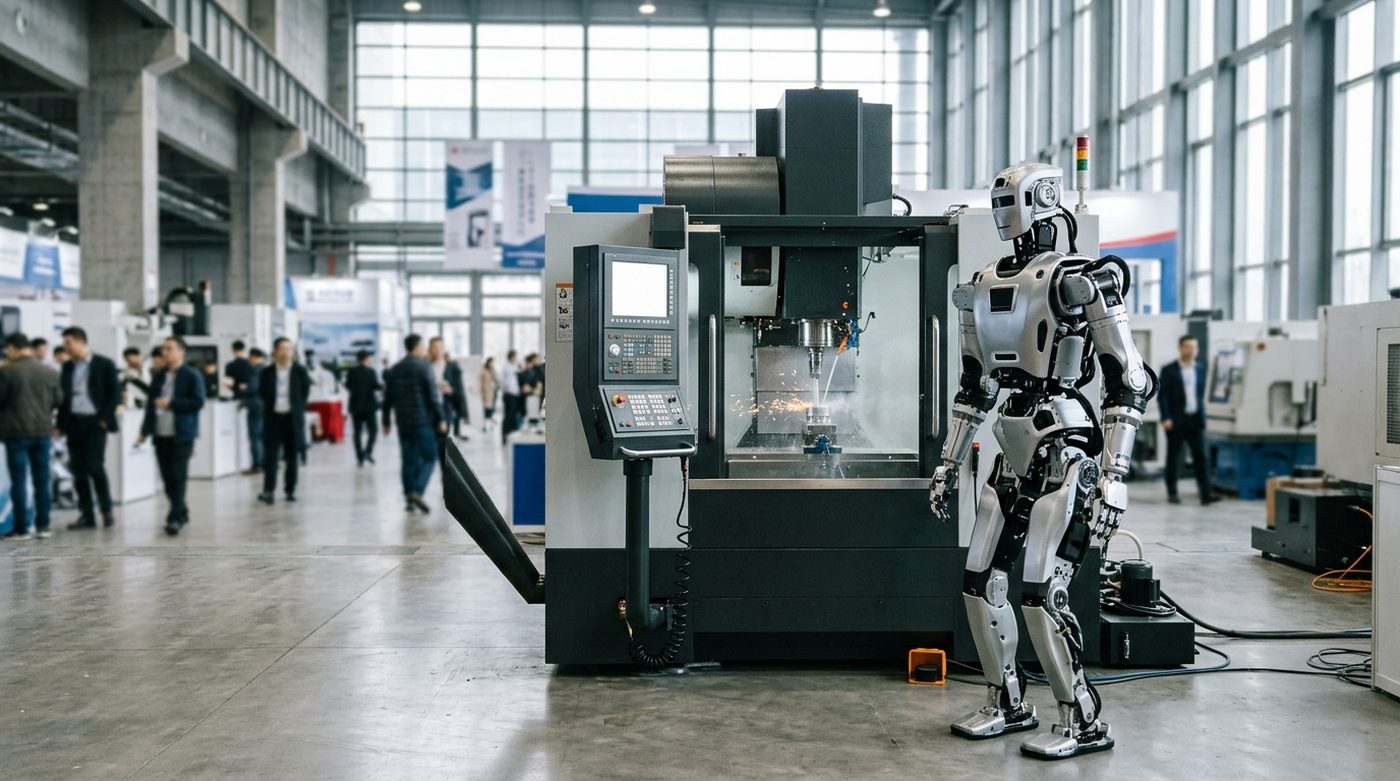
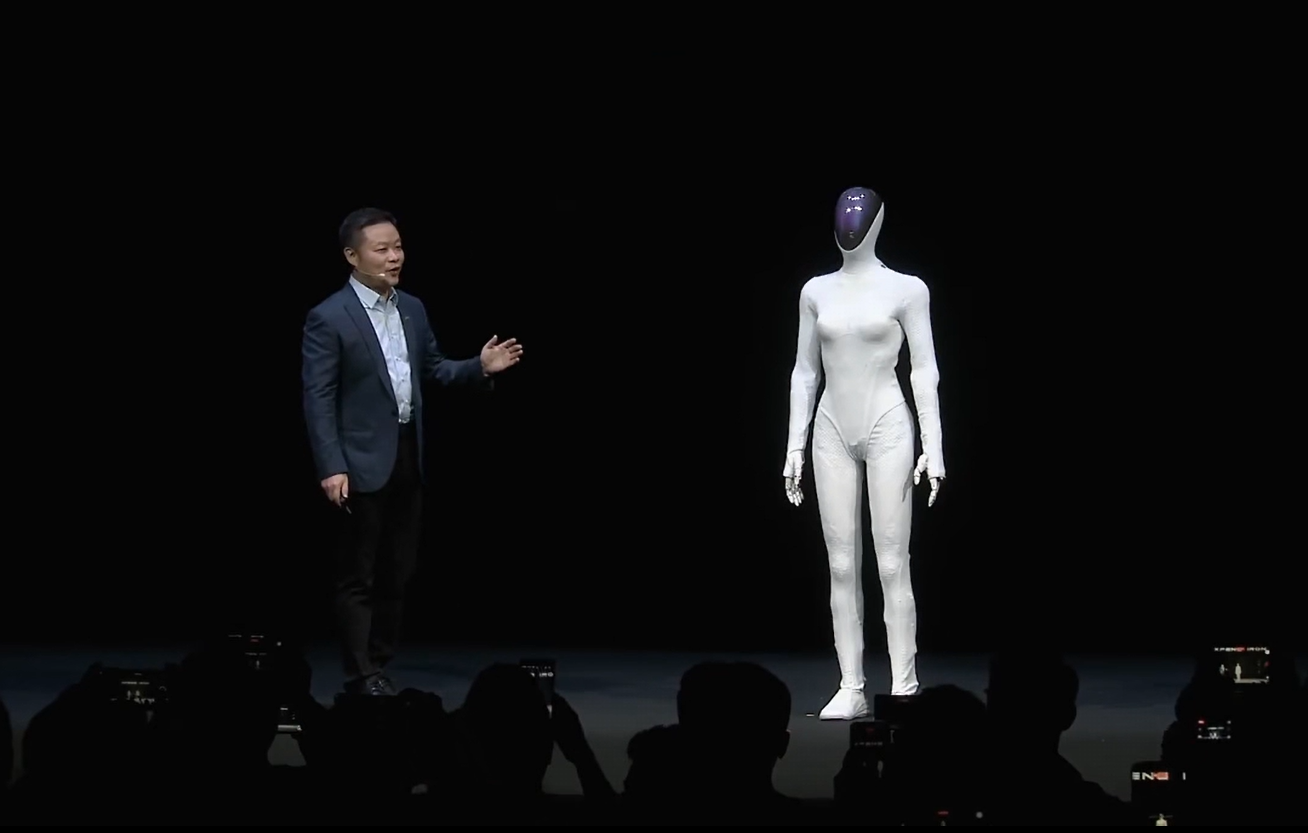
GUANGZHOU, China, September 9, 2026. XPENG commissioned its automated humanoid robot production lines on September 8 and showed an IRON unit walking off the line after automated assembly, moving the program beyond the small-batch trial production disclosed in July. The company says more than 80% of core processes are automated and still targets mass production by year-end, followed by commercial deliveries in China and overseas markets in 2027.
Guangzhou-headquartered XPeng Inc. is a publicly listed physical artificial intelligence company best known for electric vehicles, autonomous-driving systems, and its IRON general-purpose humanoid. Its robotics strategy rests on reusing automotive engineering, supply-chain control, quality systems, and manufacturing infrastructure rather than building a robot company from scratch. That reuse is the central commercial claim behind the new line, and the commissioning gives buyers a more concrete milestone than another prototype demonstration.
The Line Has Moved From Countdown to Commissioning
XPENG’s earlier disclosure established that IRON had entered small-batch trial production while a dedicated mass-production line was undergoing final systems integration. The September 8 event is different. The company now says the line has been put into operation, that an IRON unit completed automated assembly, and that the finished machine then walked off under its own control.
That distinction matters because robotics announcements often compress several manufacturing stages into one word: production. A hand-built engineering unit, a pilot cell assembling a few machines, a validated line, and repeatable volume output are not equivalent. Commissioning means the equipment and workflow exist as an operating system. It does not establish sustained throughput, acceptable yield, or customer-ready reliability, but it removes one uncertainty that remained in July.
The company reports automation across more than 80% of core processes. That figure is more useful than a generic claim that the facility is advanced, yet it still needs careful interpretation. Core-process automation does not reveal how much manual work remains in inspection, rework, calibration, final testing, material handling, or software configuration. Nor does it show whether the line can maintain the same quality at a higher takt rate. The percentage describes the design of the process, not the economics of completed units.
For procurement teams, the immediate signal is therefore operational readiness rather than proven scale. XPENG has created a repeatable path through assembly that can now be measured. The next questions are no longer whether a dedicated line will exist, but how many robots it can produce per shift, how often finished units require rework, and what failure modes appear after machines leave the controlled factory environment.
Automotive Discipline Is the Real Product Claim
IRON’s specification sheet explains why XPENG is leaning so heavily on its carmaking background. The robot has 76 degrees of freedom across the body and 21 in each hand. It carries three proprietary Turing artificial intelligence chips that XPENG says provide up to 2,250 trillion operations per second of computing capacity. Its enclosed flexible lattice structure is designed to support a human-like exterior while protecting people who work near it.
A machine with that many articulated joints, embedded computing components, sensors, structural interfaces, and safety requirements creates a manufacturing problem before it creates a labor solution. Each additional joint expands the calibration burden. Each enclosure and cable route introduces tolerance and serviceability questions. A visually convincing walk at a launch event says little about whether hundreds of machines can leave a line with the same balance, dexterity, and thermal behavior.
This is where the automotive analogy becomes more than branding. Carmakers already manage large bills of materials, safety-critical electronics, software-hardware integration, supplier qualification, traceability, and end-of-line testing. XPENG can carry parts of that operating system into robotics. It can also use existing quality teams and manufacturing data practices rather than inventing them around a much smaller initial fleet.
The analogy has limits. A car repeats a constrained set of motions and operates within a mature regulatory and service framework. A general-purpose humanoid is expected to manipulate varied objects, move safely around people, and adapt to changing tasks. The factory can standardize the body, but it cannot standardize every environment into which the body will be placed. Manufacturing discipline reduces hardware variance; it does not automatically solve perception, task generalization, or safe behavior at the edge.
That is why the newly commissioned line should be judged as infrastructure for learning. More consistent units make field data more comparable. If two robots encounter the same task failure, engineers can be more confident that the difference did not begin with inconsistent assembly. The value of line automation is not only lower labor input. It is a cleaner feedback loop between deployed machines, software teams, suppliers, and the next production batch.
The First Customers Are Deliberately Close to Home
XPENG plans to begin initial commercial-scenario rollouts in its own stores and campuses before offering IRON more broadly in China and overseas markets in 2027. That sequence is commercially conservative in the right way. Company-controlled sites give the robotics team access to operators, maintenance logs, environmental conditions, and customer interactions without depending on an external buyer to expose problems publicly.
Stores and campuses are also more forgiving than factories. A reception, guidance, or demonstration role can tolerate lower utilization while the company learns how people respond to the robot. A production cell or logistics operation usually cannot. Internal deployment therefore creates a bridge between a commissioned line and a product that independent customers can justify on uptime, labor substitution, service response, and total ownership cost.
The risk is that a controlled rollout can become a permanent demonstration loop. A robot working inside its parent company’s showroom benefits from trained staff, predictable layouts, and a willingness to absorb downtime that an external customer will not share. The program will cross its real commercial threshold when a named third party renews or expands an order after operating the machines under ordinary business constraints.
Buyers should ask for evidence that connects factory output to field performance. Useful measures include time required for commissioning at the customer site, interventions per operating hour, parts replaced during the first service interval, remote-support frequency, task-completion consistency, and the share of units that require hardware correction before deployment. Those figures will reveal whether the line is producing a product or merely producing more test platforms.
Capital Has Bought Time, Not a Proven Market
XPENG says its robotics business raised more than US$900 million in August at a post-money valuation above US$6.3 billion. The financing gives the unit room to build manufacturing capacity, carry inventory, recruit specialized engineers, and support a service organization before customer revenue can fund those functions. It also raises the standard by which the new line will be judged.
A well-funded production system can move faster through design revisions because tooling, supplier commitments, and test equipment do not need to wait for near-term cash generation. The same capital can conceal weak demand if management treats production milestones as substitutes for customer economics. A commissioned line creates fixed and semi-fixed costs that eventually need to be supported by orders, not valuation.
XPENG argues that humanoid gross margin per unit should be significantly higher than its new-energy-vehicle margin because advanced general-purpose robots face high technical barriers and limited supply. That is a forward-looking company expectation, not an established result. Early units may command premium prices, but service labor, field failures, warranty reserves, low-volume components, and frequent design changes can absorb that advantage quickly.
The decisive comparison is not the robot’s sticker price against a car. It is the annual cost of a reliable task outcome against the human labor, fixed automation, or process redesign it replaces. Until XPENG discloses unit pricing, service terms, expected utilization, and task-level performance, the gross-margin thesis remains a manufacturing ambition rather than a buyer’s business case.
Commissioning Starts the Harder Measurement Cycle
The September 8 milestone strengthens XPENG’s claim that it can industrialize humanoid hardware using capabilities built for vehicles. An operational line with more than 80% of core processes automated is more meaningful than another stage performance because it establishes a system that can be tested for throughput, yield, and consistency. It also creates the conditions for a larger, more comparable field fleet.
Yet commissioning is the start of the measurement cycle, not its conclusion. The company still needs to show that line output can survive routine deployment, that software improvements do not require disruptive hardware changes, and that support costs remain manageable as robots leave XPENG-controlled sites. A humanoid program becomes a business when repeat customers value completed work more than they value the spectacle of the machine.
For robotics buyers, the practical verdict is precise: XPENG has converted a production roadmap into operating equipment, but it has not yet converted that equipment into public evidence of repeatable customer value. The next milestone is not another robot walking off the line. It is a disclosed production rate, measured field reliability, and an outside customer returning for more.
Hero image credit: XPeng Inc.
This analysis draws on XPENG’s public production-line, product, commercialization, and financing disclosures, together with prior public reporting on the company’s trial-production phase. It is for general information purposes only and does not constitute investment, financial, or legal advice.