Astribot's SmoothRL Triples Success on Hard Robot Tasks
A training-pipeline fix called SmoothRL lifted Astribot's S1 humanoid success rates as high as 39% to 94% on hard manipulation tasks, without any new hardware.


Astribot's dynamic-throwing success rate jumped from 39 percent to 94 percent. Its pen-cap placement task went from 8 percent to 83 percent. Package opening rose from 30 percent to 90 percent. None of those gains came from new hardware, a bigger model, or additional training data. They came from fixing a bookkeeping error in how the robot's reinforcement-learning algorithm counted its own actions, a fix the Shenzhen-based company calls SmoothRL and published this week.
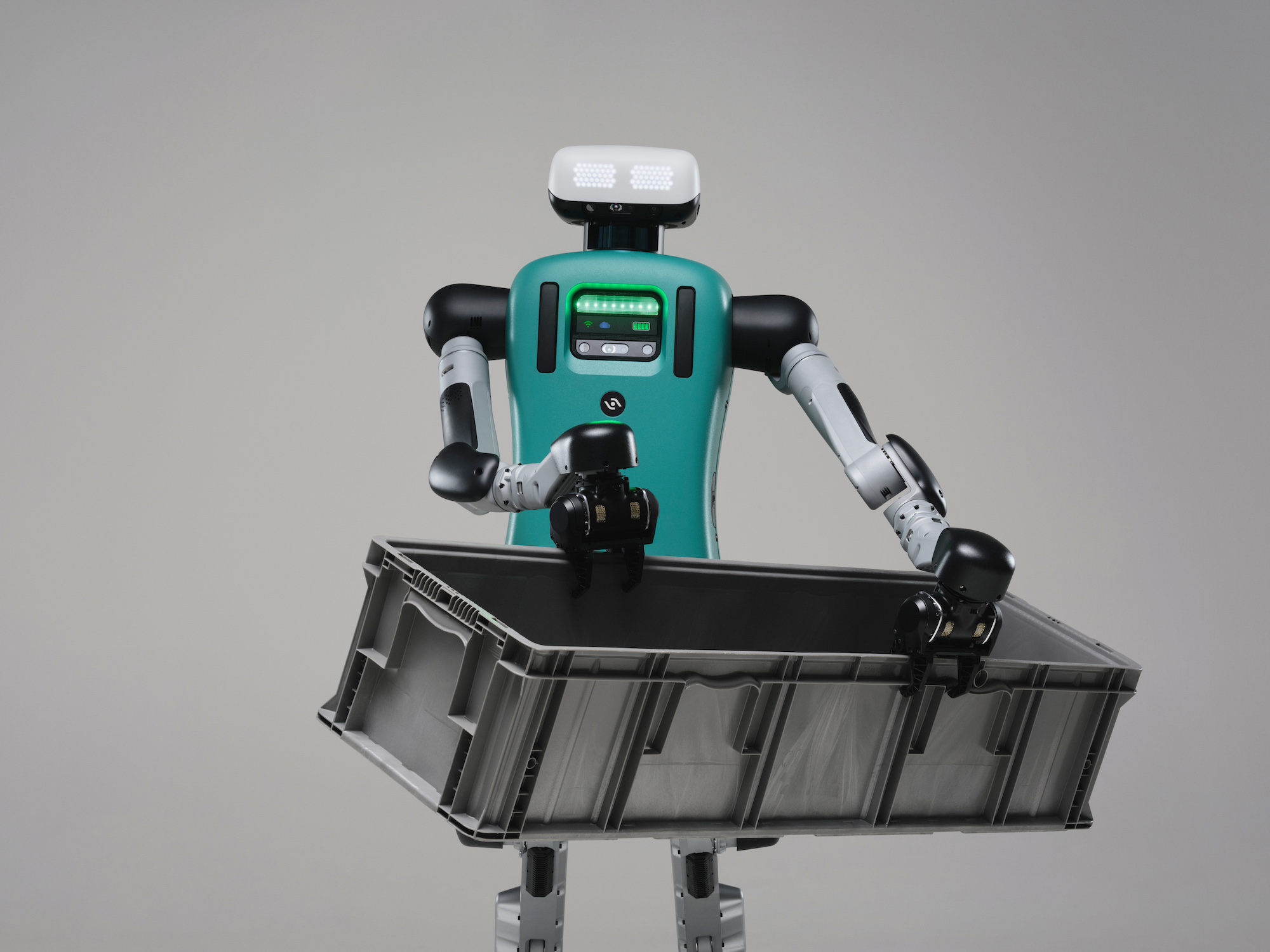
Astribot, founded in December 2022 and based in Shenzhen, builds the S1, a wheeled dual-arm humanoid designed for mobile manipulation rather than bipedal walking, betting that a stable rolling base gets a robot to commercially useful reliability faster than legs do. SmoothRL is not a new robot or a new model; it is a correction to a mismatch between how these systems are trained and how they actually run once deployed, and the size of the resulting performance jump is a useful reminder that in embodied AI, the training methodology can matter as much as the hardware wrapped around it.
The Gap Between How Robots Train and How They Work
Most reinforcement-learning setups for robots assume a clean, synchronous loop: the model generates an action, the robot executes it fully, the model observes the result, and only then does it compute the next move. Real deployed robots do not wait around like that, because pausing to think is slower than the task requires. Instead, they run asynchronously: the robot keeps executing its current motion while the model is already calculating what comes next in the background, so there is no dead time between actions. Astribot's engineers, led by researcher Wang Jianan, identified that this efficiency trick quietly breaks the assumption reinforcement learning depends on. When a robot generates a sequence of planned movements, called an action chunk, but only partially completes it before a newer, updated chunk overrides the remainder, standard reinforcement learning still assigns credit or blame to the discarded portion as if it had actually happened. The model ends up training on a version of events that never occurred.
SmoothRL's fix is to track three distinct regions inside every action chunk: the committed region, actions already locked in from a prior inference cycle; the execution region, the actions the robot actually carried out; and the discarded region, movements that were planned but never executed because a newer chunk replaced them. The framework applies its gradient updates only to the execution region, so the model learns exclusively from what the robot genuinely did rather than what it merely intended to do. Astribot pairs this with a technique it calls Reinforce in Deployment, which trains the policy under the same asynchronous conditions it will face in the field, rather than training it in a clean synchronous simulation and hoping the behavior transfers.
Why the Improvement Shows Up as Fewer Big Mistakes
The headline percentages are the easy part to report; the more informative detail is what changed underneath them. Astribot's internal testing on the S1 found that failures after the SmoothRL fix shifted character entirely, moving away from fundamental errors, the robot grabbing the wrong object or missing a target by a wide margin, toward millimeter-level placement deviations that are far easier to correct with a follow-up adjustment. That distinction matters more to a systems integrator than the raw success-rate jump does, because a robot that fails by a few millimeters is one you can tune with a firmware update, while a robot that fails by grabbing the wrong item entirely is one you have to take off the line.
Dynamic throwing, the task where SmoothRL produced its largest jump, is a deliberately hard benchmark: it requires a robot to release an object at precisely the right moment mid-motion, with no opportunity to correct after release, which makes it an unusually sensitive test of whether a control policy actually understands the physical consequences of an action rather than pattern-matching against training data. A near-tripling of success on a task that punishes timing errors this severely is a meaningfully different claim than a similar improvement on a slower, more forgiving pick-and-place task.
What This Actually Changes for Buyers
None of this is independently verified outside Astribot's own testing, and the company has not published the size or diversity of its evaluation set, so the specific percentages should be read as a company-reported benchmark rather than a peer-reviewed result. What makes the underlying claim more credible than a typical vendor benchmark is that the failure mode it describes, asynchronous execution breaking reinforcement-learning credit assignment, is a structural problem that would affect any humanoid platform running inference at real-world speeds, not a fix narrowly engineered to flatter one company's hardware. If SmoothRL's core insight generalizes, it is the kind of methodology improvement competitors will eventually need to adopt in some form, whether they license Astribot's specific approach or independently arrive at a similar fix.
For a procurement team evaluating humanoid vendors on manipulation reliability, the practical takeaway is to ask a more specific question than "what is your success rate." Ask instead how a vendor's training pipeline handles the gap between planned and executed actions during real-time inference, since that gap exists on every asynchronous deployment regardless of brand, and vendors that have not addressed it are quietly absorbing a reliability penalty they may not even be measuring correctly. A vendor that cannot answer the question at all is one still training against a synchronous assumption its own hardware violates every time it runs.
A Narrow Fix With a Wide Blast Radius
Astribot has not announced when or whether SmoothRL will ship as a customer-facing update to existing S1 deployments versus a research contribution the company is publishing for the wider field. Either path matters. If it becomes a fleet-wide software update, existing Astribot customers get a meaningful reliability improvement without new hardware spend, which is precisely the kind of software-driven gain that makes a subscription or service-contract relationship with a robotics vendor worth paying for. If it remains a published methodology, its real test will be whether independent labs or competing humanoid companies can reproduce the reported gains on their own hardware, which would confirm the fix addresses a genuine industry-wide blind spot rather than a quirk specific to Astribot's control stack.
Either way, the result is a useful corrective to a common assumption in humanoid robotics coverage, that progress mostly comes from bigger models or better actuators. Sometimes it comes from noticing that the training math quietly stopped matching what the robot was actually doing, and fixing the mismatch.
The Broader Pattern in China's Humanoid Sector
Astribot's timing is not incidental. Chinese humanoid manufacturers have spent much of 2026 racing to publish differentiated technical claims as the field grows crowded, and a growing share of that competition is shifting from raw hardware specifications, degrees of freedom, torque figures, top speed, toward the software and training layer that determines whether a robot is actually reliable enough to leave a demonstration booth. SmoothRL fits that pattern precisely: it is not a claim about what the S1 can physically do, but a claim about how much more consistently it can do what it already could, which is a harder thing to fake convincingly and, when genuine, a more durable competitive advantage than a spec sheet.
That shift also changes what evidence buyers should demand during vendor evaluation. A degrees-of-freedom count or a torque rating can be verified from a spec sheet in minutes. A claim about training methodology, credit assignment, and asynchronous execution requires either independent replication or a level of technical trust in the vendor that most procurement processes are not yet built to assess. Astribot publishing its methodology in enough detail for the specialist press to describe the three-region action-chunk mechanism is a meaningfully more verifiable disclosure than a company that simply claims improved reliability without explaining why. Buyers evaluating any humanoid vendor's reliability claims this year should ask for that same level of mechanistic detail before taking a percentage figure at face value.
This analysis draws on Astribot's public technical disclosure of the SmoothRL framework and independent Chinese-language technology reporting on its September 2026 publication. This article is for general information purposes only and does not constitute investment, financial, or legal advice.