AMD Picks Its Horse in the Humanoid Race, and It Is Built for the Battlefield
AMD has found its beachhead in humanoid robotics. Foundation Future Industries, the Eric Trump-backed robot maker with Pentagon contracts and US$100 million in contracted annual recurring revenue, announced on July 23 that its next-generation Phantom MK-2 humanoid will be built around AMD's Ryzen AI Embedded X100 processors, with AMD CPUs, graphics, and FPGA-based adaptive computing handling perception, reasoning, and motor control on a single platform. The deal hands AMD a marquee design win in a robot-compute market Nvidia has dominated through its Jetson modules and Isaac simulation stack, and it binds the chipmaker to a company whose dual-use, military-and-industrial positioning is as politically charged as it is commercially ambitious.
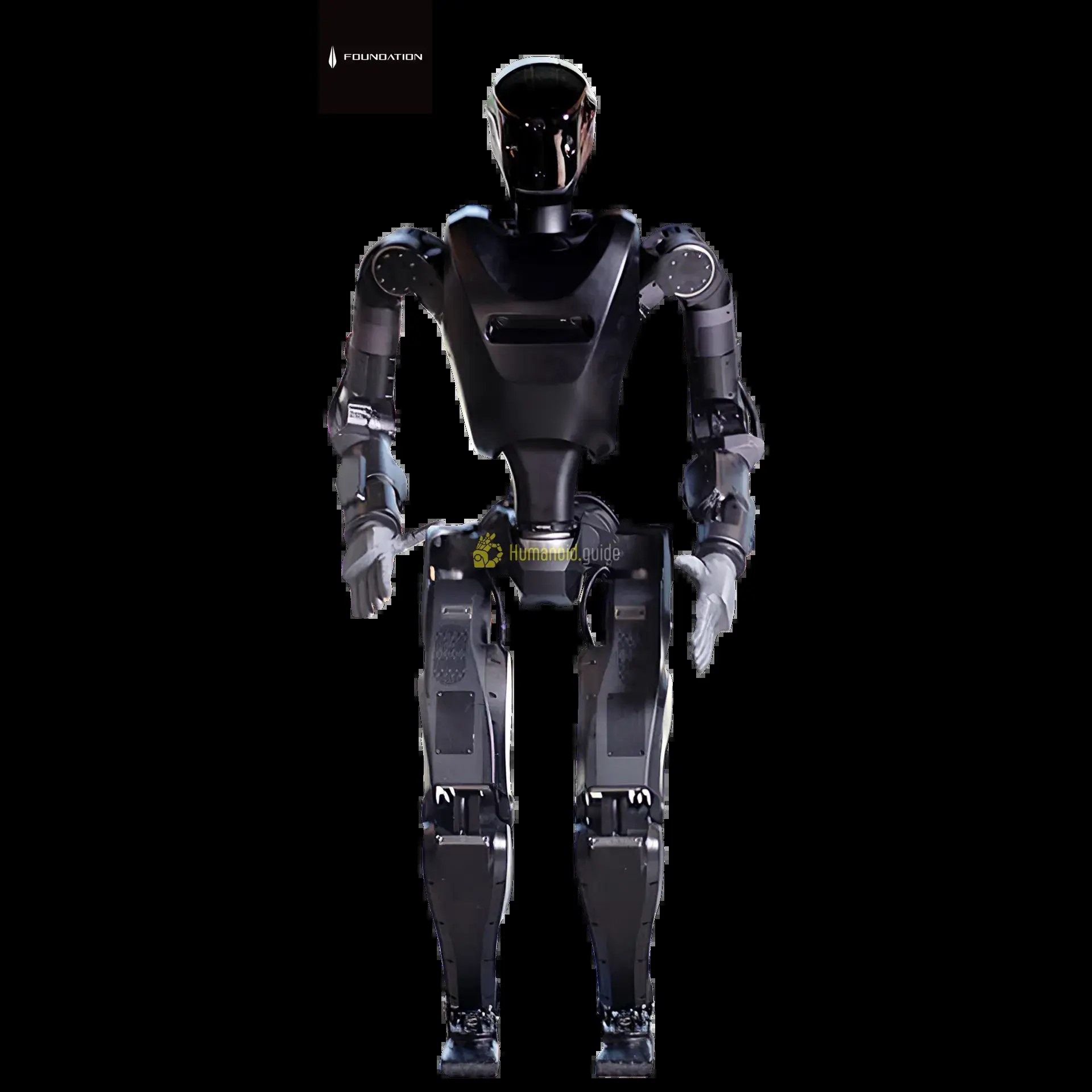
Nvidia's grip on the robot brain just met its first serious challenge. AMD is partnering with Foundation Future Industries to supply the chips at the core of the startup's next-generation humanoid robot, a machine designed from the silicon up for military and heavy-industrial deployment, the companies announced on July 23.
Under the partnership, Foundation's Phantom MK-2 humanoid will be engineered around AMD's Ryzen AI Embedded X100 Series processors, the embedded AI line the chipmaker introduced in January. The deal spans AMD's portfolio: CPUs for reasoning, graphics silicon for perception, and adaptive computing chips, the field-programmable gate arrays AMD acquired with Xilinx, coordinating the robot's 23 degrees of freedom with high-frequency tactile feedback in what the companies describe as a single deterministic control loop. Financial terms were not disclosed.
For AMD, which has spent two years watching Nvidia convert its AI dominance into an early lock on robotics through Jetson edge modules and the Isaac simulation platform, the announcement is a statement of intent. Advanced humanoid robots require tightly coordinated compute across perception, reasoning, and real-time control, AMD senior vice president Salil Raje said in the announcement, and the company is claiming its integrated platform delivers 2.5 times faster inference and 3 times faster training than comparable Nvidia configurations. Those benchmarks have not been published, and until they are, they belong in the category of marketing arithmetic rather than engineering fact.
The Robot Company That Chose the Hard Markets
Foundation Future Industries is not the obvious partner for a marquee chip deal. Founded in 2024 and led by chief executive Sankaet Pathak, the company skipped the demonstration-video phase of humanoid development and went directly for two of the least forgiving customer bases in existence: automotive factories and the Pentagon.
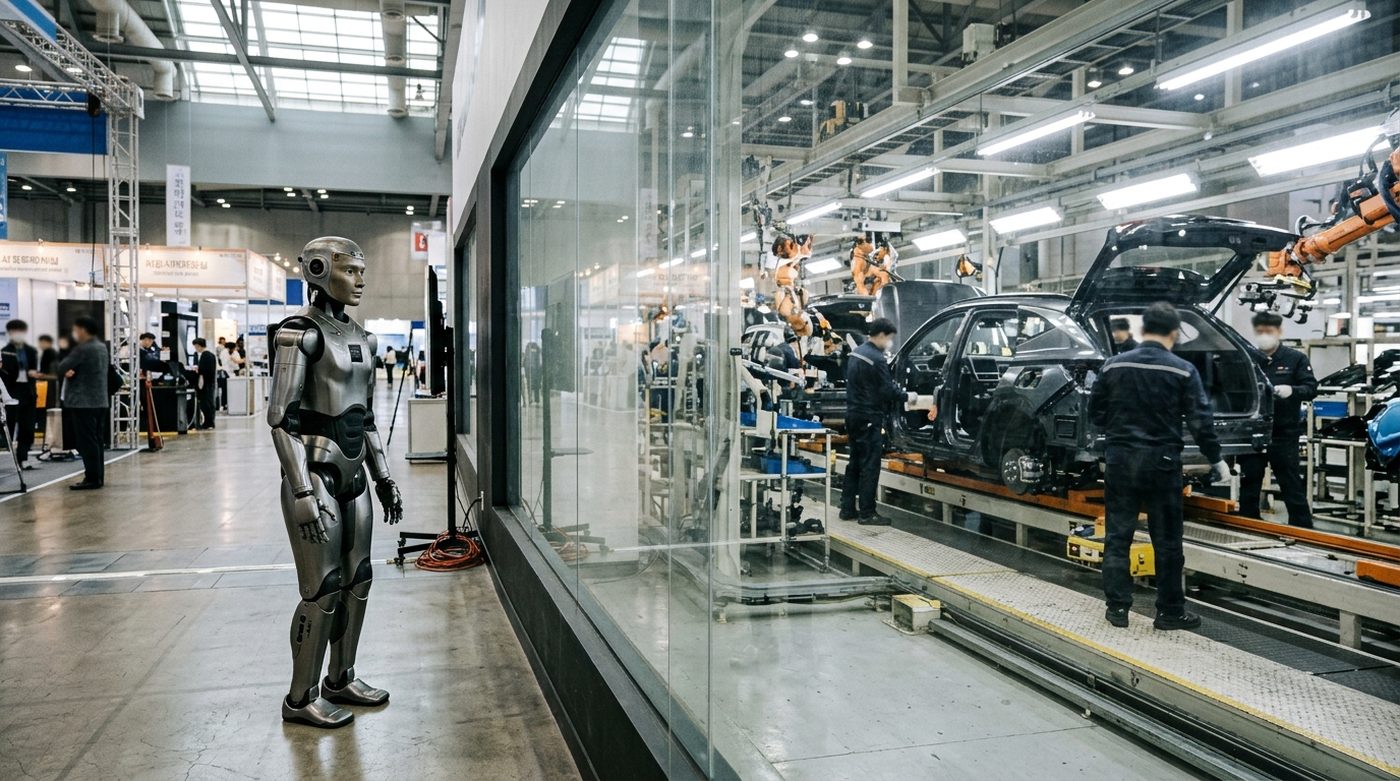
The strategy has produced numbers most humanoid startups cannot show. Foundation says its first-generation Phantom MK-1 robots contributed to building more than 24,000 cars in 2025, working real production tasks rather than staged pilots, and its robots operate five days a week in customer deployments. The company reports US100million in contracted annual recurring revenue, signed rather than banked, a distinction worth keeping in mind, but still a commercial footprint that puts it in rare company. Its business model splits cleanly by customer: industrial robots lease for roughly US100,000 per year, while defense configurations for materials handling and reconnaissance sell to government buyers at about US$300,000 per unit.
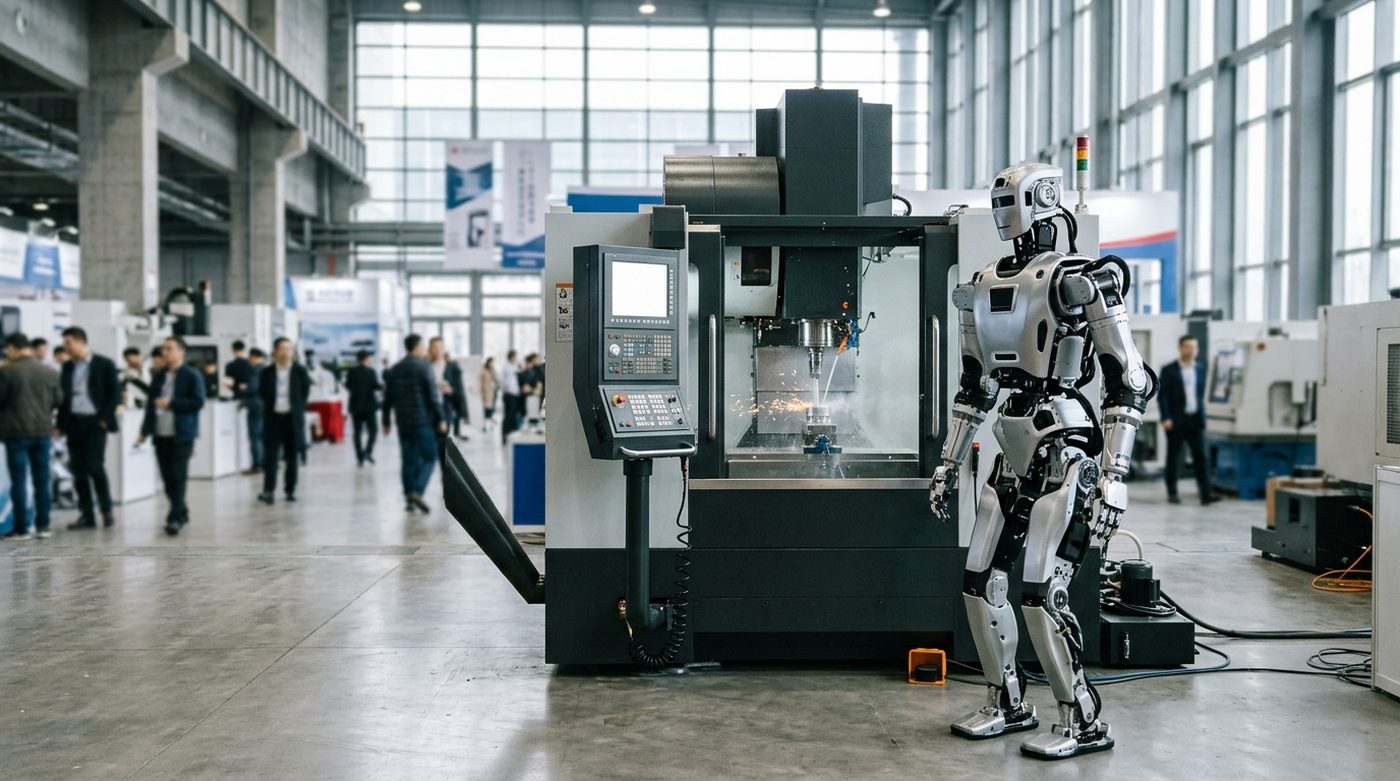
The hardware roadmap is aggressive. A factory opening in October is designed to produce 5,000 Phantom robots per year, and Pathak told Reuters that construction of a second facility with 50,000-unit annual capacity begins early next year. The MK-2 itself is specified for environments no commercial humanoid targets: tolerance of 100G vibration, an IP67 sealed rating, and 360-degree vision, engineering choices that only make sense for machines expected to work in mines, forges, and combat-support roles. Phantom robots have been tested in Ukraine.
The Trump Variable
There is no writing honestly about Foundation without addressing its cap table. Eric Trump has been an investor since early 2026 and serves as the company's chief strategy advisor, part of a broader pattern of Trump family investments in defense-adjacent technology that includes the Israeli drone maker XTEND and drone-component firm Unusual Machines. For a company competing for government contracts, that association cuts both ways: it draws procurement scrutiny and conflict-of-interest questions from oversight bodies and the press, and it signals political proximity at a moment when Washington is actively redrawing the boundaries of the robotics market.
That redrawing is not hypothetical. The House passed a defense bill this week barring the Pentagon from procuring or operating Chinese humanoid robots, a restriction that functions as a protected-market subsidy for exactly the kind of American, defense-oriented humanoid maker Foundation has built itself to be. A common misconception is that such bans mainly punish Chinese firms; their more immediate effect is to guarantee demand for domestic alternatives, whatever their relative cost or maturity. Foundation, with its US$300,000 defense units and Ukraine field history, is among the most direct beneficiaries of that guarantee.
For AMD, the political geometry is more delicate. Aligning with a politically connected defense robotics firm secures a design win and a seat at the Pentagon's table, but it also ties the chipmaker's robotics brand to a single controversial partner in a market where most future volume, by every shipment forecast, sits in commercial and industrial deployments, and a large share of it in Asia.
What the Deal Actually Tests
Strip away the politics and the partnership poses a clean technical question: can an integrated x86-plus-FPGA architecture beat Nvidia's GPU-centric stack at the specific job of running a humanoid body? Think of the two approaches like a decathlete versus a relay team. Nvidia offers one extraordinarily powerful compute engine and asks the robot's software to schedule everything through it. AMD is fielding specialized silicon for each leg of the problem, with FPGAs handling the microsecond-level motor control loop that general-purpose processors handle awkwardly, CPUs running reasoning, and GPUs processing vision.
Deterministic control is the argument that matters. A robot arm moving near humans in a factory cannot tolerate the timing jitter that a shared GPU pipeline can introduce; FPGAs execute control logic in hardware with fixed latency. If Foundation's MK-2 demonstrates measurably better real-time performance in the field, AMD acquires something no benchmark slide can manufacture: a deployed proof point in the most demanding environments available.
The deal is also, quietly, the largest public payoff yet on AMD's most expensive bet. The company paid roughly US$49 billion for Xilinx in 2022, the biggest acquisition in semiconductor history at the time, on the argument that adaptive computing would open embedded markets that GPUs could not serve. For three years the robotics dividend of that thesis remained theoretical, visible mostly in automotive and aerospace design wins. A humanoid robot is close to the ideal showcase for it: a machine that simultaneously needs vision processing, language-model reasoning, and hard-real-time motor control is a machine that needs three kinds of silicon, and AMD is the only vendor that owns competitive versions of all three under one roof. Whether that integration advantage survives contact with Nvidia's software moat, the CUDA libraries, Isaac simulation tooling, and pretrained models that make Jetson the default choice for robotics teams, is the trillion-dollar version of the question.
What It Means for the Rest of the Market
For the robot makers watching from the sidelines, the partnership changes the negotiating table. Until this week, a humanoid startup specifying its compute stack had one premium option and a price list to match. A credible second supplier, even one whose benchmarks remain unpublished, gives every Figure, Apptronik, and Agility procurement conversation a new lever, and chip pricing pressure arrives in robotics exactly the way it arrived in data centers: the moment a second vendor can plausibly claim parity. Component cost is still the binding constraint on humanoid economics, with compute among the top line items, so even a modest duopoly discount compounds across a fleet.
The timing on AMD's side is not incidental either. The company's data-center AI accelerators have narrowed Nvidia's lead in training economics but remain a distant second in market share, and investors have pressed AMD to show adjacent markets where its portfolio breadth, rather than raw GPU throughput, is the deciding factor. Embedded robotics is precisely such a market: design cycles are long, switching costs are high, and a customer won at the MK-2 stage tends to stay won through MK-3 and MK-4. A beachhead secured now, while the humanoid industry's annual volumes are still counted in thousands, positions AMD for the decade when they are counted in millions, which is the only timescale on which this deal's economics were ever meant to be judged.
The skeptical counterweight is scale. Foundation's contracted revenue and 24,000-car record are genuine differentiators, but the company remains a two-year-old startup promising a fifty-fold capacity expansion inside eighteen months, in an industry where manufacturing ramps have humbled far larger organizations. AMD's robotics ambitions now depend, at least reputationally, on that ramp holding. Nvidia's position, meanwhile, rests on hundreds of robotics customers and a simulation ecosystem no single design win dislodges.
The Compute Layer Becomes the Battleground
The larger signal is that the humanoid industry's compute layer is now contested territory. Chinese robot makers, facing their own pressure to shed American silicon, are migrating toward Horizon Robotics and other domestic chip suppliers. Nvidia is defending its incumbency with platform economics. And AMD has now declared that its path into physical AI runs through the hardest customers first, on the theory that silicon proven at 100G vibration in a defense robot will sell itself into warehouses later.
Chip partnerships in robotics used to be procurement details buried in spec sheets. This one arrived with an announcement, a named executive quote, and a political subtext, which tells you what the industry already knows: whoever supplies the brains of the humanoid fleet is buying a position in the next decade's largest edge-computing market, and nobody intends to concede it quietly.
Disclaimer: This article is for general information purposes only and does not constitute investment, legal, or procurement advice. Readers should verify details with primary sources before making business decisions.