A Carmaker Just Minted China’s 22nd Embodied AI Unicorn of the Year
Beijing-based PsiBot has closed a funding round of nearly US$100 million led by automaker Chery, lifting the two-year-old embodied AI model developer to a valuation of about US$1.48 billion and making it China’s newest robotics unicorn. PsiBot builds vision-language-action models, the intelligence layer, rather than robots themselves, and its fifteen-fold valuation jump in roughly a year marks the migration of the sector’s scarcity premium from hardware to models. The round also confirms a structural shift: strategic money from industrial giants is replacing venture capital as the marginal buyer in China’s embodied AI market, with supply chain motives setting the price.
PsiBot, the Beijing-based embodied intelligence developer known in China as Lingchu Intelligence, is finalizing a funding round of close to US$100 million at a valuation of US$1.48 billion, according to a Bloomberg report published Wednesday. The round is led by Chery Automobile, one of China’s largest carmakers, with participation from Lens Technology, the Hunan-based supplier best known for making glass and precision components for Apple and Tesla.
The valuation makes the two-year-old company at least the twenty-second Chinese embodied AI startup to cross the unicorn threshold in 2026 alone, a statistic that says as much about the state of Chinese venture capital as it does about PsiBot. At the start of the year, three companies in the sector carried billion-dollar valuations. It is not yet August.
The Company That Does Not Build Robots
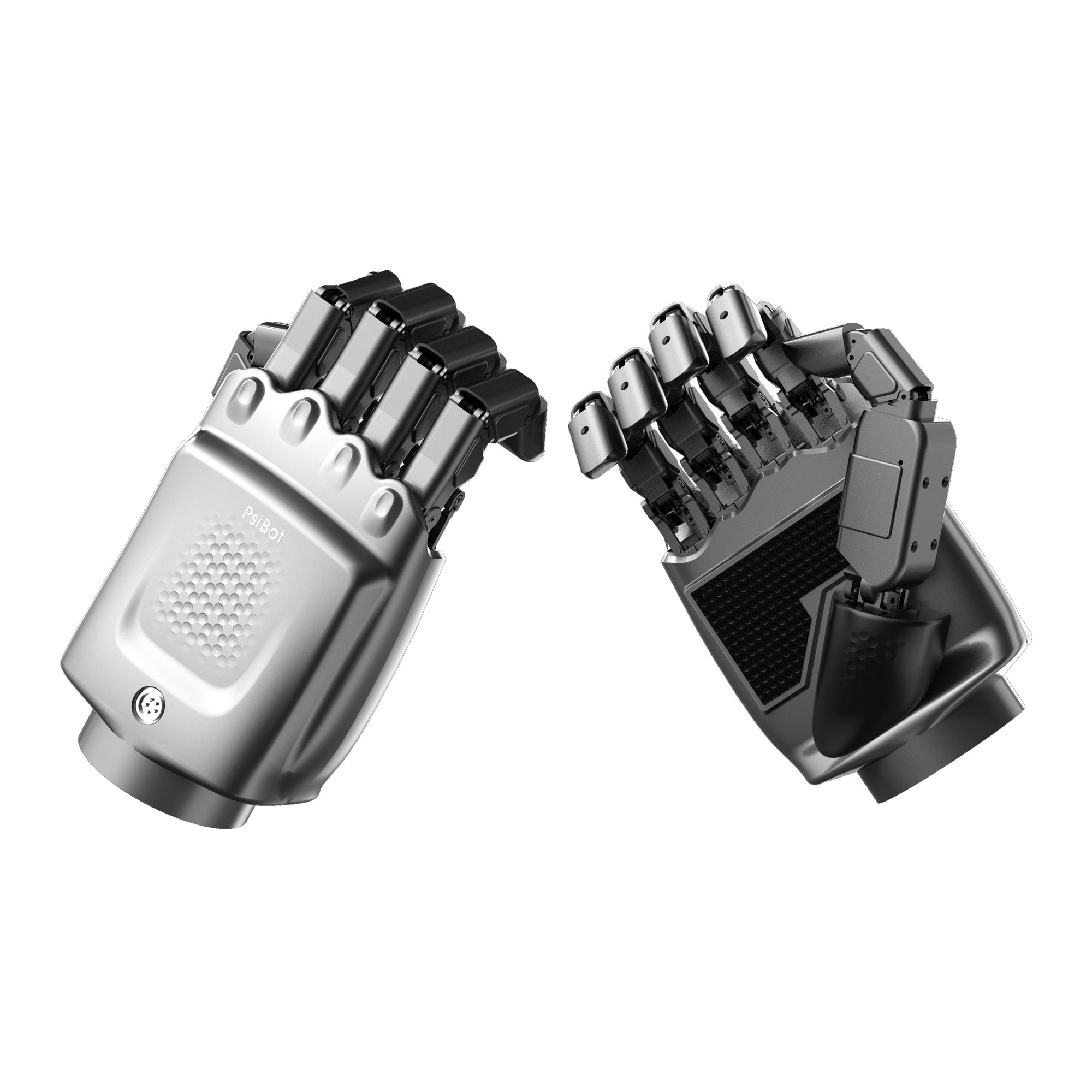
PsiBot’s pitch inverts the sector’s dominant playbook. While AgiBot, Unitree, and a long tail of rivals race to ship complete humanoids, PsiBot licenses its intelligence layer to any manufacturer that wants one. Its Psi R1 model pairs a hierarchical end-to-end vision-language-action architecture with reinforcement learning, and the company sells it alongside a 21-degree-of-freedom dexterous hand, simulation tooling, and training data platforms.
The analogy the strategy invites is deliberate: PsiBot wants to be the intelligence supplier inside other companies’ machines rather than a machine maker itself, closer to what a chipmaker is to phone brands than what a phone brand is to consumers. Founded in 2024 by chief executive Wang Qibin, formerly president of JD.com’s robotics arm and a product vice president at hotel-robot maker Yunji Technology, the company has raised heavily for its age; a March round brought in US$280 million before this latest raise.
The company’s best-known demonstration is a robot that played mahjong autonomously for more than thirty minutes, a task combining tile recognition, strategy, and fine manipulation, which PsiBot classifies as “L3 level” dexterous manipulation on its internal scale. The classification is the company’s own, and independent verification of such demonstrations remains scarce across the sector. PsiBot also claims its portable, crowdsourced data collection method cuts training data costs to roughly one tenth of conventional teleoperation, another figure investors have accepted rather than audited.
Why a Carmaker Is Writing the Check
Chery’s lead position is the more revealing half of the deal. The Wuhu-based automaker, which entered the Fortune Global 500 in 2024 with revenue of roughly CN¥480 billion (US$71 billion), has been assembling a robotics portfolio with unusual speed. It signed a global strategic collaboration with Nvidia in April covering autonomous driving, cabin AI, and robotics, deploys Nvidia’s DRIVE Hyperion platform in its EXEED brand, and operates its own robotics subsidiary, AiMOGA.
Carmakers have concluded, in China as in the United States, that the factory floor is the most defensible early market for embodied AI, and that the supply chain they already command, motors, reducers, sensors, batteries, castings, overlaps heavily with a humanoid bill of materials. Investing in the intelligence layer rather than another humanoid body is a coherent way to hedge: whichever robot brands win, Chery holds a stake in the software they may run and a channel to deploy it in its own plants.
Lens Technology’s participation follows the same industrial logic from the component side. The company has been building robotics parts since 2016, including six-axis force sensors, joint modules, and dexterous hand components, and its robotics business already generates more than CN¥1 billion (US$148 million) in annual revenue. For a supplier whose fortunes have long tracked Apple’s product cycles, embodied AI is both a diversification and a customer acquisition strategy: an investment in PsiBot is also a claim on the future orders of every manufacturer PsiBot’s platform touches.
The JD.com Lineage and the Logistics-First Wager
Wang’s resume explains the company’s unusual market entry. JD.com’s robotics division, which he ran as president, operates one of the largest automated logistics networks in the world, and Yunji shipped hotel service robots at genuine commercial volume before most of today’s humanoid startups existed. Both experiences teach the same unfashionable lesson: robots make money in constrained, repetitive, high-volume settings long before they make money anywhere else.
That lesson shows up in PsiBot’s choice of beachhead. Rather than staging viral demonstrations of robots doing backflips, the company has pointed Psi R1 at logistics automation and fine manipulation, tasks like sorting, kitting, and packing where the economic case is measurable in seconds saved per pick. The mahjong demonstration, viewed through this lens, is not entertainment; tile games compress exactly the perception, planning, and millimeter-scale manipulation challenges that warehouse work presents, in a format that happens to be legible to Chinese investors and customers alike.
The dexterous hand is the load-bearing component of that strategy. Most commercially deployed robot arms end in two-finger grippers or suction cups, which handle boxes well and almost everything else poorly. A 21-degree-of-freedom hand that can be trained cheaply, if PsiBot’s crowdsourced data claims survive contact with production environments, widens the range of automatable tasks dramatically, and it is notable that Lens Technology, an investor that manufactures hand components itself, looked at the sector and chose the intelligence layer to back.
The Crowded Middle of a Capital Flood
The round lands in a sector running hotter than any other corner of Chinese venture capital. Embodied AI companies in China raised roughly US$15.5 billion equivalent in the first half of 2026, close to five times the year-earlier figure. The unicorn count has grown from three to at least twenty-two since January.
A number that large invites the obvious skeptical question: can twenty-two unicorns all be right? The industry’s own operating data suggests not. Typical cash runways in the sector run eighteen to twenty-four months, and founders privately describe 2026 as “the year of elimination.” Research house MERICS notes that Chinese humanoids still “lack precision and dexterity and are mostly deployed in limited tasks and in site-specific trials,” while UBTech’s founder has acknowledged that deployed humanoids run at roughly half the efficiency of human workers. Omdia analyst Lian Jye Su puts the technical ceiling plainly: adaptability across diverse use cases without extensive fine-tuning “is still impossible at this stage.”
PsiBot’s platform strategy is, in one reading, a bet shaped precisely for that shakeout. If most robot brands fail, a company selling intelligence to all of them loses only some customers; if the survivors scale, its licensing base scales with them. The counterargument is equally clean: platform plays only work when the platform is genuinely hard to replace, and every major humanoid maker in China is simultaneously developing its own VLA models in-house. The sector’s giants regard the intelligence layer as their core asset, not a procurement line.
There is also a dependency question that no amount of domestic capital resolves. China’s embodied AI stack still leans on foreign foundations at both ends: Nvidia’s Jetson and Isaac platforms run beneath the training and deployment pipelines of most leading Chinese developers, while research house MERICS estimates that Schaeffler, THK, and NSK together supply roughly 90 percent of the specialized ball screws that precision robot joints require. A platform company like PsiBot inherits those dependencies through every customer it serves, and the US House’s vote this week to bar the Pentagon from Chinese humanoid robots is a reminder that the geopolitical perimeter around the sector is tightening in both directions.
The valuation mathematics of the round also reward a second look. At US$1.48 billion, PsiBot is being priced at roughly fifteen times the reported valuation it carried barely a year ago, an appreciation earned not through disclosed revenue but through the migration of the sector’s scarcity premium from hardware to models. That is not necessarily irrational: in software-layer businesses, the winner’s share of industry value tends to dwarf the hardware maker’s, as Android’s economics against handset assemblers demonstrated. But it does mean PsiBot’s investors are underwriting a specific and unproven proposition, that a two-year-old company can hold a durable model advantage against both larger-funded specialists like Physical Intelligence in the United States and the in-house teams of every Chinese humanoid maker it hopes to serve. Fifteen-fold markups in twelve months are what exit windows look like from the inside.
For investors and corporate development teams watching China’s embodied AI market, the PsiBot round is a useful marker of where the capital cycle now stands: strategic money from industrial giants is replacing pure venture money, valuations are being set by buyers with supply chain motives rather than portfolio math, and the gap between demonstration capability and deployed economics remains the number that matters most and is disclosed least.
The near-term test is concrete and dated: PsiBot says mass production of its dexterous hand begins within months, and volume delivery of embodied systems follows next year. Between those milestones sit the unglamorous variables, yield rates, warranty claims, integration timelines, that decide whether a model company becomes a products company.
The twenty-third unicorn is presumably already in term sheets. The more interesting list, the one nobody publishes, is which of the twenty-two will still be independent when the elimination year has done its work.
Disclaimer: This article is for general information purposes only and does not constitute investment, legal, or procurement advice. Readers should verify details with primary sources before making business decisions.