One in Four Warehouse Automation Buyers Say They Picked the Wrong Vendor
A new Exotec survey of 250 North American supply chain leaders finds nine in ten call warehouse automation essential, yet one in four regret their vendor choice, with price-driven buyers nearly five times more likely to report regret.

One in Four Warehouse Automation Buyers Say They Picked the Wrong Vendor
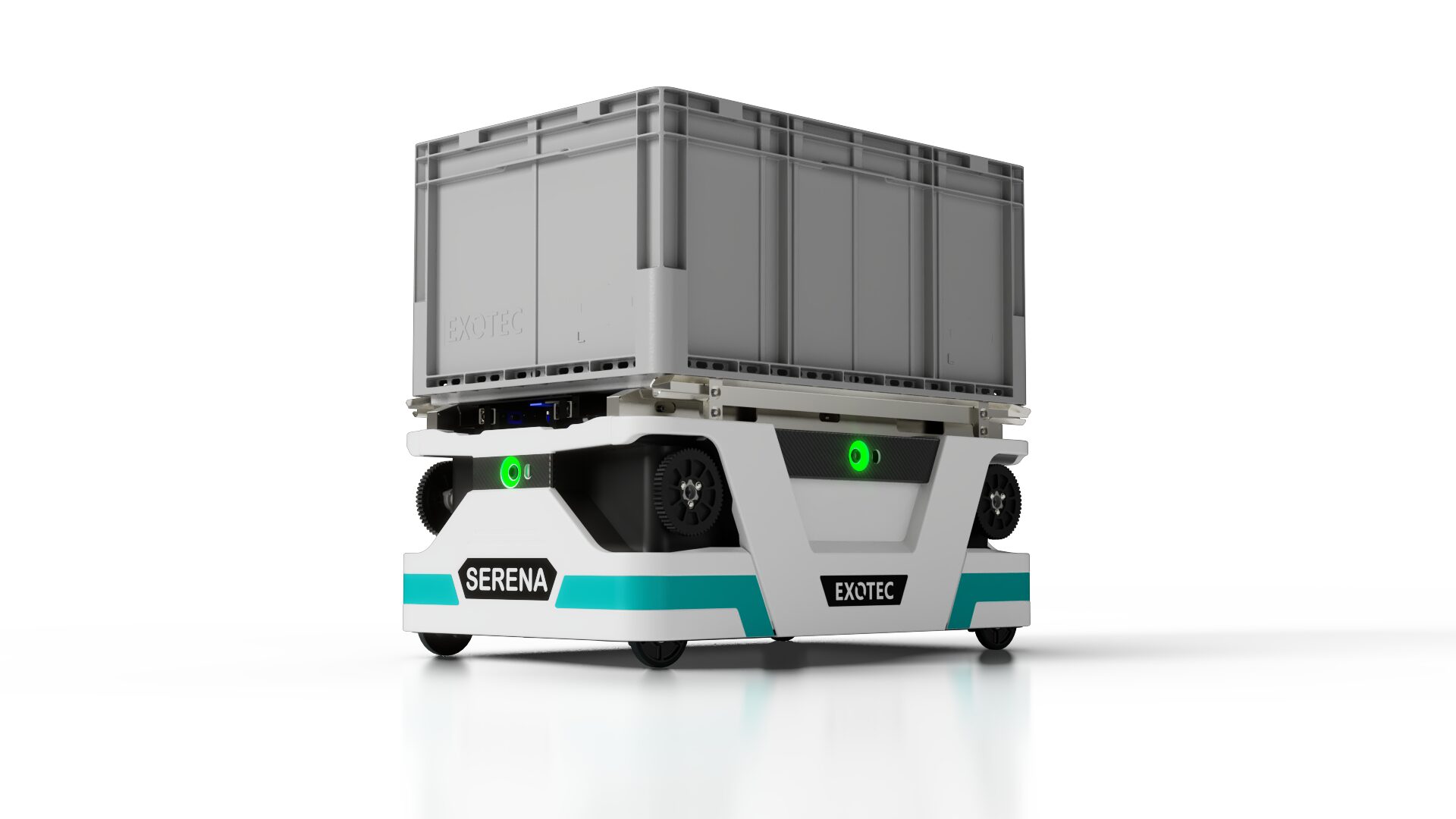
A survey of 250 U.S. and Canadian supply chain decision-makers, commissioned by French warehouse robotics maker Exotec and published October 28, found that nine in ten leaders now call warehouse automation a basic operational requirement rather than an optional upgrade, and yet one in four say they would make a different vendor choice if they had the decision to make again. Exotec, based in Croix, France, and best known for its Skypod automated storage and retrieval system, frames the gap between those two numbers as "robot regret," a problem the company argues is driven less by robots underperforming on spec than by buyers underpricing what a vendor relationship actually costs over the 10-to-15-year span a warehouse automation system typically stays in service.
The headline figure that should concern any procurement team mid-evaluation is the cost gap: 65% of surveyed leaders say their total cost of ownership came in higher than they expected at the time of purchase, and buyers who selected a vendor primarily because it offered the lowest upfront price were nearly five times as likely to say, in hindsight, that they picked the wrong supplier. That is not a story about automation failing to deliver value. It is a story about the wrong number being used to make the purchase decision in the first place.
The Decision That Outlasts the People Who Make It
Warehouse automation is unusual among capital equipment purchases in how long the consequences of a bad vendor choice persist. A 10-to-15-year operating lifespan means the manager who signs the contract is frequently gone, promoted, or working for a different company entirely by the time the system's true lifetime cost becomes visible, which removes much of the accountability pressure that normally disciplines a capital-purchasing decision. The team that inherits a poorly chosen system, often years into the contract, has little leverage to renegotiate and few practical options besides absorbing the higher-than-expected costs or undertaking an expensive, operationally disruptive switch.
That dynamic explains why the survey's separate finding, that 94% of leaders say switching vendors would be prohibitively expensive, matters as much as the regret figure itself. A buyer locked into a system that is underperforming cost expectations is not simply stuck with a worse number on a spreadsheet; they are structurally prevented from correcting the mistake through the normal competitive-pressure mechanism that would apply to almost any other vendor relationship a company holds. That combination, a decade-plus commitment paired with practically irreversible switching costs, is exactly why the initial vendor-selection decision deserves more scrutiny than most capital purchases receive, and exactly why a quarter of buyers reporting regret after the fact should be read as a structural warning rather than a rounding error.
Why Lifetime Cost Hides Behind the Purchase Price
The nearly fivefold gap in regret between buyers who optimized for low upfront price and everyone else points at a specific failure mode in how warehouse automation gets evaluated during procurement: a system's sticker price is the easiest number to compare across vendors in an RFP process, and it is also the number least correlated with what the system will actually cost to operate over its service life. Maintenance costs that rise unpredictably as a system ages, software licensing or subscription fees that were underweighted at purchase time, and the cost of keeping a specialized technician or service contract on hand all accumulate steadily over a decade in ways a one-time purchase price comparison cannot capture.
Exotec's own guidance for buyers trying to close that gap centers on two questions a procurement team should put to any vendor before signing: how maintenance costs are expected to rise each year for the vendor's existing installed base, and who owns root-cause resolution when a system goes down. Both questions are designed to surface the parts of a vendor relationship that a sticker price cannot show. A vendor unwilling or unable to answer the maintenance-cost-trajectory question with real data from existing customers is, in practice, asking a buyer to accept lifetime cost as an unknown, while a vendor that cannot clearly say who is accountable when a system fails is setting up exactly the kind of finger-pointing between integrator, software provider and hardware vendor that turns a short outage into an extended one.
The Accountability Question Most RFPs Never Ask
Buyer surveys of this kind consistently surface accountability, not raw technical capability, as the variable separating a successful automation deployment from a regretted one, and this survey's framing fits that pattern closely. A warehouse automation system is rarely a single vendor's product end to end; it typically combines hardware, control software, integration services and ongoing support, sometimes from a single company and sometimes stitched together from several, and when something goes wrong, the question of which party is responsible for diagnosing and fixing it determines whether a problem resolves in hours or drags on for weeks while vendors debate whose system is actually at fault.
A procurement team evaluating competing proposals should treat the root-cause-ownership question as seriously as any technical specification sheet, and should press for a specific, written answer rather than a general assurance of "full support." A vendor offering a single point of accountability across hardware, software and integration, even if it costs more upfront than a best-of-breed assembly of separate components, may represent a meaningfully lower lifetime cost once the operational cost of multi-vendor finger-pointing during an outage is priced in, a cost that rarely appears on an RFP comparison sheet but shows up repeatedly in the kind of post-purchase regret this survey measured.
Where the Next Five Years of Spending Is Headed
The survey also asked respondents where they plan to direct automation investment over the next five years, with AI, mobile robots, robotic arms and humanoid systems all named as planned areas of spending. That spread matters for how a buyer should think about vendor selection today, not just for the system being purchased this year: a vendor whose current platform can credibly extend into AI-driven optimization, additional mobile robot deployment or eventual humanoid integration offers a buyer a plausible upgrade path within an existing vendor relationship, while a vendor whose platform is architecturally closed to those extensions effectively forces a second vendor-selection decision, and the costs and risks that come with it, within the same facility a few years down the line.
That consideration should factor into the lifetime-cost calculation alongside maintenance and support costs, since a warehouse that needs to bolt on a second vendor's AI layer or robotic arm fleet onto an existing automated storage and retrieval system a few years into its service life is effectively repeating the integration and accountability risks the original purchase was meant to resolve, on a compressed timeline and often with less negotiating leverage than it had the first time around.
What a Smarter Evaluation Process Looks Like
None of this argues that warehouse automation itself is the problem; nine in ten respondents calling it a basic requirement is itself strong evidence the technology delivers real value once deployed. The regret this survey measures is concentrated specifically among buyers who evaluated vendors primarily on upfront price rather than on the maintenance trajectory, accountability structure and extensibility of the system they were buying into. A procurement process built to avoid that outcome looks different from a standard RFP exercise: it asks each finalist vendor for maintenance-cost data from existing customers at comparable scale and age, not projections; it gets a written, specific answer on who owns root-cause resolution during an outage before any contract is signed; and it evaluates a vendor's product roadmap and platform openness with the same seriousness as its current technical specifications, since the system being purchased today will likely still be running, and still need to accommodate new technology, a decade from now.
A buyer who runs that fuller evaluation process will not necessarily end up choosing the lowest-priced proposal, and this survey's own data suggests that is exactly the point: the nearly fivefold regret gap between price-optimized buyers and everyone else is the clearest evidence in the dataset that the cheapest system on paper is frequently not the cheapest system over the decade it actually has to run.
The Internal Case a Buyer Has to Make
None of this is an easy case to make inside an organization under pressure to control capital spending, since a maintenance-cost-trajectory requirement or a root-cause-accountability clause does not show up as a line item a finance committee can compare directly against a competing bid's lower sticker price. The practical path for a procurement team is to translate those softer evaluation criteria into a dollar estimate before the vendor decision is made, not after: modeling a conservative maintenance-cost growth curve against each finalist's own customer-reference data, and pricing in a reasonable estimate of extended-outage risk under a multi-vendor accountability structure versus a single-vendor one, so the finance committee is comparing projected total cost of ownership rather than purchase price alone.
That modeling exercise is also the strongest internal tool a procurement team has for resisting pressure to default to the lowest bid under budget-cycle time pressure, since it converts an abstract argument about long-term risk into the same kind of spreadsheet comparison that already governs how the purchase decision gets made. A vendor confident in its own maintenance-cost trajectory and accountability structure should have no difficulty supplying the reference data that exercise requires; a vendor that resists supplying it is itself a signal worth weighing heavily, independent of anything else in its proposal.
The survey's broader value, beyond any single statistic, is in making that argument easier to have internally. A procurement team citing a documented one-in-four regret rate, and a nearly fivefold regret gap tied specifically to price-driven decisions, has a concrete, externally sourced data point to set against the instinct to award a multi-year automation contract to whichever finalist submitted the lowest number, an instinct that is understandable under budget pressure and, according to this survey's own respondents, frequently regretted in hindsight.
This account draws on Exotec's October 28 survey report, based on responses from 250 U.S. and Canadian supply chain decision-makers.
This article is provided for general information purposes only and does not constitute investment, procurement, legal, or engineering advice. Survey findings reflect data reported by Exotec at the time of writing.