Inside the US Startups Building Products on Unitree's G1
Three American robotics startups, Lightberry (Lumi), Tuesday Labs (Voxel) and Dynamic Creatures (Hugo), have each built humanoid products on top of Unitree's G1 chassis rather than engineering their own hardware, with varying degrees of public disclosure about the underlying platform. The pattern lets startups skip years of mechanical engineering but concentrates supply chain risk in a single Chinese supplier, a tradeoff this article examines through each company's own statements and a regulatory window that may be narrowing for modified foreign-made chassis.

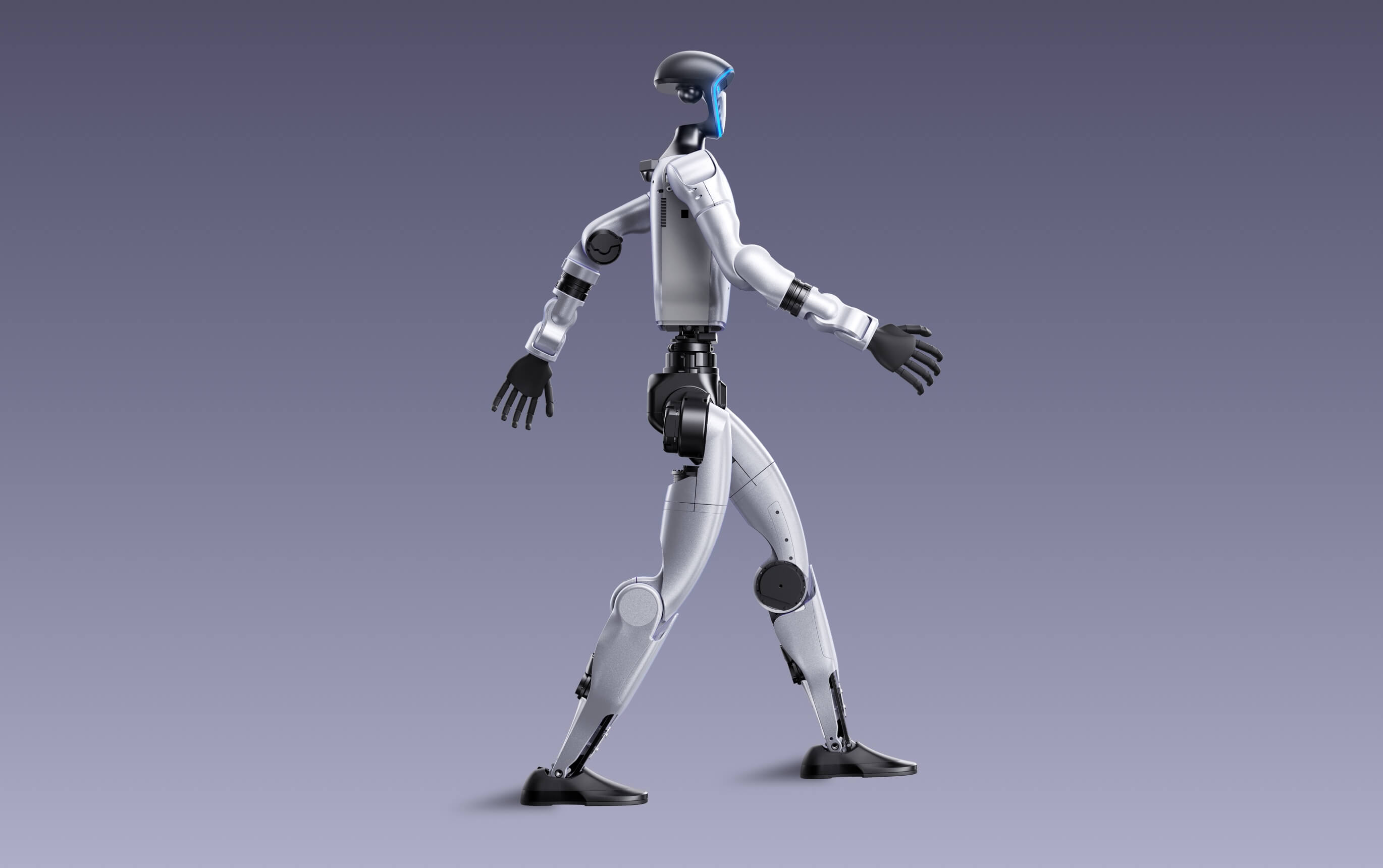
Three American robotics startups have each built a product on top of the same Chinese-made humanoid platform rather than engineering their own hardware from the ground up. Lightberry's Lumi, Tuesday Labs' Voxel and Dynamic Creatures' Hugo are all understood, to varying degrees of company confirmation, to use Unitree's G1 as their mechanical foundation, adding custom sensing, software and personality on top of a body none of them built. The pattern raises a question every buyer evaluating a humanoid supplier should be asking by now: when the hardest part of building a humanoid, the actuators, the balance control, the manufacturing yield, can be bought off the shelf from a single Chinese supplier for a fraction of what it costs to build in-house, what exactly is a venture-funded American robotics startup actually selling.
Unitree's G1 has been publicly available since 2024, with a widely cited starting price of US$13,500, though the company's own store directs buyers who want secondary development rights toward a separate EDU configuration, meaning the headline price does not necessarily reflect what a startup actually pays to get a developer-modifiable unit. Unitree founder Wang Xingxing has said cumulative G1 production sits somewhere between 10,000 and 20,000 units, a manufacturing figure rather than a confirmed sales total, but even the low end of that range dwarfs the production volume any venture-backed American humanoid startup has reached on its own hardware.
Three Companies, One Chassis, Three Different Bets
Lightberry, a San Francisco company, is the most transparent of the three about its approach. It has documented replacing the G1's onboard computer and adding its own sensing and interaction hardware, including an NVIDIA Jetson Thor T4000 compute module, an eight-microphone array, stereo cameras and a moving neck, on top of the G1's 29-degree-of-freedom frame. The resulting product, Lumi, sells as a US$39,990 Founder Edition aimed at commercial entertainment, marketing and developer use, built around conversation and situational awareness rather than manipulation or mobility tasks. Lightberry's pitch is, in practice, a software and experience company wrapped around proven mechanical hardware it bought rather than built, a framing that at least matches what the product visibly is.
Tuesday Labs is less direct about the relationship. Its Voxel, a tall yellow home robot with distinctively low-set eyes and backward-bending legs, has not had its underlying platform named by the company itself, but investor Benjamin Bolte has publicly called it a G1 wrapper, and Bolte argues that approach lets a startup avoid financing an entire humanoid manufacturing program or training its own foundation model from scratch. Voxel targets household tidying, fetching and plant care, carries an estimated price near US$20,000, and is aimed at a 2028 commercial target, with Tuesday Labs itself cautioning that the current prototype will undergo substantial hardware redesign before any production version ships. Paul Vizzio, the company's hardware lead, offered the most candid public justification for building on an existing platform rather than a clean-sheet design: "The quickest way for us to do that is use the most proven technology," a statement that treats the G1 less as a brand choice and more as a commodity input, the humanoid equivalent of building a product on a standard microcontroller rather than designing a custom chip.
Dynamic Creatures' Hugo is the hardest of the three to pin down. The company describes it as a furry character robot with 43 actuators built around what it calls a Vision-Language-Expression model, and has not confirmed that a G1 sits underneath the costume, though a developer's monitor visible in the company's own introduction video appears to show a modified G1 control interface. Unlike Lightberry and Tuesday Labs, Dynamic Creatures' public marketing leans entirely on Hugo's character and expressiveness, with no acknowledgment that the underlying mobility and balance engineering might be licensed or purchased rather than built in-house, which makes it the clearest test case for whether US buyers and reviewers will treat platform transparency as a meaningful differentiator between otherwise similar products.
The Economics That Make Buying a Platform Rational
The case for building on an existing platform rather than engineering humanoid hardware from scratch comes down to what a startup is actually trying to prove to its next investor or customer. A functioning bipedal humanoid with reliable balance control, sufficient degrees of freedom for expressive movement, and a manufacturing partner capable of producing it at any real volume represents years of engineering and tens of millions of dollars most seed and Series A robotics startups simply do not have. Unitree has already absorbed that cost and amortized it across, by its own founder's account, tens of thousands of units. A startup buying G1s at whatever Unitree's EDU pricing actually runs, rather than spending its funding round on mechanical engineering, frees that capital for the software, sensing and application work that determines whether the final product does anything useful, which is the argument Bolte makes explicitly on Tuesday Labs' behalf.
That argument has an uncomfortable edge for American robotics manufacturing, one that critic Clay Haight and others have raised without naming specific companies: if the fastest path to a US-branded humanoid product runs through Chinese hardware, the "American robotics" industry forming around products like Lumi, Voxel and Hugo may be building commercial and software value on a manufacturing base the United States does not control, a dynamic that mirrors what happened in consumer electronics and solar panel manufacturing over the preceding two decades, where American companies retained the brand and the software while the physical manufacturing capacity, and the leverage that comes with it, concentrated elsewhere.
The regulatory window this is happening inside is narrower than it looks. The G1 received its Federal Communications Commission authorization in March 2025, before new restrictions on newly authorized foreign robot models took effect in July 2026, which is why it remains importable and sellable in the United States even as the regulatory environment for Chinese robotics hardware has tightened considerably since. Substantial hardware modifications, the kind Lightberry has already made by swapping the onboard compute and adding new sensors, may trigger separate authorization requirements that have not been tested at scale yet, meaning every startup currently building on a modified G1 is operating in a compliance gray zone that could narrow further depending on how regulators treat a heavily modified foreign-made chassis.
What This Means for a Buyer Comparing These Products
For a procurement team or investor evaluating Lumi, Voxel, Hugo or any similarly platform-built product against a vertically integrated competitor such as Figure, Apptronik or Tesla's Optimus, the comparison needs a different framework than specifications alone provide. A vertically integrated humanoid maker controls its own supply chain, can iterate hardware and software together, and carries manufacturing risk and cost that shows up in a higher price and a longer path to volume. A platform-built product inherits proven, already-amortized hardware reliability but carries supply chain risk a buyer should price in directly: if Unitree's export status, pricing or production allocation shifts, every company building on the G1 inherits that disruption simultaneously, a correlated risk that does not exist for companies building their own chassis end to end, however much more expensive and slower that path has been for them so far.
The practical question worth asking any company selling a humanoid product in this category, whether a G1-based buyer such as those profiled here or a competitor claiming proprietary hardware, is straightforward and rarely answered voluntarily in marketing materials: what fraction of the unit's bill of materials, engineering effort and manufacturing risk is actually proprietary to the company selling it, versus licensed, purchased or copied from an existing platform. Lightberry answers that question honestly in its own technical documentation. Tuesday Labs answers it through an investor's public comments rather than its own marketing. Dynamic Creatures has not answered it at all, and until a company does, a buyer evaluating any of these three products for a commercial deployment, rather than a novelty purchase, should treat platform disclosure itself as a proxy for how much else about the product's claims deserves independent verification before a contract is signed.
That verification habit matters beyond these three companies specifically. As more American robotics startups reach for Unitree hardware, or hardware from China's other humanoid exporters, to compress their own time to market, the honest disclosure Lightberry has offered will likely remain the exception rather than the rule, since most startups have every commercial incentive to let a buyer assume more proprietary engineering sits under the hood than actually does. A buyer who learns to ask the bill-of-materials question early, before a demo rather than after a purchase order, is the buyer least likely to discover the gap between a company's engineering story and its actual supply chain only after a shipment Unitree itself controls fails to arrive on schedule.
This article synthesizes public reporting, company statements and publicly available product documentation current as of October 2026. It is for general information purposes only and does not constitute investment, procurement or professional advice.