The Missing Sense in Factory Automation Is Touch
Shadow Robot Company and Fraunhofer IFF launched a six-month project testing whether tactile-sensing dexterous hands can close the 10-20 percent gap in manufacturing tasks still done by hand, mounted on ordinary industrial arms rather than humanoids.

The Missing Sense in Factory Automation Is Touch
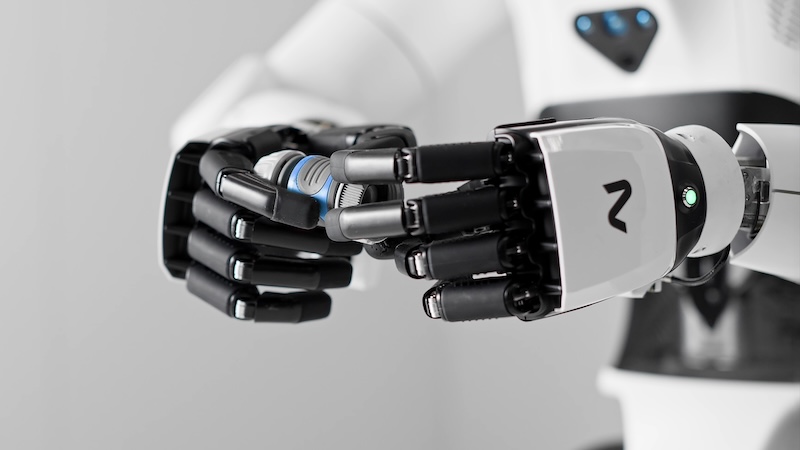
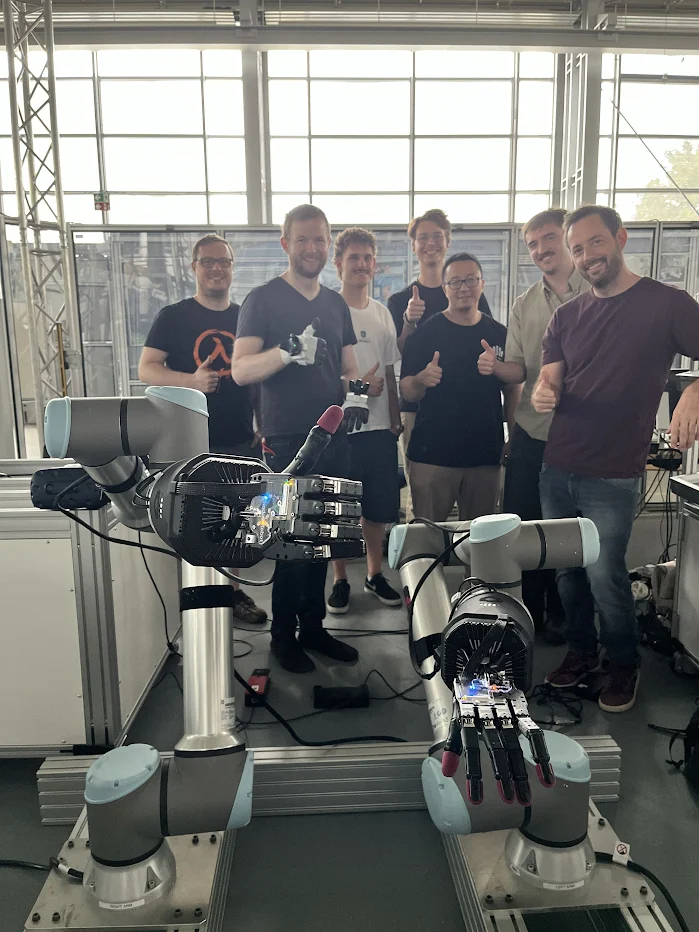
Shadow Robot Company, a London-based robotics maker founded in 1997 and widely regarded as the reference point for dexterous robotic hands, announced on October 19 that it is launching a six-month joint project with the Fraunhofer Institute for Factory Operation and Automation IFF, an applied-research institute based in Magdeburg, Germany, to test whether tactile-sensing dexterous hands can do manufacturing assembly work that conventional industrial grippers still cannot. Both organizations are members of the European robotics association euRobotics aisbl, and the project deliberately excludes humanoid robots from its scope: the dexterous hands under test will be mounted on ordinary collaborative industrial arms already common on factory floors, not on a bipedal platform.
The project's premise is a number Fraunhofer IFF states plainly: on highly automated production lines today, 10 to 20 percent of tasks are still done by hand, not because the work is conceptually difficult but because no commercially available automation technology can reliably perform it. That gap, not a splashy demonstration, is the actual addressable market this partnership is chasing, and it is a far more durable commercial target than most of the headline-grabbing humanoid announcements competing for the same procurement budgets this year.
Why Grippers Stall Where Hands Do Not
Industrial automation solved the easy 80 to 90 percent of manufacturing manipulation decades ago, using grippers engineered for a single part geometry and a single, repeatable motion. The remaining tasks resist that approach precisely because they require the thing a rigid two-finger gripper cannot provide: variable grip force, adaptable finger placement, and feedback about how a part is actually sitting in the hand rather than where a vision system predicted it would be. Precision assembly work, where a component has to be oriented, inserted, and seated correctly without visual confirmation of the contact surface, is the textbook case, and it is exactly the category Shadow Robot and Fraunhofer IFF are targeting.
Dr. José Saenz, group manager at Fraunhofer IFF, framed the partnership's logic around avoiding duplicated engineering effort. "Shadow Robot's deep experience with telemanipulation meant they had a ready-to-use, complete setup for teleoperating a five-finger hand with tactile sensing," Saenz said. "Instead of spending time on integration, we can jump straight into doing, using some of the world's most advanced dexterous hands." That framing matters commercially: Fraunhofer IFF is not building a hand from scratch to prove a research point, it is borrowing one that already exists commercially so the six-month window goes toward answering the harder question, which is whether the combination is worth deploying, not whether the hardware can be built at all.
Teleoperation as the Data Engine, Not the End State
The project's structure follows a pattern now visible across physical AI more broadly: teleoperation is being used less as a permanent control mode and more as a mechanism for generating the training data that eventually reduces how much a human needs to be in the loop at all. Shadow Robot's contribution is specifically a ready-to-use teleoperation setup paired with tactile sensing, which means every manipulation attempt during the project, successful or not, produces exactly the kind of contact-rich data that vision-only systems cannot capture. A camera can tell a control system where a part is before contact; it generally cannot tell the system how firmly the part is being gripped, whether it has started to slip, or whether an insertion has seated correctly, and those are precisely the signals that separate a gripper that works in a demonstration from one that survives a production shift.
Rich Walker, Shadow Robot's director and an elected director of euRobotics aisbl, situated the collaboration inside a longer professional relationship rather than a cold-start partnership, noting he has known the Fraunhofer IFF team for more than a decade through joint euRobotics work. It is, Walker said, "a great pleasure, and super exciting, to finally work directly with them on a cutting-edge project like this." That decade of prior contact is itself a useful signal for buyers: a six-month technical collaboration between two organizations that already understand each other's capabilities is a materially lower-risk bet than two strangers attempting the same scope on the same timeline.
The Question Neither Company Has Already Answered
What makes this project worth tracking rather than filing away as a routine research collaboration is that both partners are explicit about not yet knowing the answer to its central question. The project will test whether five-fingered dexterity is actually necessary for the manufacturing tasks in scope, or whether a simpler, cheaper hand design could achieve the same result. That is an unusual thing for a dexterous-hand manufacturer to put in writing, since the commercially convenient answer for Shadow Robot would be that intricate, five-fingered hands are always the right tool. Testing the opposite hypothesis, and publishing the result either way, gives the project's eventual findings more credibility with a skeptical industrial buyer than a vendor-funded study that only ever concludes its own product was necessary.
The project will also surface the costs of taking a tactile-sensing dexterous system from a controlled trial to a deployable one: the engineering approaches required, the integration challenges specific to a given manufacturing cell, and the actual cost delta against a conventional gripper solution for the same task. Those are the exact numbers a procurement team needs and almost never gets from a product announcement, because a six-month joint research project, unlike a sales pitch, has no commercial incentive to understate the difficulty of the problem it is solving.
A German Research Institute's Commercial Logic
Fraunhofer IFF's own description of its mission, drawing on what it calls a German tradition of high-quality handicraft applied to what it terms automated manufacture, positions the institute as a solver of problems that industrial customers have already tried and failed to automate through conventional means. That is a different starting point than a university robotics lab chasing a publishable result, and it explains why the project is scoped so narrowly around assembly tasks that specifically require precise interaction with individual components rather than a broader manipulation research agenda. An applied-research institute whose funding model depends on solving problems industrial customers actually bring to it has less room to chase an elegant but commercially irrelevant research question than a lab answering only to a grant committee.
Shadow Robot brings a comparable commercial grounding from the other side of the partnership. Beyond its Shadow Hand platform, the company's DEX-EE series was developed for Google DeepMind, and its client and partner list includes NASA, OpenAI, Siemens, and GSK, alongside contributions to programs funded by the UK's Advanced Research and Invention Agency (ARIA). A company supplying dexterous hardware to that range of customers, from a space agency to a pharmaceutical manufacturer, has already had to prove its hardware survives outside a research lab, which is a different bar than a hand that has only ever performed in a demonstration video.
Where This Leaves Buyers Evaluating Dexterous Manipulation
For manufacturers and systems integrators currently weighing whether dexterous, tactile-sensing hands belong on next year's automation roadmap, the honest answer this project is built to produce is not yet available, and that is precisely why it is worth watching rather than acting on today. A procurement team evaluating this category should treat the six-month window as a natural checkpoint: if Shadow Robot and Fraunhofer IFF publish findings showing dexterous hands clear the 10 to 20 percent gap in automatable tasks at a defensible cost, that is a credible signal to open a pilot conversation with either organization or a comparable vendor. If the findings instead show that the dexterity requirement was overstated for most of the tasks tested, that is equally useful information, because it redirects the investment toward simpler, cheaper end-effector designs instead.
The deeper signal in this partnership is about where the humanoid robotics conversation has been looking versus where the actual near-term industrial opportunity sits. Most of the capital and attention in physical AI this year has gone toward whole-body humanoid platforms attempting to walk, balance, and manipulate simultaneously, a vastly harder integration problem than dexterous manipulation mounted on a stationary or arm-based platform that factories already know how to install, power, and safety-certify. Shadow Robot and Fraunhofer IFF are betting that the unglamorous 10 to 20 percent of manual assembly tasks is a nearer, more fundable target than a general-purpose humanoid, and that the hand, not the whole body, is the component worth solving first.
The project's six-month clock is now running, and the next concrete milestone to watch is whichever party publishes results first, a dexterous hand succeeding at a task class conventional automation could never reach, mounted on hardware a factory already owns.
This analysis synthesizes statements from Shadow Robot Company and the Fraunhofer Institute for Factory Operation and Automation IFF, together with their published project materials.
This article is provided for general information purposes only and does not constitute investment, financial, or procurement advice. Readers should conduct their own due diligence before making business or purchasing decisions based on this content.