Why Investors Are Funding Physical AI's Infrastructure Layer
Two same-day funding rounds, Ubitium's US$14M for a universal physical AI processor and HyLight's EUR13M for autonomous inspection airships, point to a structural shift: sophisticated capital increasingly backing the enabling layer under physical AI rather than only the next humanoid or robot platform.

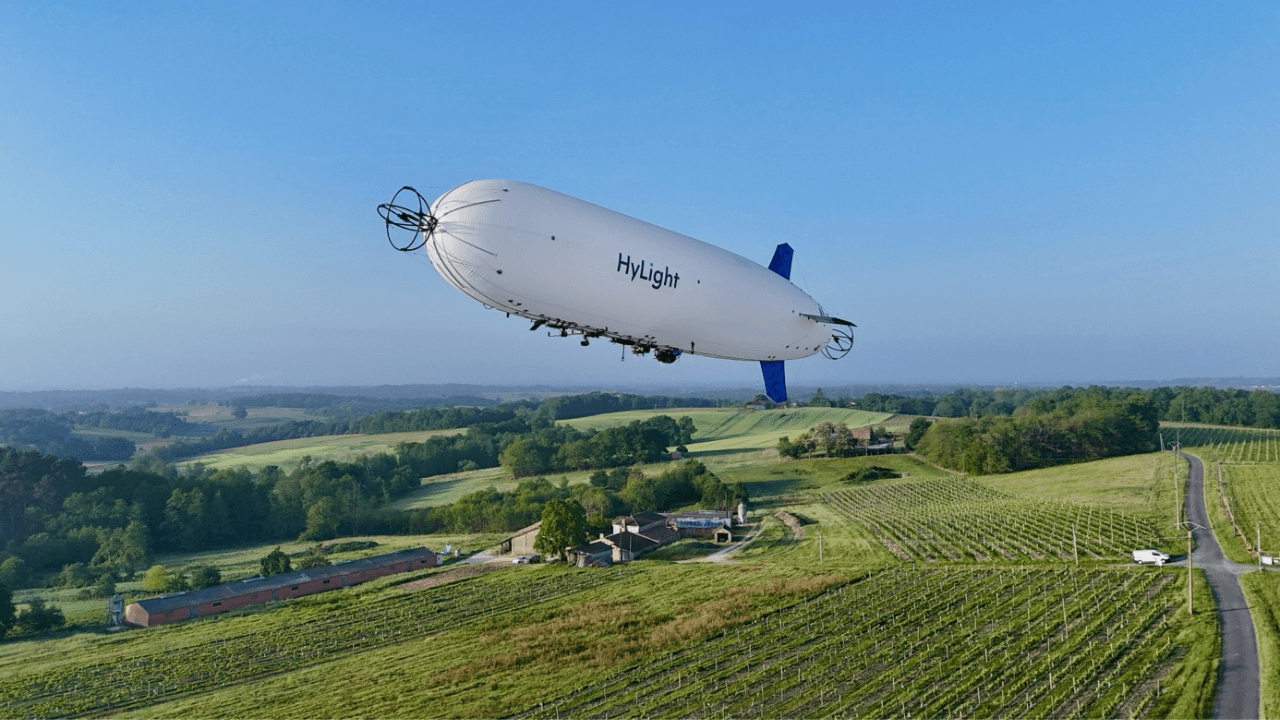
Two funding rounds closed within hours of each other on October 13, 2026, for companies that make neither a robot nor a foundation model, and that timing is more informative than either deal looks on its own. Ubitium, a semiconductor startup, raised US$14 million to build what it calls a universal processor for physical AI, while HyLight, a French aerial-inspection company, raised €13 million, approximately US$14 million, to expand its fleet of autonomous hydrogen-powered airships. Neither company builds a humanoid, a warehouse picker or an autonomous vehicle. Both are picks-and-shovels businesses selling into the physical AI boom rather than competing directly inside it, and the capital finding them on the same day is a useful data point for any buyer trying to separate durable infrastructure investment from the more speculative end of the robotics funding cycle.
The pattern these two rounds represent is not new, but it is accelerating in a specific direction: investors are increasingly funding the layer underneath physical AI, the processors, the sensing platforms, the data infrastructure, rather than only the headline-grabbing humanoids and robots that dominate the sector's press coverage. That shift matters commercially because it changes which companies a buyer should actually be underwriting for long-term vendor risk. A procurement team evaluating a humanoid or mobile robot platform is, whether it realizes it or not, also making a bet on the processors, sensors and data pipelines that platform depends on, and this week's funding activity is a reasonably clear signal about where sophisticated capital currently believes the more defensible, longer-duration value sits.
Why a Chip Startup Raised Money the Same Week as a Record Humanoid Order
Ubitium's pitch is specific and, at least on paper, addresses a real engineering bottleneck. Physical AI, defined broadly as intelligence built into machines that do physical work, requires a machine to perceive, think and act simultaneously, continuously, and on battery power, which today typically means stitching together a digital signal processor for sensing, a neural processing unit for AI inference, and a separate CPU for real-time control. Connecting those three specialized chips adds data transfers, coordination overhead and engineering complexity that, in Ubitium's framing, strains to breaking point as physical AI applications scale. Ubitium's answer is a single reconfigurable processor, drawing on chief technology officer Martin Vorbach's three decades of work in reconfigurable computing, that allocates its programmable elements across sensing, inference and control at runtime rather than hard-wiring each function to its own dedicated silicon.
The round itself, led by Ibex Investors with participation from OpenOcean and existing backers, brings Ubitium's total seed funding to US$18 million since the company's founding in 2024, and the company says it has already taped out its first silicon, demonstrating that signal processing, inference and real-time control can run on one processor architecture a year after founding. Ubitium holds 17 granted patents on the underlying technology, with more pending, and its team carries more than 250 career patents and 350 peer-reviewed publications combined, credentials drawn from backgrounds at Intel, Nvidia, Apple and Texas Instruments. That is an unusually dense concentration of established semiconductor expertise for a company this young, and it is precisely the kind of technical credibility an investor underwriting a notoriously capital-intensive and failure-prone category, custom silicon, needs to see before committing capital to a chip architecture rather than a software product that can iterate far more cheaply.
A French Airship Startup Is Betting on the Same Underlying Thesis
HyLight's business looks, on the surface, unrelated to Ubitium's chip ambitions, but it rests on an adjacent version of the same wager: that the physical AI buildout creates durable demand for specialized hardware solving a narrow, previously unautomated task well, rather than for another general-purpose robot competing in an already crowded category. HyLight, founded in 2022 and based at Air Base 217 in Brétigny-sur-Orge, France, builds autonomous hydrogen-powered airships that replace helicopter-based inspection of critical infrastructure, railways, power lines, pipelines, with a slower-moving, longer-endurance, zero-emission platform that pairs high-precision inspection with AI-powered data analysis. The company's client roster, including French national rail operator SNCF, grid operator Enedis, transmission operator NaTran, gas network operator Terega and utilities group Suez, is a list of infrastructure operators that each have an existing, expensive helicopter-inspection line item in their budgets today, which is the commercial wedge HyLight is underwriting against rather than a speculative new category it is trying to create from nothing.
The round, backed by new investors Rubio Impact Ventures, DRW and Teampact Ventures alongside existing backers Y Combinator and Ring Capital, will fund HyLight's expansion to a fleet of 15 aircraft and bring more manufacturing in-house, alongside building out an AI-powered data platform for infrastructure monitoring. Chief executive Martin Bocken has described the company's hardest problem as industrializing the technology, not building it, a distinction that separates HyLight from companies still proving out a core technical concept: the airship itself works, the current challenge is manufacturing, recruiting and operational scaling simultaneously, which is a fundamentally different and in some ways more fundable risk profile for an investor than pure technology risk.
What Capital Flowing to the Infrastructure Layer Actually Signals
Set side by side, Ubitium and HyLight make the same argument from two different directions: the physical AI buildout's most durable value may not sit with whichever company ships the most visible end-product, a humanoid robot, a self-driving car, but with the narrower set of companies solving a hard enabling problem, specialized compute, specialized sensing hardware, that every end-product in the category eventually has to rely on. That argument has precedent in prior technology cycles. The internet build-out minted durable value not only in the household-name web companies that used it but in the fiber, routing and data-center infrastructure underneath them, much of which was built by companies that never became consumer brands themselves. Physical AI investors betting on Ubitium and HyLight are, implicitly, making a similar structural bet: that the infrastructure layer captures value more reliably than the next humanoid platform, because it sells into every competing end-product in its category rather than betting on a single winner among them.
That is not a reason to dismiss the robot and humanoid side of the market, where genuinely enormous capital continues to flow and where real commercial deployments are accelerating. It is a reason for buyers and investors evaluating vendor risk across the physical AI supply chain to separate two different questions that get conflated constantly in funding coverage: whether a specific robot or platform company will win its category, which is genuinely uncertain and winner-take-most by nature, and whether the infrastructure layer underneath the category as a whole will keep finding capital and customers regardless of which specific robot maker wins, which is the bet Ubitium and HyLight are each making in their own narrow domain. McKinsey's own base-case forecast, cited in Ubitium's own materials, puts the general-purpose robotics market alone at US$370 billion by 2040, and every dollar of that market requires processors and, for infrastructure-adjacent applications, sensing platforms of exactly the kind these two companies build.
A Third Comparison Point Makes the Pattern Harder to Dismiss as Coincidence
Two same-day rounds in adjacent infrastructure categories could still be read as coincidence rather than trend, but they are consistent with a broader run of enabling-layer funding that has continued through the autumn, including other recent chip-focused raises aimed squarely at physical AI's compute bottleneck rather than at any single robot platform. The pattern is not that humanoid and platform funding has slowed, it plainly has not, but that the enabling layer is now attracting experienced, specialist capital of its own, rather than being funded only as an afterthought inside a platform company's own vertically integrated hardware budget. That distinction, a standalone infrastructure company attracting its own dedicated investor base, is a stronger signal of a maturing category than a single well-funded platform company choosing to build its own chips in-house would be, because it implies investors believe the infrastructure layer can sell across multiple competing platforms rather than being captive to just one.
The Procurement Lesson Buried in Two Small Seed Rounds
Neither Ubitium's US$14 million nor HyLight's €13 million (approximately US$14 million) round is large by the standards of this year's headline humanoid funding, and neither company has yet proven its technology at the scale its pitch implies, Ubitium with a single taped-out chip generation, HyLight with a fleet still expanding toward 15 aircraft. The size of each round is, in a sense, beside the point for a buyer reading this correctly: what matters is that experienced, technically literate investors are choosing to deploy capital into the infrastructure layer specifically, at a moment when capital chasing the next headline robot company remains comparatively abundant, which is itself a signal about where those investors believe the more defensible long-term economics actually sit. For a procurement or technology leader building a multi-year physical AI deployment roadmap rather than chasing the newest robot demo, the question worth asking of every vendor on that roadmap is a version of the same one these two rounds answer for their own narrow categories: does this vendor own a piece of the infrastructure layer that survives regardless of which specific robot or platform wins its category in the end, or is it entirely dependent on being the winning platform itself. The next quarter of funding announcements in this sector is worth watching specifically for whether more capital follows Ubitium and HyLight into the enabling layer, or whether this week turns out to be a brief exception inside a cycle still dominated by bets on the robots themselves.
This analysis synthesizes company statements and disclosed funding terms as of the publication date and should not be read as investment, financial, or professional advice; it is provided for general information purposes only.