NEURA Robotics Bets the Brain, Not the Body, Is the Real Robotics Product
NEURA Robotics has introduced Neuron AI, a multimodal foundation model fusing vision, touch, audio, robot state and memory across five robot embodiments, staking out a vertically integrated position in the global race to build a general-purpose physical AI brain, with a live test planned at NVIDIA GTC Berlin 2026.

One model, five robot bodies, and four senses beyond a camera lens: that is the specification NEURA Robotics put on the table in Metzingen, Germany, on October 14, 2026, when it introduced Neuron AI, a multimodal foundation model the company calls "the brain of the physical world." Built on what NEURA terms a Perception-Language-Action (PLA) architecture, Neuron AI fuses 3D vision, tactile and force data, audio, robot state and language into one shared, time-aligned representation, and adds a memory function so a robot can track objects it can no longer see and recall the effects of its own prior actions. NEURA, founded in 2019 and headquartered in Metzingen, describes itself as a global Physical AI company building cognitive robots alongside the software and data infrastructure needed to run them at scale.
For automation buyers, the announcement matters less as a product reveal than as a marker of where the capital and engineering effort in robotics is now concentrating. NEURA is not merely shipping a faster arm or a cheaper humanoid. It is asserting that the model running on top of the hardware, not the hardware itself, is the asset worth owning, training, and selling as a platform. That bet puts NEURA in direct company with a widening field of firms, in the United States, China and Europe, racing to build a general-purpose physical AI brain, the cognitive layer that lets different robot bodies perceive, reason and act. Whether that layer is best built by the robot maker itself, as NEURA argues, or bought separately from a model specialist and run on whatever hardware a buyer already owns, is the strategic question this launch puts in front of every procurement team now evaluating a multi-year automation contract.
A sensing bet that goes beyond what cameras can see
The core technical claim in Neuron AI is a wager that vision alone is an incomplete substrate for physical intelligence. Cameras register geometry, color and position, but they register nothing about contact, force or sound, and NEURA's argument is that a meaningful share of industrial tasks fail precisely at that gap. The company's own examples are specific: confirming that a lock has actually released, grasping an object a robot's camera cannot currently see, and judging the quality of a weld from the sound the process makes rather than from a post-hoc visual inspection. None of these are edge cases in a factory. They are the ordinary texture of manufacturing and logistics work, and they are exactly where pure-vision robot models tend to stumble once they leave a curated demo environment. Neuron AI's response is to encode 3D vision, tactile and force data, audio, robot state and language in one shared, time-aligned representation rather than treating each sensor as a separate input to be reconciled downstream. NEURA then layers in a memory function, built by adapting the model's architecture and trained on datasets designed to exercise it, so the system carries forward a sense of object permanence and cause and effect across a task sequence, not just within a single frame. Put simply for a buyer without a robotics background: most robot "vision" systems are judging a task the way someone would if they watched it through a window with the sound turned off and no memory of what happened thirty seconds earlier. Neuron AI is built on the premise that adding touch, sound and memory closes that gap, the same way a human worker relies on feel and hearing, not just sight, to tell whether a bolt has seated or a latch has caught.
Training data as the moat, not the chip or the chassis
Neuron AI is trained on three distinct data sources, and the mix says as much about NEURA's strategy as the architecture does. Real-world robot data comes from what the company calls NEURA Gyms, its physical training infrastructure where robots across different embodiments perform tasks and generate synchronized vision, touch, force, audio and movement data. Simulation-amplified data comes from NEURA's Data Amplifier and simulation stack, which expand that real-world data through simulated variations of tasks and environments. Human demonstration data comes from people wearing sensor-equipped data suits, capturing human movements directly into the training pipeline. NEURA has also lined up data partnerships with Schaeffler and Bosch, both named explicitly as data partners rather than customers, giving the model exposure to the kind of demanding, specialized manufacturing environments that German industry is known for. The strategic logic is vertical integration end to end: one company supplying the robot, the sensors, the training gyms, the simulation stack and the foundation model that ties them together. That is a different commercial proposition than a buyer licensing a model from a third-party foundation-model specialist and deploying it on hardware from an unrelated manufacturer, which is the path companies such as Physical Intelligence are pursuing with their own robot-model application programming interface (API) beta opened to developers in October 2026. NEURA's pitch is that fusing hardware, sensing and the brain under one roof shortens the loop between what a robot encounters in the field and what the next model release can learn from it. The trade-off buyers should weigh is equally direct: vertical integration can mean faster iteration and a single point of accountability, but it also means dependence on one vendor's roadmap, data practices and pricing for both the body and the mind that runs it.
One brain, five bodies, and the fleet economics behind it
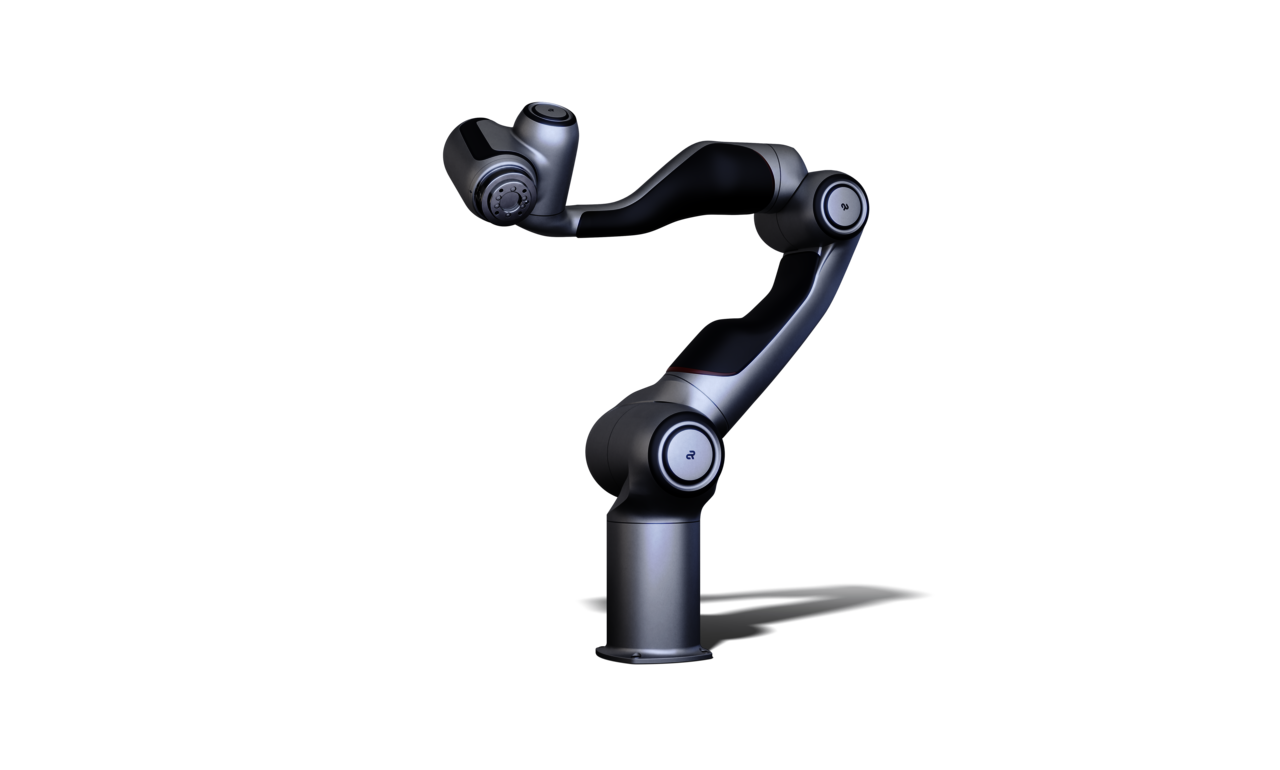
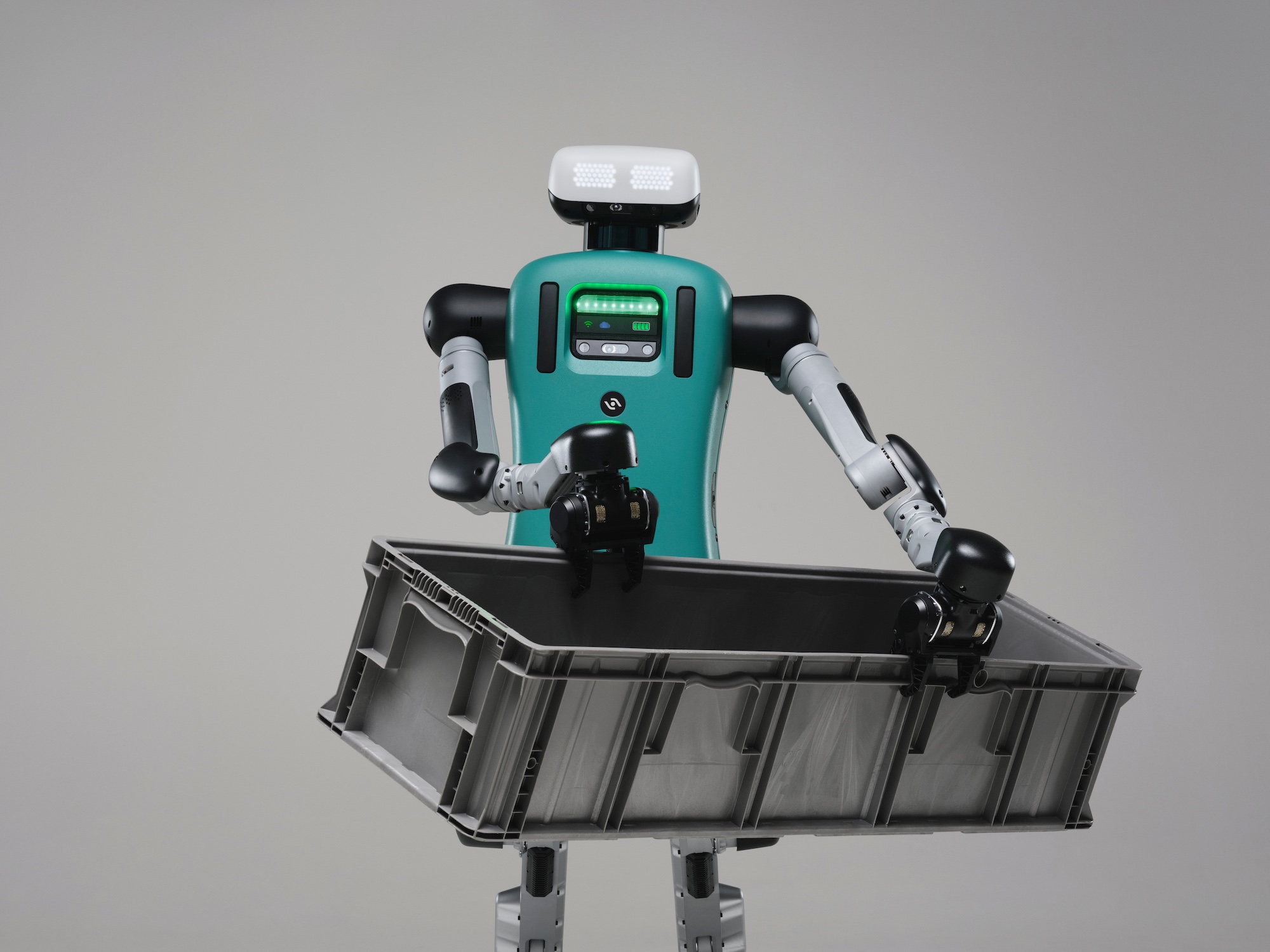
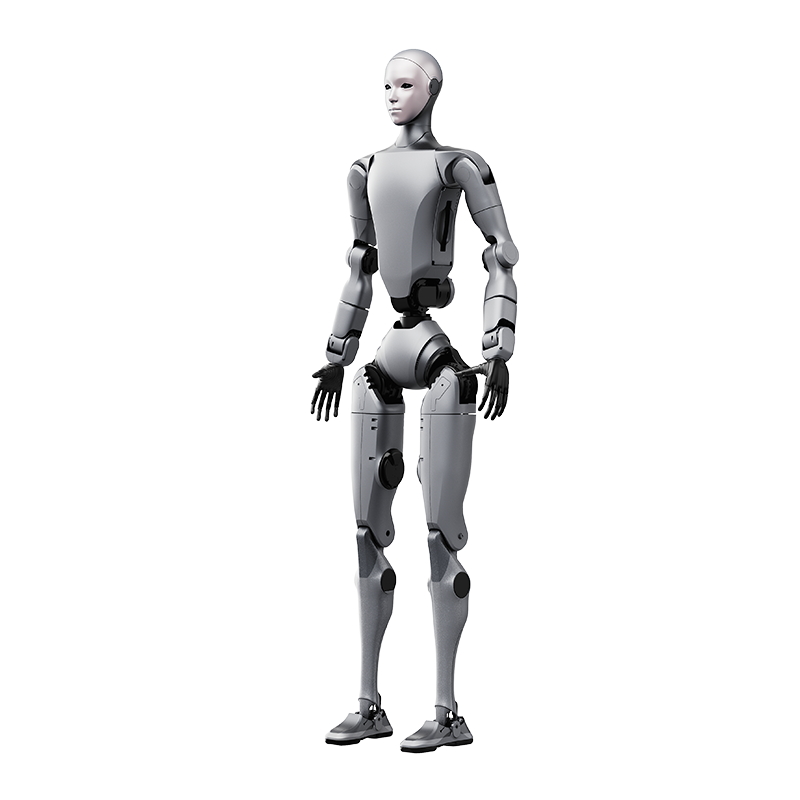
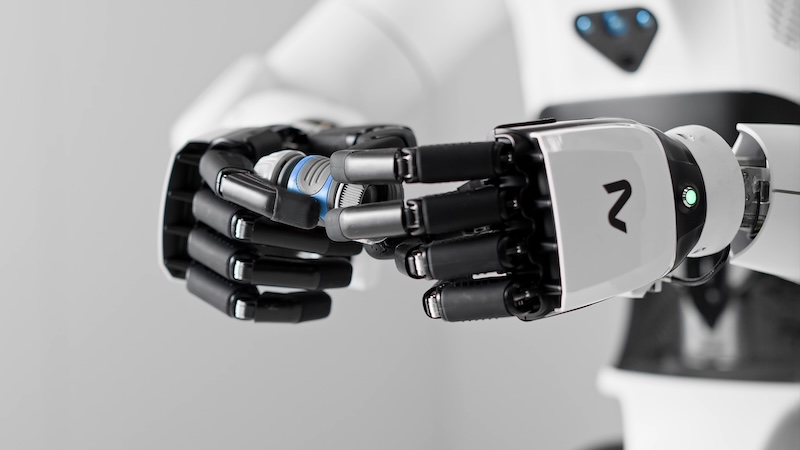
NEURA says Neuron AI runs across five different NEURA robot embodiments, each fitted with different grippers or hands, a detail that matters commercially because it is the clearest signal of what the company is actually selling. A foundation model that only works on one robot body is a product feature. A foundation model that generalizes across five mechanically distinct embodiments, from different gripper geometries to different hand designs, is closer to an operating system, and operating systems are priced and sold differently than individual machines. That generalization claim is also what makes the deployment story plausible at fleet scale. Customers fine-tune Neuron AI for their own tasks and deploy the resulting skills across robot fleets through NEURA's Neuraverse platform, the company's phrase for the ecosystem layer that sits above individual machines. No specific customer names or pricing have been disclosed, so the commercial terms of that fine-tuning and deployment model remain to be seen. But the structural claim, that a buyer could teach a skill once and push it to many robots of different physical configurations, is the same proposition behind the gap between demo performance and deployment reality that has defined the humanoid robotics industry's credibility problem for the past two years: it is one thing to show a capability on stage, and another to show it holding up, reliably, across a fleet of machines doing repetitive work on a factory floor for months without a camera crew present.
What a procurement team should actually interrogate
NEURA's announcement arrives inside a crowded and increasingly loud competitive field. Physical Intelligence opened an API beta for its own robot foundation models in October 2026. Google DeepMind has pushed Gemini Robotics 2 as a whole-body humanoid control model. WeRide, a Chinese autonomous-driving company, has introduced WITT as what it calls a physical AI cognitive foundation model. Hitachi and Agile Robots have announced a joint industrial physical AI stack, and Robotiq has open-sourced a physical-AI software layer aimed at grippers specifically. Each of these is a different answer to the vertical integration versus best-of-breed question running through the entire industry: where the generalizable "brain" for robots should live, who should own it, and which sensing modalities matter most. NEURA's full-sensory, memory-equipped approach, anchored in owning the robot hardware itself, is one competitive position among several credible ones, not an uncontested lead. For a buyer facing this field, the hard truth is that none of these competing "brain" claims, NEURA's included, should be evaluated on launch-day language or demo footage alone. The industry's own recent history, in which humanoid robots have been shown performing polished tasks on stage only for independent reporting to later reveal teleoperation, scripted sequences or heavy editing behind the scenes, is the reason buyers now discount demo video by default. The relevant diligence questions are narrower and more mundane than "does it have a brain": What is the measured task success rate in an unscripted, representative version of the buyer's own process, not a curated one? How does performance degrade when lighting, part variation or occlusion departs from the training distribution? What does Time-to-Skill, NEURA's own stated metric for how quickly a robot learns and reliably performs a new task, actually look like in hours or weeks for a task resembling the buyer's, rather than as an abstract claim? And critically, is there third-party or customer-verified evidence of sustained fleet-level reliability, as opposed to a single robot completing a single sequence once, however impressively?
None of this is reason to dismiss Neuron AI's technical premise. Fusing touch, sound and memory into perception is a reasonable response to a genuine limitation of vision-only models, and the specific failure modes NEURA cites, confirming a lock is open, grasping what cannot be seen, judging a weld by sound, are real industrial problems that camera-based systems routinely miss. The caution is narrower: a foundation model's ambition and its deployed reliability are two different things, and the industry's track record gives buyers every reason to insist on evidence of the latter before treating the former as settled.
The test NEURA has now scheduled for itself
NEURA has picked a specific, public venue to make its case concrete. At NVIDIA GTC Berlin 2026, running October 20 to 22 at Station-Berlin, Hall 3, Booth #3031, the company plans to demonstrate Neuron AI running on its humanoid robot in a live setting in front of an industrial and investor audience that has seen enough staged robot footage to know what to look for. David Reger, NEURA's founder and chief executive officer, framed the ambition plainly: "An intelligent robot needs a brain that brings its senses together and remembers what happened." Within days, that sentence will either be visibly demonstrated on a show floor in Berlin, in front of the exact buyers Neuron AI is built to persuade, or it will not.
This analysis synthesizes NEURA Robotics' own press release and public statements issued on October 14, 2026, as of the stated publication date.
This article is provided for general information purposes only and does not constitute investment, procurement, legal, or engineering advice. Figures reflect the sources listed above as of the stated information cut-off and may change without notice.