Figure Locks In Its Fourth Humanoid Design as Its Data Bill Explodes
Figure AI told employees its Figure 04 humanoid has reached design lock while CEO Brett Adcock disclosed a weekly data bill north of US$8 million and a plan to double compute capacity, teasing a Helix 3.0 model with no benchmark yet attached.


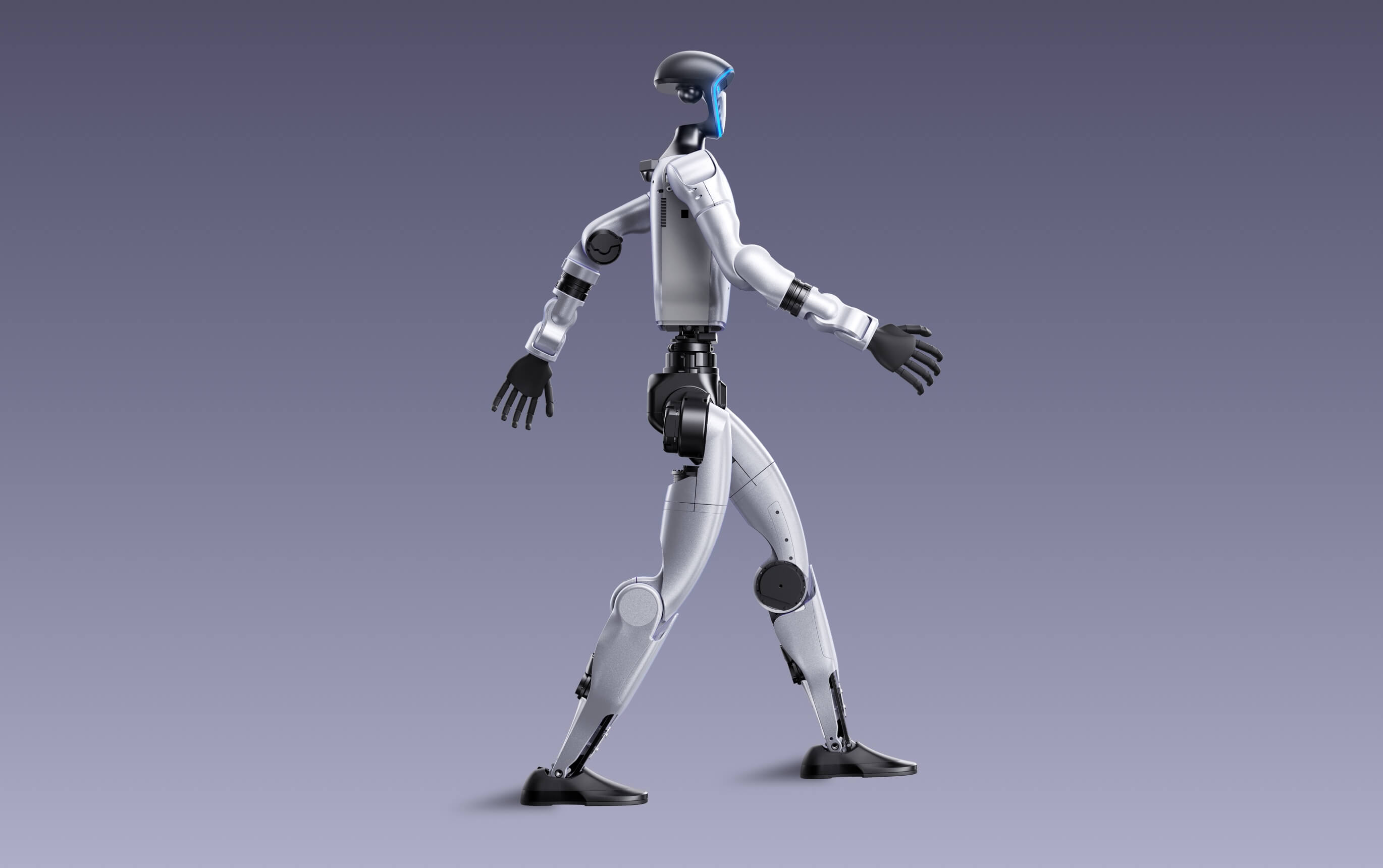
Figure AI told employees at an internal all-hands on October 22, 2026, that its fourth-generation humanoid, Figure 04, has reached design lock, with parts now shipping for new actuators, batteries and a redesigned hand. Chief executive Brett Adcock paired the hardware milestone with a pledge to roughly double the company's near-term compute capacity within about ten days and a teaser for a next-generation AI model, Helix 3.0, framing the update as a multibillion-dollar bet on scaling faster than the humanoid field's cost curve usually allows.
The timing matters because Figure is making that bet in public view of rivals who are placing very different ones. Tesla is leaning on automotive manufacturing scale for Optimus, Chinese makers such as Unitree and AgiBot are competing on unit price and shipment volume, and Boston Dynamics-descended teams are leaning on decades of locomotion research. Figure's answer, laid out across the hardware, data and compute sections of the all-hands, is to spend aggressively on both silicon and human-generated training footage before the robot itself is finished, a sequencing choice that inverts how most hardware companies scale.
The Fourth Hand Design and What Design Lock Actually Freezes
Design lock is a specific engineering milestone, not a launch date. For Figure 04, Adcock said it means the actuators, battery architecture and hand mechanism are now fixed enough that components can be ordered and manufacturing tooling can be committed, even as battery load and thermal testing continue. The company said it had assembled ten full battery packs for load testing in the week before the all-hands, with thermal validation next in line.
The hand drew the most attention internally. Adcock described a fourth iteration of the Figure 04 hand, the product of months of fingertip-tracking work benchmarked against human reference data at millimeter-level precision. He characterized the result as approaching human parity, though the company did not present results against any standardized dexterity benchmark, a caveat worth keeping in view given how often humanoid manufacturers use "human-level" language loosely. Hand design has been a recurring bottleneck across the industry: dexterous manipulation, not walking or balance, is the capability gap separating demo robots from robots a warehouse or hospital could actually deploy at scale.
Figure also disclosed that it built its 1,000th Figure 03 unit over the summer and cut production cost by more than 90% moving from Figure 02 to Figure 03, without stating an absolute unit cost. That cost curve, if it holds into Figure 04, is the real subtext of the design-lock announcement: Figure is trying to prove it can compress manufacturing cost between generations fast enough to make a capital-intensive data and compute strategy pay off before competitors undercut it on price.
A Weekly Data Bill That Rivals a Seed Round
The clearest sign of how much Figure is now spending to train its models sits in the data numbers Adcock shared. Index, the company's crowdsourced human-video program launched in August 2026 to buy training footage directly from the people who record it, had reached 37.5 million uploaded videos, 1.26 million app downloads and 112 countries by the week of the all-hands, with 210,000 people uploading at least one video that week alone. Figure's own August launch post for Index had put the early counters at roughly 16 million videos across 108 countries, so the program has more than doubled its footage in about two months.
Adcock put a number on what that growth costs: an estimated US$8.1 million in data spending in the week before the all-hands. That is a run rate of more than US$400 million a year on human-video sourcing alone, before compute or hardware. Figure is now spending more on crowdsourced training footage in a single week than many robotics startups raise in an entire seed round, and it is choosing to do so because, as Adcock put it when announcing the Nscale compute partnership in September, Helix improves "the same way every learned system does: with more data and compute." The company has not disclosed how much of the uploaded footage is cleaned, annotated or otherwise converted into usable training data, which matters because raw video volume and trainable data volume are not the same thing.
Buying Compute Years Before the Robot Ships
The compute side of the strategy was set in motion well before this week's all-hands. In September, Figure signed a strategic partnership with Nscale, a UK-based AI infrastructure and GPU cloud provider, for an initial US$3.5 billion commitment with an intent to scale past US$6 billion, covering up to 100,000 GPUs on NVIDIA's Vera Rubin platform. Nscale is also taking a strategic equity stake in Figure. The first GPUs under that agreement are not due online until the second half of 2027, at a site in Barstow, Texas, which means Figure is pre-committing billions of dollars in compute spend more than a year ahead of when most of that capacity will actually exist.
At the all-hands, Adcock added a nearer-term step: a plan to roughly double Figure's available compute capacity within about ten days of the meeting, well ahead of the 2027 Nscale buildout. He also disclosed a cash balance above US$2 billion following additional capital raised, without detailing the financing terms. Between the Nscale commitment, the near-term compute expansion and the Index data spend, Figure's capital structure now looks closer to that of a frontier AI lab than a conventional robotics manufacturer, which is precisely the comparison Adcock appears to want investors and rivals to draw.
A Different Cost Curve Than Beijing's or Tesla's
That framing puts Figure in a different competitive lane than the humanoid makers racing on unit economics. Chinese manufacturers have built an advantage on component supply chains and aggressive pricing, pushing shipment volumes up by keeping hardware costs down and iterating quickly on mass production. Tesla is wagering that Optimus can ride the company's existing automotive manufacturing base to a scale no standalone robotics company can match. Figure's bet is narrower and more expensive: that the hardest problem in humanoid robotics is not building the body but training a model general enough to operate it reliably in unscripted homes and warehouses, and that whoever accumulates the most usable human-motion data and compute first will set the pace for everyone else.
There is early evidence the data strategy is producing something measurable. In September, Figure published results from zero-shot testing of its Helix 2.5 model across 30 rented homes the system had never seen, reporting roughly 56% success across three household tasks, chosen specifically because models pretrained on Index data outperformed models trained from scratch on the same evaluation. A 56% zero-shot success rate on unscripted household chores is not a finished product, but it is a meaningfully different signal than a staged demo, and it is the result Figure is using internally to justify spending more on data rather than less.
What "Baby AGI" Does Not Mean Yet
The most quoted line from the all-hands will likely be Adcock's description of an internal model result as "baby AGI," a phrase he reportedly did not elaborate on in detail and said was not ready to share publicly. The company teased Helix 3.0, describing it as trained with more data and more GPU capacity than prior versions, with a larger model expected within weeks, but offered no capability breakdown, no benchmark results and no release date. Robotics executives have a long history of using AGI-adjacent language ahead of what the underlying systems can actually demonstrate, and an unreleased model with no published evaluation is, by definition, an unverified claim. Buyers evaluating Figure's roadmap should treat the Helix 3.0 teaser as a signal of internal confidence, not as a capability they can plan deployments around until the model actually ships with published results.
Figure also said its robots are now operating in three US states, with customer identities withheld pending approval, and that a previously reported 200-hour logistics demonstration involved robots swapping out for charging rather than one unit running continuously on a single charge, a distinction that matters for anyone sizing real duty cycles against marketing claims.
Reading the Roadmap as a Buyer, Not a Spectator
For automation buyers and integrators weighing a humanoid pilot in 2027 or 2028, the practical takeaway from this all-hands is less about Figure 04's hand mechanism and more about what the company's spending pattern implies for pricing and availability. A manufacturer burning roughly US$400 million a year on data acquisition alone, on top of a multibillion-dollar multi-year compute commitment, is not pricing its near-term hardware to recover those costs directly. That typically means early units are subsidized, availability is gated by customer approval processes rather than open ordering, and the commercial terms on offer now will look different once Figure needs the fleet to pay for the infrastructure behind it. Buyers already in conversation with Figure should ask directly how long current pricing and service terms are expected to hold once Figure 04 ships in volume, rather than assuming today's quote survives the transition.
The other practical signal is sequencing risk. Figure is stacking three unproven transitions on top of each other: a hardware generation still in thermal validation, a data pipeline that has not disclosed what share of its 37.5 million uploads are usable training data, and a model generation, Helix 3.0, with no published benchmark. Any one of those slipping pushes out the timeline for the others, since Figure 04's value proposition depends on Helix running on it well. Procurement teams should treat the October all-hands as a credible progress update from a well-capitalized company, not as a shipping commitment, and build contract language around verified milestones rather than the internal targets Adcock described to employees.
What to Watch Next
The next concrete test of this strategy is not Figure 04's design lock itself but what follows it: whether battery and thermal validation clears cleanly enough to move from locked design to shipped hardware on the timeline Adcock implied, and whether Helix 3.0 arrives within the "weeks" window he described with evaluation results attached rather than another internal-only demonstration. The Nscale compute coming online in Barstow in the second half of 2027 is the furthest-out marker, but the nearer one, the promised near-term doubling of compute capacity, should be visible within the data and uptime figures Figure chooses to disclose in its next public update. Procurement teams evaluating Figure against lower-cost Chinese or Tesla-backed alternatives should watch for that update before weighting Figure's roadmap into any 2027 deployment plan.
This analysis synthesizes company statements, public filings and figures disclosed in Figure's own announcements and internal presentation materials. It is provided for general information purposes only and does not constitute investment, procurement, or professional advice.