China's Humanoid Tenders Tripled in September. The Market Still Isn't Real Yet.
China's government procurement of humanoid robots jumped 168% to US$39M in September, but shrinking average deal sizes reveal a market still dominated by training labs and demonstrations, not factories.

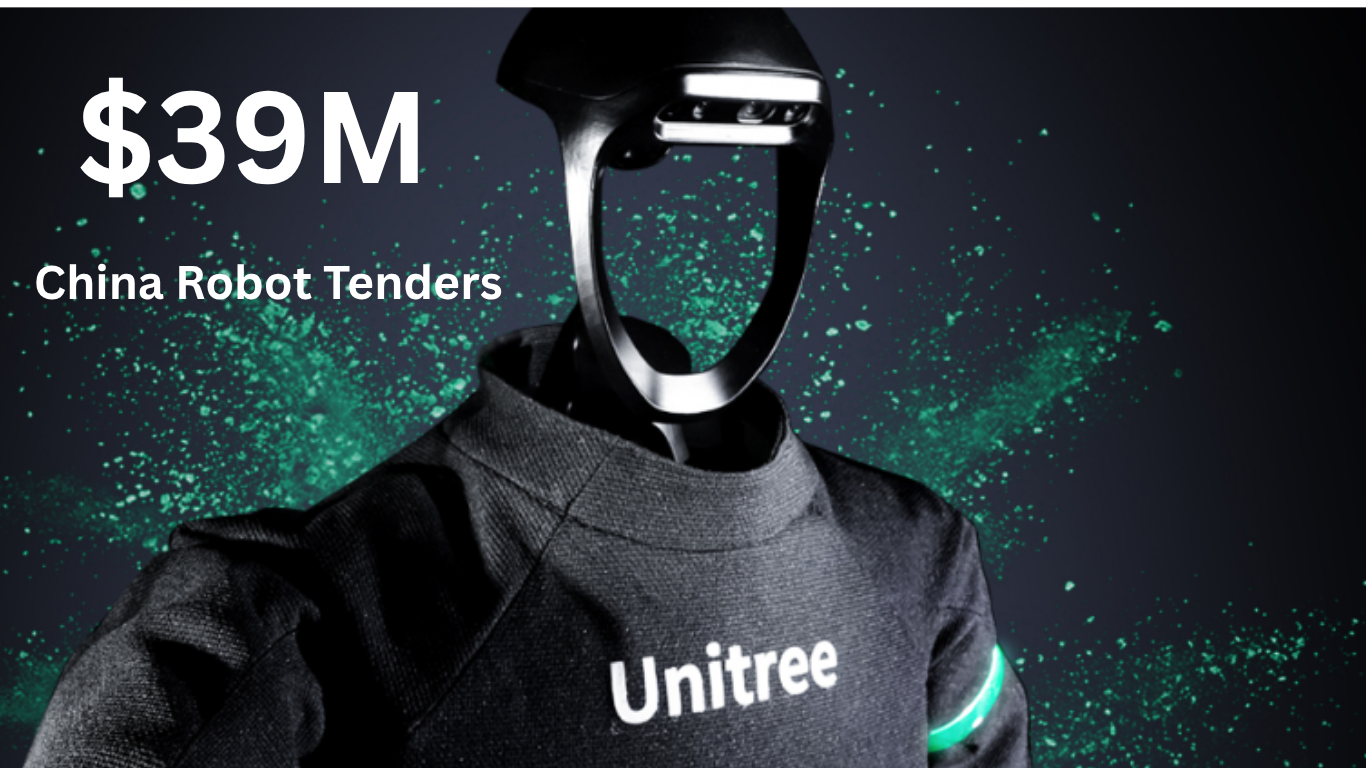
Chinese buyers spent RMB 284 million (about US$39 million) on humanoid robots and embodied AI systems across 78 publicly disclosed procurement projects in September 2026, according to tender data compiled by the Humanoid Robot Scene Application Alliance and reported by the Chinese Mobile Robot Alliance (CMRA), a Shenzhen-based industry body that tracks mobile and humanoid robot deployment across China. That is a 168 percent jump in value from August's RMB 106 million (about US$15 million) across more than 60 projects, and on paper it looks like the inflection point China's humanoid robot industry has been promising since 2024.
It is not. Universities, vocational schools, and local government offices, not factories or logistics operators, placed almost all of September's orders, and most of the money bought training platforms rather than working robots. The month's growth came from a handful of large, bulk-order deals rather than a broad shift in buyer behavior, and the average contract size, while higher than August's, remains a fraction of what it was in June. For procurement teams outside China trying to time their own humanoid robot purchases against what Beijing's market is actually doing, September's number is a useful corrective: the volume is real, but it is not yet commercial.
The distinction matters because China's humanoid robot sector has spent much of 2026 trading on the assumption that government-adjacent demand would eventually convert into industrial demand at scale. September's tender data is the first granular test of that assumption at a national level, and it suggests the conversion is happening far more slowly, and far more unevenly across buyer types, than the aggregate growth rate implies.
Who Actually Signed the Checks
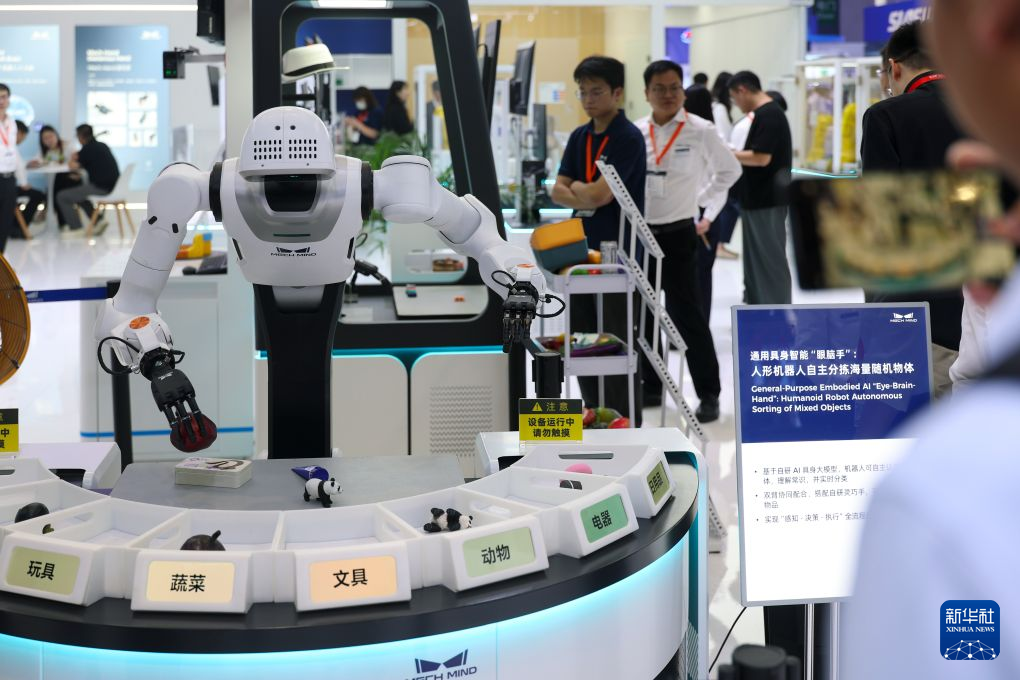
Break down the 78 contracts by buyer type and the picture sharpens considerably. Universities and vocational schools accounted for the largest share of spending, buying humanoid units mainly as research platforms for training labs and for students doing secondary development work on manipulation, locomotion, and perception algorithms. Local government and public-sector institutions, including regional Development and Reform Commission offices, emergency-management bureaus, and science museums, were the next largest category, procuring robots for exhibition displays, safety-inspection demonstrations, and so-called innovation platforms meant to showcase regional technology ambitions. A smaller tier of K12 schools in cities including Shenzhen and Wuxi made modest purchases tied to AI education curricula.
What is conspicuously thin is the category procurement managers actually care about: industrial buyers purchasing humanoid robots to run production lines, warehouses, or service operations at commercial scale. CMRA's own breakdown shows only a small share of September's volume went to public displays and industrial-adjacent applications such as substation inspection, and the alliance's data explicitly excludes construction-site projects and K12 desktop devices, so even that narrow industrial slice is likely generous relative to what is happening on actual factory floors.
Three Names, One Platform Economy
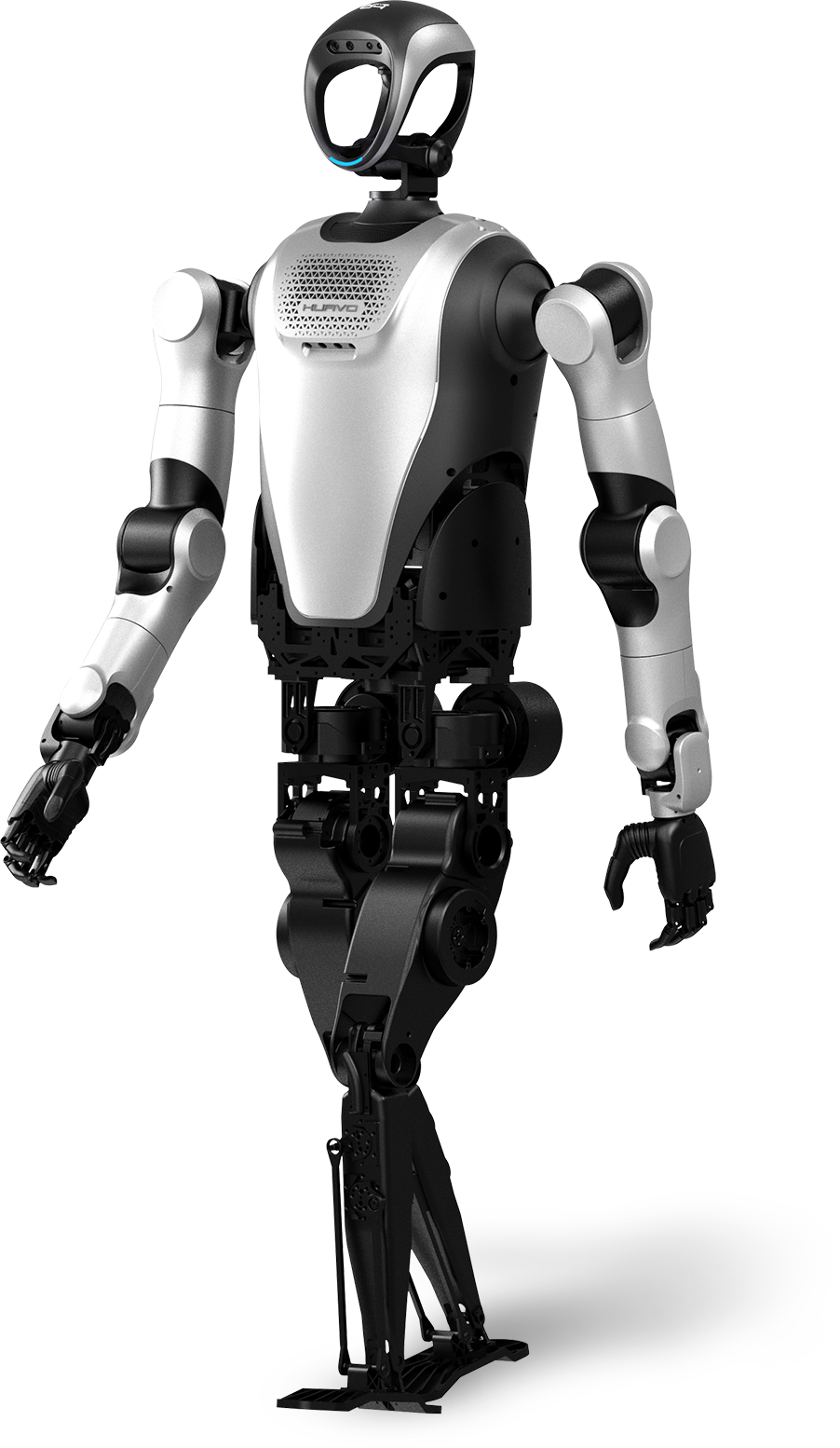
Three vendors won the most high-frequency bids: Unitree, UBTECH, and Leju Robotics (乐聚机器人), a Beijing-headquartered humanoid robot maker that has built its commercial strategy around selling general-purpose bipedal platforms to research institutions and systems integrators rather than owning a single flagship consumer product. Many of the smaller vocational and K12 orders, however, did not go directly to these three manufacturers at all. They went to local technology integrators and educational-equipment distributors who resell and configure humanoid hardware for classroom and training-lab use, a distribution layer that is easy to miss if you only track robot-maker press releases.
This matters for how buying decisions should be read. A procurement officer evaluating whether China's humanoid market has reached critical mass needs to separate genuine platform sales to end users who will operate the robots commercially from education-channel resale volume that inflates headline tender counts without reflecting deployment readiness. On September's evidence, the second category is doing most of the work.
The Deal-Size Collapse Nobody Is Advertising
The number that should worry anyone pricing a China market entry around September's headline is average contract value, not total spend. Average project size rose to roughly RMB 3.9 million (about US$540,000) in September, up from RMB 1.63 million (about US$226,000) in August, which sounds like healthy momentum until it is set against June 2026's peak average of RMB 19.17 million (about US$2.6 million). China's humanoid procurement market has not been climbing steadily upward through 2026. It has been contracting in deal size even as deal count and aggregate value fluctuate, a pattern consistent with a market still dominated by pilot-scale purchases rather than repeat commercial orders.
CMRA's own reading of the data is blunt: September's jump came from a few large platform and bulk-order deals concentrated in a handful of transactions, not from a broad upgrade in buyer behavior across the market. Put plainly, China is still years away from treating humanoid robot purchasing as a routine industrial line item, whatever the month-on-month growth rate suggests in isolation.
Why the Training-Platform Label Matters More Than the Robot Count
The dominant purchase category in September's data was not "humanoid robot" in any finished-product sense. It was "humanoid robot development platform" or "embodied AI training platform," a classification that signals the buyer intends to collect motion and interaction data, develop custom software, or run research rather than deploy the unit into a production task immediately. That distinction sits at the center of the gap between demo performance and deployment reality that has defined humanoid robotics globally through 2026: a robot that performs well in a university lab generating training data is not the same commercial proposition as one that can run an eight-hour shift on a warehouse floor without human intervention. It also raises a question few buyers are asking out loud. Every training-platform purchase generates proprietary interaction data, logged by whichever university, local government bureau, or vocational school operates the unit, and China's tender structure gives no clear answer yet on who owns that data once the robot's useful research life ends. That is the data ownership question that every integrator will face as this generation of training platforms graduates into commercial pilots, and it is one reason vendors are racing to lock in institutional buyers now rather than wait for industrial demand to mature on its own.
Reading September Against Beijing's Bigger Bet
None of this undercuts the strategic logic behind the spending. China's central and local governments have made robotics and embodied AI a declared pillar of industrial policy, and September's tender data, scattered across dozens of regional buyers rather than concentrated in a handful of flagship projects, looks less like market failure and more like the early, deliberately distributed stage of Beijing's systematic conversion of automation into national power. Seeding universities, vocational schools, and local government labs with humanoid platforms now builds the operator base, the trained workforce, and the use-case library that a later wave of industrial procurement will draw on.
For a foreign buyer or investor, the practical takeaway is to treat Chinese tender volume and Chinese commercial deployment as two separate indicators that happen to share a vendor list. Unitree, UBTECH, and Leju are each building genuine order books, but the order book that is growing fastest right now is an education and government one, not an industrial one. Anyone benchmarking competitive positioning in China's humanoid market against September's RMB 284 million (about US$39 million) figure without separating training-platform demand from production-floor demand will overstate how close the market actually is to commercial scale.
That is also why September's vendor list should be read as a map of distribution relationships rather than a ranking of commercial winners. Unitree's frequent-bid status reflects its breadth across research and government channels as much as any single large contract; UBTECH's wins skew toward displays and public-sector showcases consistent with its listed-company profile and investor-relations incentives; and Leju's platform-first strategy is explicitly built around exactly the kind of university and vocational-school sales that dominated September's tender count. None of the three has yet demonstrated the kind of repeat, multi-unit industrial order that would validate a production-scale business model inside China on this data alone.
What the Next Three Months Should Show
The clearest signal to watch is not next month's total tender value, which will keep swinging on a handful of large contracts, but average deal size. If average project value climbs back toward June's RMB 19.17 million level while volume stays high, that combination would indicate buyers are moving from single-unit research purchases toward multi-unit commercial pilots. If average deal size keeps falling even as headline totals rise, as it has since June, the market is simply getting wider, not deeper, and procurement teams abroad should price their China competitive exposure accordingly.
Buyers evaluating a China entry strategy should also track the share of tenders explicitly labeled as production or deployment contracts rather than development or training platforms, a distinction CMRA's own classification already draws but that most headline coverage of China's robot spending collapses into a single number. Until that labeled production share starts climbing month over month, treating any single month's aggregate tender value as evidence of market maturity will keep producing the same overstatement September's RMB 284 million figure risks creating on its own.
September's RMB 3.9 million (about US$540,000) average contract, measured against June's RMB 19.17 million, is the number that actually describes where China's humanoid robot market stands today.
This analysis is provided for general information purposes only and does not constitute investment, financial, or legal advice. It synthesizes publicly disclosed procurement data, industry-association reporting, and public market activity available at the time of writing.