Morph Emerges from Stealth to Embed Physical AI Directly into Soft Robotic Materials
London startup morph has emerged from stealth with soft robotic cells that embed sensing and adaptive control directly into deformable materials, starting in healthcare before expanding to automotive and industrial safety.
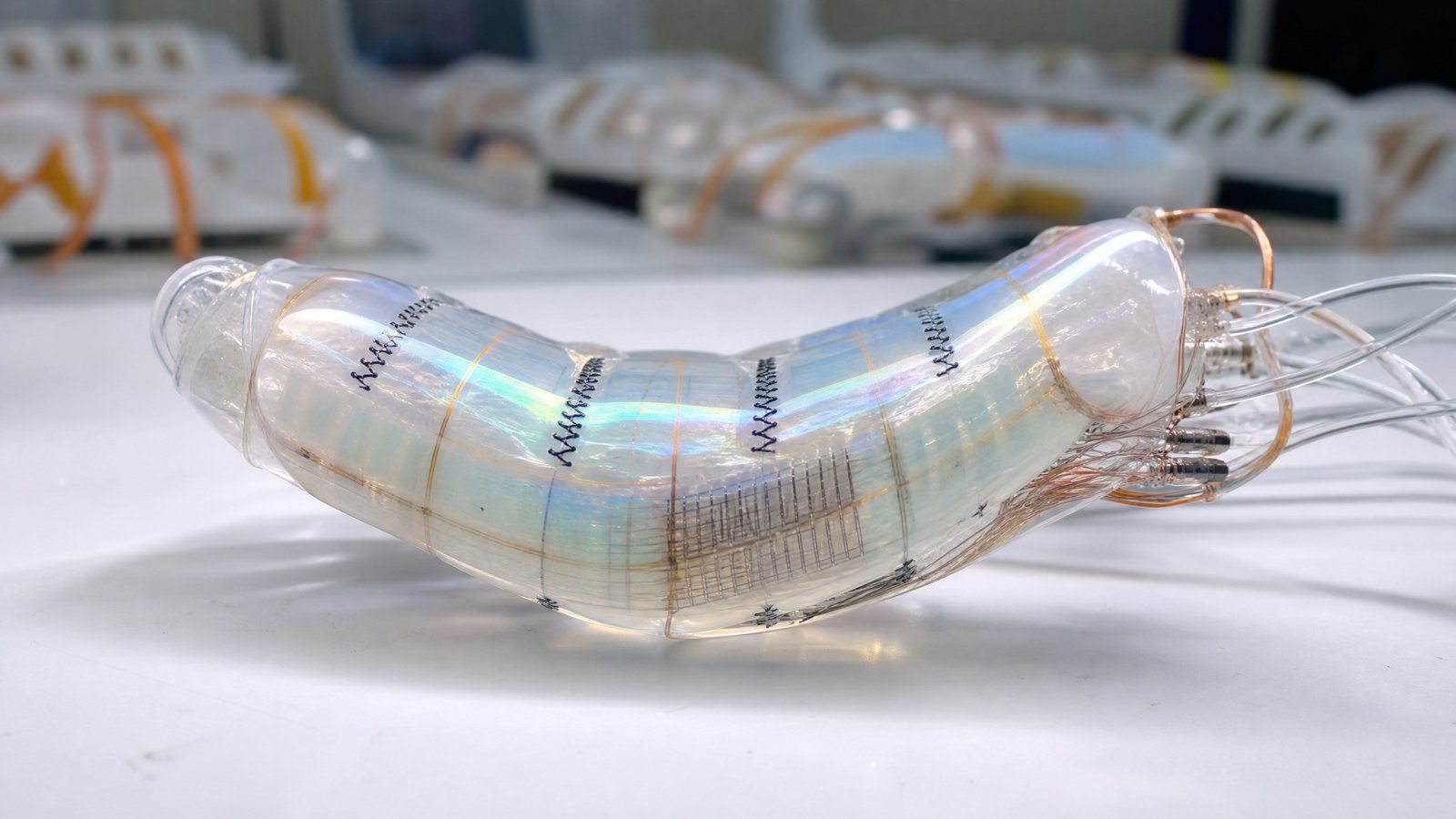
Most robots keep their intelligence and their body separate. A processor decides what to do, and rigid actuators carry out the instruction. London-based startup morph has emerged from stealth to argue that this separation is a limitation, and it is introducing soft robotic cells that embed sensing and adaptive control directly into the material itself.
The company was founded by Dr. Jean Nehme, a former reconstructive surgeon who previously founded and exited the surgical AI company Digital Surgery. Its backers include 8VC, Copper, Qubit Health Capital, Valia Ventures, and Blue Lion, along with individual investors such as Equinox chairman Harvey Spevak and the musician and entrepreneur Pharrell Williams.
The central idea is that a material can be the robot. Morph's soft robotic cells sense their environment and change their own shape and stiffness in real time, which means the substrate acts as sensor, actuator, and controller at once.
What Happened
Morph came out of stealth to introduce a class of components it calls soft robotic cells. These are reconfigurable, deformable structures that integrate sensing and adaptive control at the material level rather than bolting sensors and motors onto a rigid frame. The company is positioning itself as a business-to-business design and manufacturing partner, supplying the technology to other product makers rather than selling a finished consumer device.
Why It Matters
The significance lies in collapsing three traditionally distinct layers into one. In a conventional robot, sensing, computation, and actuation are separate systems connected by wiring and mechanical linkages, and each connection adds latency, weight, and points of failure. By embedding these functions in the material, morph's cells can respond to pressure and environmental feedback almost instantaneously.
This matters most where machines touch people. Rigid robots are dangerous near the human body because they cannot yield quickly enough to avoid injury. A material that senses contact and softens or reshapes itself in response is inherently safer for direct human interaction, which is why healthcare is the natural starting market.
From the Body to the Factory Floor
Morph's initial commercial focus is healthcare and wellness, specifically athletic performance, injury prevention, and mobility support. In these applications, a soft cell can provide adaptive support that stiffens when a joint needs stabilization and relaxes when it needs freedom of movement, responding to the wearer rather than following a fixed program.
The roadmap extends well beyond the human body. The company plans to move the technology into automotive applications and industrial safety, where adaptive, energy-absorbing materials could reshape impact protection and the safety standards that govern collaborative robots, often called cobots, working alongside people on production lines.
The Honest Limitation
Embedding intelligence in a material is elegant, but it introduces hard engineering questions. Durability is the first. Soft, deformable structures that flex continuously must survive repeated cycles without degrading their embedded sensing, and proving that longevity across millions of cycles is a substantial manufacturing challenge. Repairability is the second. When intelligence is distributed through the material, a localized failure may be harder to fix than swapping a discrete component.
Morph has not disclosed detailed performance specifications, so the claims should be read as a direction of travel rather than a proven mass-production capability. The business-to-business model is a sensible hedge, because it lets partners absorb some of the application-specific validation burden.
Explaining It Simply
Think of a material that can feel when you press on it and instantly get softer or stiffer in response, without any separate sensor or motor doing the work. Morph is building that kind of material so it can act like a robot on its own. Because it bends and cushions naturally, it is safer to wear or to work next to than a hard, motorized machine.
Strategic Implications
For the robotics industry, morph expands the definition of what a robot is. If physical AI can live inside the material, then the boundary between a passive component and an active robot blurs, and product designers gain a new building block that senses and adapts without a control cabinet behind it.
For procurement and product teams in healthcare, sports, and automotive, the practical implication is to watch soft robotic materials as a distinct supply category rather than a laboratory curiosity. By demonstrating that physical AI can be embedded within the material itself, morph is opening a design space that rigid robotics has left largely untouched.
Disclaimer: This article is provided for general informational purposes only and does not constitute investment, procurement, or legal advice. Readers should independently verify figures, specifications, and claims before making business decisions.
Primary Sources
The Robot Report, "Soft robotic cells from morph embed physical AI into hardware" (June 30, 2026): https://www.therobotreport.com/soft-robotic-cells-from-morph-embed-physical-ai-into-hardware/