Embodied AI's Breakout Product This Year Isn't a Humanoid. It's a US$399 Duck.
Hugging Face and Pollen Robotics' $399 open-source bipedal duck robot, Microduck, sold $2.6 million in 24 hours, a viral moment for accessible, open robotics hardware that has drawn far more attention than this year's expensive humanoid platforms.


Embodied AI's Breakout Product This Year Isn't a Humanoid. It's a US$399 Duck.
On Thursday, August 27, Hugging Face and Pollen Robotics, the French robotics company Hugging Face acquired last year, opened pre-orders for Microduck, a 25-centimeter, sub-800-gram bipedal robot shaped like a duck. It sold roughly one unit every four seconds in the opening rush. Pre-orders crossed US$1 million within six hours, according to a post from Hugging Face co-founder Thomas Wolf, and topped US$2.6 million within 24 hours. Anyone ordering today is looking at a four-to-six-month wait, a backlog Pollen Robotics has said openly it did not plan for. The company's public target is more than 20,000 units, a number chosen specifically because it would put Microduck in the range of history's best-selling individual robot products.
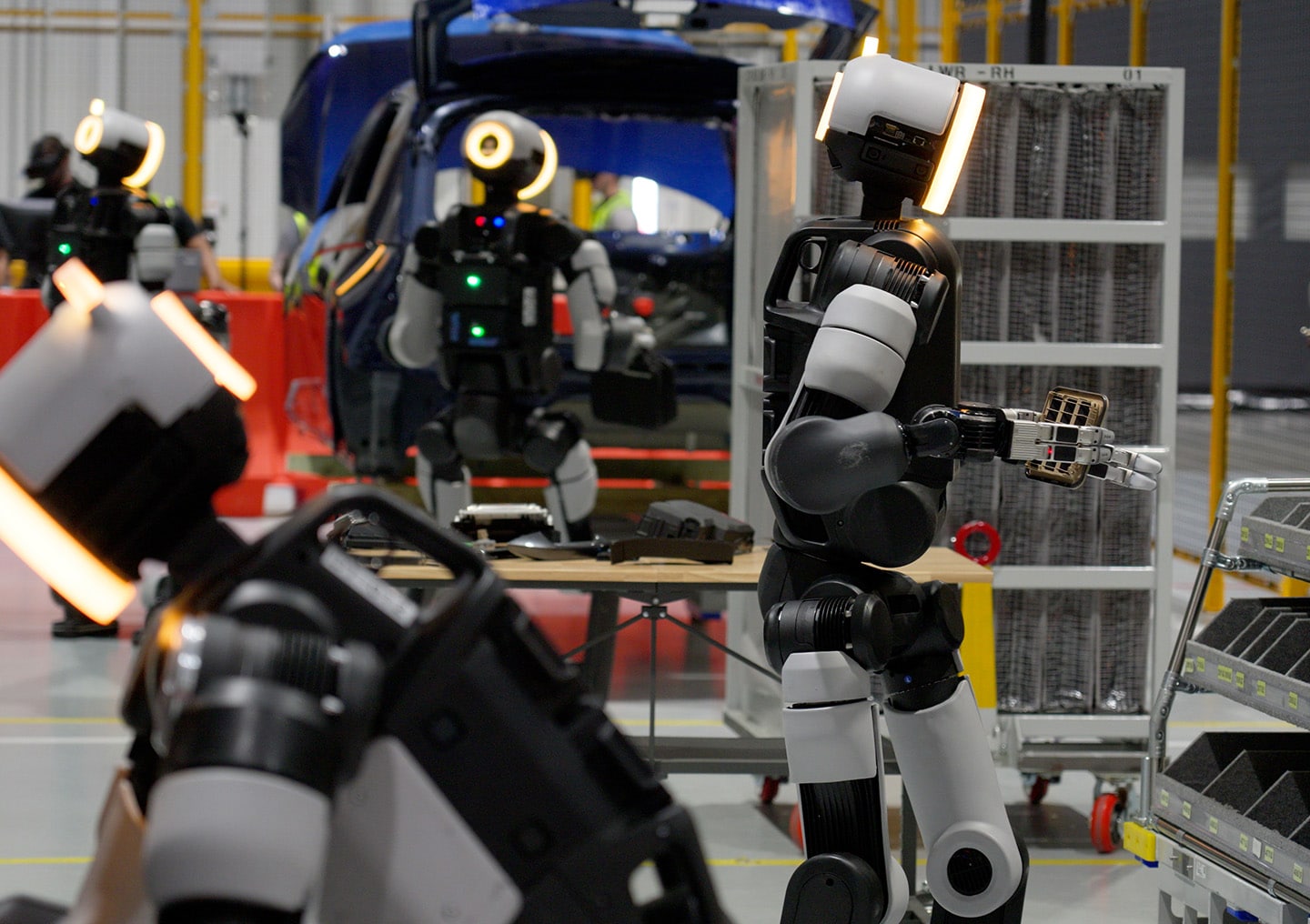
None of that reads like a company that spent two years and tens of millions of dollars building a general-purpose humanoid worker. It reads like a toy launch. That gap between the price point and the reception is the actual story: while most of 2026's embodied-AI funding and headlines have gone to companies chasing full-size humanoids that cost tens of thousands of dollars and remain largely inaccessible outside a lab or a factory pilot, the category's most viral consumer moment this year came from the opposite direction, a robot cheap and small enough for a hobbyist, a student, or a curious developer to simply buy one.
What Microduck Actually Is
Stripped of the mascot framing, Microduck is a real bipedal robotics platform. It carries 15 motors, a built-in camera, a small LiDAR sensor, and two inertial measurement units, enough sensing and actuation to support genuine legged locomotion research rather than a purely decorative toy. Its articulated beak functions as a rudimentary manipulator, capable of picking up small objects. Reported capabilities include waddling, self-righting after a fall, crouching, and, more strikingly for a robot this size, roller-skating. It does not speak; instead, each unit is given a persistent "audio identity," communicating through sound generated via a built-in microphone and speaker setup that stays consistent for that specific robot after initial setup, a small but deliberate design choice that gives an otherwise interchangeable mass-produced unit something closer to individual character.
Microduck ships in four colorways, priced uniformly at US$399, with first deliveries targeted before Christmas 2026 across North America, Europe, and the UK. Pollen Robotics positions it as a more action-oriented sibling to its existing Reachy Mini desktop robot, moving from a stationary desk companion to something that actually walks, falls, and gets back up.
Pollen Robotics did not arrive at this launch as a newcomer to open hardware. Founded in 2016 by former INRIA researchers Matthieu Lapeyre and Pierre Rouanet, the company introduced its original Reachy humanoid in 2020 and Reachy 1 placed second at the ANA Avatar XPRIZE teleoperation competition in 2022, well before Hugging Face acquired the company in April 2025. Reachy 2, a fully open-source humanoid built for embodied-AI research and real-world manipulation, followed in 2024. Reachy Mini, the compact desktop robot Microduck is explicitly positioned against, launched as part of the post-acquisition open-hardware push. Microduck is best understood as the next step in that progression rather than a sudden pivot into consumer toys: each successive product has traded size, cost, and manipulation complexity for accessibility, and Microduck is the point on that curve where the price finally dropped low enough, and the form factor small enough, to reach individual buyers rather than only labs and well-funded teams.
Why the Price Point Is the Actual Innovation
The core constraint that has kept legged-robot research and hobbyist experimentation out of reach for most people has never really been a lack of interest. It has been cost. A humanoid research platform capable of real bipedal locomotion work has historically started in the tens of thousands of dollars, putting it firmly in institutional-lab or well-funded-startup territory, and simulation, however good, cannot fully substitute for the ground friction, sensor noise, and physical drift that only show up when a real robot is actually walking on a real floor. A US$399 price point does not just make Microduck cheap; it moves bipedal-locomotion hardware into the same purchasing category as a mid-range gaming peripheral, accessible to individual developers, students, and hobbyist teams who previously had no realistic path to hands-on legged-robot experimentation at all.
That the platform is open source compounds the effect rather than sitting alongside it as a separate feature. A closed US$399 toy would still be a novelty. An open US$399 platform with real sensing and actuation is a distribution mechanism: every buyer is a potential contributor to shared code, control policies, and community documentation, the same dynamic that made Hugging Face itself a default hub for machine learning models before it ever sold a physical product. Pollen Robotics' acquisition by Hugging Face last year now reads less like a company diversifying into hardware for its own sake and more like a company positioning itself to be the place an open embodied-AI developer community actually forms, the way Hugging Face's model hub already functions for software-only AI work.
The Skeptical Read
None of that guarantees Microduck becomes a meaningful research or developer platform rather than a viral novelty that sells out once and fades. Viral commerce moments driven by scarcity and social proof, rather than by demonstrated long-term utility, are common and frequently short-lived, and a four-to-six-month order backlog is itself a scarcity signal that can inflate demand as much as it reflects genuine, durable interest; a dedicated resale market has already emerged around the preorder queue, which is as much a sign of speculative flipping as it is of authentic developer demand. A duck that can roller-skate is an excellent demonstration reel and a considerably weaker basis for judging whether the underlying platform will actually get used for serious reinforcement-learning or locomotion research once the novelty period passes, and Pollen Robotics has not yet published data on what fraction of buyers are individual developers versus toy collectors, resellers, or gift purchasers, a distinction that matters enormously for whether this becomes a genuine open research substrate or simply a very successful one-off product launch.
Pollen Robotics has also not disclosed manufacturing capacity or unit economics at this price point, and a US$399 retail price on a robot carrying 15 motors, a camera, a LiDAR sensor, and two IMUs implies either a genuinely lean bill of materials achieved at meaningful production scale, or a margin structure the company is choosing to run thin in order to seed the platform's install base first and monetize later through accessories, software, or a future higher-tier product, the same playbook consumer hardware companies have used before to prioritize distribution over near-term profit. Which of those two explanations is closer to true will matter far more to Microduck's longevity as a product line than this week's sales figures do.
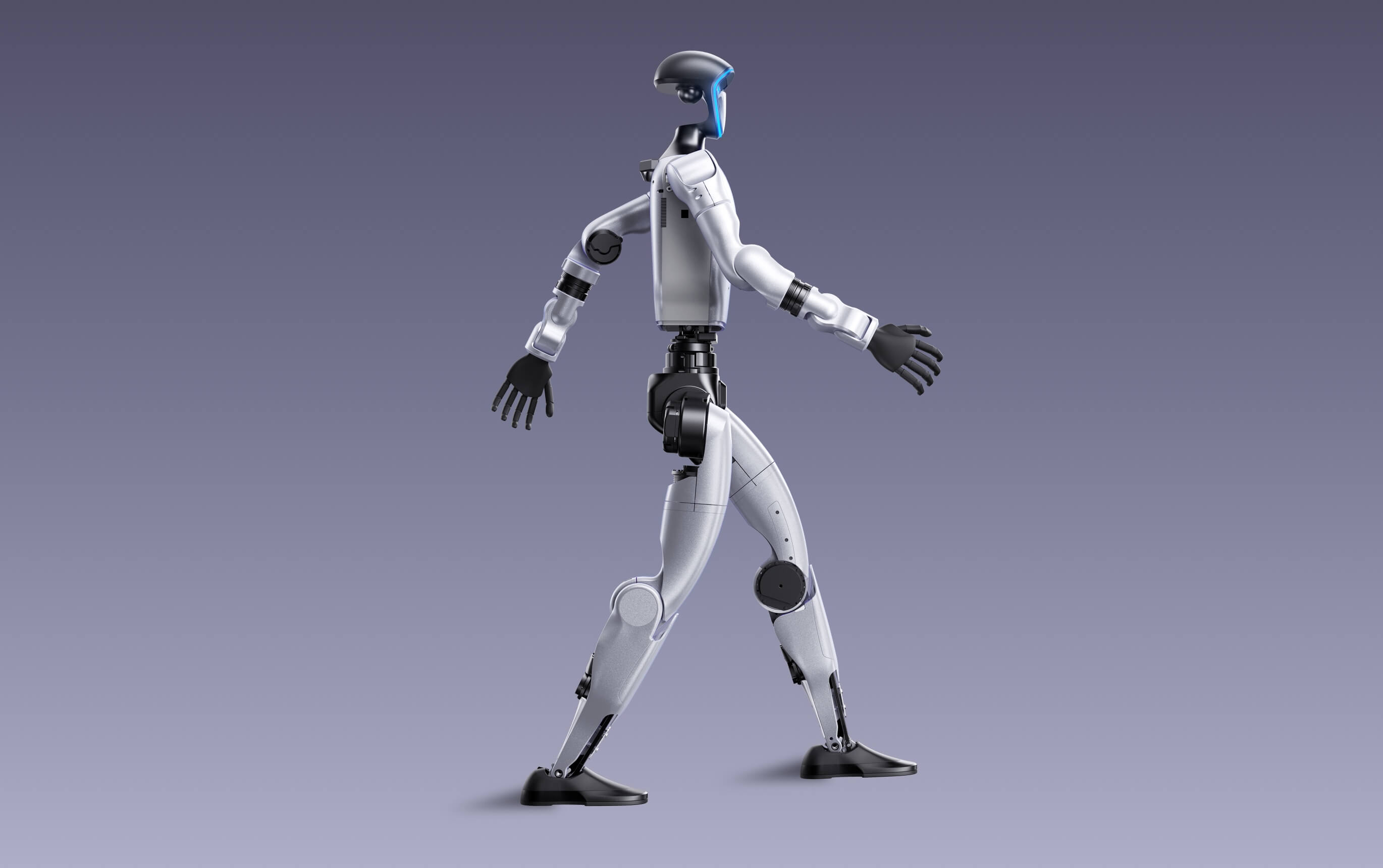
The comparison to humanoid platforms is also not entirely fair to either side. A 25-centimeter, sub-800-gram duck with no arms beyond an articulated beak is not attempting to replace a warehouse worker or a construction robot, and its manufacturers are not claiming it can. It occupies an entirely different use case, closer to an accessible research and hobbyist tool than to a commercial deployment product, and the humanoid companies raising far larger rounds this year are, for the most part, explicitly targeting industrial and commercial labor markets Microduck was never designed to touch. The interesting comparison is not which category wins; it is what each approach reveals about where genuine, hands-on demand for physical robotics currently sits once price stops being the barrier.
What This Signals for the Broader Market
Read narrowly, Microduck is a successful toy-priced robot with an unusually strong opening weekend. Read more broadly, it is a real data point in an argument that has mostly been theoretical until now: that a meaningful, currently underserved market exists for cheap, open, physically real robotics hardware sold directly to individual developers and hobbyists, sitting well below the price and access threshold that industrial and humanoid robotics companies have been building toward. Whether that market is durable enough to sustain a genuine open-source robotics ecosystem, the outcome Hugging Face's own trajectory in software AI would suggest it is betting on, or whether it proves to be a one-time viral spike that does not repeat with Pollen Robotics' next product, is not yet answerable from a single 24-hour sales number, however striking. The next real signal will not be how fast Microduck sold out; it will be whether a genuine open developer community, shared control policies, published research using the platform, third-party hardware modifications, forms around it over the coming months, the same kind of organic activity that took Hugging Face's software hub years to build and that a duck robot cannot manufacture through a viral launch alone.
Disclaimer: This article is for general information purposes only and does not constitute investment, legal, or procurement advice. Readers should verify details with primary sources before making business decisions.