China Unveils a Fully Domestic Electronic Nervous System for Robots
Dongtu Technology unveiled what it says is the first embodied robot running on a fully domestic electronic architecture, an operating system, bus and control stack that passed adversarial safety tests robots on conventional architectures reportedly failed.


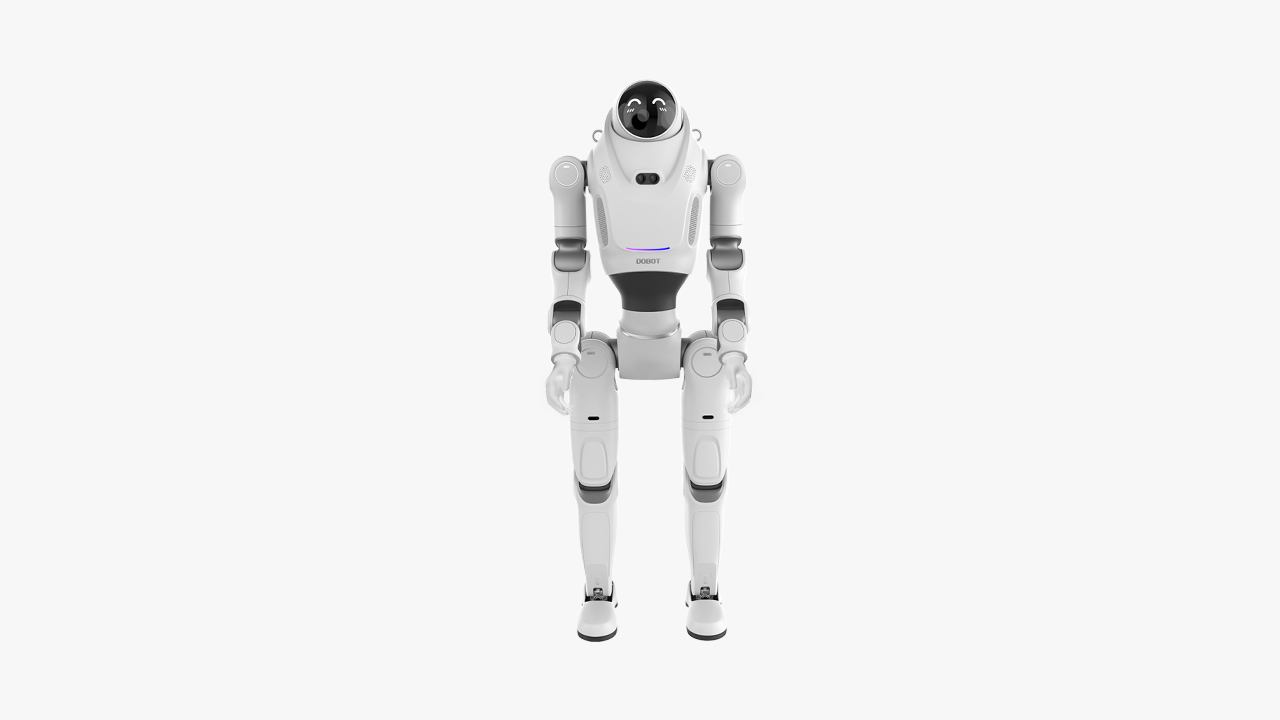
YICHANG, Hubei Province, September 28, 2026: A robot's electronic architecture, the layer of operating system, network bus and control chips that lets its brain and limbs act as one machine, has quietly become the least visible and most consequential bottleneck in embodied intelligence. On Monday, Beijing Dongtu Technology Co., Ltd., a Shenzhen Stock Exchange-listed firm (300353.SZ) that has spent two decades building industrial communication chips and real-time operating systems rather than robots themselves, unveiled what it says is the world's first embodied intelligent robot running on a fully domestically developed electronic architecture, live at an event in Yichang.
The direct answer for engineers and buyers watching China's humanoid supply chain: Dongtu Technology's architecture pairs its own Hongdao real-time operating system, marketed as Intewell, with a proprietary AUTBUS communication bus and MaVIEW development software, all built on time-sensitive networking and deterministic computing rather than foreign real-time operating systems or communication protocols. The company says the stack was validated by China's National Industrial Information Security Development and Research Center under adversarial conditions, including single-point component failure, bus-level attacks and network intrusion, and kept running when robots built on conventional architectures did not.
The Layer Nobody Photographs
Humanoid robot coverage tends to fixate on actuators, dexterous hands and large multimodal models, the parts of a robot a camera can see working. The electronic architecture is different: it is the nervous system connecting perception, decision-making and motor control into a single closed loop, and it determines whether a robot's brain can actually talk to its body fast enough, and safely enough, to be useful outside a demo stage. Dongtu Technology's own description of the problem is blunt: China's robotics industry has been running on "scattered technical routes, foreign dependence on key communication protocols, and a weak real-time operating system ecosystem," a combination that leaves a humanoid maker dependent on imported real-time operating systems and bus protocols for the one layer that cannot fail without the whole robot failing.
That dependency is the quotable fact worth sitting with: a Chinese humanoid robot can run a domestically trained vision-language-action model on a domestically fabricated AI chip and still rely on a foreign real-time operating system to keep its joints from colliding with each other. Dongtu Technology's pitch is that closing that specific gap, not the more visible chip or model layer, is what actually removes a single point of foreign dependence from the embodied intelligence stack.
What the Demonstration Was Built to Prove
The company staged a comparative safety test rather than a capability demo. Robots running conventional electronic architectures were subjected to joint-level physical disruption, network-level attacks and virus injection during the live event, and, according to the company's account of the results, responded with wiring failures, abrupt shutdowns or loss of control. The robot running Dongtu Technology's fully domestic stack, tested under the same conditions, kept operating. The specific engineering claim is that the architecture isolates real-time control functions from AI computation while still letting the two communicate, so a fault or intrusion in the AI compute layer cannot propagate into the low-level motor control loop that keeps a two-legged or multi-jointed machine from falling over or moving unpredictably.
That isolation-with-fusion design is the technical core of the pitch, and it maps onto a real industrial safety category rather than a marketing claim. Functional safety in robotics has traditionally meant hardware interlocks, physical guarding and certified emergency stops bolted onto a robot after the fact. An architecture that builds fault isolation into the communication and control layer itself is a software and network-topology answer to a problem the industry has mostly solved with hardware, and it matters most for humanoids and mobile robots that operate unguarded, near people, where a control-loop failure has no fence to contain it.
A Company Built Around the Layer It Just Sold to the Robotics Industry
Dongtu Technology did not arrive at this launch as a robotics newcomer chasing a trend. The Beijing-based company built its business over two decades around what it calls "root technology" for industrial internet: self-controllable industrial communication chips, the Hongdao high-real-time industrial operating system, time-sensitive networking, and intelligent control systems, sold as an integrated stack rather than individual components. That focus kept the company financially thin through years of industrial-automation cycles; its most recent full-year results showed the company returning to positive recurring profit after a multi-year stretch of losses, a modest but notable inflection for a firm betting its future on embodied intelligence rather than its legacy factory-automation customer base.
The strategic logic of applying that stack to humanoid robots is straightforward supply-chain arithmetic. A robot maker building on Dongtu Technology's architecture is not swapping one component vendor for another; it is removing an entire category of foreign-controlled software and protocol dependency from a bill of materials that, for most Chinese humanoid developers, already runs through domestically sourced actuators, reducers and increasingly domestic AI chips. The electronic architecture was the layer where that substitution had not yet happened at scale, largely because building a real-time operating system and deterministic network stack from scratch is a multi-year, capital-intensive undertaking that most robotics startups have neither the time nor the balance sheet to attempt themselves.
Why the Timing Reads as Strategic, Not Coincidental
China's robotics policy apparatus has spent 2026 pushing suppliers toward exactly this kind of vertical self-sufficiency, treating humanoid and embodied-AI hardware as a national industrial priority rather than a consumer product category. Framing a real-time operating system and communication bus as a supply-chain security question, rather than a performance or cost question, fits that broader posture: officials involved in validating the demonstration described full domestication of embodied intelligent robots as essential to building "industrial defenses" and protecting supply-chain security, language that echoes how Beijing has talked about semiconductor and industrial software self-sufficiency more broadly since export controls started biting deeper into China's advanced manufacturing base.
For competitors, that framing is also a warning about where the next round of China-specific compliance and localization pressure could land. If domestic electronic architecture becomes a preferred or eventually required standard for robots deployed in Chinese government-linked or state-owned industrial settings, the way domestic operating systems have become preferred in other sensitive sectors, foreign real-time OS and industrial bus vendors could find themselves locked out of a fast-growing segment of the world's largest robotics deployment market well before any formal mandate is written. That risk sits alongside a more immediate opportunity for buyers: a validated, commercially available domestic alternative gives Chinese humanoid integrators a second sourcing option for a component they previously had to import, which is exactly the kind of redundancy industrial buyers have spent the past several years learning to value after semiconductor and software supply shocks elsewhere in the stack.
What Remains Unverified
The company's own account of the comparative safety demonstration is the only public record of the test so far; no independent third-party benchmark of Dongtu Technology's architecture against a named competing real-time operating system has been published, and the identity of the "conventional architecture" robots used as the comparison baseline was not disclosed. Buyers evaluating the platform should also note that a single live demonstration, however rigorously staged, is not the same as field data from robots running the architecture across months of continuous industrial or commercial operation, where thermal cycling, firmware updates and integration with third-party actuators and sensors tend to surface the failure modes that a controlled test cannot. Dongtu Technology has not disclosed pricing, licensing terms for third-party humanoid makers, or a timeline for commercial availability beyond the Yichang unveiling itself.
Procurement teams evaluating Chinese humanoid or mobile-robot platforms should treat the electronic architecture as a distinct line item in supplier due diligence, alongside actuator sourcing, chip origin and the training-data pipeline behind a robot's control model. The relevant questions are concrete: which real-time operating system and communication bus does the platform actually run, is that stack owned or merely licensed by the integrator, and what happens to safety-critical motor control if the AI compute layer faults, freezes or is compromised. Most current specification sheets answer none of these questions, because the electronic architecture has historically been treated as a commodity layer rather than a differentiated one. Dongtu Technology's launch is itself evidence that assumption is changing, and buyers who start asking the question now will be better positioned than those who wait for it to become a standard disclosure.
What is verifiable is narrower but still significant: a Shenzhen-listed industrial technology company with a two-decade track record in real-time operating systems and deterministic networking has put a named, purchasable alternative to foreign robot electronic architecture in front of China's robotics industry, backed by a government-affiliated security lab's stress test rather than a lab demo alone. Whether that alternative becomes the default choice for China's next generation of humanoids will depend less on Monday's staged comparison than on how it performs once integrators outside Dongtu Technology's own showcase start building products on top of it.
This analysis synthesizes company statements and public market activity as of the publication date and should not be read as investment, financial, or professional advice; it is provided for general information purposes only.
Hero image credit: China News Service.