The US Robot Gate Is a Content Test, Not a China Ban
New foreign mobile robots need US manufacture plus 65 percent domestic content, or Department of War approval, before they can be sold. That rule now decides which Korean, Japanese, and European fleets a US plant can actually receive.

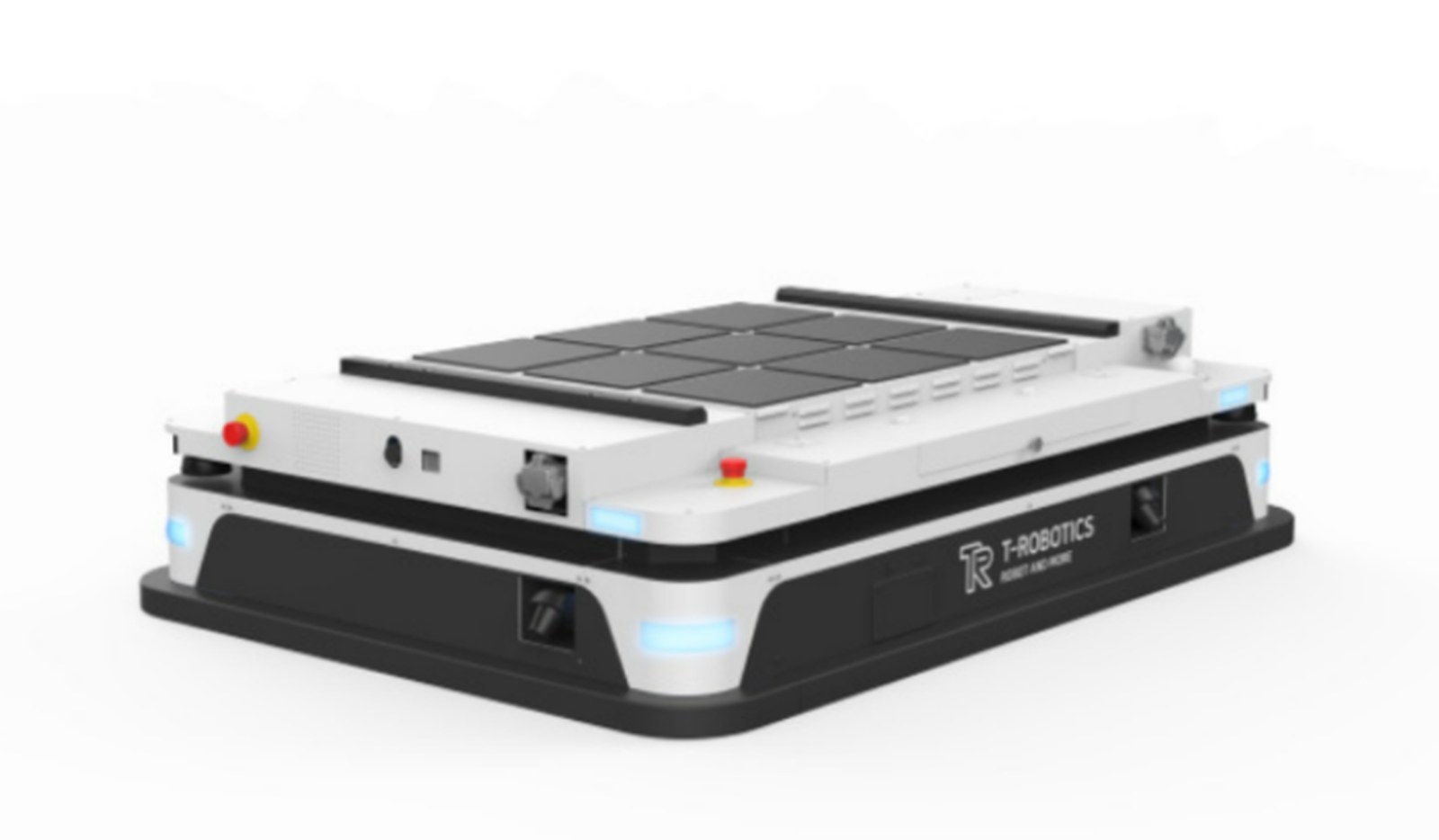
A US factory can still buy a foreign robot. It just cannot assume the robot is allowed to roll. On 14 September 2026, Korean industry reporting made that distinction concrete: Rainbow Robotics stopped United States shipments of the RB-Y1 mobile dual-arm platform, and T-Robotics opened a legal review of a KRW 15 billion (approximately US$9.9 million) AGV contract tied to a Ford Energy Battery plant. Those are same-week commercial facts. They are not the thesis.
The thesis is that the United States has replaced a country list with a content test for mobile robots, and most Asian and European vendors will fail that test if they keep building the way they build today. The 28 July 2026 FCC Covered List update is country-neutral. Producer nationality does not decide coverage. Manufacture in the United States plus 65 percent domestic component cost, rising to 75 percent in 2029, does. Conditional Approval from the Department of War is the only named alternative. Safety marks, CE files, and "not made in China" affidavits do not move the needle.
Procurement teams that still write RFQs as if the hard border is a China entity list, or as if ISO 10218 is the last stamp that matters, are specifying the wrong gate.
The event is a symptom. The specification is the disease.
Rainbow Robotics, the Sejong-based KAIST spin-off in which Samsung Electronics holds a 35 percent stake, is a useful example only because it is not a small unknown exporter. It has a US office, a Samsung parent, and a wheeled dual-arm platform sold into research and industrial work. T-Robotics, the Osan-based KOSDAQ-listed maker of semiconductor vacuum robots and factory AGVs, is useful only because its at-risk contract is a battery-plant vehicle, not a humanoid demo. An unnamed Korean AMR supplier is useful only because it shows the SME version of the same stop.
Compress those names and the remaining problem is architectural. A US plant that wants a new foreign mobile robot in 2026 or 2027 is asking for a device that, as a class, cannot receive FCC equipment authorization. Previously authorized models can still be sold. Federal agencies can still buy. Fixed, stationary arms are outside the definition. New foreign AMRs, AGVs with the covered sensing and networking stack, quadrupeds, and humanoid-style mobile manipulators are inside it.
That is a bill-of-materials problem wearing a national-security label. The FCC is the clerk. The Department of War is the exception desk. The Buy American domestic-end-product test is the actual lock.
A useful analogy is radio type approval, not export control theater. The United States already required many electronic products to obtain FCC authorization before import and sale. The Covered List says a new foreign mobile robot generally cannot obtain that authorization. The robot can be safe, cheap, and well supported and still be unsellable as a new model. Asking the vendor for a risk assessment essay does not substitute for an authorization grant.
Three gates that buyers keep mixing up
Gate one is product safety. ISO 10218, ISO/TS 15066, ISO 3691-4, ANSI/RIA R15.06, and plant-level risk assessments decide whether people can work next to the machine. Those files still matter. They do not get the robot off the Covered List.
Gate two is trade origin. Entity lists, forced-labor rules, and country-of-origin marking decide whether a Chinese, Korean, or mixed-origin supplier can clear customs as a legal person. The FCC robot update is not an entity list. A Korean subsidiary of Samsung is covered the same way a Chinese AMR brand is covered if the hardware is foreign-produced. A Japanese or German AMR is covered too. Nationality of the producing entity is irrelevant under the FCC FAQ.
Gate three is domestic content plus authorization. This is the new gate. Foreign-produced, for this purpose, means the article would not qualify as a domestic end product under 48 CFR 25.101(a). Two prongs: manufactured in the United States, and domestic component cost above 65 percent through 2028 and 75 percent from 2029. The usual commercially available off-the-shelf softening of Buy American does not apply. A Texas crate-and-ship plant that bolts Korean arms onto a US welded base will not automatically pass.
Most robotics RFQs still obsess over gates one and two. They ask for CE, UL, and a statement that the vendor is not on a restricted-party list. They do not ask for the FCC equipment authorization identifier of the exact model, the domestic component-cost worksheet, or the Department of War Conditional Approval letter. After 28 July 2026, that omission is how a 2027 US AMR fleet becomes a 2029 science project.
The 14 September Korean report is what happens when gate three is discovered after the purchase order. Rainbow Robotics had North American contracts for dozens of RB-Y1 units. T-Robotics had a two-year US AGV retool contract with staged payments. Company A had a first US order and no MOTIE answer. The commercial paper existed. The authorization path did not.
What "65 percent US content" actually demands
Robot cost is not evenly spread across sheet metal, software, and fasteners. The expensive items are the ones least likely to be American today: servo motors, precision reducers, force-torque sensors, lidar or depth cameras, motor drives, and the compute module that holds the model weights. Korean reporting on the 14 September cases repeated the industry consensus that those parts still come from Korea, Japan, China, and Germany.
A vendor that relocates final assembly to Illinois without relocating those parts fails the arithmetic. A vendor that relocates the parts needs multi-year supplier qualification, dual tooling, and a cost stack that will not match the 2026 Asian quote the buyer fell in love with. The 2029 step-up to 75 percent makes the 2026 US plant announcement even less useful as a near-term delivery promise.
Conditional Approval is not a shortcut around that math. It is a national-security review. Public legal summaries of the Department of War guidance describe ownership disclosure, supply-chain risk analysis, a US manufacturing commitment, officer certification, and a January 1, 2028 cutoff for new applicants. Electronic Times quoted a Korean exporter saying an individual company cannot assemble equity-structure and supply-chain data against the US executive branch without a government channel. As of 14 September 2026, that channel had not been described in operational detail.
Buyers should therefore treat Conditional Approval as a 2027 to 2028 option for well-capitalized vendors, not as a 2026 receiving-dock plan. Put it in the contract as a condition subsequent if the vendor insists. Do not put it in the Gantt chart as a date the plant already owns.
Fixed robots remain the clean redesign. The definition excludes a stationary industrial or medical arm. A US plant that can accept a bolted cell instead of a rolling dual-arm platform is not being old-fashioned. It is choosing the legal class that still clears. The productivity hit is real. So is the avoided two-year wait.
Authorized legacy models are the other clean path. The Covered List update does not unwind prior FCC grants. If the fleet already runs a specific foreign AMR that was authorized before 28 July 2026, additional units of that same model can still be purchased. The operational discipline is to freeze the model. A "next-gen" controller, a new radio module, or a new AI stack that the FCC would treat as a new device puts the buyer back into the blocked class. Write the bid as a model-locked buy, not as a platform buy with unlimited hardware refresh.
How the same rule treats Korea, Japan, and a US integrator
Korea is the first allied industry to say the quiet part in a daily paper: US export routes for some robot companies are blocked, and SMEs cannot self-rescue. That is why the 14 September report matters as context. It is not why the rule exists.
Japan's large arm makers are less exposed if they keep selling pedestal robots into US plants. They are exposed the moment the product strategy is a cobot on an AMR, a mobile inspection quadruped, or a humanoid-style manipulator with wireless teleoperation. FANUC's own 2026 show messaging has leaned into CRX cobots on mobile platforms and battery-powered controllers. That product direction collides with the Covered List even if the brand is Japanese and the US service network is deep. The legal class is mobility plus networking plus foreign production, not brand origin.
European AMR vendors sit in the same class. A Swiss inspection quadruped or a German warehouse AMR is foreign-produced unless it meets the domestic-end-product test. IEEE Spectrum's August coverage of the same FCC action recorded foreign vendors discussing Conditional Approval or US manufacturing plans. That is the rational vendor response. It is not a 90-day buyer response.
US integrators gain a temporary specification advantage they may not deserve on price or cycle time. They can sell a mobile cell that a Korean or Japanese OEM cannot currently import as a new model. The advantage lasts until the foreign OEM either onshores content or wins Conditional Approval, or until the US integrator's own bill of materials is full of the same foreign motors and sensors and someone asks whether the integrator's "US robot" is a domestic end product. Integrators that only wrap foreign mobile bases in US software should not assume they are safe. The test is the article, not the logo on the proposal.
China remains the political reason the interagency body convened. It is not the legal test. A buyer who writes "no Chinese robots" into a 2027 US AMR tender and then awards a Korean or Japanese mobile platform has not solved the authorization problem. The plant can still be unable to receive the machine.
Rewrite the RFQ before rewriting the cell
A US or US-bound tender issued after 28 July 2026 should add four mandatory fields.
First, FCC equipment authorization status for the exact model, including the grant identifier if the model is already authorized. "Compliant" is not an answer.
Second, domestic-end-product status under 48 CFR 25.101(a), with a component-cost worksheet that survives audit. If the vendor cannot produce the worksheet, the vendor is foreign-produced.
Third, Conditional Approval status, including the date of any Department of War determination. If none exists, the vendor must state that US commercial sale of a new model is not currently lawful.
Fourth, a model-lock clause. Hardware or radio changes that create a new device model reopen the Covered List analysis and suspend delivery dates.
ASEAN and EU buyers should add a fifth field that is commercial rather than legal: share of 2026 to 2028 planned revenue that was US-bound. A Korean AMR maker that just lost its US channel is a different support risk in Johor or Rotterdam. The FCC list does not follow the robot to Malaysia. The vendor's cash flow does.
None of this requires a buyer to take a view on US industrial policy. It requires the buyer to stop treating a July national-security determination as a China press cycle that would blow over by September. Korean exporters have now said, on the record, that it has not blown over.
The US market for new foreign mobile robots is a content market. Companies that can manufacture in the United States with a 65 percent domestic bill of materials, or that can wait in the Department of War queue, will sell. Companies that can only stamp a non-Chinese origin on an Asian mobile platform will not. Specify the gate that actually opens the dock.
This analysis synthesizes company statements, Korean market disclosures, and public US regulatory texts.
This article is for informational purposes only and does not constitute investment, legal, or purchasing advice. Verify all specifications, contract terms, and regulatory status with primary sources before making procurement or investment decisions.