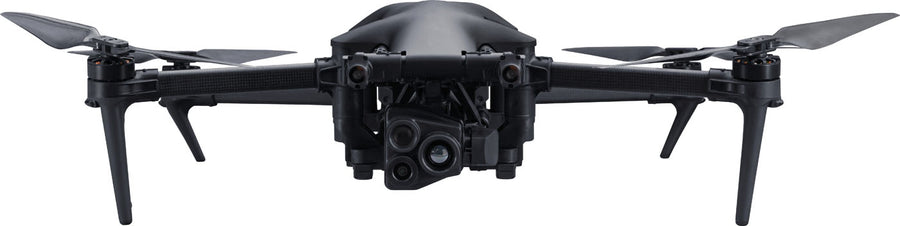
Orbbec Debuts Robot-Free Data Rig at Logis-Tech Tokyo 2026
Orbbec used Logis-Tech Tokyo to launch new perception cameras and a wearable rig that captures robot manipulation data from human demonstrators, backed by live Hitachi and automaker deployments in Japan.

TOKYO, Japan, September 8, 2026. Orbbec used the opening of Logis-Tech Tokyo 2026, Japan's largest logistics and material-handling trade show, to introduce a new depth-sensing camera platform and a hardware system for collecting robot manipulation data without a robot on hand to do the collecting. The launch is aimed squarely at warehouse and factory automation buyers rather than the consumer or research markets where Orbbec built its early business.
Orbbec is a Shenzhen-headquartered maker of 3D vision cameras and perception hardware, founded in 2013 by engineer Howard Huang and listed on Shanghai's STAR Market in 2022 as what the company markets as China's first dedicated 3D vision stock. The company built its early revenue selling depth cameras into consumer electronics and research applications before pivoting toward what it now calls building the eyes and brain of physical AI, industry shorthand for the sensing and perception hardware that sits between a robot's actuators and the AI models controlling them. Tokyo's Logis-Tech show, held every two years and drawing exhibitors from across Japan's logistics and automation supply chain, is Orbbec's platform for pitching that pivot directly to the buyers who write purchase orders for warehouse robotics.
A Camera Line Built Around One Chip, Sold Across Many Robots
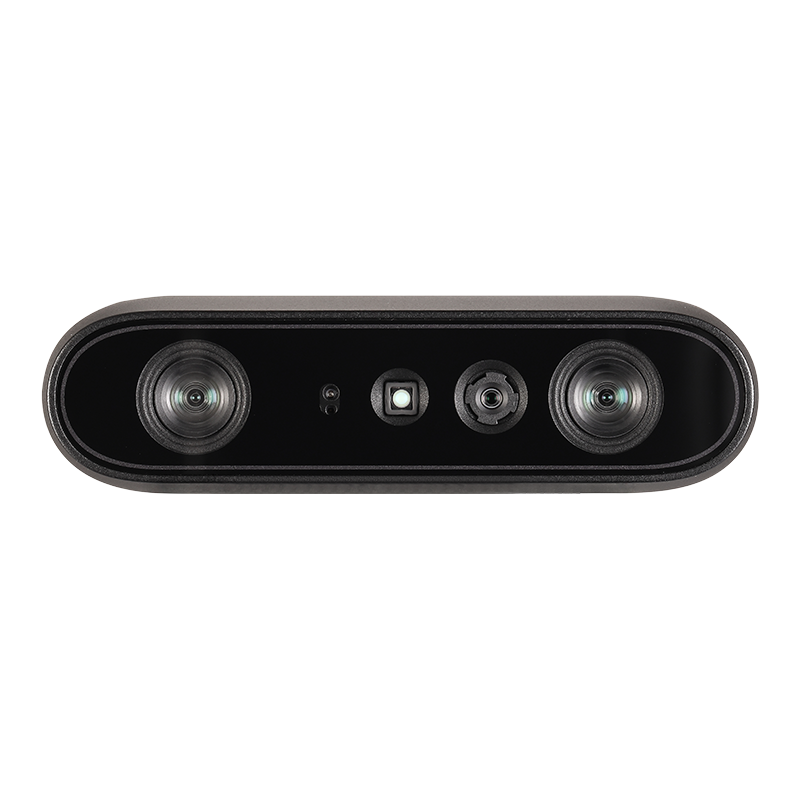
The centerpiece hardware at Logis-Tech is Orbbec's Gemini 330 series stereo vision cameras, now extended with new Gemini 335Lg and Gemini 305g variants, built around the company's proprietary depth engine chip. Orbbec also showed its Nova S1, a 3D camera using digital light processing projection for higher-precision measurement work such as pose estimation and assembly inspection, tasks where a lower-cost stereo camera can struggle with reflective or low-texture surfaces common on factory parts.
The commercial logic behind building a single depth-engine chip and shipping it across a spread of camera form factors is straightforward: it lets Orbbec spread its silicon development cost across multiple product tiers rather than engineering a new sensing stack for every application. For an integrator building a warehouse robot, that translates into a consistent perception software interface across cameras chosen for different jobs on the same robot, which lowers integration engineering cost compared to sourcing depth sensors from multiple vendors with incompatible software stacks.
Solving the Chicken-and-Egg Problem in Robot Training Data
The more unusual announcement at the show was Orbbec's robot-free data collection hardware platform, a set of wearable and handheld tools, marketed under names including EGO, UMI, and WristCam, plus a hub component, built to capture manipulation demonstrations from a human hand rather than from an actual robot arm. The pitch is direct: training a robot to grasp, place, and manipulate objects normally requires either running a physical robot through thousands of repetitions to generate training data, which is slow and requires the robot hardware to already exist, or hand-labeling simulated data, which introduces a gap between simulation and reality that has proven difficult to close reliably.
A wearable rig that captures a human demonstrator's hand movements, forces, and viewpoint while performing the actual task lets a robotics developer generate training data before a single robot arm has been built or purchased, and continue generating it in parallel with hardware development rather than waiting for hardware to be ready first. Whether that data transfers cleanly to a robot's different kinematics, a well-known problem in the imitation-learning literature sometimes called the embodiment gap, is an open technical question that Orbbec's marketing materials do not fully resolve, and buyers evaluating the platform should ask directly for evidence of successful transfer to real robot hardware rather than accepting the pitch on its face.
Two Live Customer Deployments Do the Real Selling
Beyond new hardware, Orbbec used the show to highlight two existing Japanese customer deployments that carry more evidentiary weight than any new product announcement: a retail solution running with Hitachi Group, and a hospital logistics robot built for a major Japanese automotive manufacturer's healthcare-adjacent business. Both deployments point to a strategic reality worth naming directly. Orbbec's actual commercial traction in Japan runs through large, risk-averse industrial conglomerates rather than nimble robotics startups, a customer profile that tends to produce long sales cycles but durable, defensible relationships once secured.
For a competing perception-hardware vendor trying to displace Orbbec inside Hitachi's supply chain, or inside any large Japanese industrial buyer with an existing Orbbec relationship, the practical barrier is not primarily technical. It is the switching cost of re-qualifying a new sensor supplier through the multi-department procurement and safety validation processes that large Japanese manufacturers run before approving a component for production use. That is the moat Orbbec is building in Japan, distinct from and arguably more durable than any single camera spec sheet.
What the Product Roadmap Signals About Orbbec's Next Customer
The specific mix of applications Orbbec named at the show, transparent-object picking, box and shelf recognition, pose estimation, and assembly inspection, maps closely onto the hardest unsolved perception problems in warehouse and light-manufacturing automation rather than the easier problems most depth cameras already handle well. Transparent and reflective objects in particular have been a persistent weak point for stereo and structured-light cameras because clear plastic packaging and glass containers scatter or pass through the light patterns those sensors depend on. If Orbbec's Nova S1 and its digital light processing approach meaningfully improve on that specific failure mode, it addresses a problem that has quietly limited automation adoption in grocery distribution, pharmaceutical packaging, and consumer electronics fulfillment, all sectors that move significant volumes of transparent or reflective packaged goods through manual picking stations today specifically because existing vision systems cannot reliably see them.
That is a more commercially interesting bet than simply shipping a faster or cheaper version of an existing camera, because it targets a category of automation project that buyers have shelved rather than one they are actively comparison-shopping. A warehouse operator that has already tried and abandoned a vision-guided picking project for transparent packaging is a different sales conversation than one evaluating competing camera specs for an application vision systems already handle adequately, and Orbbec's product framing at Logis-Tech suggests the company is chasing the former, higher-friction but potentially higher-value opportunity.
Reading the China-Japan Supply Relationship Correctly
Orbbec's presence at a major Japanese logistics show, backed by named references at Hitachi and a leading domestic automaker, is also a data point in the broader pattern of Chinese robotics-component suppliers winning design positions inside Japanese industrial automation, a market that has historically favored domestic component suppliers. That shift has been driven less by price alone and more by China's faster iteration cycle on depth-sensing hardware, where Orbbec and its domestic competitors have been shipping new chip generations roughly annually while some legacy Japanese and Western sensor suppliers have moved more slowly.
For procurement teams at Japanese and other Asia-Pacific manufacturers currently sourcing 3D vision hardware from incumbent suppliers, the practical question raised by Orbbec's Logis-Tech presence is not whether to switch immediately, but whether their current vendor's product refresh cadence is keeping pace with what a company like Orbbec is now shipping annually. A perception stack that was competitive eighteen months ago may already be behind on cost, resolution, or software tooling relative to what is now available, and the Hitachi and automaker references give buyers a concrete precedent to ask about when evaluating whether a supplier switch is worth the requalification cost.
There is a second, quieter signal in the robot-free data collection platform worth flagging for buyers rather than only integrators. Any company selling wearable data-capture hardware is implicitly also selling the data pipeline and, in many commercial arrangements, some claim on the resulting training data or the right to aggregate it across customers to improve its own models. Buyers evaluating Orbbec's EGO, UMI, and WristCam tools for an internal robotics program should read the commercial terms carefully before deploying them at scale, specifically around data ownership, whether captured demonstrations can be reused by Orbbec for other customers or its own model development, and whether that arrangement is acceptable given the proprietary nature of a company's own manipulation tasks. This is not a criticism unique to Orbbec; it is a standard diligence question for any vendor whose hardware doubles as a data-collection instrument, and it is worth asking explicitly rather than assuming standard consumer-hardware terms apply to an industrial data-generation tool.
Taken together, the Logis-Tech announcements describe a company trying to move up the value chain from selling individual sensors to selling a broader perception and data infrastructure layer that other robotics companies build on top of. That is a more defensible long-term competitive position than competing purely on camera specifications, where component pricing tends to compress margins over time as more manufacturers enter the market. Whether Orbbec can execute on that broader platform ambition, rather than simply the sensor business it has already proven, is the open question its Hitachi and automaker references only partially answer.
Hero image credit: Orbbec.
This analysis draws on Orbbec's public Logis-Tech Tokyo 2026 announcement and the company's published product specifications. It is for general information purposes only and does not constitute investment, financial, or legal advice.