Japan's Humanoid Robots Face a China Reckoning at Tokyo Summit
At a Tokyo humanoid robotics summit, Chinese systems outnumbered Japanese ones, exposing Japan's shift from hardware leadership to an urgent race in AI software, shared data, and scale. Japan is responding with AIRoA, a national data platform, and major state-backed investment to deploy 10 million AI-equipped robots by 2040.


Japan's Humanoid Robots Face a China Reckoning at Tokyo Summit
Physical Desk RAI | July 6, 2026
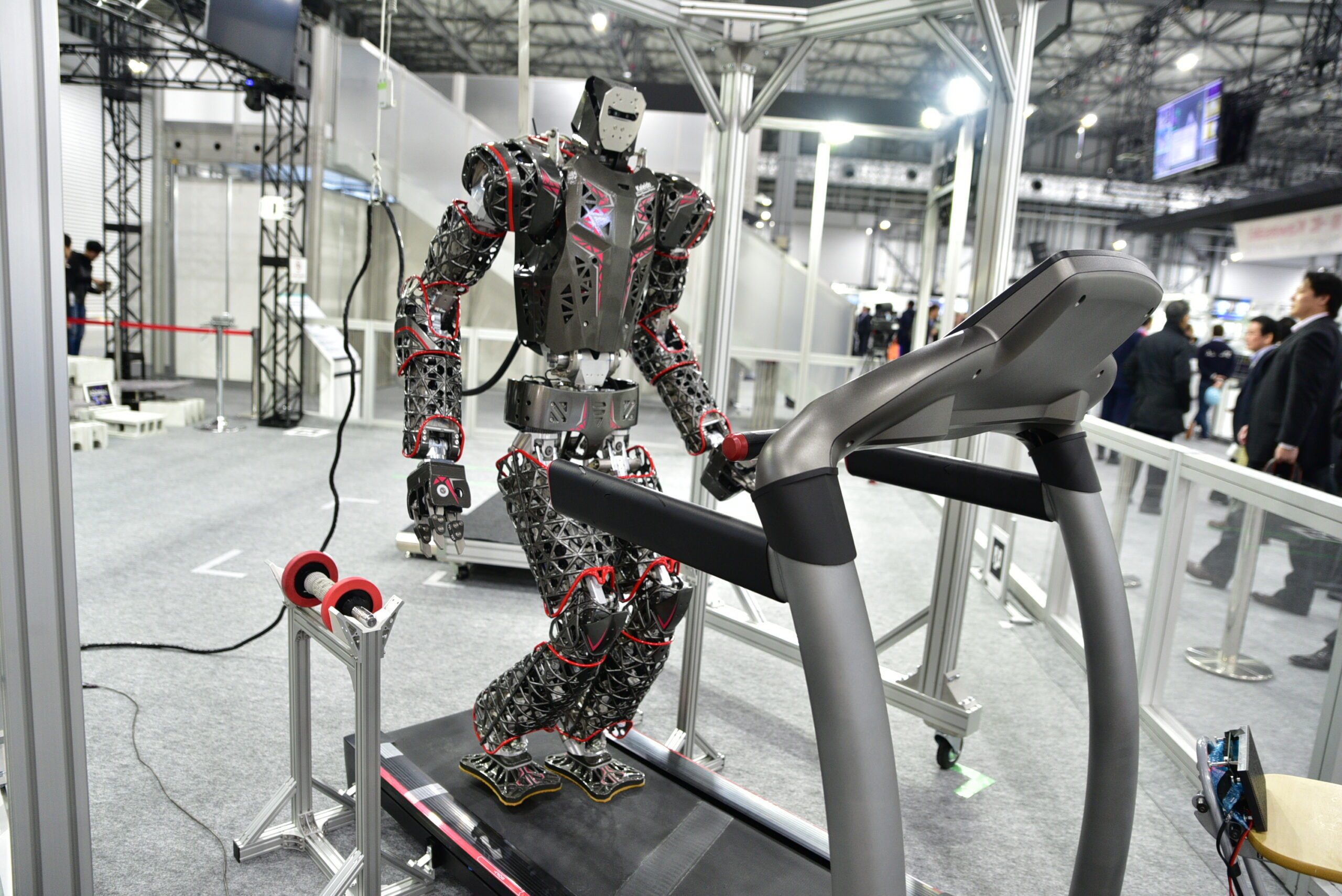
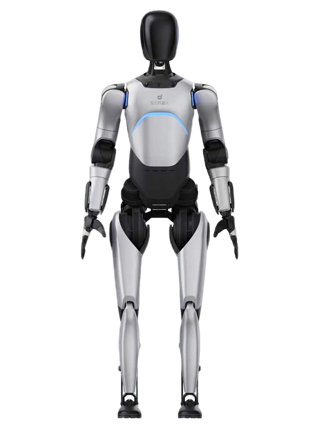
Japan invented the modern humanoid robot. WABOT-1, built at Waseda University in 1973, was the world's first full-scale android capable of walking and gripping objects, and Honda's ASIMO later became its global symbol. At the Humanoids Summit held in Tokyo this month, that legacy looked fragile: roughly 40 robots filled the floor, and Chinese-built systems outnumbered Japanese ones by a wide margin, according to IEEE Spectrum. Booster Robotics' K1 and Unitree's G1 drew the crowds, and in a detail that stung, some Japanese firms demonstrated using Chinese-made robot bodies rather than their own hardware.
The numbers explain the mood. China now operates more industrial robots than any other country and accounted for roughly 54 percent of new robot installations worldwide in 2024, per the International Federation of Robotics. That base has translated into humanoid manufacturing speed, with Chinese firms shipping general-purpose platforms at volumes and prices Japan's smaller specialists struggle to match. Japan still knows how to build precise, reliable machines. The question is whether precision still wins a race now decided largely by AI software.
What Changed: Software Now Beats Craftsmanship
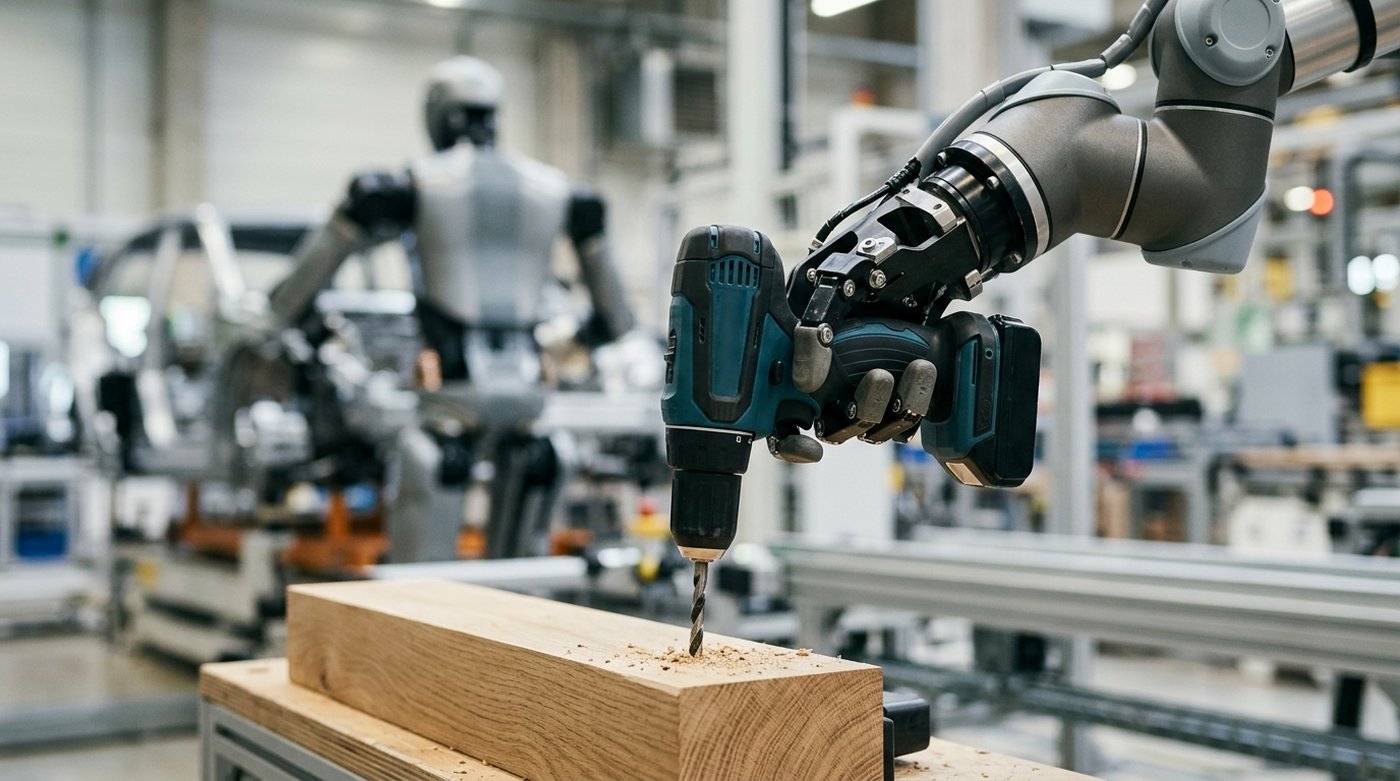
For decades, Japan's edge came from dexterous hands, quiet servo motors, and manufacturing tolerances few rivals could match — an edge that still exists, as demonstrators showed robotic hands fine enough to thread a needle. But the center of gravity has shifted from the actuator to the foundation model. A robot's value now comes largely from the AI stack that lets it perceive a room, plan multi-step tasks, and generalize to unfamiliar objects, not from how its fingers curl. China's newer entrants pitched software-driven versatility and lower unit cost, and it showed in sheer volume on the floor.
Japan's Countermove: AIRoA and a National Data Platform
Japan is not standing still. The AI Robot Association (AIRoA), a consortium formed in December 2024, counts Toyota, Nissan, NEC, Fujitsu, and KDDI among roughly a dozen members pooling resources for shared robot foundation models and open training data. In June, AIRoA, Toyota, and the National Institute of Advanced Industrial Science and Technology (AIST) jointly standardized a data-collection interface for robotic imitation learning, letting companies pool real-world manipulation data instead of building isolated proprietary sets. AIRoA has also joined Toyota's Woven City project as an "Inventor," trialing robots in real settings at the experimental Shizuoka test town. Separately, Japan's industry ministry has committed roughly 387.3 billion yen toward a homegrown multimodal robot "brain," led by new venture Noetra Corp. with SoftBank and Preferred Networks.
The Bigger Bet: 10 Million Robots by 2040
Tokyo's response extends beyond one consortium. The government's revised physical AI strategy targets 10 million AI-equipped robots deployed across 18 sectors, including restaurants, food manufacturing, logistics, and medical care, by 2040, backed by up to 1 trillion yen (about $6.1 billion) in state support over five years, contingent on measurable results. The logic is demographic as much as competitive: Japan's shrinking, aging workforce makes physical AI an operational necessity, not a novelty, for sectors already short on staff.
"Japan pioneered this field with WABOT-1 and ASIMO, but the summit made one thing obvious: hardware precision alone no longer defines leadership in humanoid robotics. The country that owns the data and the foundation model owns the robot."
Analysts at the summit floated a $100 billion opportunity in general-purpose robotics that Japan could still capture, but only by accelerating deregulation, diversifying its supplier base, and treating AI and data infrastructure as core competencies, not an add-on to excellent hardware. Toyota's Frontier Research Center, an AIRoA member, is betting that manufacturing reliability paired with pooled training data can close the gap China opened through scale and software-first design.
Q: Why did Chinese robots outnumber Japanese ones at a summit held in Tokyo?
A: Chinese makers like Unitree and Booster Robotics scaled humanoid production faster and cheaper, leveraging an industrial robot base that made up about 54 percent of global installations in 2024.
Q: What is AIRoA and why does it matter?
A: A Japanese consortium including Toyota, Nissan, NEC, and Fujitsu that pools robot training data and builds shared foundation models, fixing Japan's historically fragmented, single-company approach.
Q: What is Japan spending to catch up?
A: Up to 1 trillion yen ($6.1 billion) over five years for robot deployment, plus roughly 387.3 billion yen for a domestic AI "brain" led by Noetra Corp., SoftBank, and Preferred Networks.
Q: Is Japan's robot hardware actually falling behind?
A: Not on precision — Japanese firms showed hands fine enough to thread needles. The gap is in AI software, shared data, and manufacturing scale.
Why This Matters Beyond Japan
The Tokyo summit previews a fight every advanced economy will eventually face. Robots are shifting from single-purpose industrial arms to general-purpose systems trained on shared, pooled datasets, and the country that controls that pipeline, not just the sturdiest chassis, will set the terms for the next decade of automation. Japan's answer, shared data standards, a live testbed at Woven City, and a sovereign AI model, is a bet that reliability and openness can beat raw volume. What most coverage skips: pooling data across competing companies is a governance problem as much as a technical one, and Japan's 2040 target gives it barely a decade and a half to prove a craftsmanship culture can also become a platform culture.
Source: IEEE Spectrum — "Japan Pioneered Humanoid Robots—Can It Now Catch China?", published July 4, 2026.