Hanshow and X-Era Lab Test Embodied Robots Across 70,000 Stores
Hanshow Technology and X-Era Lab are piloting an inventory robot that uses Hanshow's existing electronic shelf labels as a built-in navigation grid, cutting one of retail robotics' biggest hidden deployment costs.

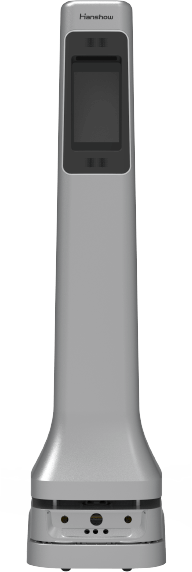
JIAXING, China, September 9, 2026. Retail-technology supplier Hanshow Technology and embodied AI developer X-Era Lab have moved their joint inspection robot out of pilot demonstrations and into proof-of-concept testing across a shared installed base of roughly 70,000 stores, the companies disclosed this week. The robots use Hanshow's existing electronic shelf label network as a built-in positioning system, an approach that sidesteps one of the more expensive parts of deploying mobile robots in retail: building a store-specific navigation map from scratch.
Hanshow Technology, listed on the Shenzhen Stock Exchange and headquartered in Jiaxing, Zhejiang, is one of the world's largest suppliers of electronic shelf labels, serving more than 550 retail clients across nearly 70,000 stores in over 80 countries. X-Era Lab, also known by its Chinese registered name Tuoyuan Intelligence, is a Chinese deep learning company focused on embodied AI and what it calls world action models, the class of systems that let a robot predict how a physical environment will change in response to its own movement rather than simply react to what a camera sees in the current frame. The pairing puts a hardware distribution network with genuine global reach behind an AI company that, on its own, would have needed years to build comparable store access.
The Shelf Label Grid Becomes the Robot's Map
Most retail inspection robots need either a pre-built floor plan, a fleet of fixed reference markers installed specifically for navigation, or continuous visual simultaneous localization and mapping that struggles when shelves, promotional displays, or seasonal layouts change. Hanshow's contribution to this partnership sidesteps all three. Because its electronic shelf labels are already installed at fixed, known positions across tens of thousands of stores to display pricing, they function as a ready-made coordinate grid the robot can read as it moves down an aisle. A retailer that has already paid for Hanshow's labels for pricing accuracy gets a navigation infrastructure layer for the inspection robot at effectively no incremental cost, rather than paying a second time for a dedicated localization system.
That matters commercially because navigation infrastructure has historically been one of the larger hidden costs in retail robotics deployments, one that vendors rarely itemize clearly in a proposal. A retailer evaluating a standalone inspection robot vendor should ask directly whether the quoted price includes store mapping and ongoing map maintenance as shelf layouts change, because that cost does not disappear just because a demo looks polished. The Hanshow and X-Era Lab approach reduces that specific line item for any retailer already running Hanshow's label network, which is a meaningful subset of large chains globally given the company's install base.
What the World Action Model Actually Does on the Floor
X-Era Lab's contribution is the software that turns raw camera and sensor input into a usable inventory signal. The company's Visual World Action model uses what it describes as four-dimensional spatiotemporal representation, meaning the system tracks not just where objects are but how their arrangement is expected to change over time, running on a model with roughly 10 billion parameters. In practical terms, that lets the robot distinguish between a shelf gap that is a genuine out-of-stock event and one that is simply mid-restock, or flag a planogram violation where a product has been placed in the wrong facing, tasks that a purely reactive computer-vision system handles poorly because it has no model of what should be happening next.
The companies describe the current phase as proof-of-concept testing in domestic and international shopping centers, not a completed commercial rollout. That distinction is worth taking seriously. A proof-of-concept at 70,000 potential store locations is a meaningful pipeline, but it is still a pipeline, not a signed deployment count, and retailers should not read the partnership announcement as evidence that tens of thousands of stores are already running the robot today.
Where This Sits Against Shelf-Scanning Incumbents
Automated shelf auditing is not a new category. Fixed camera arrays mounted on shelving, handheld scanning tools carried by store staff, and dedicated shelf-scanning robots from other vendors have all been sold into large grocery and general-merchandise chains over the past several years, with mixed results on return on investment. The recurring complaint from retail operations teams about earlier generations of these tools has been false-positive rates high enough that staff learn to ignore the alerts, which defeats the purpose of automating the check in the first place. Hanshow and X-Era Lab are implicitly positioning their partnership as a response to that specific failure mode, betting that a positioning system with near-zero marginal deployment cost combined with a world action model built to distinguish transient restocking from genuine stock-outs will produce fewer false alarms than systems built primarily around static computer vision.
Whether that bet pays off is an empirical question the proof-of-concept phase is designed to answer, and retailers evaluating the partnership should treat vendor claims about accuracy improvements with the same skepticism they would apply to any pre-deployment marketing claim. The metric that will actually matter to a store operations director is the ratio of actionable alerts to total alerts generated, measured over weeks of continuous operation rather than a curated demonstration walk-through.
A Closed Loop That Compounds With Scale
The more durable claim in this partnership is structural rather than a single product spec. The companies describe a closed-loop arrangement in which real-world retail feedback continuously refines the underlying AI models, rather than the model being trained once and shipped. Every store that runs the robot generates labeled data about real shelf conditions, restocking patterns, and edge cases that a lab environment cannot replicate, and that data flows back into training the next model version. If the mechanism works as described, the system should get measurably better at distinguishing genuine stock-outs from transient restocking activity as store count grows, which is the single biggest source of false alerts that has historically limited retailer trust in automated shelf-inspection tools.
That flywheel dynamic is also the commercial logic behind pairing an AI lab with a hardware distributor that already has scale. A world action model trained only on a handful of pilot stores would plateau quickly. One trained on data flowing back from a meaningful fraction of 70,000 locations, if adoption follows the proof-of-concept phase, has a genuine data advantage over a competitor starting from zero installed stores. Retailers evaluating competing inspection robot vendors should ask directly how many live stores are generating training data today, not how many stores are contractually eligible for the deployment, since those numbers can differ substantially in early partnerships like this one.
The Buying Decision This Actually Changes
For a retail operations team weighing whether to pilot an inspection robot, the practical effect of this partnership is to lower the entry cost for any chain already running Hanshow's electronic shelf label infrastructure, since the navigation layer is effectively already paid for. For chains without that existing label network, the calculus is less favorable, because the labor and capital cost of installing a comparable positioning grid from scratch would need to be weighed against the value of automated shelf auditing on its own merits.
The honest reading of this announcement is that Hanshow and X-Era Lab have built a plausible path to retail-scale deployment by removing one specific cost barrier, not that they have already proven the robot works reliably at that scale. The proof-of-concept phase, and how quickly it converts into paid, sustained deployments across a meaningful share of that 70,000-store footprint, is the evidence that will separate this partnership from the long list of retail robotics pilots that generated a press release and little else.
There is also a supply-side dimension worth watching. Hanshow's own hardware, the SPatrol robot line that already roams store aisles collecting shelf information, sits alongside this new joint effort rather than being replaced by it, suggesting the company is running parallel tracks internally while also betting on an external AI partner for the harder perception problem. That is a reasonable hedge for a hardware company that does not want to be dependent on a single software roadmap, but it also means retailers should ask Hanshow directly which product line, its own SPatrol platform or the joint X-Era Lab system, is the one actually being sold and supported for a given deployment, since the two may carry different pricing, different accuracy profiles, and different support commitments even though they share the same underlying label infrastructure.
For procurement teams building a near-term automation roadmap, the pragmatic move is to treat this announcement as a signal to open a conversation with Hanshow about pilot terms rather than as a purchase-ready product listing. Ask for the actual store count currently generating live training data, the false-positive rate measured over a full operating month rather than a demonstration, and whether pricing is bundled with the existing electronic shelf label contract or sold as a separate line item. Those three answers will do more to predict whether this deployment succeeds at scale than anything in the announcement itself.
Hero image credit: Hanshow Technology.
This analysis draws on public reporting on the Hanshow Technology and X-Era Lab partnership, together with Hanshow's public disclosures about its electronic shelf label business and store footprint. It is for general information purposes only and does not constitute investment, financial, or legal advice.