Decent Holding Says It Will Turn Community Care Centers Into a Robotics Training Network
The Nasdaq-listed China services company says a new agreement with Anhui Taihao Intelligent Technology will use its community healthcare and eldercare footprint as real-world validation infrastructure for home and healthcare robots.

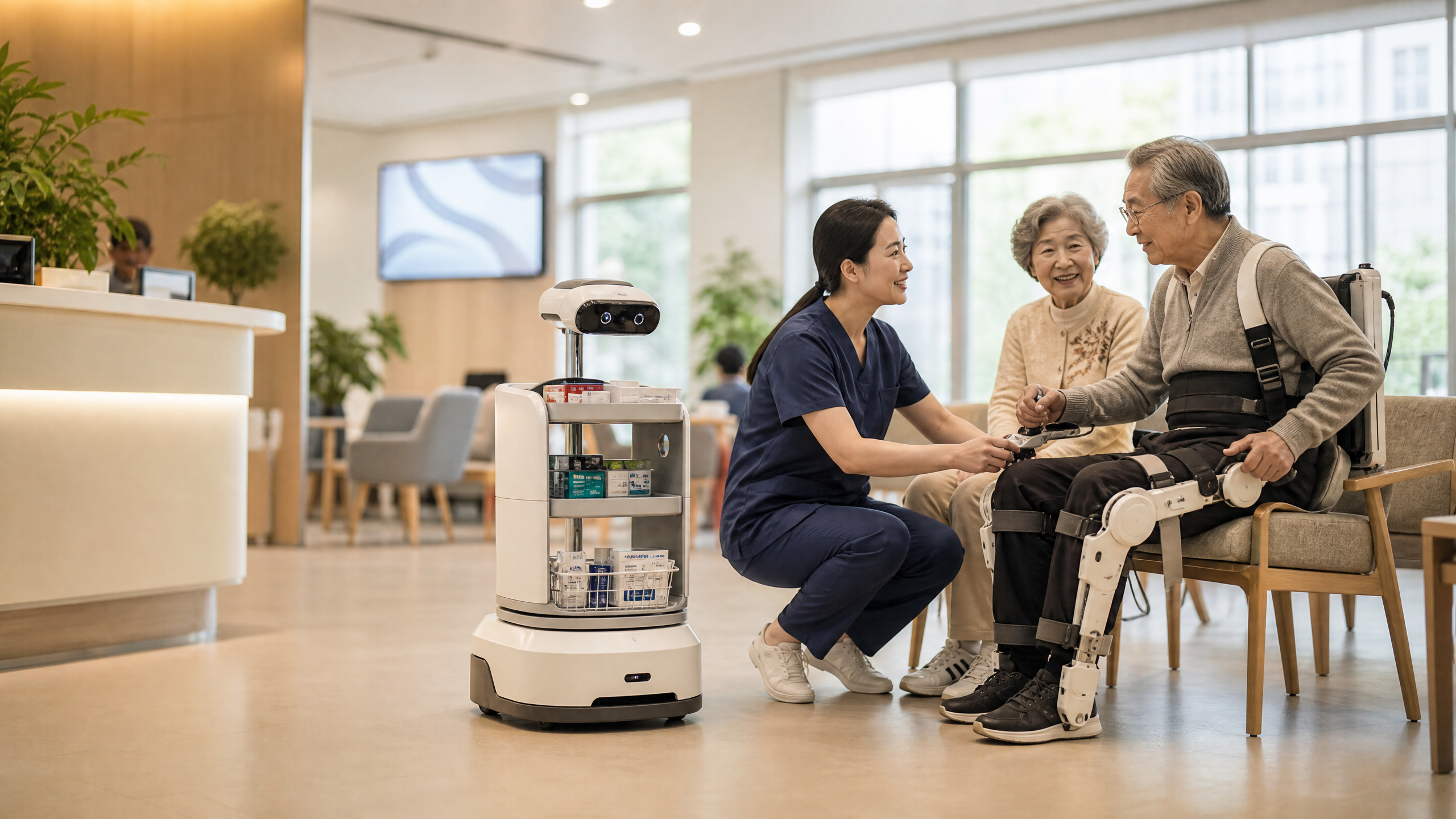
Decent Holding Inc. says it has entered into a strategic cooperation agreement with Anhui Taihao Intelligent Technology Co., Ltd., a robotics company focused on healthcare robots, wearable robotics and intelligent healthcare devices. The announcement frames the partnership as the start of a home and community embodied-robotics training and validation infrastructure network in China.
The key claim is not only that robots will be introduced into care settings. Decent says its existing footprint of approximately 400 community service centers could become a practical environment for testing and improving robots in real home, healthcare and community scenarios. According to the company announcement, each center typically serves communities ranging from 30,000 to 100,000 residents, giving the network access to a broad set of daily living and caregiving situations. Decent also says it aims to reach approximately 1,000 operational community service centers by the end of 2026, subject to market conditions, operating progress and execution of its expansion strategy.
The robotics angle is clear. The company says it intends to gradually introduce healthcare robots, wearable robotics, intelligent monitoring devices, smart caregiving systems and future home-service robots into its operations. If the plan moves beyond announcement language, the network could provide robotics developers with something the sector increasingly needs: real environments where products can be validated against daily use, not just stage demonstrations.
This announcement lands in the same broader policy moment as China’s push for humanoid robots and embodied AI to move into real working scenarios. The practical question is whether community-care infrastructure can become a useful bridge between robotics labs and real households. Robots for eldercare and healthcare must deal with safety, comfort, privacy, human trust, reliability and maintenance. A large network of service centers could help expose products to those constraints, but only if deployments are measured and independently verifiable.
As China’s robotics market is moving from showroom demonstrations toward places where people actually live, recover , and if Decent and Taihao can turn community centers into credible testing grounds, the result could help define what practical eldercare and healthcare robots could offer before they enter ordinary homes. The next signal to watch is not another announcement, but evidence of real deployments, user feedback, safety controls and measurable service outcomes.